Your Cart is Empty
Start shopping

Did you know collagen is the most abundant protein in the human body? It plays an important role in maintaining skin structure, firmness, and resilience. As people age, collagen production gradually declines, while cumulative sun exposure and genetics can contribute to changes in skin texture and the appearance of wrinkles.
Ellanse is a collagen-stimulating injectable that combines polycaprolactone (PCL) microspheres with a carboxymethylcellulose (CMC) gel carrier. This formulation provides an initial volumizing effect while the PCL component supports a gradual tissue-remodeling response. These properties have made PCL-based fillers an area of interest in facial rejuvenation, although product selection and injection technique must be tailored to the treatment area.
This article explores the use of Ellanse for forehead rejuvenation, including its formulation, treatment process, patient selection, expected outcomes, and aftercare considerations. Because the forehead contains important vessels and anatomical structures, Ellanse forehead treatment requires careful assessment and appropriate clinical expertise.
Key Takeaways
- Ellanse combines PCL microspheres with a CMC-based gel carrier to provide an initial volumizing effect alongside a gradual collagen-stimulating response.
- Ellanse forehead treatment requires careful anatomical assessment because filler injections in the forehead can carry significant vascular risks.
- A thorough consultation should precede treatment to assess skin quality, volume changes, wrinkles, medical history, and the patient’s aesthetic goals.
- Results and longevity vary according to the specific formulation, treatment area, injection technique, and individual patient factors.
- Appropriate practitioner training and post-treatment monitoring are important when incorporating PCL-based fillers into aesthetic practice.
About: Doctor Medica is your trusted supplier of top-quality dermal fillers, viscosupplements, and more for your medical practice. We offer genuine products from leading brands at the lowest prices in the market.
What is Ellanse and How Does it Work for Forehead Rejuvenation?
Ellanse is a collagen-stimulating injectable that combines PCL microspheres with a CMC-based carrier gel. [1] Published descriptions of the formulation report approximately 30% PCL microspheres and 70% CMC gel.
The CMC carrier contributes to the initial volumizing effect, while the PCL microspheres are designed to support a gradual collagen response. As the microspheres undergo degradation, tissue remodeling around the particles may contribute to longer-lasting changes in skin structure and volume.
This mechanism differs from hyaluronic acid (HA) fillers, which primarily provide volume through their gel properties. Unlike HA fillers, PCL-based products cannot be dissolved with hyaluronidase in the same manner, making careful product selection and injection planning particularly important.
For an Ellanse forehead treatment, the objective may involve addressing selected areas of volume deficiency or improving contour rather than simply filling every visible forehead line. Dynamic forehead lines can also be influenced by repeated muscle movement, skin quality, and facial anatomy, so a filler is not necessarily appropriate for every type of wrinkle.
The duration of results varies among patients and depends on the formulation, treatment area, technique, and individual biological factors. Published studies have demonstrated sustained aesthetic effects with PCL-based fillers, but these findings should not be interpreted as a guarantee of a particular duration for forehead treatment. [3]
Clinics that order Ellanse online may consider how the product’s microsphere-based formulation contributes to its distinctive behavior within treated tissues.
The Treatment Process for Ellanse Forehead Rejuvenation
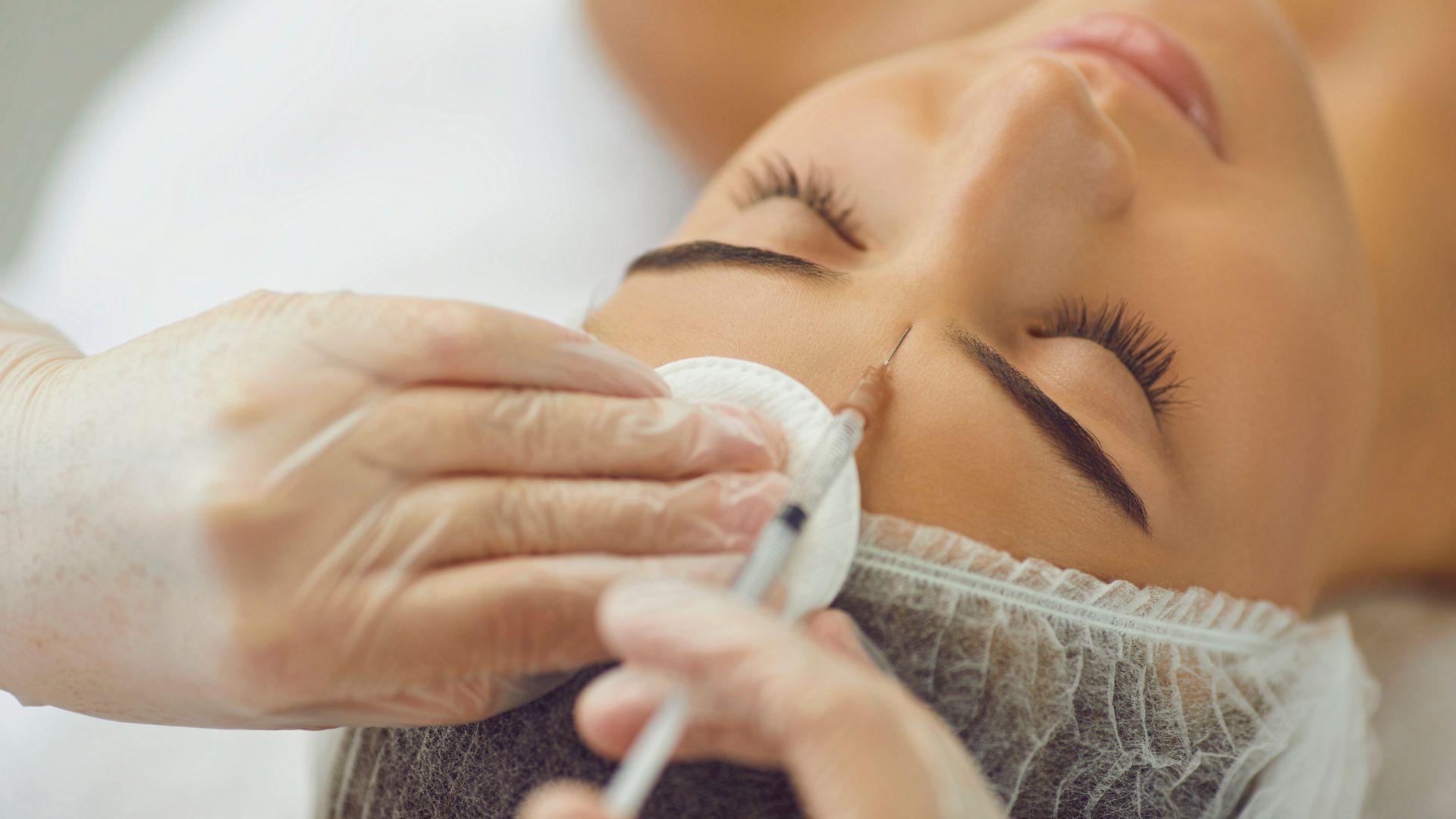
Thorough consultation and assessment are important before starting any injectable treatment. During this stage, medical professionals should discuss the patient’s concerns, previous aesthetic procedures, medical history, medications, and desired outcomes.
The practitioner should assess the forehead’s anatomy, skin quality, degree of volume loss, and the nature of any lines or contour irregularities. This evaluation helps determine whether an injectable treatment is appropriate and whether another approach may better address the patient’s concern.
After assessment, the practitioner determines the appropriate product, injection plane, amount, and technique. Because the forehead contains vessels that can communicate with the ophthalmic circulation, filler injections in this region require detailed anatomical knowledge and appropriate precautions.
Ellanse may also be considered for other facial applications, depending on the specific product and clinical indication. For example, Ellanse hands treatment involves a different anatomical region and treatment objective from forehead rejuvenation and should be planned accordingly.
Patient Selection and Considerations for Ellanse Forehead Treatment
Ellanse is not suitable for every patient. A practitioner should determine whether the patient’s concerns are related to volume loss, skin quality, dynamic movement, or another factor before recommending treatment.
Potential injection-related reactions can include swelling, redness, tenderness, bruising, and palpable irregularities. Less common but more serious complications can include infection, inflammatory reactions, nodules, and vascular compromise.
Patients with known hypersensitivity to product components, active infection or inflammation at the treatment site, or other relevant contraindications may not be appropriate candidates. A complete medical history should be reviewed before treatment.
Patient expectations should also be addressed. Although PCL-based fillers can provide an initial change in volume and may support subsequent collagen remodeling, the magnitude and duration of improvement differ between individuals. A single treatment should not be presented as a guaranteed solution for all forehead wrinkles.
For patients considering an Ellanse forehead procedure, practitioners should also explain that the forehead is a particularly sensitive treatment area from a vascular perspective. Any unexpected pain, skin discoloration, visual disturbance, or other signs suggestive of vascular compromise requires immediate clinical assessment.
Post-Treatment Care and Maintenance for Optimal Results
Right after your Ellanse treatment, avoid touching the forehead area for at least six hours to keep it clean and prevent unwanted reactions. It’s also crucial to stay away from extreme temperatures, both hot and cold, for up to two weeks. If you experience any swelling or discomfort, which is typical, you can use a cold compress.
For skincare, be gentle with your face. Use mild products and avoid anything too harsh, like exfoliants or peels, for a few days. Additionally, avoid heavy workouts or activities that increase blood flow significantly for the first day or two.
Ellanse plays a significant role in long-term anti-aging solutions by stimulating the body to produce more collagen. This is important because collagen production decreases as early as our twenties. Maintaining proper skincare over time can help reduce visible signs of aging.
Proper aftercare and regular check-ups are critical for optimal results. Patients should avoid strenuous exercise, excessive sun exposure, and certain skin products after getting Ellanse. Following the care instructions provided by their doctor is essential.
Protecting the skin from environmental damage and UV rays is also important. Studies show significant improvements in wrinkles around the eyes and mouth with this care plan. To maintain the benefits, patients may need additional treatments over time.
Clinical Studies and Before-and-After Photos
Research on PCL-based collagen stimulators has examined their use in facial rejuvenation and volume restoration. Clinical evidence suggests that PCL-based fillers can produce sustained aesthetic improvement in selected facial applications, although evidence for one anatomical site should not automatically be extrapolated to another. [3,4]
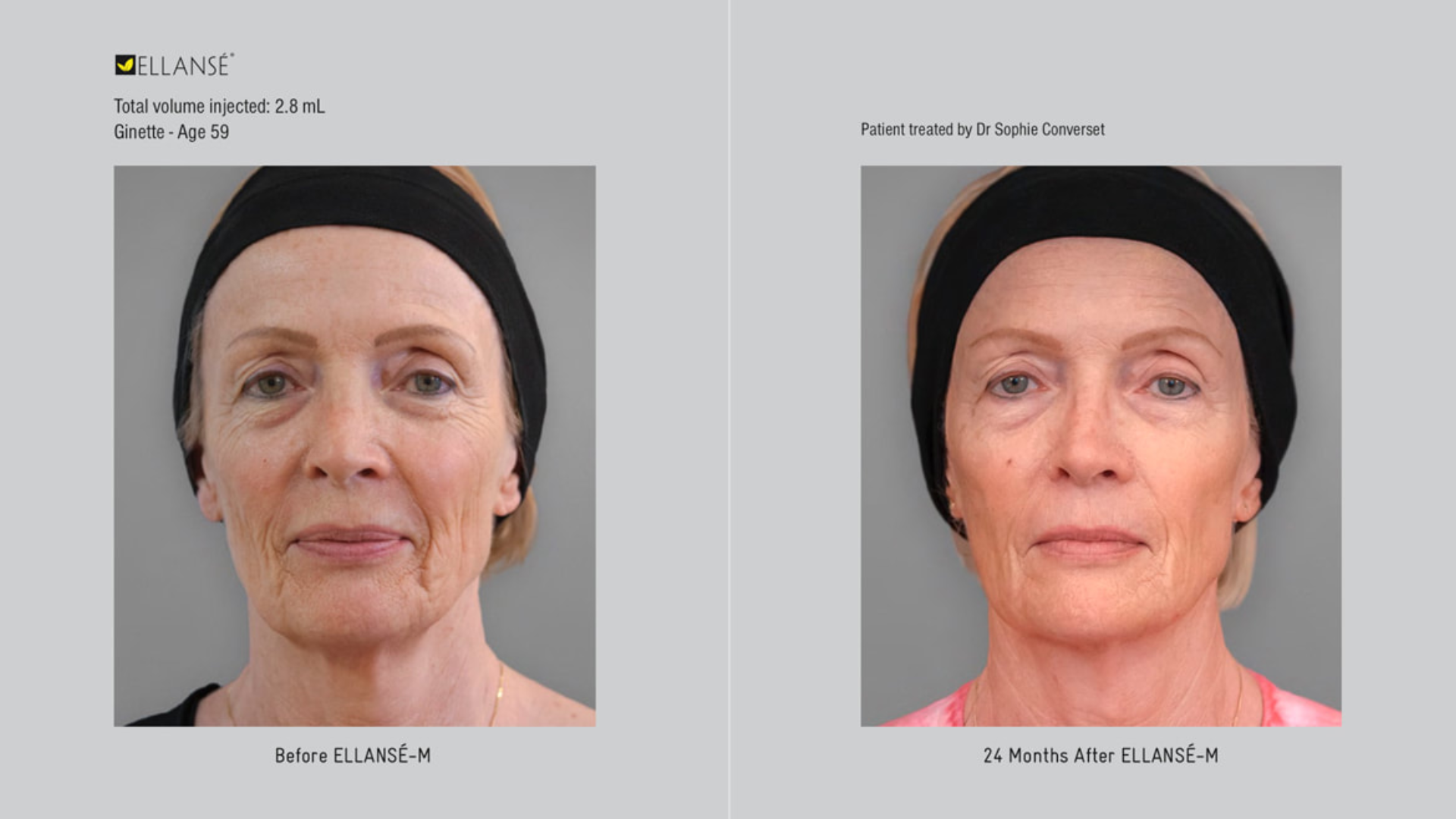
Image Courtesy of The Grove Clinic
The forehead displays signs of aging, including fine lines, wrinkles, and sagging skin. Due to the deep creases and lack of smoothness, the overall appearance may seem tired or stressed. Post-treatment, the forehead appears significantly smoother and more youthful. Fine lines and wrinkles are diminished, and the skin looks firmer and rejuvenated, contributing to a refreshed and more vibrant overall appearance.
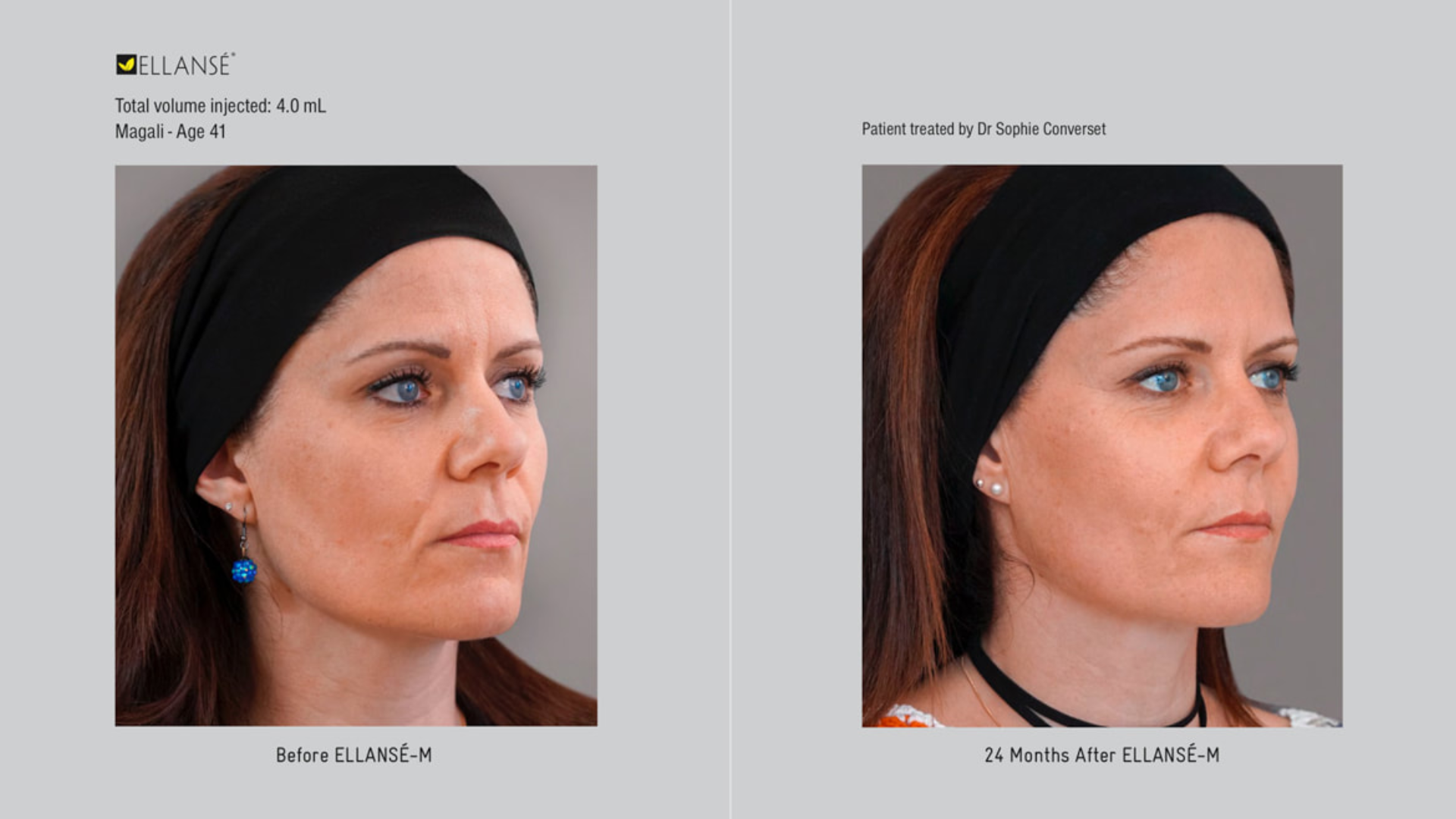
Image Courtesy of The Grove Clinic
When evaluating results from an Ellanse forehead treatment, clinicians and patients should focus on whether the treatment produced an appropriate and proportionate change for the individual’s anatomy rather than expecting a standardized appearance.
Conclusion
Ellanse combines an initial volumizing effect with a collagen-stimulating mechanism, distinguishing it from conventional HA-based fillers. These characteristics may make it an option for selected facial rejuvenation procedures when the product and treatment area are considered appropriate.
However, the forehead is an anatomically sensitive region where filler injections require particular caution. An Ellanse forehead treatment should therefore be based on appropriate patient selection, detailed anatomical knowledge, product-specific evidence, and realistic expectations rather than assumptions about universal results or longevity.
FAQs
1. What is Ellanse forehead treatment?
Using Ellanse on the forehead is a treatment method that stimulates collagen production in this area, enhancing skin elasticity and reducing signs of aging.
2. How does Ellanse stimulate collagen effectively?
Ellanse’s effectiveness in stimulating collagen lies in its unique formulation. It works beneath the skin surface, encouraging your body’s natural collagen production for long-lasting results.
3. Is there any risk involved with the Ellanse forehead procedure?
Like any cosmetic procedure, using Ellanse for forehead treatments could have risks. These might include temporary swelling or redness at injection sites. Always consult a professional before undergoing such treatments.
4. How soon can I see results after an Ellanse forehead treatment?
Results from an Ellanse forehead treatment can vary depending on individual factors like age and skin condition, but typically, improvements are noticeable within weeks after the procedure.
Citations
[1] Ellansé. “ELLANSÉ | Dermal Fillers for Natural Collagen Stimulation.” Ellansé, ellanse.com/what-is-ellanse.
[2] Kowayo. “Ellanse Review and Benefits Singaporeans Should Know.” Kowayo Aesthetic Clinic, 24 Aug. 2026, kowayo.com/fillers/ellanse-review-and-benefits-singaporeans-should-know.
[3] De Melo, Francisco, et al. “Recommendations for Volume Augmentation and Rejuvenation of the Face and Hands With the New Generation Polycaprolactone-based Collagen Stimulator (Ellansé®).” Taylor & Francis, Nov. 2017, www.tandfonline.com/doi/full/10.2147/CCID.S145195.
[4] De Melo, Francisco, et al. “Minimally Invasive Aesthetic Treatment of the Face and Neck Using Combinations of a PCL-Based Collagen Stimulator, PLLA/PLGA Suspension Sutures, and Cross-Linked Hyaluronic Acid.” Clinical Cosmetic and Investigational Dermatology, vol. Volume 13, May 2020, pp. 333–44. https://doi.org/10.2147/ccid.s248280.
The content on this page has been written and fact-checked in accordance with our Editorial Policy. Clinical claims are sourced from peer-reviewed literature, regulatory documentation, and manufacturer specifications. Where citations are provided, it is always in accordance to our editorial standards.