Your Cart is Empty
Start shopping
ELLANSÉ™
(2 products)
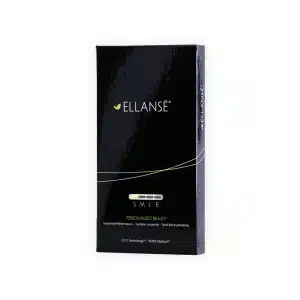
Ellansé is a CE-marked PCL-based collagen stimulator filler by Sinclair Pharma, designed to combine immediate volume correction with long-term collagen biostimulation. Unlike standard hyaluronic acid fillers, Ellansé uses polycaprolactone microspheres suspended in a CMC carrier gel to deliver progressive collagen formation in the treated area. The range includes four duration variants — Ellansé-S, Ellansé-M, Ellansé-L, and Ellansé-E — spanning approximately one to four years of effect. Licensed practitioners looking to buy Ellansé can browse the Doctor Medica catalog or contact representatives for availability, documentation, and wholesale guidance.
Filters
Category
Brand
Price Range
$
$

The Manufacturer Behind Ellansé — Sinclair Pharma
Sinclair Pharma is an international specialty pharmaceutical and medical device company with a focused portfolio in aesthetic medicine. Its injectable aesthetic range includes Ellansé, Perfectha, and other professional products used by licensed practitioners across multiple markets. Sinclair Pharma emphasizes clinical evidence generation, professional education, and regulatory compliance across EU and international territories, and its products are developed for use by trained aesthetic physicians, cosmetic surgeons, and dermatologists. Clinics preparing to order Ellansé or purchase Ellansé for their injectable offering should review the manufacturer’s IFU, CE documentation, and applicable local regulatory requirements before clinical use. [1]
How Ellansé Works — PCL Biostimulation Technology
Ellansé operates through a dual-action mechanism that sets it apart from both standard HA fillers and other collagen stimulators. At the moment of injection, the CMC carrier gel provides immediate volume and structural correction in the treated area. As the carrier gel is gradually absorbed, the PCL microspheres remain in the tissue and stimulate new collagen formation as they biodegrade, with the rate and timeline corresponding to the selected duration variant. This means results do not simply hold and then decline; they can improve progressively as collagen builds over the treatment period. [1][2]
What is Ellansé made of? The product is composed of synthetic polycaprolactone microspheres suspended in a carrier gel containing carboxymethylcellulose, phosphate-buffered saline, and glycerin. PCL is the biostimulatory component responsible for driving neocollagenesis, while CMC provides the structural correction visible immediately after injection. Histological evidence confirms that collagen formation occurs around PCL microspheres following carrier gel resorption, supporting the progressive improvement in treated tissue that practitioners and patients observe over the treatment timeline. [1][4]
This dual-action profile makes Ellansé particularly useful for practitioners seeking lasting structural improvement rather than short-cycle volume replacement. Standard HA fillers deliver temporary mechanical volume; Ellansé delivers both immediate correction and a progressive collagen response, with a duration the practitioner can select in advance. Four variants — Ellansé-S, -M, -L, and -E — give clinicians duration control not available with most other products in the biostimulator or filler category, an approach supported by prospective clinical evidence of tunable longevity in facial correction. [1][2][3]
Is Ellansé Dissolvable and Does It Migrate?
Because Ellansé is not HA-based, it cannot be dissolved with hyaluronidase. This irreversibility must be discussed clearly with patients during consent. On migration, the risk is considered low as long as it is injected at the correct depth by an experienced practitioner. Superficial placement, overcorrection, or poor technique increase the risk of visible irregularity, lump formation, or nodular reactions, which reinforces why correct plane selection and conservative dosing are non-negotiable in every treatment. [1][2]
Ellansé as a Collagen Stimulator — Indications and Clinical Positioning
Ellansé is clinically positioned as a biostimulator filler for facial rejuvenation, with an EU-approved intended use describing it as a poly-ɛ-caprolactone-based injectable implant indicated for subdermal implantation in the face for the lasting correction of wrinkles and signs of facial aging. [1]
For practitioners navigating a crowded injectable market, this positioning matters. Ellansé sits at the intersection of structural filler and collagen stimulator — relevant for cases where volume alone is insufficient and where longer-lasting biological improvement is part of the treatment objective. Practitioners who buy dermal fillers across multiple categories can position Ellansé alongside HA and CaHA options to cover the full spectrum from short-cycle reversible volume to multi-year biostimulation, making it a meaningful addition rather than a replacement for existing products in the clinic. [1][2]
Ellansé Product Range — Four Duration Variants
The Ellansé range is organized entirely around treatment duration. Every variant shares the same core technology — PCL microspheres in a CMC carrier gel — but each carries a distinct longevity and degradation profile. This architecture allows clinicians to match the selected product to a patient’s anatomy, correction depth, aesthetic goals, and tolerance for a longer or shorter treatment cycle, rather than working within a single fixed duration. Clinical trial data support the durability of this approach, with prospective evidence demonstrating sustained efficacy and patient satisfaction across the shorter-duration formulations that underpin the range. [2][3] Practitioners who want to buy Ellansé online can evaluate the four variants against their patient population and treatment priorities before ordering.
Most Popular Ellansé Products
- Ellansé-S 1 mL is the shortest-duration option, with results typically lasting approximately 1 year. Prospective clinical evidence supports its efficacy in nasolabial fold correction and sustained patient satisfaction at 1 year, making it a well-documented starting point for practitioners new to PCL-based biostimulation.[3]
- Ellansé-M 1 mL carries an approximate two-year duration and is often considered a clinically balanced choice for facial rejuvenation, contouring, and structural support. Clinical data on the early PCL formulations underpinning the range support its durability profile, and it offers meaningful longevity without the extended commitment of the L or E variants. [2][3]
- Ellansé-L 1 mL is positioned for extended correction at approximately three years. It is suited to stable anatomical areas and experienced hands, provided that patients fully understand the product’s longer-lasting nature and the importance of precise, conservative placement. [1][2]
- Ellansé-E 1 mL is the longest-duration option at approximately four years. Its extended persistence profile makes careful patient selection, anatomical precision, and conservative volume correction especially important — any placement errors carry a proportionally longer clinical window during which management may be required. [1][2]
Treatment Areas and Indications
Ellansé treatment planning centers on the face, with injection depth and patient selection being the two most critical variables. Because Ellansé is a subdermal biostimulator rather than a superficial volumizer, a correct tissue plane is essential to outcome quality and safety across all treatment areas. [1][2]
- Nasolabial folds: A primary facial indication. Ellansé may be used to soften moderate-to-deep folds by restoring structural support in the treated area and stimulating progressive collagen formation over time, with clinical trial data demonstrating efficacy and patient satisfaction in this indication specifically. [2][3]
- Cheeks and mid-face: Volume loss in these areas is another common indication for treatment, particularly when longer-lasting structural restoration is preferred over shorter-cycle HA filler treatments. Ellansé may support cheek contouring and facial framework restoration in appropriate patients. [1][2]
- Jawline and chin: Contouring protocols can incorporate Ellansé for lower-face definition and projection when placed in the deep dermal or subdermal plane by a trained practitioner. [1][2]
- Temples: May be addressed in selected patients to correct hollowing and restore overall facial balance, based on careful anatomical assessment and individual patient suitability. [1][2]
- Skin laxity and broader facial aging: Can be addressed with Ellansé, in which collagen stimulation is part of the treatment objective, particularly for patients with mild-to-moderate laxity or visible structural decline, for whom the goal extends beyond short-term volume correction. [1][2]
- Off-label body applications: These have appeared in the aesthetic literature but should be considered only when clinically documented, legally permitted, and individually appropriate. [1][2]
Ellansé before-and-after outcomes cited in clinical literature consistently reflect treatments performed at the correct subdermal depth. Superficial placement is not appropriate and increases the risk of nodules, visible product, contour irregularity, and inflammatory responses. [1][2]
Administration — Injection Technique and Protocol
Ellansé is administered by injection into the deep dermal or subdermal plane. Superficial placement is contraindicated. Depending on the treatment area and indication, the technique may involve bolus injection for structural volume support or linear threading for fold correction and contouring — with the approach determined by anatomy, the specific product variant, and the practitioner’s clinical training. [1][2]
Standard safe injection practices apply: aspiration where appropriate, slow and controlled delivery, and thorough familiarity with facial vascular anatomy to prevent intravascular placement. Intravascular injection of any soft tissue filler carries the risk of vascular occlusion, skin necrosis, and in severe cases, visual compromise — risks that apply equally to Ellansé as to other injectable products. [1]
Duration and Post-Treatment Care
Duration depends on the selected variant: approximately 1 year for Ellansé-S, 2 years for Ellansé-M, 3 years for Ellansé-L, and 4 years for Ellansé-E. PCL microspheres biodegrade progressively in line with the variant’s designed duration profile, driving the collagen stimulation timeline throughout. [1][2][3]
Post-treatment care should follow the product IFU and the practitioner’s own clinical protocol. Patients are generally advised to avoid pressure on the treated area, strenuous activity, and excessive heat exposure in the immediate post-treatment period. Massage, where indicated, should be guided by product-specific instructions — PCL-CMC handling differs from HA fillers, and standard massage habits may not be appropriate. [1][2]
Regulatory Status, Market Availability, and Safety Considerations
Ellansé is a CE-marked medical device cleared for use in the EU, the UK, and other international markets where applicable local regulatory requirements are met. Its EU-approved classification as a poly-ɛ-caprolactone-based injectable implant for subdermal facial use reflects a documented conformity assessment against relevant EU medical device requirements. [1]
FDA Approval and U.S. Availability
Ellansé is not currently FDA-cleared or FDA-approved as a dermal filler in the United States. The FDA maintains a separate registry of cleared dermal filler devices, and Ellansé does not currently appear on it. US-based practitioners should verify regulatory status directly through FDA resources before making procurement or patient-facing decisions. [5]
It is not available through standard FDA-approved dermal filler market channels in the United States. Practitioners outside the US should confirm local regulatory requirements, approved indications, and verified distributor documentation before sourcing Ellansé for clinical use. [5]
Safety Profile
Ellansé’s safety profile is consistent with other injectable biostimulator fillers when used correctly by trained practitioners. Common post-injection reactions include temporary swelling, bruising, redness, tenderness, and edema at the injection site — generally transient and self-resolving. Persistent pain, discoloration, or any sign of vascular compromise requires prompt clinical assessment. [1][6][7]
Nodule formation is a rare but documented adverse event associated with PCL-based fillers. It is largely technique-dependent and linked to incorrect injection depth, overcorrection, superficial placement, or inflammatory response. The use of a collagenase mixture has been reported in the literature as one approach to managing established PCL-based nodules, though this requires experienced clinical judgment and familiarity with current evidence. [1][6][7]
Contraindications include known hypersensitivity to polycaprolactone, carboxymethylcellulose, or any other formulation component; active skin infection or inflammation at the treatment site; and pregnancy or lactation, where applicable per the product IFU. Because Ellansé cannot be dissolved with hyaluronidase, thorough pre-treatment consent covering irreversibility and the critical role of the technique is essential for every patient. [1]
Ellansé vs Competing Collagen Stimulators and Fillers
vs Sculptra®
Ellansé and Sculptra® are both collagen stimulators, but their mechanisms and clinical behavior differ in ways that matter to treatment planning. Ellansé’s CMC carrier gel delivers immediate structural correction at the time of injection, while Sculptra® — using poly-L-lactic acid — works through gradual collagen induction with no meaningful immediate volumizing effect. Duration profiles, injection protocols, and the onset of visible results also differ between the two, making them better suited to different patient profiles and treatment objectives. Practitioners who buy Sculptra® alongside Ellansé can cover a broader range of biostimulation approaches within a single clinic offering.
vs Radiesse®
Ellansé and Radiesse® occupy adjacent space in the biostimulatory filler category but use different active materials. Radiesse® is based on calcium hydroxylapatite microspheres in a gel carrier; Ellansé uses PCL microspheres in a CMC carrier. Both provide volume correction and collagen stimulation, but their tissue feel, duration profiles, injection behavior, and degradation timelines differ in clinically relevant ways that affect product selection for specific anatomical areas. Clinics that buy Radiesse® as part of a broader biostimulator range gain an additional tool for cases where CaHA may be preferred over PCL.
vs JUVÉDERM®
JUVÉDERM® is a hyaluronic acid filler family; Ellansé is a PCL-based collagen stimulator — a comparison across two fundamentally different treatment categories. HA fillers deliver temporary, reversible volume that is dissolvable with hyaluronidase, while Ellansé is selected when longer-lasting biostimulation is the goal, and patients understand that correction is not rapidly reversible. Many aesthetic practices that buy JUVÉDERM® do so alongside a biostimulator such as Ellansé, offering patients both a reversible, short-cycle option and a longer-duration, collagen-stimulating alternative.
vs RESTYLANE®
Like JUVÉDERM®, RESTYLANE® is a hyaluronic acid range offering reversible volume and contouring across a broad product family. The comparison with Ellansé is primarily one of longevity, mechanism, and reversibility: RESTYLANE® suits shorter-cycle protocols and cases where dissolving is a practical option; Ellansé suits cases where multi-year PCL-based biostimulation is the clinical objective. Practices that buy RESTYLANE® for volume and skin-quality protocols can position Ellansé as a complementary option for patients seeking longer-lasting structural correction.
vs BELOTERO®
BELOTERO® is an HA filler family noted for soft tissue integration and versatility across a range of correction depths. Unlike Ellansé, it is manageable as a dissolvable HA product and can be placed at more superficial planes — making it a different tool for different clinical scenarios rather than a direct substitute. Ellansé is suited to deep dermal or subdermal structural correction where collagen stimulation is part of the objective. Clinics that buy BELOTERO® for softer superficial correction can use Ellansé to address the deeper structural work that HA integration alone cannot achieve.
Doctor Medica has supplied aesthetic injectable products to licensed practitioners since 2006, offering competitive wholesale prices, guaranteed authenticity, and verifiable LOT numbers. Practitioners looking to buy Ellansé wholesale can browse the Doctor Medica catalog or contact representatives for product availability, documentation, and clinical purchasing support.
FAQs
What is Ellansé?
Ellansé is a CE-marked PCL-based collagen stimulator filler by Sinclair Pharma. It provides immediate volume correction through a CMC carrier gel and longer-term collagen biostimulation through PCL microspheres. The range includes four duration variants: Ellansé-S, -M, -L, and -E. [1][2]
What is Ellansé made of?
Ellansé is composed of polycaprolactone microspheres suspended in a carboxymethylcellulose carrier gel, with phosphate-buffered saline and glycerin as supporting components. CMC provides immediate volumisation while PCL microspheres stimulate collagen formation as they degrade. [1][2]
Is Ellansé FDA-approved?
No. Ellansé is not currently FDA-cleared or FDA-approved for use in the United States. It is CE-marked and authorized in multiple international markets, but US practitioners should verify FDA status directly before making any procurement or clinical decision. [5]
Is Ellansé available in the US?
Ellansé is not available through standard US market channels as an FDA-approved dermal filler. Practitioners outside the US should confirm local regulatory requirements before ordering or using Ellansé. [5]
How long does Ellansé last?
Duration depends on the variant: Ellansé-S approximately 1 year, Ellansé-M approximately 2 years, Ellansé-L approximately 3 years, and Ellansé-E approximately 4 years. Results may evolve progressively as collagen formation develops over the treatment timeline. [1][2][3]
Can Ellansé be dissolved?
No. Ellansé cannot be dissolved with hyaluronidase because it is not a hyaluronic acid filler. This is an essential consent point, as correction is not quickly reversible. Practitioners should select patients carefully and use an anatomically appropriate technique. [1]
What are the side effects of Ellansé?
Common side effects include swelling, bruising, redness, tenderness, and edema at the injection site — typically transient. Rare but documented risks include nodule formation and inflammatory reactions. Because Ellansé cannot be dissolved with hyaluronidase, correct technique and careful patient selection are essential. [1][7]
Does Ellansé migrate?
When injected correctly into the deep dermal or subdermal plane by an experienced practitioner, migration risk is considered low. Superficial placement, overcorrection, or poor technique may increase the risk of lumps, irregularity, or other complications. [1][2]
How does Ellansé compare to Sculptra®?
Both are collagen stimulators but differ in material and onset. Ellansé delivers immediate correction via CMC carrier plus collagen stimulation via PCL microspheres. Sculptra® uses poly-L-lactic acid and is associated with gradual collagen-building without a meaningful immediate volumizing effect. [2][6]
Where can practitioners buy Ellansé wholesale?
Licensed practitioners can purchase Ellansé through Doctor Medica, a wholesale supplier of aesthetic injectables offering verifiable LOT numbers and product documentation. Contact representatives for availability, authenticity verification, and clinical purchasing support.
Citations
- Sinclair Pharma. Ellansé® Summary of Safety and Clinical Performance (SSCP). Sinclair Pharma. 2026. https://sinclair.com/media/dzunuwow/e-mdd-sscp-02-ellanse-mdd-sscp_digital-version-copy.pdf
- de Melo F, Nicolau P, Piovano L, et al. Recommendations for volume augmentation and rejuvenation of the face and hands with the new generation polycaprolactone-based collagen stimulator (Ellansé®). Clinical, Cosmetic and Investigational Dermatology. 2017. https://pmc.ncbi.nlm.nih.gov/articles/PMC5685142/
- Moers-Carpi MM, Sherwood S. Polycaprolactone for the Correction of Nasolabial Folds: A 24-Month, Prospective, Randomized, Controlled Clinical Trial. Dermatologic Surgery. 2013. https://pmc.ncbi.nlm.nih.gov/articles/PMC3615178/
- Kim JH, et al. Neocollagenesis in human tissue injected with a polycaprolactone-based dermal filler. Journal of Cosmetic and Laser Therapy. 2014. https://pubmed.ncbi.nlm.nih.gov/25260139/
- S. Food and Drug Administration. FDA-Approved Dermal Fillers. FDA. 2026. https://www.fda.gov/medical-devices/aesthetic-cosmetic-devices/fda-approved-dermal-fillers
- Lin SL, Christen MO. Polycaprolactone-based dermal filler complications: A retrospective study of 1111 treatments. Journal of Cosmetic Dermatology. 2020. https://pubmed.ncbi.nlm.nih.gov/32485052/
- Wu L. iCare Technique of Dissolving Ellanse M Nodules Using Collagenase: A Case Series and Experimental Study. Journal of Cosmetic Dermatology. 2025. https://pmc.ncbi.nlm.nih.gov/articles/PMC12038313/
For licensed medical professionals only. This content is for informational purposes only and does not constitute medical advice.
Written by Doctor Medica’s Editorial team
The content on this page has been written and fact-checked in accordance with our Editorial Policy. Clinical claims are sourced from peer-reviewed literature, regulatory documentation, and manufacturer specifications. Where citations are provided, it is always in accordance to our editorial standards.
Doctor Medica sources products exclusively through authorized distributors and established procurement channels. Products are verified as genuine, and supplied in the original packaging with their seal intact. Learn more about how we guarantee product authenticity, sourcing compliance, and traceable delivery to our clients.