Your Cart is Empty
Start shopping

THERASET®
(1 products)
Theraset® is a poly-L-lactic acid (PLLA) biostimulator from Wizchem Co., Ltd, a South Korean manufacturer of aesthetic injectables. The product is packaged as Theraset® PLLA filler 365mg, a single-use lyophilized vial, and is biocompatible and biodegradable. It is injected into the subcutaneous layer to stimulate collagen production rather than to fill tissue directly. Licensed practitioners can buy Theraset® wholesale from Doctor Medica with verified sourcing and dedicated account support. Open a professional account and order Theraset® online today.
Filters
Category
Brand
Price Range
$
$

Theraset®: Composition and Clinical Profile
Theraset is made of PLLA, a synthetic polymer built from repeating units of L-lactic acid. Polylactides have a long record in medicine as resorbable sutures, pins, plates, screws and drug-release vehicles, which is why the material is characterized as biocompatible and biodegradable [3]. Wizchem Co., Ltd, headquartered in Daejeon, South Korea, positions Theraset® as a collagenesis filler intended to soften wrinkles and address age-related volume loss. Wizchem’s product information identifies the PLLA-based formulation used in Theraset® [5]. Practitioners should verify the product’s current regulatory status, applicable labeling and manufacturer documentation for their market before use.
Theraset® belongs to the biostimulators category, although it differs from conventional hyaluronic acid dermal fillers in how its effects develop. Unlike a gel-based filler procedure that provides immediate volume, PLLA-based treatment relies on a gradual tissue response. Its underlying mechanism is explained in the following section.
Patient counselling should emphasize that natural collagen production develops gradually. Unlike immediate-effect fillers, PLLA-based treatments are evaluated over time, with follow-up appointments used to assess changes in facial volume and determine whether further treatment is appropriate.
Buy Theraset® PLLA Filler: Available Products
Theraset® PLLA Filler 365mg
| Specification | Detail |
| Manufacturer | Wizchem Co., Ltd (South Korea) |
| Active substance | Poly-L-lactic acid (PLLA) |
| Strength | 365 mg per vial |
| Format | Lyophilized powder, single-use vial |
| Preparation | Reconstitution with sterile water for injection per IFU |
| Injection plane | Subcutaneous layer |
| Onset of visible change | Not established specifically for Theraset® by the cited studies |
| Reversibility | Not reversible |
The Theraset® PLLA filler 365mg vial arrives as a dry powder and must be reconstituted with sterile water for injection before use. Diluent volume, hydration time and any optional addition of local anesthetic should follow Wizchem’s instructions for use (IFU). Once prepared, the suspension is delivered into the subcutaneous layer, where it initiates a progressive collagenesis response that unfolds over several months. It is intended for facial volume restoration and collagen stimulation in aging skin, and the biocompatible and biodegradable carrier polymer is gradually cleared from the tissue as new collagen forms.
Mechanism — How Theraset® Stimulates Collagen
Research on injectable PLLA, much of it involving SCULPTRA®, describes several biological processes that contribute to collagen stimulation. These processes can be organized into four stages for clinical understanding [1].
- Placement. Theraset is injected into the subcutaneous layer by needle or cannula. The water vehicle produces a temporary fullness that resolves within days as the fluid is absorbed, leaving the PLLA microparticles dispersed in the tissue.
- Recognition. The body identifies the particles as foreign material and mounts a controlled, subclinical foreign body response. Monocytes are recruited and mature into macrophages, some of which fuse into multinucleated giant cells around the particles [1].
- Fibroblast activation. Signals from macrophages contribute to fibroblast activation and dermal collagen production. The fibroblasts deposit new collagen fibers, predominantly type I collagen, around the particles and within the surrounding extracellular matrix [1].
- Degradation and remodeling. PLLA slowly hydrolyzes into lactic acid, which is then metabolized to carbon dioxide and water [3]. As the polymer disappears, the newly formed collagen remains as the structural result.
This is why Theraset® is best understood as a filler that stimulates collagen rather than a volumizing agent. Longer-term changes are associated with collagen-related tissue responses rather than persistent volume from the reconstitution fluid.
Particle behavior also explains why preparation matters so much. A well-hydrated, evenly suspended product spreads as a fine, diffuse layer of particles, and the collagen response follows that distribution. Uneven particle distribution or inappropriate preparation may increase the risk of localized reactions, including palpable nodules. Following the manufacturer’s reconstitution and administration instructions is therefore an important part of treatment planning.
Clinical results with PLLA-based injectables develop gradually, although the precise onset and duration vary by formulation and treatment protocol. FDA documentation for SCULPTRA® reports improvements lasting up to 24 months [2]. These findings provide evidence for SCULPTRA® but should not be interpreted as confirmation of identical outcomes with Theraset®. Softening of wrinkles and restoration of facial contour through gradual collagenesis is the primary clinical outcome practitioners should plan around.
Theraset® Treatment Planning: Areas, Protocol and Safety
Theraset® is used in the face, where gradual rebuilding of lost volume is the objective:
- Cheeks and midface, for restoring projection lost to fat and collagen depletion.
- Temples, for correcting hollowing that ages the upper face.
- Jawline, for improving contour and definition along the mandibular border.
- Nasolabial folds, where gradual improvement in the surrounding facial structure may help soften visible creases.
PLLA-based treatment plans commonly involve staged appointments, allowing practitioners to assess the developing response before additional treatment. The number and spacing of sessions should follow the product’s current instructions and individual clinical assessment. Theraset® requires reconstitution according to its IFU, including the specified preparation conditions and injection technique. Incorrect placement or preparation may increase the risk of adverse effects such as papules and nodules. Post-treatment massage and other aftercare instructions should likewise follow the manufacturer-approved protocol.
Theraset® is not reversible. Unlike hyaluronic acid, there is no enzyme that dissolves PLLA or the collagen it induces. Careful patient selection, conservative dosing per session and clear consent discussions are therefore essential. The product is biocompatible and biodegradable and is generally well tolerated when placed correctly.
Patient Selection
The best candidates for Theraset® have diffuse, age-related volume loss, reasonable skin quality and realistic expectations about gradual change. Patients who want an instant result before an event, or who expect a single appointment to deliver a complete correction, are usually better served by an immediate-effect filler. PLLA treatment should be deferred where there is active infection or inflammation at the injection site, and a history of keloid or hypertrophic scarring calls for caution. Any hypersensitivity to product components is a contraindication, and the full list in the IFU should be reviewed for every patient.
Expected Side Effects
Transient swelling, tenderness, redness and bruising at injection sites are the most commonly reported effects with PLLA-class products and usually settle within days. Papules and nodules are recognized complications of PLLA-based treatments. Their occurrence may be influenced by formulation, injection technique and other patient- or treatment-related factors, and some nodules may only be detectable through palpation. Delayed inflammatory nodules are uncommon but should be assessed and managed promptly.
How Theraset® Compares With Other Biostimulators
Biostimulators differ in their active material, in whether they give any immediate correction, and in how long they last. The comparisons below focus on those mechanistic and clinical differences.
Theraset® vs SCULPTRA®
SCULPTRA® (Galderma) is the original PLLA biostimulator and the benchmark for the class. In the US it was approved in 2004 for HIV-associated facial lipoatrophy, in 2009 for nasolabial folds and other facial wrinkles in immune-competent patients, and in 2023 for fine lines and wrinkles in the cheek region [2]. Its mechanism matches that of Theraset®: subcutaneous PLLA microparticles, a foreign body response, fibroblast activation and gradual collagen deposition. The key differences are evidence base and regulatory status. SCULPTRA® has two decades of controlled trial data, whereas published clinical data specific to Theraset® are limited, so the Wizchem product relies largely on class evidence. Reconstitution protocols also differ.
The current US label for SCULPTRA® allows 5 mL or 8 mL of sterile water, and the 8 mL dilution with lidocaine may be injected immediately after reconstitution [2], whereas older practice relied on long hydration periods. Theraset® should be prepared exactly as its own IFU states. Similarities in their PLLA mechanisms do not establish equivalent clinical timelines for the individual formulations.
Theraset® vs ELLANSÉ™
ELLANSÉ (Sinclair Pharma) is built on polycaprolactone (PCL) microspheres suspended in a carboxymethylcellulose (CMC) gel. That gel produces an immediate correction at injection, something Theraset® does not offer, and it is gradually resorbed while the PCL microspheres stimulate collagen [4]. Longevity depends on polymer chain length. Sinclair cites roughly 1 year for ELLANSÉ™-S and 2 years for ELLANSÉ™-M, with 3- and 4-year figures for the L and E versions extrapolated from degradation data rather than clinical follow-up [4].
ELLANSÉ™ has held CE marking since 2009 but is not FDA-approved. Neither product is reversible. Theraset® suits practitioners who prefer a gradual, PLLA-driven result. ELLANSÉ™ suits those who want immediate shape plus a longer-acting stimulus.
Theraset® vs RADIESSE®
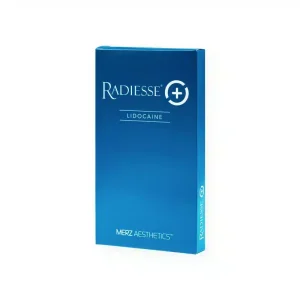
RADIESSE® (Merz Aesthetics) uses calcium hydroxylapatite (CaHA) microspheres in a CMC gel, a third biostimulatory chemistry. Like ELLANSÉ™, it delivers immediate volume from the gel carrier and then stimulates collagen as the carrier resorbs. RADIESSE® is CE-marked and FDA-approved for moderate to severe facial wrinkles and folds, dorsal hand volume loss and, at a 1:2 saline dilution, décolleté wrinkles. Hyperdiluted RADIESSE® is also widely used for skin quality. Theraset® gives no immediate structural lift, and its result comes entirely from delayed collagenesis.
RADIESSE® is the stronger option when a patient needs visible contour on the day of treatment. Theraset® is better suited when a purely biostimulatory PLLA effect is preferred.
Theraset® vs HArmonyCA™
HArmonyCA™ (Allergan Aesthetics, an AbbVie company) is a hybrid injectable, not a diluted CaHA product. Each pre-filled syringe combines cross-linked hyaluronic acid (20 mg/mL) with CaHA microspheres and lidocaine. The HA component provides immediate lift and volume, while the CaHA component stimulates collagen over the following months. It is indicated for midface volume and lifting of the mid and lower face, has been evaluated in post-marketing studies to 12 months, and is CE-marked but not FDA-approved. Only its HA fraction responds to hyaluronidase. Theraset® offers no immediate effect and no partial reversibility, but it provides a purely collagen-driven result in the subcutaneous plane.
Theraset® vs LANLUMA®
LANLUMA® (Sinclair Pharma) is a CE-marked PLLA biostimulator formulated with CMC and mannitol and designed with larger presentations for broad treatment areas. LANLUMA® V is used in the face and hands, and LANLUMA® X is used for body indications such as buttock enhancement, thighs and the appearance of cellulite. Both products rely on PLLA-driven collagen stimulation, but their formulations, product presentations and intended treatment applications differ.
Both products are biocompatible and biodegradable, and neither is reversible.
Theraset® vs NITHYA®
NITHYA® is a lyophilized injectable of purified equine type I collagen produced by Euroresearch Srl in Milan. It is not a polynucleotide product. Rather than relying on a foreign body response, NITHYA® supplies exogenous collagen that acts as a biomimetic scaffold and stimulus for fibroblasts, and it is used in superficial planes for skin quality, firmness and texture, with separate face and body presentations. NITHYA® uses purified equine collagen in treatments addressing tissue quality and facial aging, while Theraset® relies on PLLA-driven stimulation for gradual collagen formation and volume restoration. Their distinct materials and mechanisms may serve different clinical goals, although combined use requires individualized evaluation.
Where to Buy Theraset® — Verified Products at Doctor Medica
For more than 15 years, Doctor Medica has supplied licensed aesthetic practitioners with authentic injectables sourced through verified channels. Practitioners who order Theraset® wholesale here receive genuine Wizchem product, tiered pricing that improves with volume, and a professional support team that can help with account setup and order questions. Once your license has been verified, you can buy Theraset® online in a few steps and purchase Theraset® online with confidence in the integrity of the supply chain behind every vial.
Ordering is straightforward. Register a professional account, submit your license for verification, and once you are approved you can order Theraset® at the quantity you need, with per-unit pricing that improves at higher volume tiers. Shipping is handled with the temperature and documentation standards that aesthetic injectables require, and every vial is dispatched in the manufacturer’s original sealed packaging so LOT and expiry details are visible on receipt. Shipping timelines and routing options are confirmed with your account manager at the point of order.
Frequently Asked Questions
How does a PLLA biostimulator differ from a conventional hyaluronic acid filler?
Hyaluronic acid fillers provide volume primarily through the injected gel, whereas PLLA-based biostimulators rely on a gradual tissue response involving collagen formation. These differences influence treatment planning, expectations and how results are assessed over time.
What role do macrophages play in PLLA-related collagen formation?
Research involving injectable PLLA describes a local foreign-body response in which macrophages interact with other cells, including fibroblasts. These interactions contribute to signaling processes associated with new collagen deposition. The specific response may vary between formulations.
Why does collagen stimulation produce gradual rather than immediate results?
Collagen remodeling involves a biological process that develops over time. With PLLA-based treatments, the intended longer-term improvement comes from changes in the surrounding tissue rather than an immediately volumizing gel. This distinction is important when discussing treatment expectations.
What can SCULPTRA® studies tell practitioners about Theraset®?
SCULPTRA® studies provide useful evidence about injectable PLLA and its potential clinical effects. However, their findings do not automatically establish equivalent efficacy, duration or safety outcomes for Theraset®. Each formulation requires evaluation of its own supporting evidence.
Why is the listed 365 mg strength insufficient to describe the entire Theraset® formulation?
A labeled product strength does not necessarily explain every component of a formulation or its preparation requirements. Practitioners should consult Wizchem’s current documentation to confirm the active PLLA content, excipients and instructions associated with the Theraset® PLLA filler 365mg presentation.
Which patient factors matter when considering staged collagen stimulation?
Relevant considerations include the patient’s treatment goals, degree and distribution of volume loss, medical history, expectations and suitability for gradual improvement. Clinicians should also review the product’s listed contraindications before developing an individualized plan.
What factors may contribute to papules or nodules after PLLA treatment?
Papules and nodules are recognized adverse events associated with PLLA injectables. Product formulation, preparation, injection technique and patient-related factors may influence their development. Practitioners should follow the appropriate manufacturer instructions and assess suspected complications.
How should clinicians discuss treatment durability when Theraset®-specific evidence is limited?
Published PLLA studies offer general information about progressive improvement and potential treatment longevity. However, practitioners should distinguish these class-level findings from clinical evidence specific to Theraset® and avoid promising a fixed onset or duration without supporting product data.
Disclaimer
For licensed medical professionals only. This content is for informational purposes only and does not constitute medical advice.
Citations and Resources
[1] Avelar, Luiz Eduardo et al. “Unveiling the Mechanism: Injectable Poly-L-Lactic Acid’s Evolving Role-Insights From Recent Studies.” Journal of cosmetic dermatology vol. 24,1 (2025): e16635. doi:10.1111/jocd.16635
[2] U.S. Food and Drug Administration. “Summary of Safety and Effectiveness Data (SSED): Sculptra (P030050/S039).” U.S. Food and Drug Administration, 18 Apr. 2023, www.accessdata.fda.gov/cdrh_docs/pdf3/P030050S039B.pdf.
[3] Simamora, Pahala, and Wendy Chern. “Poly-L-lactic acid: an overview.” Journal of drugs in dermatology : JDD vol. 5,5 (2006): 436-40.
[4] de Melo, Francisco et al. “Recommendations for volume augmentation and rejuvenation of the face and hands with the new generation polycaprolactone-based collagen stimulator (Ellansé®).” Clinical, cosmetic and investigational dermatology vol. 10 431-440. 8 Nov. 2017, doi:10.2147/CCID.S145195
[5] Korea Expo. “WIZCHEM CO., LTD. : Brand Showcase 2024.” Korea Expo, Exporum Inc., en.k-expo.org/brand-exhibition-2024/?bmode=view&idx=21603922.
Written by Doctor Medica’s Editorial team
The content on this page has been written and fact-checked in accordance with our Editorial Policy. Clinical claims are sourced from peer-reviewed literature, regulatory documentation, and manufacturer specifications. Where citations are provided, it is always in accordance to our editorial standards.
Doctor Medica sources products exclusively through authorized distributors and established procurement channels. Products are verified as genuine, and supplied in the original packaging with their seal intact. Learn more about how we guarantee product authenticity, sourcing compliance, and traceable delivery to our clients.