Your Cart is Empty
Start shopping
According to the 2019 American Society for Dermatologic Surgery (ASDS) Consumer Survey, nearly 70% of consumers were considering a cosmetic procedure, driven by the desire to feel more confident, look more attractive, and maintain a youthful appearance. As interest in minimally invasive treatments continues to grow, Nabota Botox reviews can provide useful context on how patients and practitioners perceive treatment results, onset, tolerability, and overall satisfaction.
Nabota Botox, developed by Daewoong Pharmaceutical, is a botulinum toxin type A product designed to reduce wrinkles and fine lines. Known for its quick onset of action, high purity, and precise formulation, Nabota stands out as a compelling alternative to traditional Botox. It offers patients a refreshed and youthful look with reliable, long-lasting results.
This article will delve into the benefits and effectiveness of Nabota Botox, explore potential side effects, and highlight user experiences. We will provide insights into what sets Nabota apart and why it has become a preferred choice for those seeking facial rejuvenation.
Key Takeaways
- Nabota is a botulinum toxin type A product that has gained popularity in the aesthetic industry.
- It is known for its efficacy in reducing wrinkles and fine lines, with a safety profile comparable to Botox.
- Clinical studies and patient reviews have shown positive results, making Nabota a viable alternative to Botox for cosmetic treatments.
About: DoctorMedica is your trusted supplier of top-quality dermal fillers, viscosupplements, and more for your medical practice. We offer genuine products from leading brands at the lowest prices in the market.
Recommended products
Considering a Purchase?
Sign in to Explore Options.
What is Nabota?

Nabota is a botulinum toxin type A product developed by Daewoong Pharmaceutical. It is primarily used for cosmetic treatments to reduce the appearance of wrinkles, particularly forehead frown lines [1]. Approved by the FDA in 2019, Nabota has gained popularity for its quick onset of action, with noticeable improvements often seen within two to three days after injection.
Nabota works by blocking the release of acetylcholine, a neurotransmitter responsible for muscle contractions. By inhibiting this chemical messenger, Nabota causes temporary muscle relaxation, which helps to smooth out wrinkles and prevent new ones from forming. This mechanism is similar to that of other botulinum toxin products like Botox and Xeomin.
While both Nabota and Botox contain botulinum toxin type A as their active ingredient, there are some differences:
- Origin: Nabota is produced by Daewoong Pharmaceutical in South Korea, whereas Botox is developed by Allergan in the United States.
- Onset of Action: Nabota typically shows effects within two to three days, while Botox usually takes four to seven days.
- Formulation and Dosage: The two have different formulations and dosage units, which may influence their clinical efficacy and patient experiences.
Nabota vs Botox

When evaluating Nabota Botox reviews, it is important to distinguish individual patient experiences from controlled clinical evidence. Reviews may highlight factors such as onset, comfort, perceived longevity, and satisfaction, while clinical trials provide more structured comparisons of efficacy and safety. Several clinical studies have compared the efficacy and safety of Nabota vs Botox. One notable study found that Nabota was not inferior to Botox in treating glabellar lines, with both products showing similar effectiveness and safety profiles. Another phase III double-blind, randomized controlled trial involving 197 patients with post-stroke spasticity also confirmed that Nabota’s efficacy and safety were comparable to those of Botox [2].
Experts in aesthetic medicine have praised Nabota for its rapid onset of action and competitive pricing. Many practitioners find Nabota to be a reliable alternative to Botox, particularly for patients seeking quicker results. While Botox remains the gold standard, Nabota’s growing popularity is attributed to its comparable efficacy and cost-effectiveness.
Safety Profile of Nabota Compared to Botox
The safety profiles of Nabota and Botox are quite similar, with both products demonstrating a high level of safety in clinical trials. The experiences described in Nabota Botox reviews may also include temporary reactions such as injection-site discomfort, headache, bruising, or localized muscle weakness, although individual responses can vary. However, no significant differences in adverse effects have been observed between the two products. This makes Nabota a viable option for patients seeking an effective and safe botulinum toxin treatment.
Nabota Botox Reviews: Patient Experiences and Real-World Results
Nabota Botox reviews often focus on visible wrinkle reduction, how quickly results appear, treatment comfort, and overall satisfaction with the outcome. These experiences can complement clinical evidence by showing how treatment is perceived outside controlled study settings.
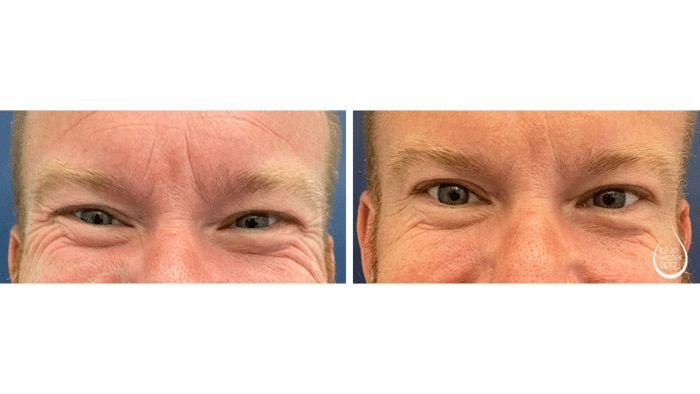
Image Courtesy of Blue Water Spa
Pronounced crow’s feet radiate from the corners of the eyes, making the face look older and less vibrant. The wrinkles are especially noticeable when smiling or squinting.
After the procedure, the wrinkles around the eyes have softened, creating a refreshed and more vibrant look. The overall facial expression appears younger, with smoother skin and diminished lines around the eyes.
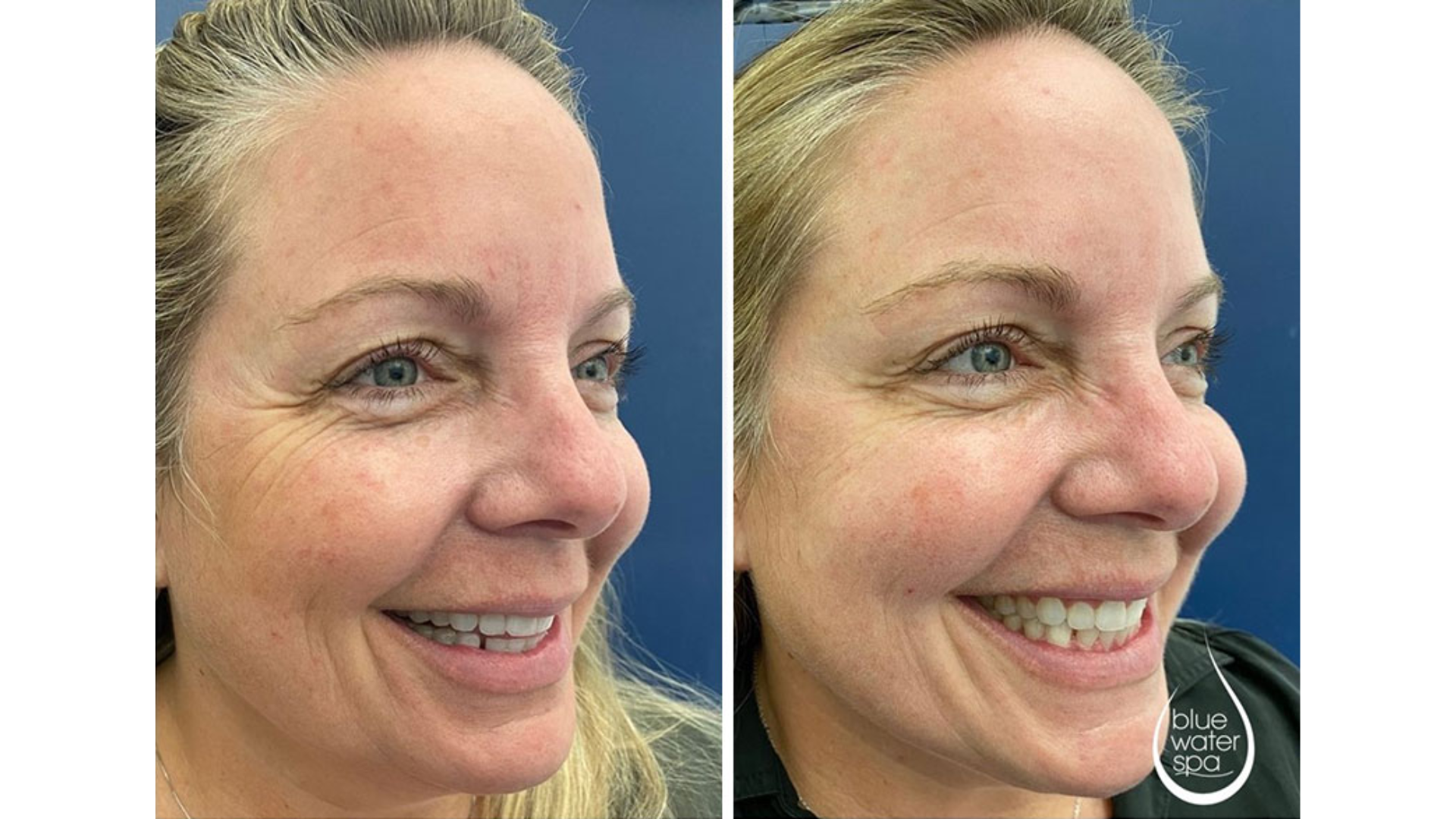
Image Courtesy of Blue Water Spa
Fine lines and wrinkles around the outer corners of the eyes, commonly known as crow’s feet, are visible when smiling or at rest. These creases contribute to an aged, tired appearance.
The crow’s feet are significantly reduced, giving the eye area a smoother and more youthful appearance. The skin around the eyes looks rejuvenated, with fewer lines visible, even during facial expressions.
Patients generally express satisfaction with Nabota. Numerous participants observed an improvement in their wrinkles 2 or 3 days post-treatment. Research indicates that more than 40% of patients experienced diminished pain up to 6 weeks after receiving Nabota for muscle pain concerns.
Conclusion
Nabota has proven to be an effective treatment for frown lines, gaining positive feedback from both clinical studies and patient experiences. With its quick onset of action and strong safety profile, many individuals notice visible improvements shortly after their treatments. As a strong alternative to Botox, Nabota continues to receive praise for delivering reliable and satisfying results.
For those seeking effective wrinkle reduction, Nabota is a promising choice in facial rejuvenation.
FAQs
1. What is Nabota?
Nabota is a botulinum toxin type A product developed by Daewoong Pharmaceutical, used primarily for reducing the appearance of wrinkles.
2. What do most reviews say about Nabota?
Most reviews highlight Nabota’s high patient satisfaction due to its natural-looking results, quick onset, minimal discomfort during injections, and cost-effectiveness.
3. How effective is Nabota?
Nabota is highly effective in reducing the appearance of wrinkles, with clinical studies showing results comparable to Botox.
Citations
[1] Song, Sinyoung, et al. “Safety, Efficacy, and Onset of a Novel Botulinum Toxin Type A (Nabota) for the Treatment of Glabellar Frown Lines: A Single-Arm, Prospective, Phase 4 Clinical Study.” Archives of Craniofacial Surgery, vol. 19, no. 3, 2018, pp. 168–174. https://doi.org/10.7181/acfs.2018.01886.
[2] Hwang, Wonjae, et al. “Efficacy and Safety of Botulinum Toxin Type A (NABOTA) for Post-Stroke Upper Extremity Spasticity: A Multicenter Phase IV Trial.” Annals of Rehabilitation Medicine, vol. 46, no. 4, 2022, pp. 163–171. https://doi.org/10.5535/arm.22061.
[3] American Society for Dermatologic Surgery. “ASDS Survey: Dermatologists and Digital Resources Influence Cosmetic Procedures and Skin Care Decisions.” American Society for Dermatologic Surgery, 15 Oct. 2019. https://www.asds.net/skin-experts/news-room/press-releases/asds-survey-dermatologists-and-digital-resources-influence-cosmetic-procedures-and-skin-care-decisions.
[4] Fabi, Sabrina, et al. “Facial Aesthetic Priorities and Concerns: A Physician and Patient Perception Global Survey.” Aesthetic Surgery Journal, vol. 42, no. 4, 2022, pp. NP218–NP229. https://doi.org/10.1093/asj/sjab358.
[5] Frevert, Jürgen, et al. “Comparison of Botulinum Neurotoxin Type A Formulations in Asia.” Clinical, Cosmetic and Investigational Dermatology, vol. 11, 2018, pp. 327–331. https://doi.org/10.2147/CCID.S160723
The content on this page has been written and fact-checked in accordance with our Editorial Policy. Clinical claims are sourced from peer-reviewed literature, regulatory documentation, and manufacturer specifications. Where citations are provided, it is always in accordance to our editorial standards.