Your Cart is Empty
Start shopping

Osteoarthritis pain, particularly in the knee, affects millions of people and can make everyday movement increasingly difficult.[1] For patients exploring hyaluronic acid injections, a common question is, “What is Euflexxa?” It is a non-avian sodium hyaluronate viscosupplement used to relieve knee osteoarthritis pain by improving lubrication and cushioning within the joint.
Euflexxa is generally considered when more conservative treatments, such as physical therapy, oral pain medication, or corticosteroid injections, have not provided sufficient relief. It is administered directly into the affected knee as a series of three weekly injections.
This article explains Euflexxa’s formulation, how it works, who may benefit from treatment, when patients might notice improvement, and how it compares with other injectable options.
Key Takeaways
- Euflexxa is an injectable hyaluronic acid product designed to provide relief for knee osteoarthritis by replenishing synovial fluid and improving joint lubrication.
- It increases viscosity in the joint, helping to reduce friction, improve shock absorption, and alleviate pain and stiffness.
- The product is non-steroidal, making it a favorable alternative for patients looking to avoid corticosteroids or surgery.
- Clinicians administer Euflexxa as a series of three weekly injections, with full benefits typically seen after 4-6 weeks.
- The treatment provides long-lasting relief, often for up to 6 months, making it a great option for those who need extended pain management.
- Euflexxa is generally safe for most patients, with minimal side effects, including mild swelling or bruising at the injection site.
- It is beneficial for patients with severe cartilage damage or who wish to delay knee replacement surgery.
- Compared to other injectables like PRP or corticosteroids, Euflexxa offers a clean, non-avian formulation, providing a gentler and more biocompatible solution.
About: Doctor Medica is your trusted supplier of top-quality dermal fillers, viscosupplements, and a range of medical and aesthetic products for your practice. We offer authentic products from leading brands at the lowest prices. Contact Doctor Medica today!
Recommended products
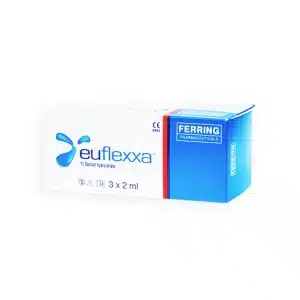

What Is Euflexxa? Composition and Formulation Insights
Because Euflexxa is supplied as a precisely formulated intra-articular injection, practices that order Euflexxa online need confidence that the product is authentic and has been handled appropriately throughout the supply chain.
Euflexxa contains sodium hyaluronate, a purified form of hyaluronic acid naturally found in synovial fluid. This viscous fluid helps lubricate and cushion the joints. In osteoarthritis, changes in the amount and quality of hyaluronic acid can contribute to increased friction, stiffness, and discomfort.
What sets Euflexxa apart from some other hyaluronic acid products is its non-avian, bioengineered origin. It is produced from bacterial cells rather than bird-derived sources, which may make it an appropriate option for patients with concerns about avian-derived ingredients. However, patients with a known hypersensitivity to hyaluronan preparations should not receive the treatment.
Euflexxa is injected directly into the knee joint, typically once a week for three consecutive weeks. Each prefilled syringe contains 2 mL of a 1% sodium hyaluronate solution, allowing the full dose to be administered during each treatment session.
Biomechanical and Biologic Effects
Euflexxa supplements the depleted hyaluronic acid in the knee’s synovial fluid. By increasing the viscosity of the fluid, it enhances joint lubrication and shock absorption, which can help reduce friction between the bones and improve the overall joint function. This results in less discomfort and stiffness, particularly after periods of inactivity.
Key biomechanical effects include enhanced lubrication, which improves joint mobility. It also reduces discomfort during daily activities, such as walking, bending, or standing. Additionally, by restoring the knee’s ability to absorb shock during weight-bearing activities, Euflexxa helps slow the progression of cartilage wear, protecting against further tissue damage.
While Euflexxa isn’t a cure for OA, it provides temporary pain relief that can last up to 6 months for many patients. This relief delays the need for more invasive procedures, such as knee replacement surgery, offering a non-invasive alternative for those seeking to improve functionality and quality of life.
Indication and Clinical Use Rationale

For patients asking “What is Euflexxa?”, its clinical role is straightforward: it is an FDA-approved viscosupplement for knee osteoarthritis when more conservative approaches have not provided adequate relief. It’s particularly useful when symptoms persist or worsen, and when a patient doesn’t need or want surgery.
Ideal candidates for Euflexxa include patients who show visible signs of cartilage thinning or joint space narrowing on their X-rays. Those who wish to avoid corticosteroids due to their long-term risks or previous side effects can also benefit from Euflexxa, which provides symptom relief without compromising the immune system.
Before beginning treatment, healthcare providers have their patients undergo an assessment to check the following:
- Severity
- Mobility limitations
- Overall health status
Hyaluronic acid injections are also used in some patients with advanced knee osteoarthritis before surgery. In a national claims analysis of patients who ultimately underwent total knee replacement, 14.7% received at least one hyaluronic acid injection during the 12 months before surgery.[3]
Euflexxa is particularly valuable for patients who are not yet ready for surgery but want to relieve pain and maintain joint function.
Onset and Duration of Benefit

Unlike corticosteroid injections, which often provide rapid pain relief, Euflexxa takes longer to show its full effects. Patients usually experience improvement after the second or third injection, with maximum therapeutic benefit generally achieved between 4 to 6 weeks after completing the treatment series.
The typical timeline is as follows:
- Weeks 1–2: Mild relief or no noticeable change.
- Weeks 3–4: Gradual reduction in joint stiffness and pain.
- Week 6 and beyond: Full therapeutic effect for most patients.
The relief can last up to 6 months, making Euflexxa an effective solution for those who require long-term pain management without the need for frequent injections.
Comparisons with Other Injectables
When considering Euflexxa for joint pain relief, it’s useful to compare it with other injectable treatments commonly used for knee osteoarthritis.[2] Corticosteroids, platelet-rich plasma (PRP), and other HA products all serve similar purposes but vary in mechanisms, duration of benefit, and patient preference.
- Euflexxa offers a non-steroidal, biocompatible option that provides gradual and lasting pain relief, without immune suppression.
- Corticosteroid injections provide rapid relief but may cause cartilage breakdown over time, especially with repeated use.
- PRP injections, which utilize the patient’s own blood to promote healing, may offer longer-term benefits but come with higher variability and require more invasive procedures.
- Other HA products may offer faster onset of relief but can come with risks like inconsistent quality.
Patients comparing these injectable options should also review Euflexxa side effects, including localized pain, swelling, bruising, or stiffness around the treated knee. Individual reactions can vary, so potential risks should be discussed with a qualified healthcare professional.
Conclusion
Answering “What is Euflexxa?” requires looking at both its composition and clinical purpose. It is a non-steroidal sodium hyaluronate injection designed to supplement the joint’s natural synovial fluid, improve lubrication, and provide gradual relief from knee osteoarthritis symptoms.
This sodium hyaluronate treatment is particularly suitable for patients who want an alternative to corticosteroids and who may not yet be candidates for knee replacement. Its ability to reduce pain, improve function, and provide long-lasting relief has made it a trusted solution in osteoarthritis management.
FAQs
1. What is Euflexxa made of?
Euflexxa contains sodium hyaluronate, a purified form of hyaluronic acid made through bacterial fermentation. It mimics natural joint fluid and is injected directly into the knee to restore cushioning and lubrication.
2. How many injections of Euflexxa do I need?
A complete course consists of three injections, given once per week for three consecutive weeks. This schedule optimizes pain relief and joint function over time.
3. What are the common side effects of Euflexxa?
Most side effects are mild and localized, such as swelling, pain, or stiffness at the injection site. Severe adverse reactions are rare.
4. Can I use Euflexxa with other arthritis treatments?
Yes, practitioners can combine Euflexxa with physical therapy, oral medications, and lifestyle changes. However, patients cannot get Euflexxa treatments with other intra-articular injections without a doctor’s approval.
Citations
[1] Wang, Yichen et al. “Global, regional, and national burden of osteoarthritis among middle-aged and older adults: estimates from the global burden of disease study 2021 and projections to 2050.” Frontiers in medicine vol. 12 1696929. 16 Dec. 2025, doi:10.3389/fmed.2025.1696929
[2] Ferring Pharmaceuticals Inc. Product Information: Euflexxa (1% Sodium Hyaluronate). U.S. Food and Drug Administration, www.accessdata.fda.gov/cdrh_docs/pdf/P010029S008c.pdf.
[3] Weick, Jack W et al. “Hyaluronic Acid Injections for Treatment of Advanced Osteoarthritis of the Knee: Utilization and Cost in a National Population Sample.” The Journal of bone and joint surgery. American volume vol. 98,17 (2016): 1429-35. doi:10.2106/JBJS.15.01358
The content on this page has been written and fact-checked in accordance with our Editorial Policy. Clinical claims are sourced from peer-reviewed literature, regulatory documentation, and manufacturer specifications. Where citations are provided, it is always in accordance to our editorial standards.