Your Cart is Empty
Start shopping


Learning how to reconstitute retatrutide is an important part of preparing lyophilized peptide material for controlled laboratory research. Retatrutide reconstitution requires an appropriate solvent, an accurate concentration calculation, aseptic handling, and validated storage conditions. This is a research-preparation reference, not a clinical dosing or administration guide.
This article covers bacteriostatic water, preparation calculations for 10mg, 20mg, and 30mg vials, basic reconstitution technique, and post-reconstitution storage. Licensed professionals with sourcing questions, including where to buy retatrutide for research preparation, can reach Doctor Medica’s staff for direction.
Key Takeaways
- The amount of bacteriostatic water used depends on the required research concentration, not on a fixed volume per vial size.
- Reconstitution calculations determine only the stock concentration and should never be interpreted as clinical doses.
- Storage duration must be supported by product-specific stability information rather than generic guidelines.
About: Doctor Medica is your trusted all-in-one supplier of high-quality medical injectables and supplies. We offer a worry-free experience in searching for the best and most popular products on the market, like retatrutide. Whether for health professionals, plastic surgeons, dermatologists, licensed estheticians, or other specialists, we can offer genuine, brand-name products you may need. With Doctor Medica, we prioritize serving you better to improve the patient’s quality of life.
What Is Bacteriostatic Water?
Bacteriostatic water is sterile water containing benzyl alcohol as an antimicrobial preservative. It is supplied in a multidose vial and may allow repeated withdrawals when handled correctly. [3]
The preservative limits bacterial growth but does not sterilize a contaminated vial. Aseptic technique remains necessary during every preparation and withdrawal. [3][4] Bacteriostatic water also should not be assumed suitable for every laboratory assay — researchers should confirm that the solvent and its preservative are compatible with the peptide, analytical method, and experimental model before proceeding.
How to Reconstitute Retatrutide 10mg
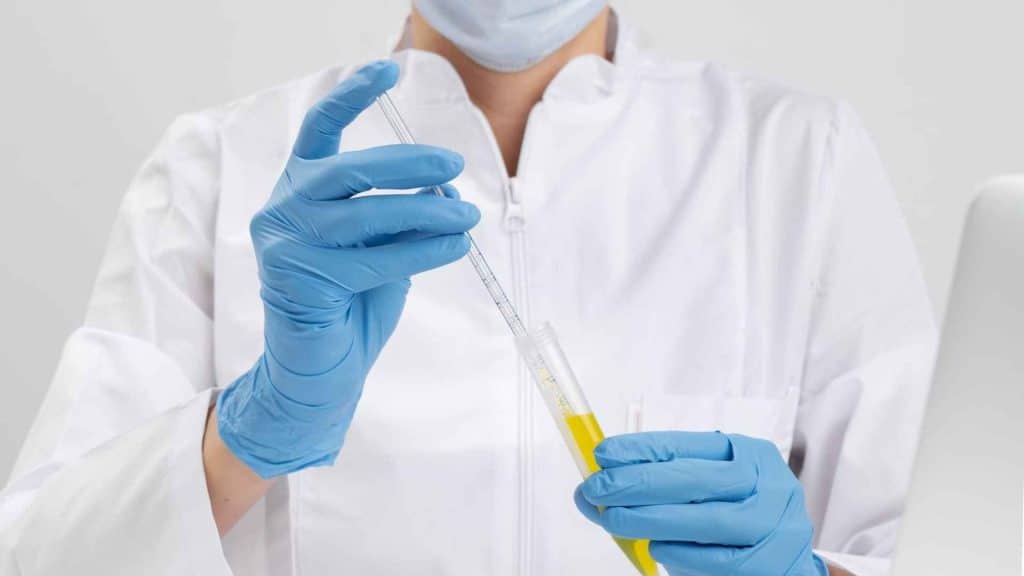
Before reconstituting a 10mg vial, determine the stock concentration required for the laboratory protocol. The volume of solvent added changes the resulting concentration; the total peptide content remains fixed at 10mg.
Concentration (mg/mL) = peptide quantity (mg) ÷ solvent volume (mL)
Retatrutide 10mg Research Concentration Chart
| BAC Water Added | Resulting Concentration |
| 1mL | 10mg/mL |
| 2mL | 5mg/mL |
| 4mL | 2.5mg/mL |
| 5mL | 2mg/mL |
Research preparation reference only. These calculations do not represent clinical doses.
Step-by-Step Research Preparation
- Begin by reviewing the product documentation to confirm the vial quantity, recommended solvent, storage requirements, and certificate of analysis. Calculate the solvent volume needed for the intended laboratory stock concentration before starting.
- Prepare a clean workspace and follow all institutional requirements for personal protective equipment and aseptic handling. Inspect the vial and diluent carefully, and do not use any container with visible damage, a compromised seal, or particulate matter in the solution.
- Disinfect both vial stoppers with an appropriate alcohol swab and allow them to dry completely.[4] Add the validated solvent slowly along the inner wall of the vial rather than directing it forcefully onto the powder.
- Gently swirl the vial until the material has dissolved; do not shake.[4]
- Inspect the finished preparation and label it immediately. Record the compound name, stock concentration, solvent, lot number, preparation date, and required storage conditions.
How Much BAC Water Is Used for 20mg and 30mg Vials?
The same formula applies when scaling to larger vial sizes. The table below summarizes common target concentrations across 10mg, 20mg, and 30mg vials.
| Vial Quantity | BAC Water for 10mg/mL | BAC Water for 5mg/mL |
| 10mg | 1mL | 2mL |
| 20mg | 2mL | 4mL |
| 30mg | 3mL | 6mL |
Research preparation reference only — not a clinical dosing guide. Confirm vial capacity and solvent compatibility before use.
The solvent volume should be calculated by dividing the peptide quantity by the intended stock concentration. For example, preparing a 30 mg vial at 10 mg/mL requires 3 mL of solvent, while a target concentration of 5 mg/mL requires 6 mL. These calculations describe laboratory stock concentrations only and should not be interpreted as injection volumes, dosing guidance, or treatment instructions.
Professionals researching retatrutide before and after body composition outcomes should note that preparation calculations are entirely separate from trial efficacy data — the solvent volume used in a laboratory vial has no bearing on the outcomes reported in clinical research.
What Does Research Context Tell Us About Reconstitution Practice?
Published Phase 2 trials describe the dose groups and schedules used in controlled research, but they do not provide instructions for reconstituting third-party 10 mg, 20 mg, or 30 mg vials.[1] Trial materials are manufactured and prepared under sponsor-controlled quality systems, so the published dosing data cannot determine how much bacteriostatic water to add, whether a particular diluent is compatible, or how long a separately sourced preparation will remain stable.
Retatrutide remains investigational and is not FDA-approved for clinical use.[2][5] Reconstitution practices should therefore rely on product-specific documentation and validated laboratory procedures rather than on inferences drawn from clinical trial publications.
How Long Does Retatrutide Last After Reconstitution? Stability and Storage Guidelines
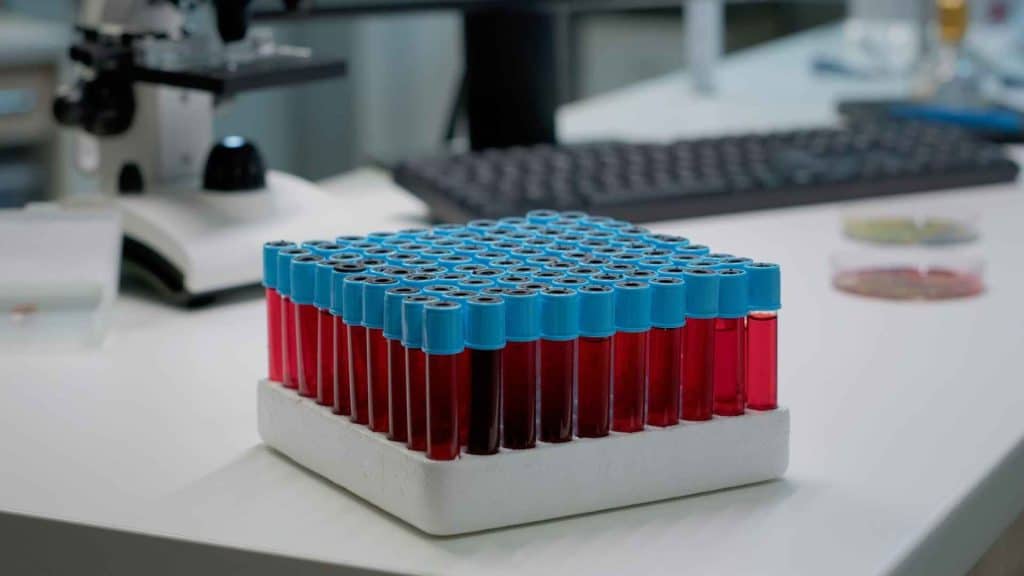
No single shelf life applies to every reconstituted retatrutide preparation. Stability can vary with the solvent, final concentration, storage temperature, light exposure, vial material, contamination controls, and frequency of access.
The commonly referenced 28-day limit for opened multidose vials comes from general infection-control guidance, not from retatrutide-specific chemical stability data.[4] It therefore should not be treated as proof that a reconstituted preparation remains pharmacologically intact for 28 days. Researchers should rely on product-specific technical documentation or validated internal stability studies rather than assign an unsupported two- or four-week shelf life.
Some peptide preparations are refrigerated at 2°C to 8°C, but this should not be presented as a universal storage requirement for retatrutide without supporting product data. Room-temperature exposure should be kept to a minimum and documented. Any preparation with an uncertain storage history, stability profile, or contamination status should not be used.
Common Reconstitution Errors and How to Avoid Them
Calculation and Handling
One of the most common errors is adding solvent without first calculating the volume needed for the intended stock concentration. Online charts can serve as a reference, but they do not replace checking the peptide quantity, target concentration, vial capacity, and solvent compatibility. It is also important to distinguish stock concentration from experimental dose. A concentration of 10 mg/mL, for example, indicates how much peptide is present in each milliliter of solution; it does not determine the amount required for a particular assay or procedure.
Vigorous shaking should be avoided because it can introduce foam and subject the peptide to unnecessary mechanical stress. Gentle swirling is generally preferred until the material has fully dissolved. The choice of solvent should also follow the specific protocol. Because bacteriostatic water contains benzyl alcohol, it may be unsuitable for certain cell lines or analytical methods.[3] In such cases, sterile water, an appropriate buffer, or another validated solvent may be required.
Storage and Documentation
Refrigeration alone does not guarantee chemical stability across a preparation’s usable life. Stability depends on concentration, light exposure, container material, repeated vial access, and temperature. Every vial entry should use a new sterile needle, syringe, or pipette tip — reusing equipment increases the risk of contamination. [4] Each prepared vial should also be labeled immediately after reconstitution with the compound name, final concentration, solvent and volume, lot number, preparation date, storage conditions, and assigned discard or retest date. Incomplete labeling leads to calculation errors and loss of sample traceability.
The contents of this page are meant for licensed medical professionals. They serve informational purposes only and are not to be taken as medical advice.
Citations
[1] Jastreboff AM, Kaplan LM, Frías JP, et al. Triple-Hormone-Receptor Agonist Retatrutide for Obesity – A Phase 2 Trial. N Engl J Med. 2023;389(6):514-526. doi:10.1056/NEJMoa2301972
[2] U.S. Food and Drug Administration. FDA’s concerns with unapproved GLP-1 drugs used for weight loss. Updated June 15, 2026. https://www.fda.gov/drugs/drug-alerts-and-statements/fdas-concerns-unapproved-glp-1-drugs-used-weight-loss
[3] Pfizer Medical Information. Bacteriostatic Water for Injection, USP: Description. https://www.pfizermedicalinformation.com/bacteriostatic-water/description
[4] Centers for Disease Control and Prevention. Preventing unsafe injection practices. Updated March 26, 2024. https://www.cdc.gov/injection-safety/hcp/clinical-safety/index.html
[5] U.S. Food and Drug Administration. FDA intends to take action against non-FDA-approved GLP-1 drugs. Published February 6, 2026. https://www.fda.gov/news-events/press-announcements/fda-intends-take-action-against-non-fda-approved-glp-1-drugs
The content on this page has been written and fact-checked in accordance with our Editorial Policy. Clinical claims are sourced from peer-reviewed literature, regulatory documentation, and manufacturer specifications. Where citations are provided, it is always in accordance to our editorial standards.