Your Cart is Empty
Start shopping
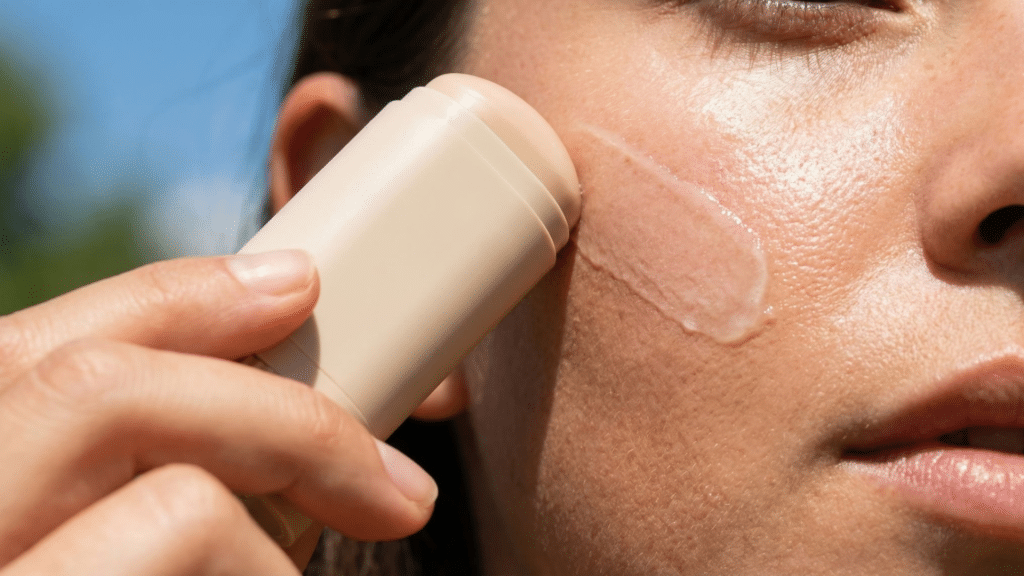
Korean Botox balm is a widely used term for a group of K-beauty balms designed to temporarily smooth, moisturize, and improve the appearance of fine lines in dry areas. These topical cosmetics are not injectable botulinum toxin products and should not be expected to produce botulinum toxin’s neuromuscular effects. Their formulas typically rely on emollients, waxes, oils, and other skin-conditioning ingredients rather than botulinum toxin or other neuromuscular agents.
This article explores what Korean Botox balm is as a cosmetic format, why it has attracted attention, which ingredients commonly appear in these formulas, and what beauty professionals should realistically expect from them.
Doctor Medica covers Korean Botox for licensed medical practices as an educational resource, and Korean Botox balm sits in a separate cosmetic category that this article addresses as an informational guide. Clinicians researching the injectable can consult dedicated resources on where to buy Korean botox wholesale in the Korean botulinum toxin category.
Key Takeaways
- Korean Botox balm is a topical cosmetic, not an injectable botulinum toxin treatment.
- Formulas generally focus on hydration, occlusion, emollience, and the temporary smoothing of dry or fine-textured skin.
- Ingredient lists and claims vary considerably by brand, so professionals should evaluate the individual INCI list rather than relying on the “Botox balm” name.
About: Doctor Medica is your trusted supplier of top-quality dermal fillers, viscosupplements, and more for your medical practice. We offer genuine products from leading brands at the lowest prices in the market. If you’re looking to buy Korean Botox for your practice, contact Doctor Medica today.
What Does “Korean Botox Balm” Actually Refer To?
Despite the name, Korean Botox balm is not a topical version of Botox. The U.S. Food and Drug Administration describes botulinum toxin products as injectable drugs that block nerve activity in muscles and temporarily reduce muscle movement.[6] A conventional moisturizing balm should not be expected to block nerve activity or reduce muscle movement like injectable botulinum toxin. Products marketed as Korean Botox balms should be evaluated by their individual ingredient lists, and the term itself does not establish that a product contains botulinum toxin.
Instead, the term refers to solid K-beauty balms promoted to moisturize areas where dryness, dullness, or fine dehydration lines are more noticeable. Depending on the product’s instructions, they may be applied around the forehead, eye area, mouth, cheeks, lips, or neck.
These products belong to the broader Korean multi-balm trend. Unlike a traditional cream or serum, the formula comes in a stick that can be applied directly to areas that need additional moisture. Products in this category commonly combine emollient oils, waxes, botanical extracts, humectants, and other skin-conditioning agents.[4]
In practice, the effect is closer to that of a rich moisturizing balm than to that of a neuromodulator. Added moisture and surface emollience may make dry skin look smoother and may make fine dehydration lines appear temporarily less noticeable.[3]
Which Ingredients Are Commonly Found in Korean Botox Balm?
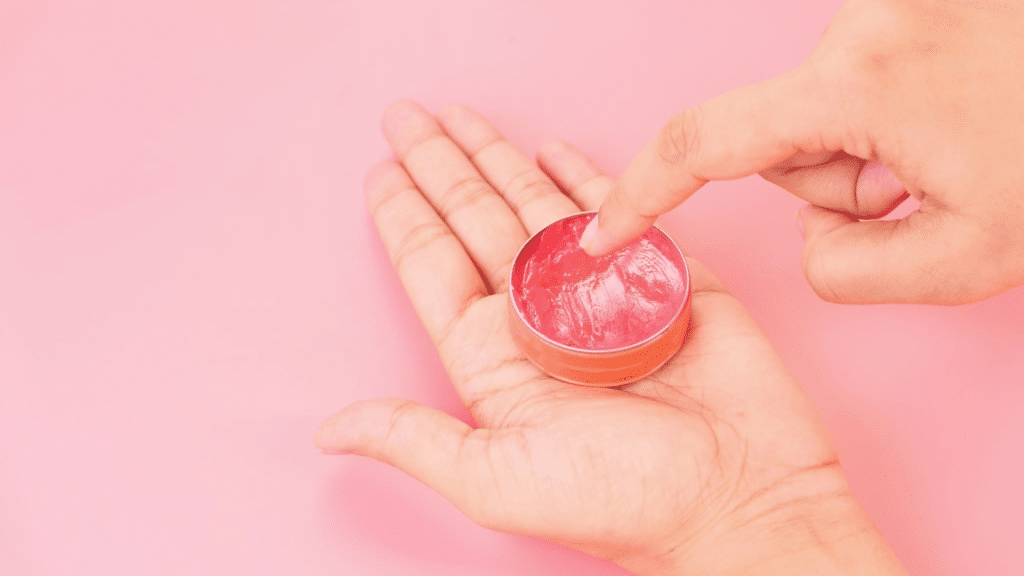
There is no universal formula for products described as Korean Botox balm, and ingredients can vary significantly by manufacturer. Professionals should therefore check the individual INCI list rather than assume that products marketed under the same label use comparable formulas.
Sunflower Seed Oil
Helianthus annuus sunflower seed oil is an emollient found in some Korean balm formulations. Its fatty acids contribute to its emollient properties, and research has examined sunflower seed oil in relation to skin hydration and barrier function.[2] In a balm, the oil can also contribute to the slip needed for the stick to glide smoothly over the skin.
Candelilla Wax and Shea Butter
Euphorbia cerifera candelilla wax is a structuring ingredient in solid balm products. It contributes firmness and helps the formula maintain a solid, spreadable form in a twist-up stick.
Butyrospermum parkii shea butter serves a different formulation role. It is a lipid-rich emollient commonly used to soften dry skin and improve the feel of the product. Plant-derived oils and butters have been studied for potential roles in supporting skin-barrier function, although effects depend on the specific ingredient, formulation, and application.[3]
Polyglyceryl-2 Triisostearate
Polyglyceryl-2 triisostearate is primarily a formulation and skin-conditioning ingredient. In an oil-based balm, it may help support texture and the distribution of the formula’s components.
This is an important reminder when reading ingredient lists. Not every chemically complex ingredient name represents an active treatment ingredient; some components primarily support the texture, stability, or application of the formula.
Carrot and Fruit Extracts
Some multi-balms contain carrot-derived ingredients, such as Daucus carota sativa seed oil or root extract. KAHI’s Multi Balm Stick also lists botanical ingredients including gardenia, schisandra, and Caesalpinia spinosa fruit extract.[1]
These botanical components are primarily included for skin-conditioning purposes, although their concentrations and practical significance vary by formulation.
Lithospermum Erythrorhizon Root Extract
Lithospermum erythrorhizon root extract is another botanical found in some Korean balm formulas. Research on cosmetic formulations containing this extract has reported moisturizing effects, although those findings should not automatically be generalized to every balm containing the ingredient.[4] Ingredient concentration, vehicle composition, and the overall formulation can influence the observed cosmetic effect.
Licorice Root Extract
Licorice-derived ingredients, including Glycyrrhiza glabra root extract, appear in many skincare products. Licorice-derived compounds have been studied particularly for their relationship to pigmentation and skin-brightening applications.[5]
This evidence should not be read as a claim that any individual balm treats pigmentary disorders.
Apple Seed Oil and Prunus-Derived Oils
Some formulas use Pyrus malus (apple) seed oil, which is a lipid ingredient rather than a conventional fruit extract. Others include Prunus ingredients, such as Prunus amygdalus dulcis (sweet almond oil). These oils can contribute to emollience and the balm’s spreadability.
Together, the oils, butters, waxes, extracts, and conditioning agents in these formulas can account for much of the immediate cosmetic effect associated with the category. The result may be softer, smoother, and more luminous-looking skin, not a change in the underlying facial musculature.
Korean Botox Balm Sticks and Multi-Balm Formats
Depending on the product’s instructions, a balm stick may be applied around the eye area, forehead, cheeks, lips, or neck. It should not be applied directly into the eyes.[1] Compared with jar or bottle products, the stick format makes targeted reapplication more convenient.
Multi-balms are similarly used to add moisture and create a smoother-looking finish on dry or creased areas.
What Is a Wrinkle Bounce Multi Balm?
KAHI’s Multi Balm Stick is marketed with the “Wrinkle Bounce” name. Its published formula includes sunflower seed oil, candelilla wax, shea butter, botanical extracts, hydrolyzed collagen, adenosine, soluble proteoglycan, and sodium DNA, among other cosmetic ingredients.[1]
The “wrinkle bounce” phrasing reflects cosmetic positioning rather than a measured biomechanical property. Its visible effects mainly come from moisturization, emollience, and temporary surface smoothing.
What Can Korean Botox Balm Realistically Do?
These products may provide a temporary cosmetic effect, but not a Botox-like neuromuscular effect. They should not be expected to weaken facial muscles or reproduce the neuromuscular effects of injectable botulinum toxin.[6] Their oils and emollients can help moisturize and soften dry skin, which may make fine dehydration lines look temporarily less prominent.[3]
Users who like these products commonly describe the following cosmetic effects:
- Softer, more hydrated skin.
- A dewy finish.
- Temporarily smoother-looking fine dehydration lines.
- Convenient reapplication throughout the day.
Why Did Korean Botox Balm Go Viral?
The format attracted attention because it combines a portable stick design with an immediately glossy, moisturized finish that is easy to apply and demonstrate in beauty content.
KAHI’s Multi Balm Stick (Original) is one example of the format. Its published ingredient list includes oils, waxes, botanical extracts, hydrolyzed collagen, adenosine, soluble proteoglycan, and sodium DNA, and it does not list botulinum toxin.[1]
How Do Korean Botox Balm Options Differ?
KAHI offers a Multi Balm Stick that is associated with this product format.[1] Other Korean beauty companies also offer balm-style products marketed for concerns such as hydration, radiance, firmness, eye-area care, or the appearance of wrinkles. The best Korean Botox balm for a particular user depends more on formula, texture, finish, and ingredient tolerance than on the marketing label alone.
What About Korean Botox Balm NIDA?
NIDA also appears in searches related to Korean Botox balm, although product names and catalog availability may change over time. Professionals should check NIDA’s current official catalog rather than relying on search terms or third-party descriptions.
NIDA’s catalog includes products marketed for skincare concerns such as hydration, fine lines, and overall skin appearance.[7]
What Is the Best Korean Botox Balm?
The most suitable Korean Botox balm depends on the user’s skin concerns, preferred texture, and tolerance for specific ingredients. Rather than focusing on the “Botox” marketing label, beauty professionals can compare formulas based on:
- Dryness: emollient oils, butters, and occlusive ingredients.
- Fine dehydration lines: moisturizing and film-forming ingredients.
- Sensitive skin: fragrance, botanical extracts, and other potential irritants.
- Makeup compatibility: whether the finish is lightweight, glossy, or heavy.
- Portability: stick packaging for convenient targeted reapplication.
The term “Botox balm” should therefore be understood as cosmetic marketing terminology, not as evidence that a product contains botulinum toxin. The best option matches the user’s skin type, routine, preferred finish, and ingredient tolerance while keeping expectations within what a topical cosmetic can realistically provide.
Where Does Korean Botox Balm Fit in a Skin Care Routine?
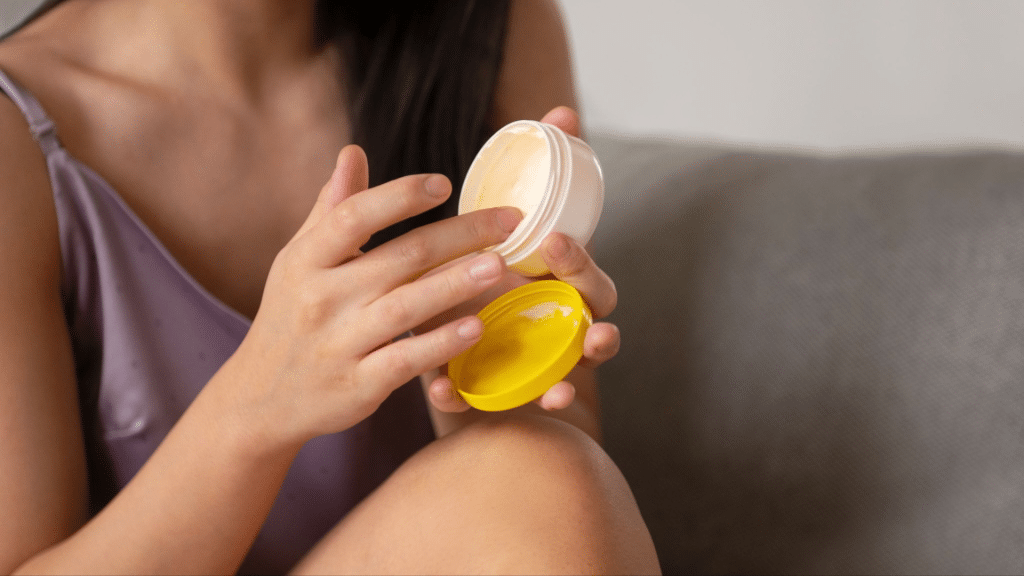
Korean Botox balm is generally used as a targeted moisturizing step rather than as the foundation of a skincare routine. If the product’s instructions allow, apply it after lighter skincare products to areas where dryness or fine dehydration lines are more noticeable, such as around the mouth, forehead, or neck. Use additional caution around the eye area.
Because these formulas can contain substantial amounts of oils, waxes, and emollients, users may prefer to apply them sparingly, particularly when layering them with makeup. Too much may feel heavy or interfere with makeup, especially on oilier skin types.
Professionals comparing topical formats can also review Korean botox serum products, which may offer a lighter-feeling alternative to a solid balm, depending on the formula.
For licensed medical professionals only. This content is for informational purposes only and does not constitute medical advice.
Citations
[1] KAHI. “Multi Balm Stick (Original).” KAHI Official Store, kahicosmetics.com/products/wrinkle-bounce-multi-balm-9g.
[2] Lim, Heng Chee et al. “Mechanistic insights and clinical evidence of Helianthus annuus Linn. (Sunflower) seed oil for dermatological applications: A narrative review.” Drug delivery and translational research vol. 15,11 (2025): 4260-4276. doi:10.1007/s13346-025-01939-0
[3] Lin, Tzu-Kai et al. “Anti-Inflammatory and Skin Barrier Repair Effects of Topical Application of Some Plant Oils.” International journal of molecular sciences vol. 19,1 70. 27 Dec. 2017, doi:10.3390/ijms19010070
[4] Chang, Man-Jau et al. “Cosmetic formulations containing Lithospermum erythrorhizon root extract show moisturizing effects on human skin.” Archives of dermatological research vol. 300,6 (2008): 317-23. doi:10.1007/s00403-008-0867-9
[5] Hollinger, Jasmine C et al. “Are Natural Ingredients Effective in the Management of Hyperpigmentation? A Systematic Review.” The Journal of clinical and aesthetic dermatology vol. 11,2 (2018): 28-37.
[6] U.S. Food and Drug Administration. “FDA Warns Companies Over Illegal Marketing of Botox and Related Products.” U.S. Food and Drug Administration, 5 Nov. 2025, www.fda.gov/news-events/press-announcements/fda-warns-companies-over-illegal-marketing-botox-and-related-products.
[7] NIDA. “Products.” NIDA, nida.co/collections/all.
The content on this page has been written and fact-checked in accordance with our Editorial Policy. Clinical claims are sourced from peer-reviewed literature, regulatory documentation, and manufacturer specifications. Where citations are provided, it is always in accordance to our editorial standards.