Your Cart is Empty
Start shopping

Viscosupplementation is a proven treatment for knee osteoarthritis (OA). It offers relief by injecting a gel-like substance into the joint to restore lubrication and reduce pain. According to the World Health Organization, OA affects over 70% of people older than 55, making effective solutions like viscosupplements essential for managing symptoms.
Durolane is a leading viscosupplement designed to improve joint movement and alleviate discomfort. Formulated with hyaluronic acid and advanced technology, it is often recommended for patients who have not found relief through medications or physical therapy.
In this article, we will explore the recommended Durolane dosage, its prescribing guidelines, and key details to help you better understand its role in treating knee osteoarthritis.
Key Takeaways
- Durolane is a single-injection viscosupplement that can treat knee osteoarthritis (OA). It provides relief by restoring joint lubrication and reducing pain.
- One 3 mL injection per affected knee is typically sufficient, offering pain relief and improved mobility for up to six months. If necessary, re-injections are recommended only after six months.
- Durolane is administered intra-articularly into the knee joint under sterile conditions, with ultrasound guidance recommended for precise needle placement.
- Patients with joint infections, skin conditions near the injection site, or known allergies to hyaluronic acid should avoid Durolane.
About: Doctor Medica is your trusted supplier of top-quality dermal fillers, viscosupplements, and a range of medical and aesthetic products for your practice. We offer authentic products from leading brands at the lowest prices. Contact Doctor Medica today!
Recommended products
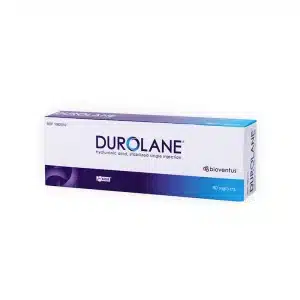


Recommended Dosage Schedule for Durolane Injections
When considering Durolane for knee osteoarthritis, it’s essential to understand the recommended dosage and treatment schedule. This helps ensure the best possible relief and minimizes risks. Below are the critical details about how Durolane is administered and how frequently it can be used [1].
- Initial Dosage: A single injection of 3 mL of Durolane is administered directly into the affected joint. This is usually sufficient for providing relief for up to six months.
- Additional Treatments: Unlike other treatments that may require multiple sessions over several weeks, Durolane’s high concentration of hyaluronic acid allows for effective pain relief with just one injection
- Frequency of Injections: Durolane can provide relief for up to six months following a single injection. Re-injections typically follow six months after the initial dose, depending on the patient’s symptoms and response to treatment.
A single-injection schedule may also make Durolane easier to work into long-term osteoarthritis management, particularly for patients who want to limit repeat appointments. When practices buy Durolane online, the value lies not only in the product itself but also in how its dosing schedule fits patient follow-up, symptom monitoring, and overall treatment planning.
Injection Sites for Durolane Administration

Practitioners typically administer Durolane via intra-articular injection into the knee joint. It is indicated for the treatment of pain associated with knee osteoarthritis. The injection should directly enter into the synovial space of the knee to ensure proper medication distribution [2].
Injection Technique
- Preparation: Ensure the injection site is clean and free from infection. Use aseptic techniques to prevent contamination.
- Positioning: The patient should be positioned comfortably, typically lying on their back with the knee slightly bent. This position allows for easier access to the joint space.
- Needle Insertion: To minimize discomfort, practitioners typically use a fine-gauge needle. The needle then targets the joint space, usually at the superolateral or anterolateral aspect of the knee.
- Injection: Slowly inject the Durolane solution into the joint space. Monitor for any signs of resistance, which may indicate incorrect needle placement.
- Post-Injection Care: After the injection, doctors may advise patients to rest the knee and apply ice to reduce any potential swelling.
Precautions and Guidelines for Durolane Dosage

Before prescribing Durolane, a thorough patient assessment can confirm that the pain stems from knee osteoarthritis, not another condition. Durolane works best for patients without sufficient relief from treatments like physical therapy or pain medications. Doctors should also check for skin infections or diseases near the injection site, as these can interfere with safe administration [3].
Those with a history of allergies or adverse reactions to hyaluronic acid or similar medications should inform their doctor before treatment. Discussing potential side effects and post-treatment monitoring helps ensure the injection is safe and appropriate. Patients who are exploring treatment options may compare Durolane vs Synvisc to understand the differences in composition and effectiveness and determine which treatment better aligns with their needs.
Older adults may require additional care when receiving Durolane injections, as they may experience slower healing or increased sensitivity to side effects. Close monitoring and tailored treatment plans can help minimize risks and maximize the benefits of viscosupplementation in this population.
Contraindications and Interactions with Other Medications

Patients with active joint infections, skin infections near the injection site, or systemic infections are not suitable patients for Durolane. Additionally, individuals with known hypersensitivity to hyaluronic acid or any component of the injection should avoid this treatment.
Those who want to get Durolane injections should also exercise caution if they are using anticoagulants (blood thinners) or immunosuppressive medications, as these may increase the risk of complications. Patients should inform their doctor of all current medications to ensure no potential interactions could affect the injection’s safety or efficacy.
Conclusion
Durolane injections are a convenient and effective treatment for knee osteoarthritis, providing long-lasting pain relief and improved joint function. Proper patient evaluation, adherence to injection guidelines, and consideration of individual needs ensure safe and successful outcomes.
With its advanced formulation, Durolane continues to play a vital role in the non-surgical management of OA symptoms.
FAQs
1. How often can a patient receive Durolane?
Durolane can provide relief for up to six months. Re-injections are generally recommended no sooner than six months after the initial dose.
2. Are there any side effects of Durolane?
Common side effects include temporary swelling, pain, or redness at the injection site, which typically resolve within a few days.
3. Who should not use Durolane?
Patients with active joint infections, skin conditions near the injection site, systemic infections, or allergies to hyaluronic acid should avoid Durolane injections.
4. How is Durolane different from other viscosupplements?
Durolane is a single-injection treatment that offers long-lasting relief, making it a convenient option compared to multi-injection therapies.
Citations
[1] World Health Organization. “Osteoarthritis.” World Health Organization, 14 July 2023, https://www.who.int/news-room/fact-sheets/detail/osteoarthritis.
[2] Peck, James, et al. “A Comprehensive Review of Viscosupplementation in Osteoarthritis of the Knee.” Orthopedic Reviews, vol. 13, no. 2, 2021, article 25549. https://doi.org/10.52965/001c.25549.
[3] “Durolane Injection: Uses, Side Effects & Warnings.” Drugs.com, 14 Aug. 2023, https://www.drugs.com/mtm/durolane-injection.html. Accessed 18 Nov. 2024.
The content on this page has been written and fact-checked in accordance with our Editorial Policy. Clinical claims are sourced from peer-reviewed literature, regulatory documentation, and manufacturer specifications. Where citations are provided, it is always in accordance to our editorial standards.