Your Cart is Empty
Start shopping

If you follow current events, you’ll notice that the Ozempic craze is far from ending its trending cycle. Celebrities enter red carpet events flaunting their reinvented appearances, tabloids dissect every trace of possible Ozempic use in public figures, and patients from all walks of life—now backed by real-life experiences from their peer group—are begging for a chance to try this miracle solution for weight loss.
From that, a new side effect of GLP-1 receptor drugs has emerged: sagging skin in the buttocks area, and the big question of how to fix the “Ozempic butt.” Read on with Doctor Medica and discover the solution with us.
Key Takeaways
- “Ozempic butt” is a colloquial term that describes the sagging of the skin of the buttocks area as a result of rapid weight loss, often connected to the use of GLP-1 receptor drugs, the most popular of which is Ozempic.
- Factors that can lead to the loss of volume and elasticity in the buttocks area of patients, apart from rapid weight loss, include: age, severity and duration of obesity, and genetics.
- Preventative measures that will help minimize the “Ozempic butt” include: a gradual weight loss regimen, a balanced diet, muscle-building exercises, and skin moisturizing.
- “Ozempic butt” treatments include: biostimulators and dermal fillers like Radiesse and Sculptra, skin tightening procedures, and surgical options like implants, skin excision, and a Brazilian Butt Lift.
What is the Ozempic Butt?
You’ve heard the term: Ozempic face, and now it’s time for Ozempic butt. “Ozempic butt” refers to the loss of volume and elasticity in the buttocks area, leading to a sagging or flattened appearance. This change is primarily due to the rapid reduction of subcutaneous fat, which the skin cannot adapt to quickly enough, resulting in excess or loose skin.
While GLP-1 receptor drugs don’t lead to the side effect of these “Ozempic buttocks”, the fact that rapid weight loss contributed to their use can cause sagging skin; the term, usually used in online conversation, is becoming a norm in describing this condition.
That said, other factors that can lead to “Ozempic butt” include:
- Severity and duration of obesity in patients, as this can minimize the skin’s ability to retract
- Age of patients, as skin loses its elasticity naturally over time
- Genetics, as it can influence the body’s response to weight loss
Before you begin treating patients, make sure to explore their medical histories and lifestyle choices to create the best possible regimen. Furthermore, before you order dermal fillers online, it’s worth noting that Ozempic is not an aesthetic facial or body injection. Ozempic contains semaglutide, a GLP-1 receptor agonist that can influence glucose regulation and appetite, making it important to understand its clinical profile.
Finding Solution: How to Fix Ozempic Butt
While it’s important to note that not every patient undergoing weight loss will experience the so-called “Ozempic butt”, many doctors agree on one key message: the best treatment is prevention. With this, most patients may ask their providers how to fix Ozempic butt side effect.
Tips for “Ozempic Butt” Prevention
Whether your patient is losing weight through medication, diet, or lifestyle changes, the following recommendations can help minimize the risk of sagging skin and volume loss in the buttocks area:
- Encourage gradual weight loss: Rapid fat loss increases the chance of skin laxity, particularly in areas with naturally less muscle mass and support. A slower, steady approach gives the skin a better chance to adapt.
- Support a balanced, nutrient-rich diet: Even if appetite is suppressed, it’s essential to maintain protein intake and supply the body with vitamins and minerals that support skin elasticity and collagen production.
- Introduce resistance training: Building muscle in the glutes not only helps replace some of the lost volume but also improves circulation, skin quality, and overall firmness.
- Promote daily skin hydration: A combination of topical moisturizers, body oils, and sometimes even in-office skin hydration treatments can support the skin barrier and improve resilience.
Non-surgical “Ozempic Butt” Treatments
In the case where the Ozempic butt is already present, aesthetic medicine offers a range of procedures that can improve skin texture, restore volume, and enhance the contour of the buttocks—offering effective solutions to the increasingly common question: how to fix the “Ozempic butt”?
Non-surgical treatments include:
- Biostimulators: Injectables like Sculptra or Radiesse can restore lost volume and stimulate collagen production over time with proper administration, like the diamond injection technique. These products not only provide a subtle lift but also improve skin thickness and elasticity, with results that develop gradually and look natural.
- Skin tightening procedures: Ultrasound-based treatments or radiofrequency therapies can stimulate collagen deep within the dermis, helping to firm and tighten the skin. These methods are especially effective when combined with injectables.
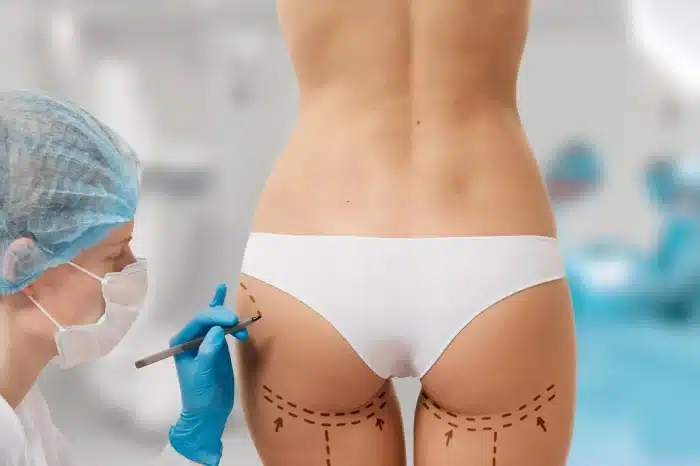
Surgical “Ozempic Butt” Treatments
Surgical options are available, but are often reserved for more severe cases:
- Skin excision: This is a surgical removal of excess skin, often used in cases of extreme sagging following massive weight loss. Recovery can be significant, and scarring is a consideration.
- Buttock implants: A more invasive option involving the insertion of silicone implants. While it provides volume, it carries higher risks and isn’t always compatible with a natural body shape.
- Brazilian Butt Lift (BBL): This procedure involves fat transfer from other areas of the patient’s body into the buttocks. While popular, it requires a sufficient amount of donor fat, which many GLP-1 users no longer have.
With these treatments, practitioners and patients may often wonder what’s the best way to fix Ozempic butt.
While surgery can offer a definitive solution for some, it comes with a long list of caveats—prolonged downtime, anesthesia risks, and the potential for overcorrection. Many patients simply aren’t good candidates for surgery, or they want results without going under the knife.
That’s where non-surgical treatments come in. Dermal fillers and biostimulators offer a highly customizable, low-risk way to restore volume, firm the skin, and rebuild lost confidence. When done by experienced providers, the results are subtle yet impactful, enhancing the body’s natural contours without the need for drastic intervention.
In clinical practice, these minimally invasive options have become the go-to solution for treating Ozempic butt, offering patients a safe and effective way to look as good as they feel.
Fixing “Ozempic Butt” With Non-Surgical Solutions
Non-surgical treatments for “Ozempic butt”, such as dermal fillers and biostimulators, have quickly become the preferred choice among both patients and practitioners. Their main advantage lies in the combination of safety, subtlety, and minimal downtime.
Products like Sculptra (a poly-L-lactic acid filler), Radiesse (a calcium hydroxylapatite-based option), HYAcorp (a hyaluronic acid filler), and other body sculpting solutions not only add volume but also stimulate the skin’s natural collagen production, leading to gradual and long-lasting improvement in firmness and elasticity. All these can be found on Doctor Medica.
Most patients require a series of treatments spaced a few weeks apart, with results typically lasting between 18 and 24 months, depending on the product used, lifestyle factors, and individual response.
Side effects are generally mild and may include temporary swelling, bruising, tenderness, or firmness at the injection site.
When administered by experienced providers, these treatments offer natural-looking results that can be tailored to each patient’s body and aesthetic goals, without the risks and recovery time associated with surgery.
Conclusion
As the use of GLP-1 receptor agonists like Ozempic continues to grow, so does the need for comprehensive aesthetic support.
While not a medical term, the Ozempic butt is a very real concern for patients who’ve experienced dramatic body changes in a short time.
Thankfully, modern aesthetic medicine offers highly effective, non-surgical solutions that can restore volume, improve skin quality, and help patients feel more comfortable in their changing bodies.
By focusing on prevention, education, and minimally invasive treatments like biostimulators and dermal fillers, providers can confidently answer the question of how to fix Ozempic butt and deliver results that are safe, subtle, and satisfying.
For more information on how to fix Ozempic butt with products and options tailored to your practice, practitioners may browse the brands and categories of Doctor Medica to guide them for their safe and effective options.
FAQs
1. Does Ozempic affect your buttocks?
The use of Ozempic and similar drugs does not affect one’s buttocks directly, but can lead to rapid weight loss, which causes skin sagging and loss of volume in certain body areas.
2. What is “Ozempic butt”?
“Ozempic butt” is a colloquial term describing a visible lack of volume and elasticity in the buttocks area, usually attributed to the use of the Ozempic drug.
3. How to avoid “Ozempic butt” from happening?
With moderate weight loss, a balanced diet, exercise, and moisturization, one can help reduce the possibility of the “Ozempic butt” appearing.
4. How to fix “Ozempic butt”?
There are surgical and non-surgical treatments available for all those wishing to restore the quality of the skin and the appearance of the buttocks area.
Citations
[1] Ellis, Rachel Reiff. “What Is Ozempic Butt?” WebMD, 12 July 2024, www.webmd.com/obesity/what-is-ozempic-butt.
[2] O’Neill, Elizabeth S., et al. “Injectable Weight Loss Medications in Plastic Surgery: What We Know, Perioperative Considerations, and Recommendations for the Future.” Plastic & Reconstructive Surgery Global Open, vol. 12, no. 1, Jan. 2024, p. e5516. https://doi.org/10.1097/gox.0000000000005516.
[3] Wirth, Peter J., et al. “Current Weight Loss Medications: What Plastic Surgeons Should Know.” Aesthetic Surgery Journal, vol. 44, no. 2, Sept. 2023, pp. NP177–83. https://doi.org/10.1093/asj/sjad304.
[4] Drugs.com. “How Do You Avoid Ozempic Butt?” Drugs.com, 5 Feb. 2026, www.drugs.com/medical-answers/how-you-avoid-ozempic-butt-3577365.
[5] McBratney, Susan, PhD. Does Ozempic Affect Your Buttocks? What to Know About “Ozempic Butt.” 14 July 2025, www.medicalnewstoday.com/articles/drugs-ozempic-butt#before-starting-ozempic.
[6] Grace, Asia. “‘Ozempic Butt’ Leaves Ladies Feeling ‘deflated’ Ahead of Beach Season: ‘I’ve Got Ghost A–.’” New York Post, 10 May 2024, nypost.com/2024/05/10/lifestyle/ozempic-butt-latest-side-effect-of-popular-weight-loss-drug.
[7] Miller, Korin. “What Is ‘Ozempic Butt’ and Why Does This Side Effect Happen?” Prevention, 26 June 2023, www.prevention.com/health/a44316429/ozempic-butt-side-effects.
The content on this page has been written and fact-checked in accordance with our Editorial Policy. Clinical claims are sourced from peer-reviewed literature, regulatory documentation, and manufacturer specifications. Where citations are provided, it is always in accordance to our editorial standards.