Your Cart is Empty
Start shopping

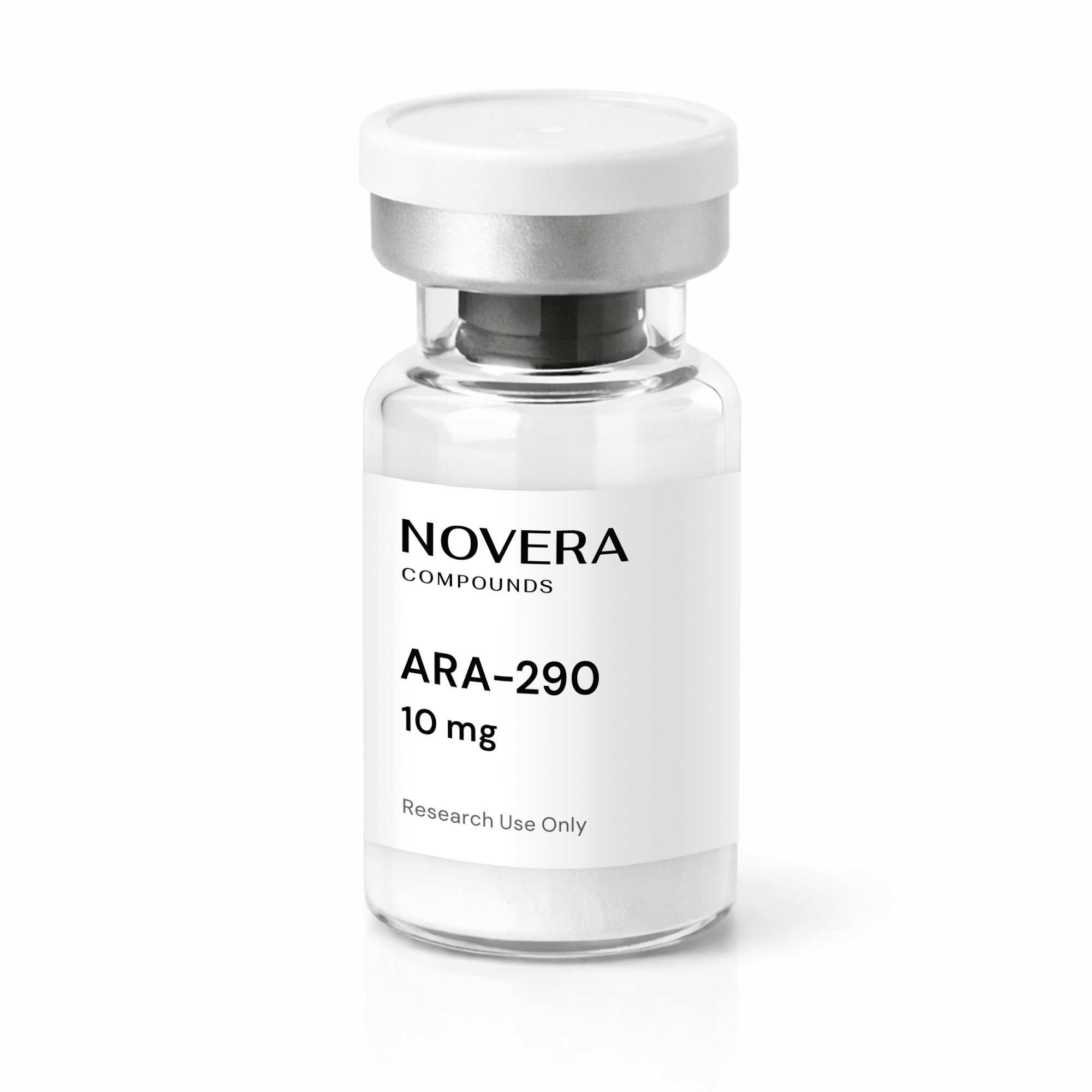
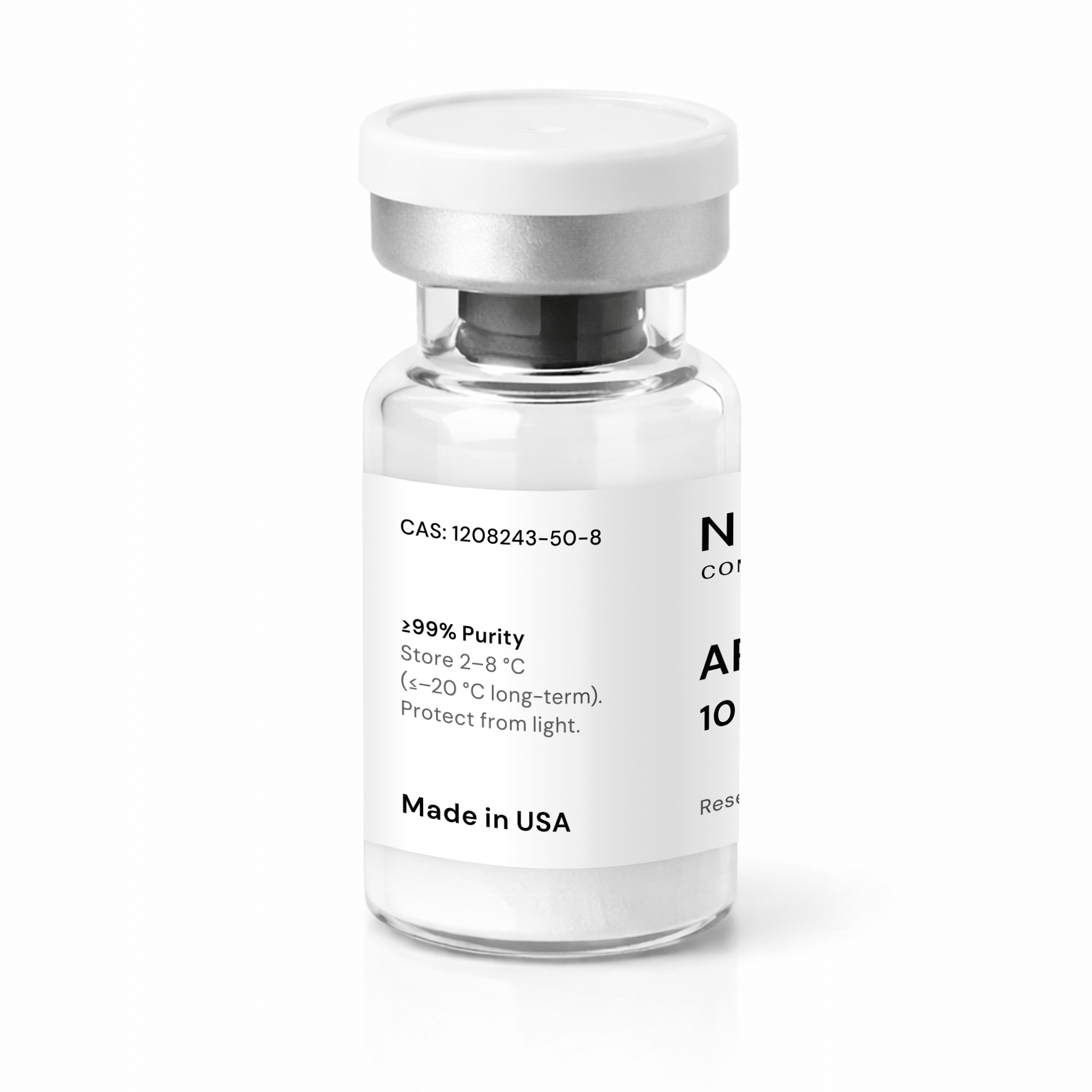
ARA-290 10mg
Tier
| Packs | Discount (%) | For Each |
|---|---|---|
| 1 - 5 | — | $72.00 |
| 6 - 10 | 1.39 % | $71.00 |
| 11 - 20 | 2.78 % | $70.00 |
| 21+ | 4.17 % | $69.00 |
Product description
What is ARA-290 (10mg)?
ARA-290 (10mg) is a synthetic peptide fragment derived from the helix-B domain of erythropoietin (EPO). It is classified as a healing and regenerative peptide and is being studied for its potential to influence tissue-protective signaling without stimulating red blood cell production. Researchers also refer to the peptide as Cibinetide and PHBSP. This compound has the following characteristics:- CAS Number: 1208243-50-8
- Chemical Formula: C₅₁H₈₄N₁₆O₂₁
- Molecular Weight: 1257.31 g/mol
What are the key features of ARA-290 (10mg)?
ARA-290 (10mg) is supplied as a lyophilized peptide powder, ensuring stability during storage and transport. Produced under controlled laboratory conditions, it is intended for experimental use in academic or industrial research. Key product characteristics include:- 10 mg lyophilized peptide per vial
- High purity, typically ≥98% as verified by analytical testing
- Sequence-specific synthetic peptide (11 amino acids)
- Quality control testing via HPLC and mass spectrometry (MS)
- Designed for investigation of tissue-protective signaling pathways
- Suitable for in vitro and animal model research
- For laboratory research use only
How is ARA-290 (10mg) synthesized?
ARA-290 is synthesized using solid-phase peptide synthesis (SPPS), a standard method for creating peptides in research. It is chemically assembled to match the specific hGH-fragment analog used in metabolic studies, not isolated from human tissue. After synthesis, the peptide is purified by HPLC and confirmed for identity and molecular weight by mass spectrometry (MS). These steps ensure the product meets the required specifications for reproducibility in laboratory research.What is ARA-290 (10mg) being studied for? What are its possible benefits?
ARA-290 is primarily being studied for its potential to regulate inflammatory signaling and support cellular repair mechanisms. Preclinical and early-stage clinical studies have investigated its activity in models of neuropathy, metabolic dysfunction, and tissue injury. Areas under investigation include:- Regulation of pro-inflammatory cytokine expression
- Support of endothelial cell integrity (cells lining blood vessels)
- Modulation of immune cell activation
- Investigation in models of small fiber neuropathy
- Research into metabolic and neuroinflammatory pathways
How does ARA-290 (10mg) work in research studies?
In laboratory studies, ARA-290 interacts with cellular repair pathways related to erythropoietin-derived signaling. Unlike full erythropoietin, it is designed to selectively influence non-hematopoietic signaling mechanisms. Experimental models suggest that ARA-290 may affect intracellular signaling pathways related to inflammation control, oxidative stress response, and cellular survival. Researchers examine changes in cytokine expression, neural cell stress markers, and endothelial function following exposure to the peptide. These studies aim to understand how short peptide fragments can support broader biological repair systems.What dosing information exists for ARA-290 (10mg)?
Dosing information for ARA-290 comes primarily from preclinical animal and in vitro studies. Reported experimental protocols have included dosing at 3–60 µg/kg in rodent models to assess neuropathic and inflammatory parameters. Some studies have used repeated subcutaneous dosing over several weeks to assess the persistence of biological effects. In cell culture experiments, doses in the nanomolar range are used to evaluate signaling and inflammatory markers. These dosing parameters are specific to research settings. There are no established human dosing guidelines for ARA-290, and extrapolation from animal data is not appropriate outside controlled research environments.How should ARA-290 (10mg) be stored and handled?
ARA-290 (10mg) should be stored as a lyophilized powder at ≤–20 °C for long-term preservation. Under proper storage conditions, the peptide maintains stability for up to 24 months. Protection from light and moisture is recommended to preserve the peptide's integrity.Storage
- Long-term: Store at ≤–20 °C
- Short-term (after reconstitution): Store at 2–8 °C
- Protect from light and moisture
- Shelf life of up to 24 months (when stored properly and sealed)
- Room temperature exposure during transport is acceptable for short periods
Handling
- Use aseptic technique during reconstitution and aliquoting
- Avoid repeated freeze-thaw cycles to ensure stability
Where can I read more research about ARA-290 (10mg)?
The following publications provide foundational and translational insights into ARA-290:- Brines M, Dunne AN, van Velzen M, et al. ARA 290, a nonerythropoietic peptide engineered from erythropoietin, improves metabolic control and neuropathic symptoms in patients with type 2 diabetes. Mol Med. 2015;20(1):658-666. Published 2015 Mar 13. doi:10.2119/molmed.2014.00215
- Dahan A, Brines M, Niesters M, Cerami A, van Velzen M. Targeting the innate repair receptor to treat neuropathy. Pain Rep. 2016;1(1):e566. Published 2016 Aug 9. doi:10.1097/PR9.0000000000000566
- Heij L, Niesters M, Swartjes M, et al. Safety and efficacy of ARA 290 in sarcoidosis patients with symptoms of small fiber neuropathy: a randomized, double-blind pilot study. Mol Med. 2012;18(1):1430-1436. Published 2012 Nov 15. doi:10.2119/molmed.2012.00332
- van Velzen M, Heij L, Niesters M, et al. ARA 290 for treatment of small fiber neuropathy in sarcoidosis. Expert Opin Investig Drugs. 2014;23(4):541-550. doi:10.1517/13543784.2014.892072
- Swartjes M, van Velzen M, Niesters M, et al. ARA 290, a peptide derived from the tertiary structure of erythropoietin, produces long-term relief of neuropathic pain coupled with suppression of the spinal microglia response. Mol Pain. 2014;10:13. Published 2014 Feb 16. doi:10.1186/1744-8069-10-13
Compliance Statement
This product is intended for laboratory research use only and is not approved for human or veterinary use.Shop with Confidence: Product Authenticity is Guaranteed
All products available at Doctor Medica shop are obtained from respective manufacturers and contain original LOT numbers Contact us if you have any questions about product LOT numbers.
What is ARA-290 (10mg)?
ARA-290 (10mg) is a synthetic peptide fragment derived from the helix-B domain of erythropoietin (EPO). It is classified as a healing and regenerative peptide and is being studied for its potential to influence tissue-protective signaling without stimulating red blood cell production. Researchers also refer to the peptide as Cibinetide and PHBSP.
This compound has the following characteristics:
- CAS Number: 1208243-50-8
- Chemical Formula: C₅₁H₈₄N₁₆O₂₁
- Molecular Weight: 1257.31 g/mol
Its peptide sequence (XEQLERALNSS) consists of 11 amino acids, where “X” represents pyroglutamic acid at the N-terminus. ARA-290 is typically supplied at high purity and used in preclinical and in vitro research to explore cellular stress responses, inflammation, and tissue repair pathways.
What are the key features of ARA-290 (10mg)?
ARA-290 (10mg) is supplied as a lyophilized peptide powder, ensuring stability during storage and transport. Produced under controlled laboratory conditions, it is intended for experimental use in academic or industrial research.
Key product characteristics include:
- 10 mg lyophilized peptide per vial
- High purity, typically ≥98% as verified by analytical testing
- Sequence-specific synthetic peptide (11 amino acids)
- Quality control testing via HPLC and mass spectrometry (MS)
- Designed for investigation of tissue-protective signaling pathways
- Suitable for in vitro and animal model research
- For laboratory research use only
How is ARA-290 (10mg) synthesized?
ARA-290 is synthesized using solid-phase peptide synthesis (SPPS), a standard method for creating peptides in research. It is chemically assembled to match the specific hGH-fragment analog used in metabolic studies, not isolated from human tissue.
After synthesis, the peptide is purified by HPLC and confirmed for identity and molecular weight by mass spectrometry (MS). These steps ensure the product meets the required specifications for reproducibility in laboratory research.
What is ARA-290 (10mg) being studied for? What are its possible benefits?
ARA-290 is primarily being studied for its potential to regulate inflammatory signaling and support cellular repair mechanisms. Preclinical and early-stage clinical studies have investigated its activity in models of neuropathy, metabolic dysfunction, and tissue injury.
Areas under investigation include:
- Regulation of pro-inflammatory cytokine expression
- Support of endothelial cell integrity (cells lining blood vessels)
- Modulation of immune cell activation
- Investigation in models of small fiber neuropathy
- Research into metabolic and neuroinflammatory pathways
It is important to note that these observations come from early-stage research, and ARA-290 is not approved for therapeutic use. Findings are specific to controlled study conditions.
How does ARA-290 (10mg) work in research studies?
In laboratory studies, ARA-290 interacts with cellular repair pathways related to erythropoietin-derived signaling. Unlike full erythropoietin, it is designed to selectively influence non-hematopoietic signaling mechanisms.
Experimental models suggest that ARA-290 may affect intracellular signaling pathways related to inflammation control, oxidative stress response, and cellular survival. Researchers examine changes in cytokine expression, neural cell stress markers, and endothelial function following exposure to the peptide. These studies aim to understand how short peptide fragments can support broader biological repair systems.
What dosing information exists for ARA-290 (10mg)?
Dosing information for ARA-290 comes primarily from preclinical animal and in vitro studies. Reported experimental protocols have included dosing at 3–60 µg/kg in rodent models to assess neuropathic and inflammatory parameters. Some studies have used repeated subcutaneous dosing over several weeks to assess the persistence of biological effects.
In cell culture experiments, doses in the nanomolar range are used to evaluate signaling and inflammatory markers. These dosing parameters are specific to research settings.
There are no established human dosing guidelines for ARA-290, and extrapolation from animal data is not appropriate outside controlled research environments.
How should ARA-290 (10mg) be stored and handled?
ARA-290 (10mg) should be stored as a lyophilized powder at ≤–20 °C for long-term preservation. Under proper storage conditions, the peptide maintains stability for up to 24 months. Protection from light and moisture is recommended to preserve the peptide’s integrity.
Storage
- Long-term: Store at ≤–20 °C
- Short-term (after reconstitution): Store at 2–8 °C
- Protect from light and moisture
- Shelf life of up to 24 months (when stored properly and sealed)
- Room temperature exposure during transport is acceptable for short periods
Handling
- Use aseptic technique during reconstitution and aliquoting
- Avoid repeated freeze-thaw cycles to ensure stability
Where can I read more research about ARA-290 (10mg)?
The following publications provide foundational and translational insights into ARA-290:
- Brines M, Dunne AN, van Velzen M, et al. ARA 290, a nonerythropoietic peptide engineered from erythropoietin, improves metabolic control and neuropathic symptoms in patients with type 2 diabetes. Mol Med. 2015;20(1):658-666. Published 2015 Mar 13. doi:10.2119/molmed.2014.00215
- Dahan A, Brines M, Niesters M, Cerami A, van Velzen M. Targeting the innate repair receptor to treat neuropathy. Pain Rep. 2016;1(1):e566. Published 2016 Aug 9. doi:10.1097/PR9.0000000000000566
- Heij L, Niesters M, Swartjes M, et al. Safety and efficacy of ARA 290 in sarcoidosis patients with symptoms of small fiber neuropathy: a randomized, double-blind pilot study. Mol Med. 2012;18(1):1430-1436. Published 2012 Nov 15. doi:10.2119/molmed.2012.00332
- van Velzen M, Heij L, Niesters M, et al. ARA 290 for treatment of small fiber neuropathy in sarcoidosis. Expert Opin Investig Drugs. 2014;23(4):541-550. doi:10.1517/13543784.2014.892072
- Swartjes M, van Velzen M, Niesters M, et al. ARA 290, a peptide derived from the tertiary structure of erythropoietin, produces long-term relief of neuropathic pain coupled with suppression of the spinal microglia response. Mol Pain. 2014;10:13. Published 2014 Feb 16. doi:10.1186/1744-8069-10-13
Compliance Statement
This product is intended for laboratory research use only and is not approved for human or veterinary use.