Your Cart is Empty
Start shopping

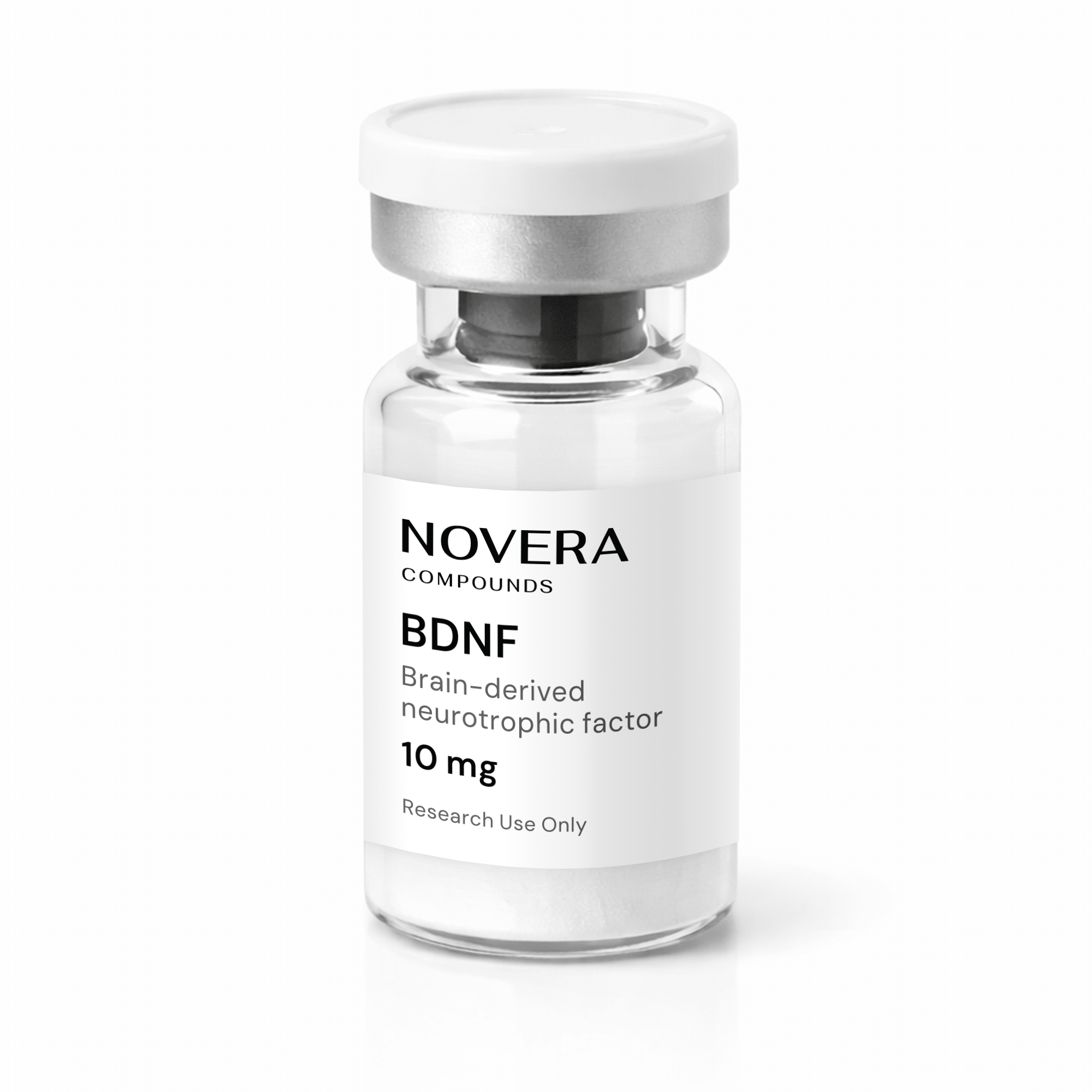
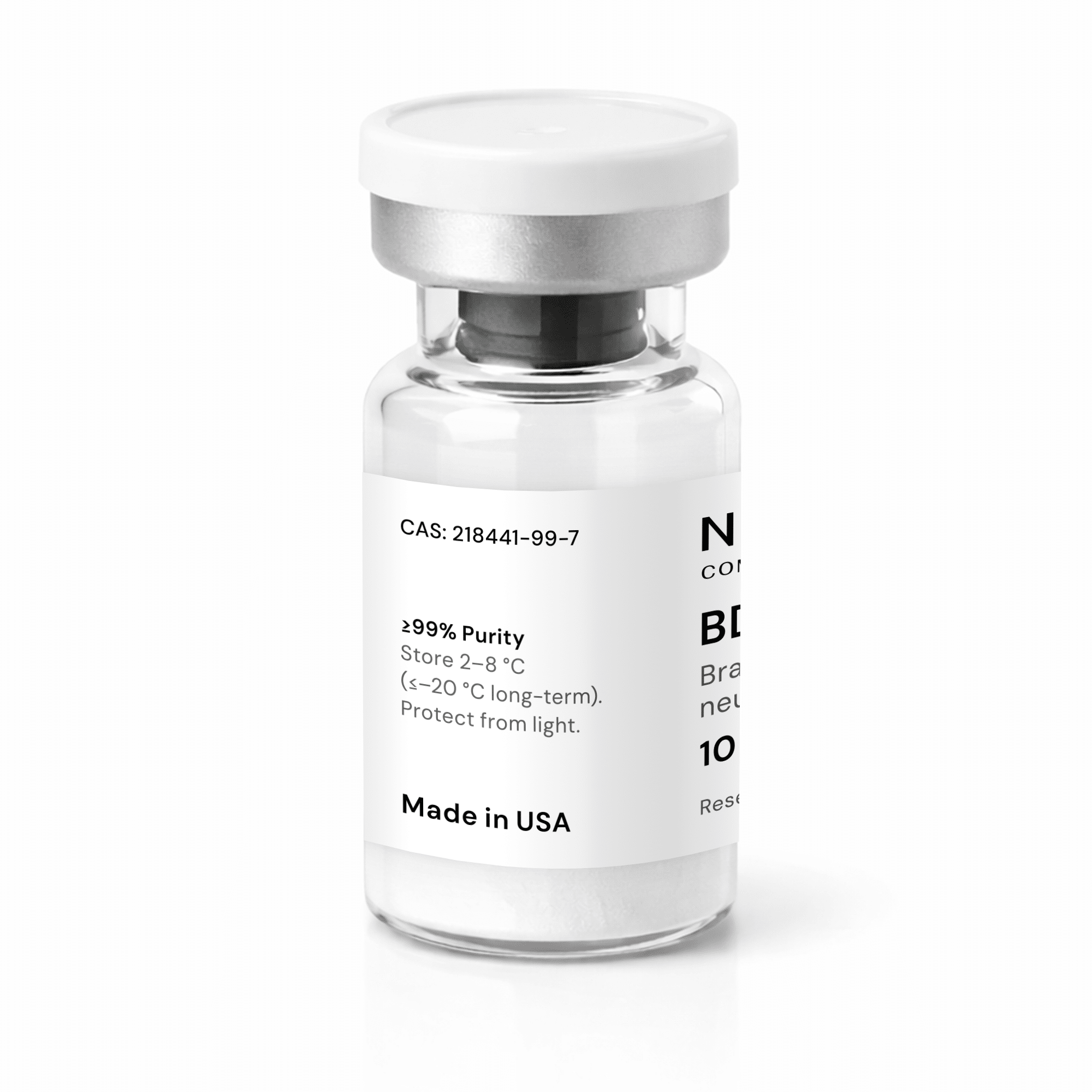
BDNF (Brain-derived neurotrophic factor) 10mg
Tier
| Packs | Discount (%) | For Each |
|---|---|---|
| 1 - 5 | — | $150.00 |
| 6 - 10 | 10 % | $135.00 |
| 11 - 20 | 18.67 % | $122.00 |
| 21+ | 26.67 % | $110.00 |
Shop with Confidence: 100% Authentic Products
All products are sourced from trusted suppliers and come with original manufacturer LOT numbers for identification and traceability.
Product description
What is BDNF (Brain-derived neurotrophic factor) (10mg)?
BDNF (Brain-derived neurotrophic factor) (10mg) is a recombinant human neurotrophic protein, composed of approximately 119 amino acids in its mature form. It belongs to the neurotrophin family of growth factors and is categorized under neuronal growth and synaptic signaling proteins. This compound is being studied as a biological regulator associated with neuronal survival, plasticity, and cellular communication.
The molecule consists of a structured polypeptide chain that forms a biologically active homodimer under physiological research conditions. Research-grade material is typically produced using recombinant expression systems and purified to high standards (commonly ≥95% by HPLC verification). It has been studied for its involvement in synaptic modulation, neuronal differentiation, and neuroplasticity in laboratory models.
What are the key features of BDNF (Brain-derived neurotrophic factor) (10mg)?
BDNF (Brain-derived neurotrophic factor) (10mg) is supplied for controlled laboratory research use and is produced under standardized recombinant protein manufacturing conditions.
Key features include:
- High research-grade purity (commonly ≥95% by HPLC)
- Recombinant human protein format
- Supplied as 10 mg lyophilized powder in a sealed vial
- Studied in neuroscience and cellular signaling research models
- Storage recommended at 2–8 °C (≤–20 °C for long-term storage)
- For laboratory research use only
This material is intended for in vitro and preclinical experimental applications.
How is BDNF (Brain-derived neurotrophic factor) (10mg) synthesized?
BDNF (Brain-derived neurotrophic factor) (10mg) is typically produced using recombinant DNA technology. The human BDNF gene sequence is inserted into an expression system (e.g., bacterial or mammalian cell lines) to produce the recombinant protein.
After expression, the protein undergoes purification using chromatographic techniques. The final product is typically verified for identity and purity using high-performance liquid chromatography (HPLC) and mass spectrometry (MS) to confirm its molecular weight and structural integrity. The lyophilized format enhances stability for storage and transport in research environments.
Before you buy brain peptides online, take time to assess product information, sourcing transparency, and available documentation from potential suppliers.
What is BDNF (Brain-derived neurotrophic factor) (10mg) being studied for? What are its possible benefits?
BDNF (Brain-derived neurotrophic factor) (10mg) has been studied extensively in neuroscience research. Investigations focus on its role in neuronal development, synaptic plasticity, and cellular resilience.
Research areas include:
- Neuroplasticity and synaptic remodeling
- Memory and learning models
- Neurodegenerative disease research
- Mood and behavioral neuroscience studies
- Cell survival and differentiation models
In experimental systems, BDNF is being investigated for its involvement in supporting neuronal growth and maintaining synaptic connections. These potential biological roles are based on laboratory and preclinical findings and do not establish therapeutic use.
How does BDNF (Brain-derived neurotrophic factor) (10mg) work in research studies?
In laboratory studies, BDNF is being investigated for its effects on cellular signaling pathways that regulate neuronal growth and survival. It interacts with neurotrophic signaling systems that affect gene expression, protein synthesis, and synaptic strength.
BDNF exerts its primary effects by high-affinity binding to the TrkB (NTRK2) receptor tyrosine kinase, activating downstream pathways, including MAPK/ERK, PI3K/Akt, and PLCγ, that regulate neuronal survival, differentiation, and synaptic plasticity.
Additionally, BDNF also binds to the low-affinity p75NTR receptor, which can produce distinct signaling outcomes, including apoptosis, depending on the cellular context. This dual-receptor interaction makes BDNF a crucial player in both neuronal survival and death decisions.
In research models, BDNF has been associated with:
- Increased dendritic branching
- Enhanced synaptic connectivity
- Modulation of neuronal signaling networks
These effects are observed in controlled experimental environments and remain investigational.
What dosing information exists for BDNF (Brain-derived neurotrophic factor) (10mg)?
In preclinical research, BDNF has been studied across a range of experimental concentrations. In in vitro cell culture studies, common concentrations are in the nanogram per milliliter (ng/mL) range, used to evaluate neuronal survival and differentiation.
In animal research models, dosing has ranged from micrograms per kilogram (µg/kg) to milligrams per kilogram (mg/kg), administered via localized or systemic routes depending on the study design. Duration and frequency vary widely based on the research objective.
There are no established human dosing guidelines for this product, as it is intended strictly for laboratory research use.
How should BDNF (Brain-derived neurotrophic factor) (10mg) be stored and handled?
BDNF (Brain-derived neurotrophic factor) (10mg) should be stored at 2–8 °C for routine handling. For long-term storage, maintain the product at ≤–20 °C. Protect the vial from excessive light exposure.
Once reconstituted with sterile laboratory-grade solvent, short-term storage at 2–8 °C is typically recommended. Avoid repeated freeze-thaw cycles, as these may affect protein stability. The shelf life is approximately 24 months when stored according to recommended conditions.
Standard laboratory protective equipment should be used during handling. Dispose of materials according to institutional biosafety guidelines.
Citations
[4] Chao MV. Neurotrophins and their receptors: a convergence point for many signalling pathways. Nat Rev Neurosci. 2003;4(4):299-309. doi:10.1038/nrn1078
[5] Brigadski T, Leßmann V. The physiology of regulated BDNF release. Cell Tissue Res. 2020;382(1):15-45. doi:10.1007/s00441-020-03253-2
Compliance Statement
This product is intended for laboratory research use only and is not approved for human or veterinary use.
Doctor Medica sources products exclusively through authorized distributors and established procurement channels. Products are verified as genuine, and supplied in the original packaging with their seal intact. Learn more about how we guarantee product authenticity, sourcing compliance, and traceable delivery to our clients.