Your Cart is Empty
Start shopping

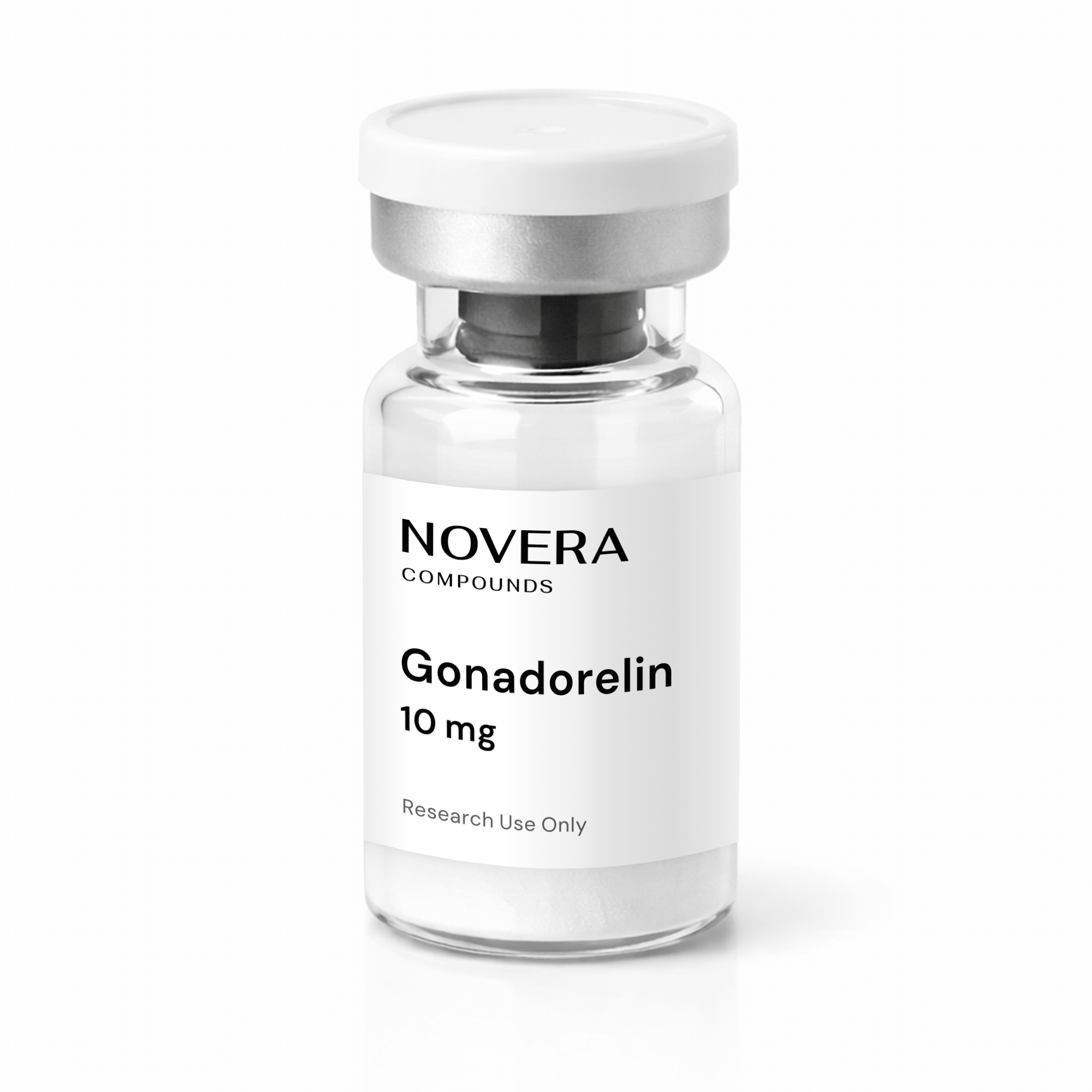
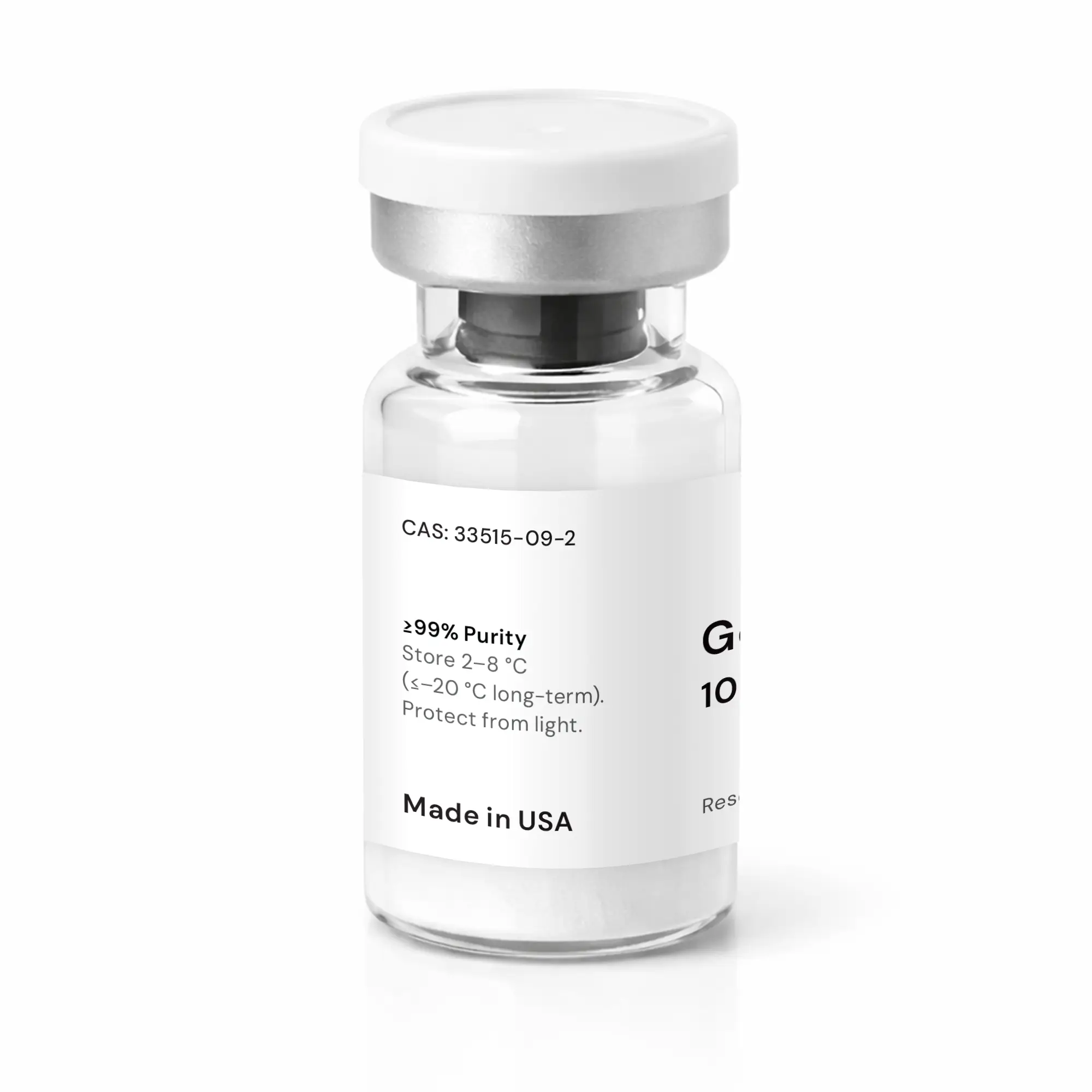
Gonadorelin 10mg
Tier
| Packs | Discount (%) | For Each |
|---|---|---|
| 1 - 5 | — | $85.00 |
| 6 - 10 | 9.41 % | $77.00 |
| 11 - 20 | 18.82 % | $69.00 |
| 21+ | 27.06 % | $62.00 |
Product description
What is Gonadorelin (10mg)?
Gonadorelin (10mg) is a synthetic decapeptide that mimics endogenous gonadotropin-releasing hormone (GnRH). It plays a vital role in regulating the hypothalamic–pituitary–gonadal (HPG) axis, which controls the release of luteinizing hormone (LH) and follicle-stimulating hormone (FSH). Gonadorelin has been widely studied in laboratory research to influence gonadotropin secretion and endocrine feedback mechanisms. Gonadorelin consists of 10 amino acids, with an N-terminal pyroglutamate and a C-terminal glycine amide, which contribute to its stability. The peptide has a molecular weight of approximately 1182.3 g/mol. Research-grade preparations typically achieve ≥98% purity, verified through high-performance liquid chromatography (HPLC) and mass spectrometry (MS).What are the key features of Gonadorelin (10mg)?
Gonadorelin (10mg) is supplied as a lyophilized peptide intended for controlled laboratory research. It is used in studies involving endocrine signaling and receptor pharmacology. Key features of Gonadorelin (10mg) include:- Peptide sequence: Pyr-His-Trp-Ser-Tyr-Gly-Leu-Arg-Pro-Gly
- CAS Number: 33515-09-02
- Subcategory: Hormonal & Sexual Health Peptides
- Molecular weight: 1182.3 g/mol
- Chemical Formula: C₅₅H₇₅N₁₇O₁₃
- Purity: Typically ≥98%, verified by HPLC
- Analytical confirmation: Identity confirmed using mass spectrometry (MS)
- Format: 10 mg lyophilized peptide supplied in a sealed research vial
How is Gonadorelin (10mg) synthesized?
Gonadorelin has been studied for its regulatory role in the HPG axis and its influence on gonadotropin secretion. Researchers have investigated its effects on luteinizing hormone (LH) and follicle-stimulating hormone (FSH) secretion, examining its use in pulsatile and continuous exposure models. Research areas include:- Pulsatile LH and FSH secretion dynamics
- Endocrine feedback loop modeling
- Reproductive axis regulation in animal models
- Steroidogenesis studies in gonadal tissue
- Receptor desensitization and resensitization research
What is Gonadorelin (10mg) being studied for? What are its possible benefits?
Gonadorelin has been studied for its regulatory role in the HPG axis and its influence on gonadotropin secretion. Researchers have investigated its effects on luteinizing hormone (LH) and follicle-stimulating hormone (FSH) secretion, using pulsatile and continuous exposure models. Research areas include:- Pulsatile LH and FSH secretion dynamics
- Endocrine feedback loop modeling
- Reproductive axis regulation in animal models
- Steroidogenesis studies in gonadal tissue
- Receptor desensitization and resensitization research
How does Gonadorelin (10mg) work in research studies?
In laboratory models, Gonadorelin binds to receptors on anterior pituitary gonadotroph cells, initiating intracellular signaling cascades that increase intracellular calcium levels and activate downstream pathways involved in hormone synthesis and secretion. Pulsatile exposure is frequently used to replicate physiologic hormone release patterns, stimulating measurable LH and FSH secretion. In contrast, sustained exposure reduces receptor responsiveness, supporting studies of receptor regulation and endocrine adaptation. These mechanisms make Gonadorelin valuable for investigating hormone signaling kinetics, endocrine feedback loops, and reproductive biology in controlled laboratory environments.What dosing information exists for Gonadorelin (10mg)?
Dosing information for Gonadorelin is based on preclinical studies and clinical trial protocols examining peptide-based metabolic regulators. In experimental animal models, pulsatile administration has been studied at doses of approximately 0.1–1 µg/kg, administered at 30–60-minute intervals to simulate physiologic hormone pulses. Continuous infusion models in animals have used dose ranges between 1–10 µg/kg/hour to evaluate receptor desensitization and hormonal suppression. In vitro experiments involving cultured pituitary cells commonly utilize concentrations between 1 and 100 nM to assess intracellular signaling and gonadotropin release. These dosing regimens are experimental and model-specific. No standardized human dosing guidelines are established for standalone research peptide preparations.How should Gonadorelin (10mg) be stored and handled?
To minimize degradation, Gonadorelin (10mg) should be stored in its lyophilized form at –20 °C or lower. Cold storage preserves peptide structural integrity and reduces the risk of degradation. Protect the vial from light, heat, and moisture, which may affect peptide integrity. After reconstitution with an appropriate sterile laboratory solvent, the solution is typically stored at 2–8 °C for short-term use in laboratory experiments. Researchers should prepare small aliquots to minimize repeated freeze-thaw cycles, as these cycles can compromise peptide structural integrity. Peptide integrity may vary depending on solvent choice and laboratory handling conditions.Where can I read more research about Gonadorelin (10mg)?
The following peer-reviewed publications provide foundational and advanced insights into Gonadorelin and GnRH biology:- Millar RP, Lu ZL, Pawson AJ, Flanagan CA, Morgan K, Maudsley SR. Gonadotropin-releasing hormone receptors. Endocr Rev. 2004;25(2):235-275. doi:10.1210/er.2003-0002
- Flanagan C, Millar R, Illing N. Advances in understanding gonadotrophin-releasing hormone receptor structure and ligand interactions. Reviews of Reproduction. 1997;2(2):113-120. doi:10.1530/revreprod/2.2.113
- Kaiser UB, Conn PM, Chin WW. Studies of gonadotropin-releasing hormone (GnRH) action using GnRH receptor-expressing pituitary cell lines. Endocr Rev. 1997;18(1):46-70. doi:10.1210/edrv.18.1.0289
- Vollaard ES, van Beek AP, Verburg FA, Roos A, Land JA. Gonadotropin-releasing hormone agonist treatment in postmenopausal women with hyperandrogenism of ovarian origin. J Clin Endocrinol Metab. 2011;96(5):1197-1201. doi:10.1210/jc.2010-1991
Compliance Statement
This product is intended for laboratory research use only and is not approved for human or veterinary use.Shop with Confidence: Product Authenticity is Guaranteed
All products available at Doctor Medica shop are obtained from respective manufacturers and contain original LOT numbers Contact us if you have any questions about product LOT numbers.
What is Gonadorelin (10mg)?
Gonadorelin (10mg) is a synthetic decapeptide that mimics endogenous gonadotropin-releasing hormone (GnRH). It plays a vital role in regulating the hypothalamic–pituitary–gonadal (HPG) axis, which controls the release of luteinizing hormone (LH) and follicle-stimulating hormone (FSH). Gonadorelin has been widely studied in laboratory research to influence gonadotropin secretion and endocrine feedback mechanisms.
Gonadorelin consists of 10 amino acids, with an N-terminal pyroglutamate and a C-terminal glycine amide, which contribute to its stability. The peptide has a molecular weight of approximately 1182.3 g/mol. Research-grade preparations typically achieve ≥98% purity, verified through high-performance liquid chromatography (HPLC) and mass spectrometry (MS).
What are the key features of Gonadorelin (10mg)?
Gonadorelin (10mg) is supplied as a lyophilized peptide intended for controlled laboratory research. It is used in studies involving endocrine signaling and receptor pharmacology.
Key features of Gonadorelin (10mg) include:
- Peptide sequence: Pyr-His-Trp-Ser-Tyr-Gly-Leu-Arg-Pro-Gly
- CAS Number: 33515-09-02
- Subcategory: Hormonal & Sexual Health Peptides
- Molecular weight: 1182.3 g/mol
- Chemical Formula: C₅₅H₇₅N₁₇O₁₃
- Purity: Typically ≥98%, verified by HPLC
- Analytical confirmation: Identity confirmed using mass spectrometry (MS)
- Format: 10 mg lyophilized peptide supplied in a sealed research vial
This product is supplied strictly for laboratory research use only and is not intended for diagnostic, therapeutic, or clinical applications.
How is Gonadorelin (10mg) synthesized?
Gonadorelin has been studied for its regulatory role in the HPG axis and its influence on gonadotropin secretion. Researchers have investigated its effects on luteinizing hormone (LH) and follicle-stimulating hormone (FSH) secretion, examining its use in pulsatile and continuous exposure models.
Research areas include:
- Pulsatile LH and FSH secretion dynamics
- Endocrine feedback loop modeling
- Reproductive axis regulation in animal models
- Steroidogenesis studies in gonadal tissue
- Receptor desensitization and resensitization research
These studies are primarily conducted in preclinical settings, exploring the potential biological implications in fertility research, hypogonadal states, and hormone-responsive tissue studies. Findings are experimental and do not suggest therapeutic outcomes.
What is Gonadorelin (10mg) being studied for? What are its possible benefits?
Gonadorelin has been studied for its regulatory role in the HPG axis and its influence on gonadotropin secretion. Researchers have investigated its effects on luteinizing hormone (LH) and follicle-stimulating hormone (FSH) secretion, using pulsatile and continuous exposure models.
Research areas include:
- Pulsatile LH and FSH secretion dynamics
- Endocrine feedback loop modeling
- Reproductive axis regulation in animal models
- Steroidogenesis studies in gonadal tissue
- Receptor desensitization and resensitization research
These studies are primarily conducted in preclinical settings, exploring the potential biological implications in fertility research, hypogonadal states, and hormone-responsive tissue studies. Findings are experimental and do not suggest therapeutic outcomes.
How does Gonadorelin (10mg) work in research studies?
In laboratory models, Gonadorelin binds to receptors on anterior pituitary gonadotroph cells, initiating intracellular signaling cascades that increase intracellular calcium levels and activate downstream pathways involved in hormone synthesis and secretion.
Pulsatile exposure is frequently used to replicate physiologic hormone release patterns, stimulating measurable LH and FSH secretion. In contrast, sustained exposure reduces receptor responsiveness, supporting studies of receptor regulation and endocrine adaptation. These mechanisms make Gonadorelin valuable for investigating hormone signaling kinetics, endocrine feedback loops, and reproductive biology in controlled laboratory environments.
What dosing information exists for Gonadorelin (10mg)?
Dosing information for Gonadorelin is based on preclinical studies and clinical trial protocols examining peptide-based metabolic regulators. In experimental animal models, pulsatile administration has been studied at doses of approximately 0.1–1 µg/kg, administered at 30–60-minute intervals to simulate physiologic hormone pulses.
Continuous infusion models in animals have used dose ranges between 1–10 µg/kg/hour to evaluate receptor desensitization and hormonal suppression. In vitro experiments involving cultured pituitary cells commonly utilize concentrations between 1 and 100 nM to assess intracellular signaling and gonadotropin release.
These dosing regimens are experimental and model-specific. No standardized human dosing guidelines are established for standalone research peptide preparations.
How should Gonadorelin (10mg) be stored and handled?
To minimize degradation, Gonadorelin (10mg) should be stored in its lyophilized form at –20 °C or lower. Cold storage preserves peptide structural integrity and reduces the risk of degradation. Protect the vial from light, heat, and moisture, which may affect peptide integrity.
After reconstitution with an appropriate sterile laboratory solvent, the solution is typically stored at 2–8 °C for short-term use in laboratory experiments. Researchers should prepare small aliquots to minimize repeated freeze-thaw cycles, as these cycles can compromise peptide structural integrity. Peptide integrity may vary depending on solvent choice and laboratory handling conditions.
Where can I read more research about Gonadorelin (10mg)?
The following peer-reviewed publications provide foundational and advanced insights into Gonadorelin and GnRH biology:
- Millar RP, Lu ZL, Pawson AJ, Flanagan CA, Morgan K, Maudsley SR. Gonadotropin-releasing hormone receptors. Endocr Rev. 2004;25(2):235-275. doi:10.1210/er.2003-0002
- Flanagan C, Millar R, Illing N. Advances in understanding gonadotrophin-releasing hormone receptor structure and ligand interactions. Reviews of Reproduction. 1997;2(2):113-120. doi:10.1530/revreprod/2.2.113
- Kaiser UB, Conn PM, Chin WW. Studies of gonadotropin-releasing hormone (GnRH) action using GnRH receptor-expressing pituitary cell lines. Endocr Rev. 1997;18(1):46-70. doi:10.1210/edrv.18.1.0289
- Vollaard ES, van Beek AP, Verburg FA, Roos A, Land JA. Gonadotropin-releasing hormone agonist treatment in postmenopausal women with hyperandrogenism of ovarian origin. J Clin Endocrinol Metab. 2011;96(5):1197-1201. doi:10.1210/jc.2010-1991
Compliance Statement
This product is intended for laboratory research use only and is not approved for human or veterinary use.