Your Cart is Empty
Start shopping

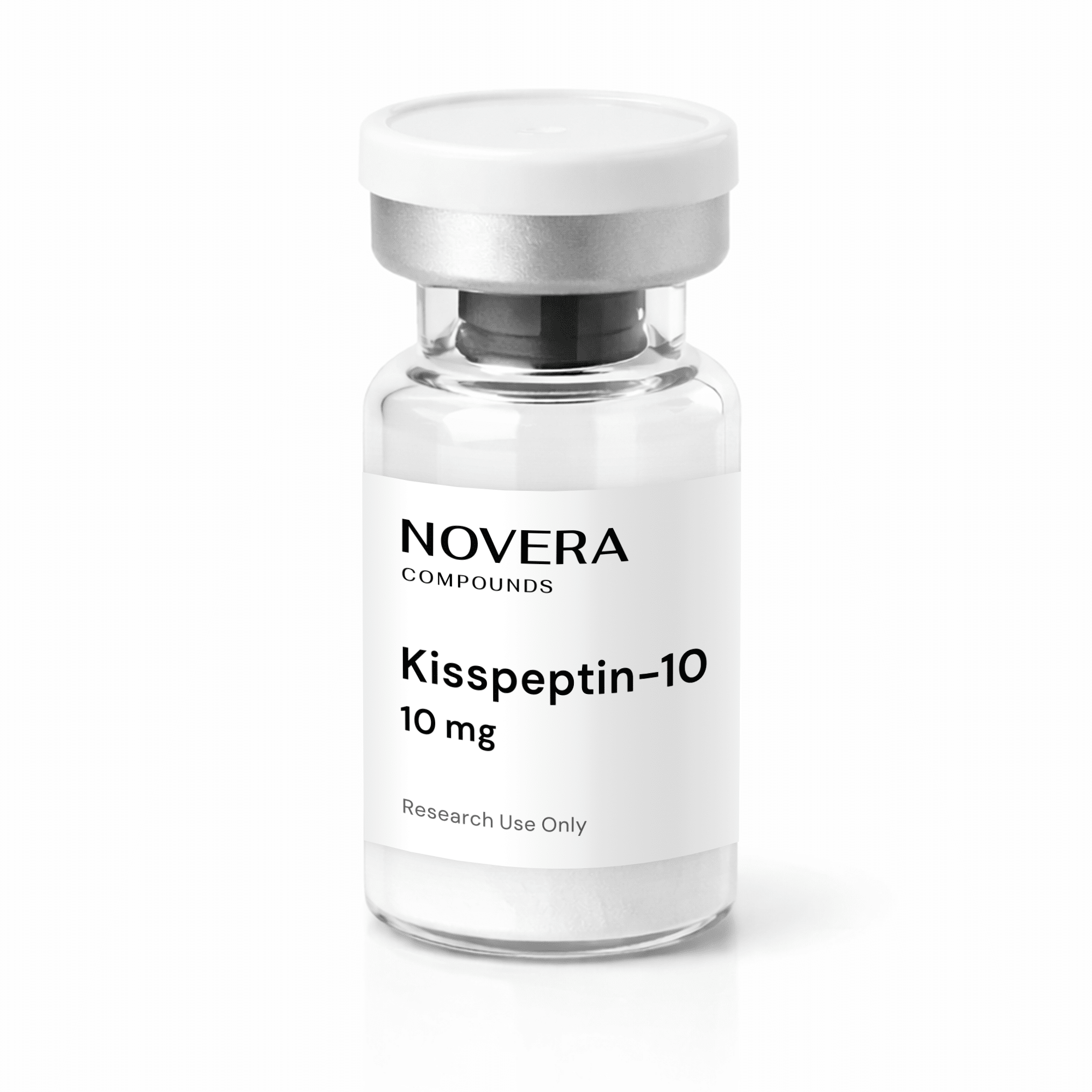
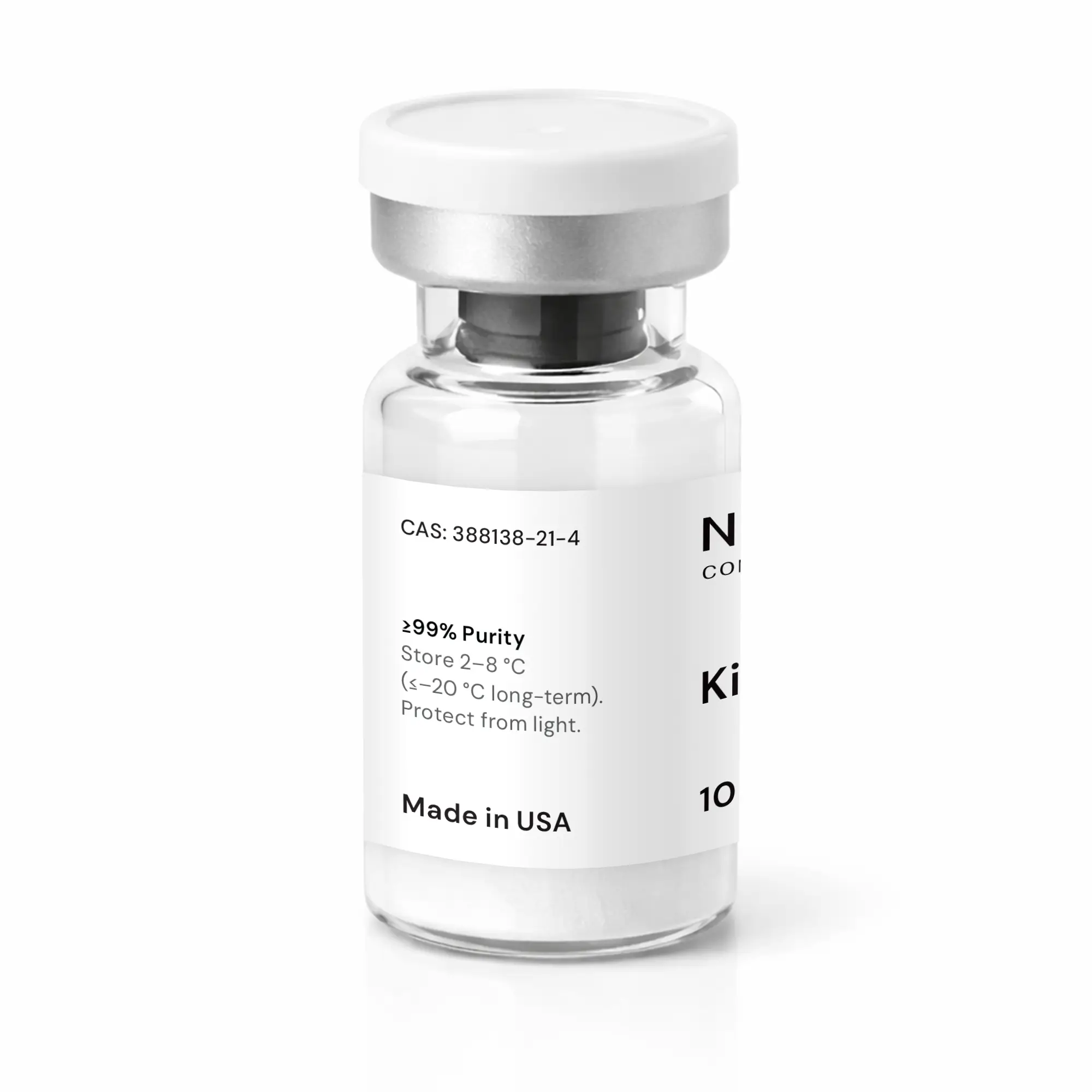
Kisspeptin 10mg
Tier
| Packs | Discount (%) | For Each |
|---|---|---|
| 1 - 5 | — | $70.00 |
| 6 - 10 | 10 % | $63.00 |
| 11 - 20 | 18.57 % | $57.00 |
| 21+ | 27.14 % | $51.00 |
Product description
What is KissPeptin-10?
The KissPeptin-10 (10mg) is a synthetic decapeptide derived from the KissPeptin family, a group of naturally occurring peptides involved in reproductive and neuroendocrine signaling. It consists of 10 amino acids and has a molecular weight of approximately 1.3 kDa (1,302.4 Daltons). KissPeptin 10 peptide is supplied as a lyophilized powder in 10 mg vials with >98% purity, providing consistent and high-quality results for laboratory research. KissPeptin 10 is widely used in experimental models to investigate hormonal regulation, endocrine signaling, and neurobiological pathways, offering researchers a reliable tool to study peptide-mediated cellular responses.What are the key features of KissPeptin-10 (10mg)?
The main features of KissPeptin 10 make it well-suited for research purposes. It is supplied as a 10 mg vial, verified for high purity by HPLC, and is compatible with various in vitro and preclinical experiments. Designed for consistent results, this peptide allows researchers to explore signaling pathways, hormone modulation, and cellular behavior in controlled settings. Key highlights include:- Supplied in KissPeptin-10 (10mg) and Kisspeptin (5mg) vials for convenient laboratory use
- High purity peptide (>98%) confirmed by analytical testing
- Fully synthetic peptide for accurate and reproducible studies
- Chemically stable under recommended storage conditions
- Suitable for multiple research applications, including neuroendocrine and reproductive biology studies
- Reliable for KissPeptin peptide for research applications
- For laboratory research use only
How is KissPeptin-10 synthesized?
KissPeptin 10 is synthesized by solid-phase peptide synthesis (SPPS), a widely used method that provides precise control over the amino acid sequence. After synthesis, the peptide undergoes rigorous verification using HPLC and mass spectrometry (MS) to ensure correct sequence composition, structural integrity, and high purity. The synthetic approach replicates the natural decapeptide fragment of Kisspeptin while eliminating variability associated with biological sources. Researchers using KissPeptin 10 mg vials can rely on this consistent production method to run reproducible in vitro and preclinical experiments with confidence.What is KissPeptin-10 (10mg) being studied for? What are its possible benefits?
In the sexual health and hormonal peptides category, KissPeptin 10 is being explored in multiple preclinical contexts, primarily to understand its role in molecular signaling and physiological regulation. Key areas under investigation include:- Reproductive biology: Studying hormone signaling modulation in animal models to understand gonadotropin regulation.
- Neuroendocrine pathways: Evaluating potential effects on neuronal activation and communication in vitro
- Cell signaling and migration: Assessing how the peptide influences pathways related to cell proliferation, differentiation, and movement
- Metabolic regulation: Investigating links to energy homeostasis and cellular metabolism in controlled preclinical models
How does KissPeptin-10 work in research studies?
In laboratory studies, KissPeptin-10 (10mg) is thought to interact with cellular pathways, modulating signaling mechanisms that may influence hormone release and cellular activation. Researchers typically investigate dose-dependent responses in in vitro cell cultures or preclinical animal models. The synthetic KissPeptin 10 peptide enables precise experimental control, allowing scientists to analyze molecular interactions and cellular behaviors. This peptide is primarily a research tool, providing insights into fundamental biological mechanisms without implying human or clinical use. Within the broader sexual health and hormonal peptide research category, researchers may explore compounds such as Gonadorelin and Human Chorionic Gonadotropin (HCG). These are also frequently investigated for their roles in endocrine signaling and reproductive hormone regulation.What dosing information exists for KissPeptin-10?
Researchers studying KissPeptin-10 (10mg) reference reported in vitro and preclinical dosing ranges to ensure accurate, reproducible experiments with KissPeptin-10.- In-vitro assays: commonly use 1–100 nM concentrations
- Preclinical murine studies: tested doses range from 10 µg/kg to 100 µg/kg
How should KissPeptin-10 (10mg) be stored and handled?
To maintain peptide integrity and experimental consistency, KissPeptin 10 should be stored and handled carefully:- Lyophilized peptide: store at –20 °C, protected from light and moisture
- Reconstituted peptide: short-term storage at 2–8 °C is recommended
- Avoid repeated freeze-thaw cycles to preserve chemical stability.
- Typical shelf life: typically 1–2 years under optimal storage conditions
Where can I read more research about KissPeptin-10?
Researchers can consult peer-reviewed publications and preclinical studies to explore the mechanisms of KissPeptin 10 signaling, thereby guiding experimental design and data interpretation in controlled laboratory settings. Reliable studies of information include:- Tovar S, Vázquez MJ, Navarro VM, et al. Effects of Single or Repeated Intravenous Administration of Kisspeptin upon Dynamic LH Secretion in Conscious Male Rats. Endocrinology. 2006;147(6):2696-2704. doi:10.1210/en.2005-1397
- Ramzan F, Qureshi IZ. Intraperitoneal kisspeptin-10 administration induces dose-dependent degenerative changes in maturing rat testes. Life Sciences. 2010;88(5-6):246-256. doi:10.1016/j.lfs.2010.11.019
- Oakley AE, Clifton DK, Steiner RA. Kisspeptin signaling in the brain. Endocr Rev. 2009;30(6):713-743. doi:10.1210/er.2009-0005
- Orlando G, Leone S, Ferrante C, et al. Effects of kisspeptin-10 on hypothalamic neuropeptides and neurotransmitters involved in appetite control. Molecules. 2018;23(12):3071. doi:10.3390/molecules23123071
- Suzuki S, Kadokawa H, Hashizume T. Direct kisspeptin-10 stimulation on luteinizing hormone secretion from bovine and porcine anterior pituitary cells. Animal Reproduction Science. 2007;103(3-4):360-365. doi:10.1016/j.anireprosci.2007.05.016
- Mills EGA, Dhillo WS, Comninos AN. Kisspeptin and the control of emotions, mood and reproductive behaviour. Journal of Endocrinology. 2018;239(1):R1-R12. doi:10.1530/joe-18-0269
Compliance Notice
This product is intended for laboratory research use only and is not approved for human or veterinary use.Shop with Confidence: Product Authenticity is Guaranteed
All products available at Doctor Medica shop are obtained from respective manufacturers and contain original LOT numbers Contact us if you have any questions about product LOT numbers.
What is KissPeptin-10?
The KissPeptin-10 (10mg) is a synthetic decapeptide derived from the KissPeptin family, a group of naturally occurring peptides involved in reproductive and neuroendocrine signaling. It consists of 10 amino acids and has a molecular weight of approximately 1.3 kDa (1,302.4 Daltons).
KissPeptin 10 peptide is supplied as a lyophilized powder in 10 mg vials with >98% purity, providing consistent and high-quality results for laboratory research. KissPeptin 10 is widely used in experimental models to investigate hormonal regulation, endocrine signaling, and neurobiological pathways, offering researchers a reliable tool to study peptide-mediated cellular responses.
What are the key features of KissPeptin-10 (10mg)?
The main features of KissPeptin 10 make it well-suited for research purposes. It is supplied as a 10 mg vial, verified for high purity by HPLC, and is compatible with various in vitro and preclinical experiments. Designed for consistent results, this peptide allows researchers to explore signaling pathways, hormone modulation, and cellular behavior in controlled settings. Key highlights include:
- Supplied in KissPeptin-10 (10mg) and Kisspeptin (5mg) vials for convenient laboratory use
- High purity peptide (>98%) confirmed by analytical testing
- Fully synthetic peptide for accurate and reproducible studies
- Chemically stable under recommended storage conditions
- Suitable for multiple research applications, including neuroendocrine and reproductive biology studies
- Reliable for KissPeptin peptide for research applications
- For laboratory research use only
These features ensure that researchers who buy KissPeptin 10 receive a dependable, standardized peptide suitable for precise experimental work.
How is KissPeptin-10 synthesized?
KissPeptin 10 is synthesized by solid-phase peptide synthesis (SPPS), a widely used method that provides precise control over the amino acid sequence. After synthesis, the peptide undergoes rigorous verification using HPLC and mass spectrometry (MS) to ensure correct sequence composition, structural integrity, and high purity.
The synthetic approach replicates the natural decapeptide fragment of Kisspeptin while eliminating variability associated with biological sources. Researchers using KissPeptin 10 mg vials can rely on this consistent production method to run reproducible in vitro and preclinical experiments with confidence.
What is KissPeptin-10 (10mg) being studied for? What are its possible benefits?
In the sexual health and hormonal peptides category, KissPeptin 10 is being explored in multiple preclinical contexts, primarily to understand its role in molecular signaling and physiological regulation. Key areas under investigation include:
- Reproductive biology: Studying hormone signaling modulation in animal models to understand gonadotropin regulation.
- Neuroendocrine pathways: Evaluating potential effects on neuronal activation and communication in vitro
- Cell signaling and migration: Assessing how the peptide influences pathways related to cell proliferation, differentiation, and movement
- Metabolic regulation: Investigating links to energy homeostasis and cellular metabolism in controlled preclinical models
It is important to note that these research areas are exploratory. Observed effects are limited to laboratory conditions, and no therapeutic claims are made. Researchers who buy KissPeptin 10 can utilize the peptide for reproducible, controlled research studies.
How does KissPeptin-10 work in research studies?
In laboratory studies, KissPeptin-10 (10mg) is thought to interact with cellular pathways, modulating signaling mechanisms that may influence hormone release and cellular activation. Researchers typically investigate dose-dependent responses in in vitro cell cultures or preclinical animal models.
The synthetic KissPeptin 10 peptide enables precise experimental control, allowing scientists to analyze molecular interactions and cellular behaviors. This peptide is primarily a research tool, providing insights into fundamental biological mechanisms without implying human or clinical use.
Within the broader sexual health and hormonal peptide research category, researchers may explore compounds such as Gonadorelin and Human Chorionic Gonadotropin (HCG). These are also frequently investigated for their roles in endocrine signaling and reproductive hormone regulation.
What dosing information exists for KissPeptin-10?
Researchers studying KissPeptin-10 (10mg) reference reported in vitro and preclinical dosing ranges to ensure accurate, reproducible experiments with KissPeptin-10.
- In-vitro assays: commonly use 1–100 nM concentrations
- Preclinical murine studies: tested doses range from 10 µg/kg to 100 µg/kg
No human dosing recommendations exist. All applications are for research purposes only. Laboratory protocols should be followed to ensure accurate dosing, safe handling, and reproducible experimental results when working with KissPeptin 10 peptide.
How should KissPeptin-10 (10mg) be stored and handled?
To maintain peptide integrity and experimental consistency, KissPeptin 10 should be stored and handled carefully:
- Lyophilized peptide: store at –20 °C, protected from light and moisture
- Reconstituted peptide: short-term storage at 2–8 °C is recommended
- Avoid repeated freeze-thaw cycles to preserve chemical stability.
- Typical shelf life: typically 1–2 years under optimal storage conditions
Following these recommendations ensures that the KissPeptin 10 mg vial remains research-ready and maintains high purity for in-vitro assays and preclinical studies. Proper handling also supports consistent experimental outcomes when using KissPeptin peptide for research purposes.
Where can I read more research about KissPeptin-10?
Researchers can consult peer-reviewed publications and preclinical studies to explore the mechanisms of KissPeptin 10 signaling, thereby guiding experimental design and data interpretation in controlled laboratory settings.
Reliable studies of information include:
- Tovar S, Vázquez MJ, Navarro VM, et al. Effects of Single or Repeated Intravenous Administration of Kisspeptin upon Dynamic LH Secretion in Conscious Male Rats. Endocrinology. 2006;147(6):2696-2704. doi:10.1210/en.2005-1397
- Ramzan F, Qureshi IZ. Intraperitoneal kisspeptin-10 administration induces dose-dependent degenerative changes in maturing rat testes. Life Sciences. 2010;88(5-6):246-256. doi:10.1016/j.lfs.2010.11.019
- Oakley AE, Clifton DK, Steiner RA. Kisspeptin signaling in the brain. Endocr Rev. 2009;30(6):713-743. doi:10.1210/er.2009-0005
- Orlando G, Leone S, Ferrante C, et al. Effects of kisspeptin-10 on hypothalamic neuropeptides and neurotransmitters involved in appetite control. Molecules. 2018;23(12):3071. doi:10.3390/molecules23123071
- Suzuki S, Kadokawa H, Hashizume T. Direct kisspeptin-10 stimulation on luteinizing hormone secretion from bovine and porcine anterior pituitary cells. Animal Reproduction Science. 2007;103(3-4):360-365. doi:10.1016/j.anireprosci.2007.05.016
- Mills EGA, Dhillo WS, Comninos AN. Kisspeptin and the control of emotions, mood and reproductive behaviour. Journal of Endocrinology. 2018;239(1):R1-R12. doi:10.1530/joe-18-0269
Compliance Notice
This product is intended for laboratory research use only and is not approved for human or veterinary use.