Your Cart is Empty
Start shopping

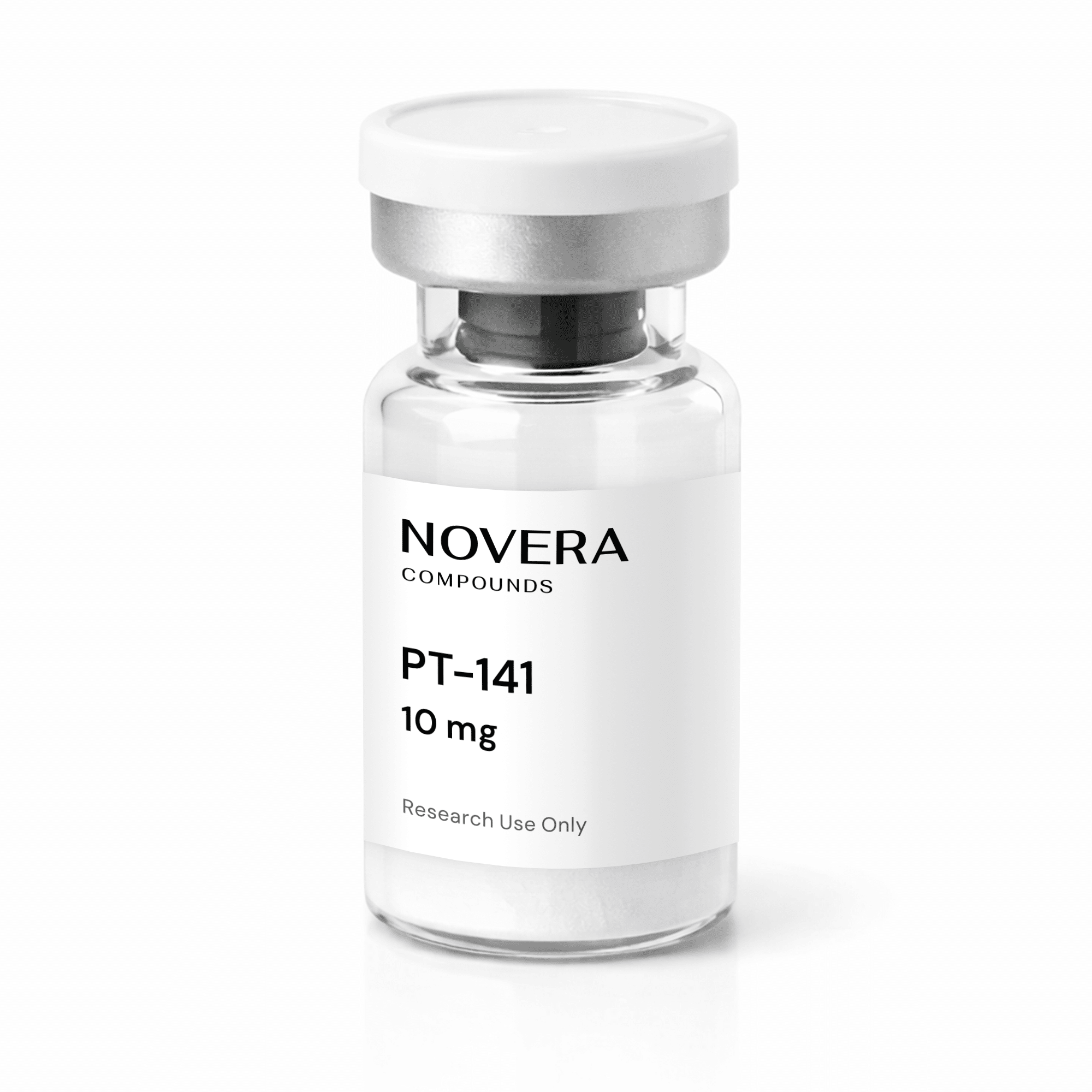
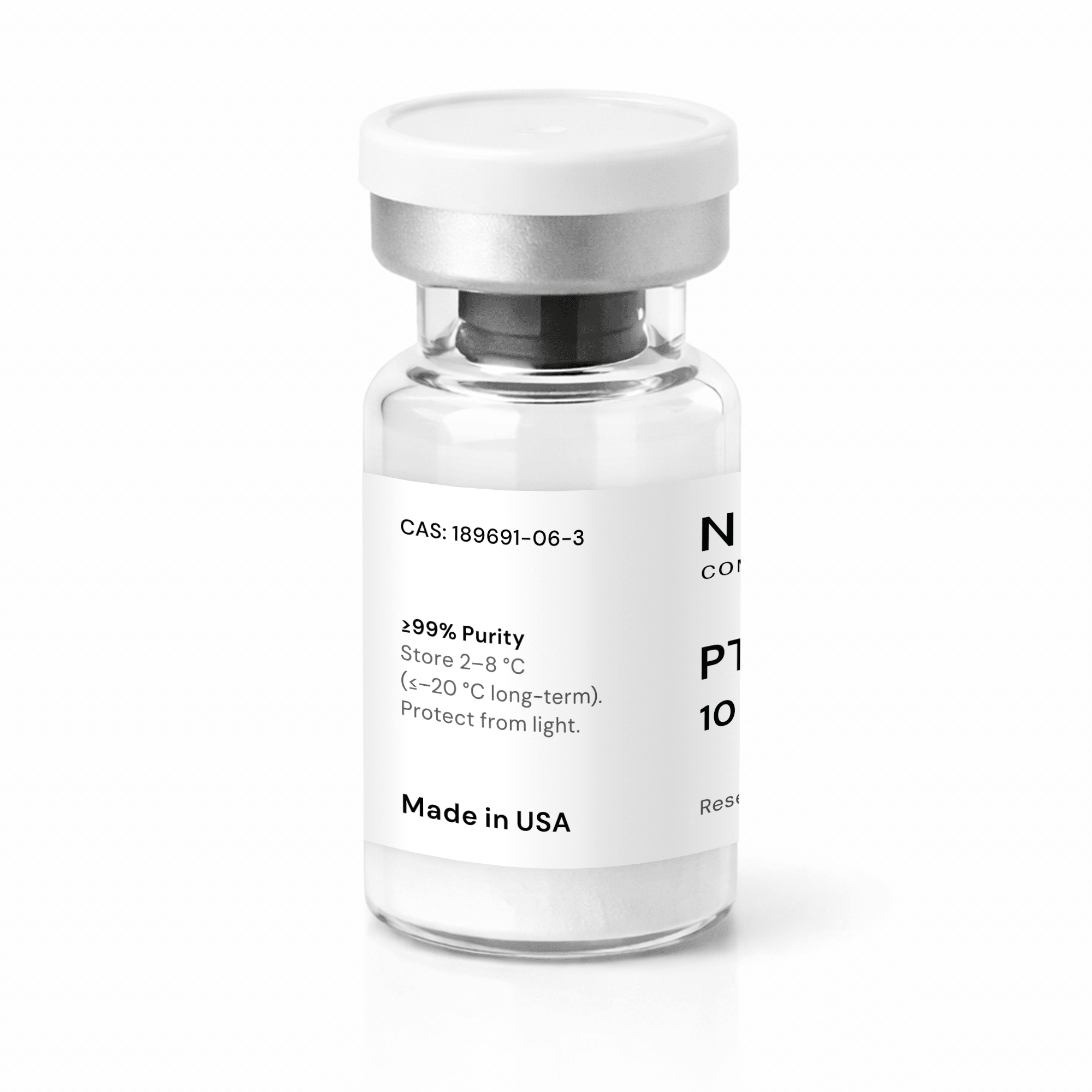
PT-141 10mg
Tier
| Packs | Discount (%) | For Each |
|---|---|---|
| 1 - 5 | — | $49.00 |
| 6 - 10 | 8.16 % | $45.00 |
| 11 - 20 | 16.33 % | $41.00 |
| 21+ | 24.49 % | $37.00 |
Shop with Confidence: 100% Authentic Products
All products are sourced from trusted suppliers and come with original manufacturer LOT numbers for identification and traceability.
Product description
What is PT-141 (10mg)?
PT-141, also known as bremelanotide, is a synthetically manufactured cyclic heptapeptide and melanocortin receptor agonist extensively studied in research environments. This peptide is structurally derived from Melanotan II (MT-II), which is itself an established analogue of alpha-melanocyte-stimulating hormone (α-MSH). PT-141 has been studied for its selective binding activity within central melanocortin pathways, particularly through interaction with melanocortin-3 and melanocortin-4 receptors (MC3R and MC4R).
- Structurally, PT-141 consists of seven amino acids arranged in a cyclic lactam ring configuration with the sequence Ac-Nle-cyclo[Asp-His-D-Phe-Arg-Trp-Lys]-OH, which provides enhanced stability and enzymatic resistance compared to linear peptide analogues.
- The peptide has a molecular weight of approximately 1025.2 Daltons(C50H68N14O10) and is supplied as a research-grade lyophilized powder with 99% purity, verified through high-performance liquid chromatography (HPLC) and mass spectrometry analysis.
This PT 141 peptide maintains well-defined analytical specifications suitable for controlled laboratory investigations into GPCR activation, neuronal signaling, and neuroendocrine modulation pathways. When clinicians buy hormone peptides wholesale, they should evaluate supplier reliability, handling requirements, and preparation guidelines to ensure the product is managed according to applicable standards.
What are the key features of PT-141 (10mg)?
PT-141 is characterized by a highly stable cyclic structure and selective receptor binding affinity suitable for laboratory research protocols. The peptide is supplied as a lyophilized (freeze-dried) powder in sealed vials, allowing researchers to prepare precise concentrations for controlled experimental work using sterile reconstitution techniques. The cyclic ring configuration provides enhanced resistance to enzymatic degradation compared to linear peptide structures.
Key features include:
- 99% purityconfirmed by HPLC and mass spectrometry analysis
- Cyclic heptapeptide structureproviding enhanced enzymatic stability and receptor selectivity
- Selective melanocortin receptor bindingwith high affinity for MC4R and MC3R in the central nervous system
- Lyophilized powder formatfor enhanced long-term stability and controlled reconstitution
- Seven amino acidsarranged in a stabilized ring lactam configuration
- Consistent analytical verificationvia mass spectrometry, HPLC, and peptide structural mapping
- Versatilityacross in vitro cellular research systems and preclinical animal models
This product is intended for laboratory research use only and is not approved for human or veterinary use. Researchers seeking to buy PT 141 for controlled laboratory applications rely on these standardized specifications to maintain experimental consistency.
How is PT-141 (10mg) synthesized?
PT-141 is produced using solid-phase peptide synthesis (SPPS), a well-established methodology where individual amino acids are sequentially added to a resin-bound growing chain. This approach utilizes Fmoc (9-fluorenylmethoxycarbonyl) protective group chemistry, which enables precise incorporation of the specific amino acids required for the heptapeptide sequence, including nonstandard residues such as norleucine (Nle) and D-configured phenylalanine (D-Phe).
Following linear synthesis completion, the peptide undergoes cyclization to form the distinctive ring lactam structure characteristic of PT-141. This cyclization step is critical for generating the enhanced enzymatic resistance and receptor selectivity compared to linear analogues. Following cyclization, the crude material undergoes multi-step purification via reversed-phase HPLC to remove incomplete sequences, cyclization by-products, and other impurities.
Mass spectrometry analysis and HPLC retention-time mapping confirm structural integrity and molecular weight accuracy. The final purified material is converted to its acetate salt form and lyophilized to produce a stable white to off-white hygroscopic powder suitable for long-term storage. This rigorous synthesis and purification workflow ensures that PT 141 10 mg vial products meet established pharmaceutical quality standards for peptide research applications.
What is PT-141 (10mg) being studied for? What are its possible benefits?
PT-141 is being studied in multiple research areas related to central nervous system function, melanocortin-mediated signaling, and neurobiological pathways. Research models have examined how melanocortin receptor agonism influences hypothalamic and limbic system activation, neural circuits involved in motivational processes, and central mechanisms of behavioral responses.
These investigations remain exploratory and confined exclusively to laboratory environments, contributing mechanistic insights into how melanocortin peptides interact with specific receptor populations in controlled preclinical systems.
Potential biological areas under investigation include:
- Central melanocortin signaling pathwaysand hypothalamic/limbic system activation
- Motivation-related neural circuitsand behavioral response patterns in animal models
- Neurochemical modulation,including dopamine and serotonin signaling in neural tissues
- Neuroendocrine regulationand hormonal response mechanisms in preclinical studies
- GPCR activationand intracellular adenylyl cyclase/cAMP signaling cascades
These research areas represent ongoing mechanistic studies with no established therapeutic benefits. PT-141 is studied exclusively for understanding how its cyclic structure and melanocortin receptor selectivity modulate central neural function in laboratory systems. No clinical efficacy or human therapeutic applications have been established for research-grade material.
How does PT-141 (10mg) work in research studies?
In laboratory settings, PT-141 is believed to function as a selective agonist of melanocortin receptors, particularly MC3R and MC4R, which are expressed abundantly in the hypothalamus and other central nervous system regions. Upon receptor binding and activation, these G-protein-coupled receptors initiate intracellular signaling cascades involving activation of adenylyl cyclase and cyclic adenosine monophosphate (cAMP) production, which researchers use as readout markers of receptor engagement and downstream pathway activation.
Research studies have documented that PT-141 administration in animal models increases c-Fos immunoreactivity in hypothalamic nuclei, a molecular marker of neuronal activation widely used in preclinical neuroscience research. The peptide’s cyclic lactam structure provides enzymatic resistance enabling sustained hypothalamic effects within controlled experimental timeframes.
Studies have also explored how PT-141 influences intracellular signaling associated with behavioral motivation and neural circuit activation in specific brain regions. These observations remain limited to preclinical research conducted in animal models and in vitro cellular systems, representing theoretical mechanistic investigations rather than clinically proven effects in human biology.
What dosing information exists for PT-141 (10mg)?
Dosing data for PT-141 originates exclusively from preclinical research and controlled laboratory studies. In animal models, PT-141 has been studied at doses ranging from 0.3 to 10 mg/kg administered subcutaneously, with statistically significant responses typically observed at doses greater than 1.0 mg/kg in healthy animal subjects. Systemic administration protocols have commonly employed single-dose or repeated subcutaneous injection schedules depending on the research design and neurobiological endpoint being measured.
Research studies examining behavioral and neurochemical responses have employed dose ranges of 4 to 6 mg in animal models to elicit measurable changes in neuronal activation and behavioral outputs. In vitro cellular research has utilized PT-141 at nanomolar to low micromolar concentrations (typically 0.1–100 nM), depending on the cell type expressing melanocortin receptors and the specific receptor signaling being investigated.
It should be emphasized that no human dosing guidelines exist for research-grade material, and all dosing information derives exclusively from published preclinical investigations in animal models and in vitro cell culture systems. Researchers using PT 141 for research must follow institutional animal care and use protocols and established laboratory guidelines.
How should PT-141 (10mg) be stored and handled?
PT-141 should be stored at −20 °C in its lyophilized form, protected from light, moisture, and temperature fluctuations. Shelf-life can also reach up to 24 months under proper storage environment. Vials should remain sealed until use and stored in a cool, dry location away from direct light exposure and excessive humidity.
Short-term storage at 2–8 °C (standard refrigerator temperature) is acceptable for limited durations (typically 24–48 hours) if immediate use is planned, though extended storage should occur at −20 °C or lower.
Once reconstituted with bacteriostatic water or appropriate sterile diluent, PT-141 solutions should be refrigerated at 2–8 °C and not frozen. Reconstituted solutions have limited stability; researchers should prepare fresh solutions for each experiment or maintain reconstituted material for no longer than the timeframe supported by published stability studies (typically 7–14 days under refrigeration, depending on diluent composition and storage conditions).
Handling Precautions:
- Avoid repeated freeze-thaw cycles, which can degrade the peptide and compromise structural integrity
- Protect from elevated temperatures above 30 °C (86 °F)
- Minimize exposure to light by storing in original vials or amber-colored opaque containers
- Use aseptic, sterile laboratory procedures during all reconstitution and handling steps
- Gently swirl vials to dissolve lyophilized material; do not shake vigorously, as this may cause aggregation
- Keep all reconstituted solutions clearly labeled with content, concentration, preparation date, and storage conditions
These recommendations align with standard practices for handling PT 141 10 mg vial preparations and other peptide therapeutics requiring preservation of molecular and structural integrity.
Citations
The following credible scientific and medical literature sources provide peer-reviewed research on PT-141:
[3] Diamond LE, Earle DC, Rosen RB, Willett M, Molinoff PB. Double-blind, placebo-controlled evaluation of the safety, pharmacokinetic properties and pharmacodynamic effects of intranasal PT-141, a melanocortin receptor agonist, in healthy males and patients with mild-to-moderate erectile dysfunction. International Journal of Impotence Research. 2004;16(1):51-59. doi:https://doi.org/10.1038/sj.ijir.3901139
[4] US Food and Drug Administration. CENTER for DRUG EVALUATION and RESEARCH APPLICATION NUMBER: 210557Orig1s000 OTHER REVIEW(S).; 2019. Accessed March 10, 2026. https://www.accessdata.fda.gov/drugsatfda_docs/nda/2019/210557Orig1s000OtherR.pdf
[5] Bremelanotide. go.drugbank.com. https://go.drugbank.com/drugs/DB11653
Compliance Statement
This product is intended for laboratory research use only and is not approved for human or veterinary use.
All claims and references on this page apply only to the genuine product, and not replicas or products that cannot be traced back to the official manufacturer. Read more to learn how product authenticity is verified.