Your Cart is Empty
Start shopping

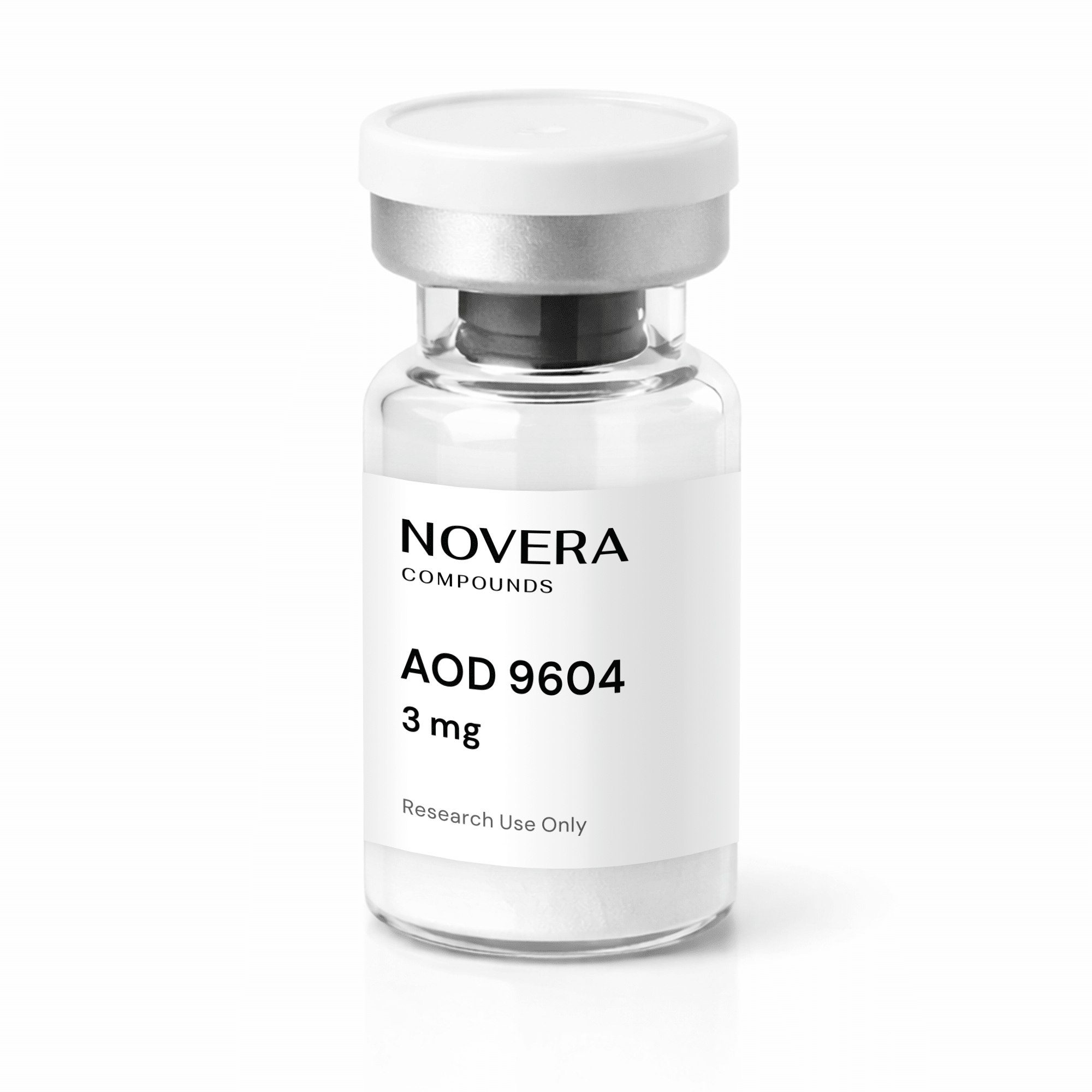
AOD 9604 3mg
Coming Soon
This peptide will be available soon. Join the waitlist to be notified when it launches.
Tier
| Packs | Discount (%) | For Each |
|---|---|---|
| 1 - 5 | — | $42.00 |
| 6 - 10 | 2.38 % | $41.00 |
| 11 - 20 | 4.76 % | $40.00 |
| 21+ | 7.14 % | $39.00 |
Shop with Confidence: 100% Authentic Products
All products are sourced from trusted suppliers and come with original manufacturer LOT numbers for identification and traceability.
Product description
What is AOD 9604 (3mg)?
AOD 9604 (3mg) is a synthetic peptide fragment derived from the C-terminal region of human growth hormone (hGH), specifically the lipolytic domain. It is classified as a metabolic peptide and is studied in preclinical research for its effects on lipid metabolism and adipocyte signaling, aiming to isolate its lipolytic activity from the broader metabolic effects of full-length hGH and IGF-1.
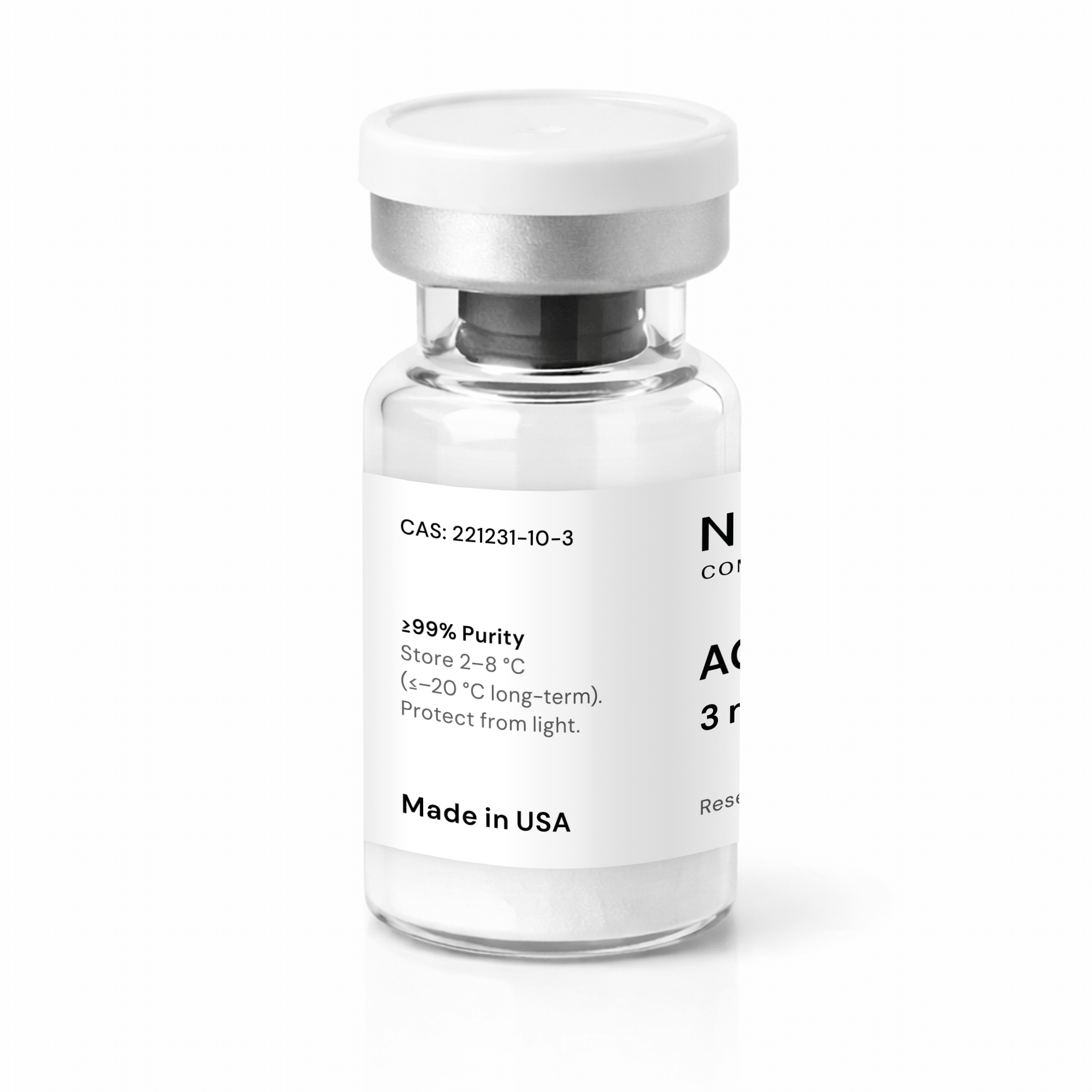
- CAS Number: 221231-10-3
- Chemical Formula: C₇₈H₁₂₃N₂₃O₂₃S₂
- Molecular Weight: 1815.10 g/mol
- Peptide Sequence: Tyr-Leu-Arg-Ile-Val-Gln-Cys-Arg-Ser-Val-Glu-Gly-Ser-Cys-Gly-Phe-OH
- Synonyms: AOD-9604, AOD 9604
Research-grade material is typically lyophilized (freeze-dried) and verified by HPLC and MS, with purity often reported as ≥99%, depending on the supplier’s Certificate of Analysis (COA).
What are the key features of AOD 9604 (3mg)?
AOD 9604 (3mg) is generally supplied as a lyophilized peptide in a vial for laboratory studies on metabolic signaling, fat cell biology, and energy regulation. It is studied in obesity and metabolic-dysregulation models, not as an approved treatment.
- 3 mg lyophilized vial for easy reconstitution in the lab
- Typically supplied with COA, HPLC, and MS verification (depending on the supplier)
- Studied as an hGH-fragment analog in fat metabolism and adipocyte (fat cell) signaling research
- Frequently used in metabolic research without the full hGH profile
- Suitable for in vitro and preclinical model research (protocol-specific)
- For laboratory research use only
Clinicians who buy AOD 9604 online should ensure that handling procedures, including cold chain management and reconstitution requirements, align with appropriate guidelines.
How is AOD 9604 (3mg) synthesized?
AOD 9604 is synthesized using solid-phase peptide synthesis (SPPS), a standard method for creating peptides in research. It is chemically assembled to match the specific hGH-fragment analog used in metabolic studies, not isolated from human tissue.
After synthesis, the peptide is purified using reverse-phase HPLC and characterized with mass spectrometry (MS) to confirm its identity and molecular weight. Suppliers typically provide a COA (Certificate of Analysis) to support reproducibility in research settings.
Before you buy peptides for weight loss online, take time to assess product information, sourcing transparency, and available documentation from potential suppliers.
What is AOD 9604 (3mg) being studied for? What are its possible benefits?
AOD 9604 is primarily being studied in metabolic and obesity-related models for its potential effects on fat breakdown (lipolysis), fat metabolism, and overall energy regulation. Early preclinical studies in obese animal models have shown reduced weight gain and increased fat breakdown in fat tissue under certain conditions.
Possible benefits being researched include:
- Support for fat mobilization (fat breakdown)
- Changes in adipocyte metabolic activity (fat cell activity)
- Maintenance of metabolic processes without the broader effects of full-length hGH
While there has been some discussion of human research in obesity treatments, the outcomes have been mixed, and clinical effectiveness has not been established. These effects are still being studied and vary by research model.
How does AOD 9604 (3mg) work in research studies?
In research studies, AOD 9604 is thought to influence fat metabolism and signaling in fat tissue and related metabolic systems. Studies suggest that it may change how fat cells respond to signals and affect metabolic gene activity, including its connection to the β3-adrenergic pathway in animal models.
In simpler terms, AOD 9604 is used in research to assess whether this short fragment of human growth hormone can promote greater fat breakdown, without the broader effects seen with full-length hGH. It is mainly used as a tool for studying adipocyte and metabolic pathways, rather than as a proven clinical treatment.
What dosing information exists for AOD 9604 (3mg)?
There are no standardized dosing guidelines for human use. The available dosing data come from preclinical and experimental studies, which vary by species, study type, and objectives.
For example, some rodent studies have used oral doses around 500 µg/kg daily for 19 days in obese Zucker rats, and injected doses in obese mice have ranged from 250–500 µg/kg/day in some experimental designs.
In in vitro studies, concentration-based approaches are often used (e.g., µM-range exposures in cell models), while safety or toxicology studies may use much higher doses depending on the protocol. These dosing values are research-specific and should not be interpreted as dosing recommendations for humans. The human dosing, pharmacokinetics, and efficacy are still unknown.
How should AOD 9604 (3mg) be stored and handled?
AOD 9604 (3mg) is typically supplied as a lyophilized peptide and should be stored to protect it from heat, light, and moisture. Proper storage ensures peptide stability and batch consistency during research.
Storage
- Long-term: Store at ≤–20 °C
- Short-term (after reconstitution): Store at 2–8 °C
- Protect from light and moisture
- Shelf life of up to 24 months (when properly stored and sealed)
- Room temperature exposure during transport is acceptable for short periods
Handling
- Use aseptic technique during reconstitution and aliquoting
- Avoid freeze-thaw cycles as much as possible to maintain peptide integrity
Citations
Research on AOD 9604 is typically focused on its individual components and related metabolic studies. Here are some key references for further reading:
[3 ] More MI, Kenley D. Safety and metabolism of AOD9604, a novel nutraceutical ingredient for improved metabolic health. J Endocrinol Metab. 2014;4(1-2):31-38. doi:10.14740/jem213w. https://www.jofem.org/index.php/jofem/article/view/213
[5] Heffernan M, Summers RJ, Thorburn A, et al. The effects of human GH and its lipolytic fragment (AOD9604) on lipid metabolism following chronic treatment in obese mice and beta(3)-AR knock-out mice. Endocrinology. 2001;142(12):5182-5189. doi:10.1210/endo.142.12.8522
Compliance Statement
This product is intended for laboratory research use only and is not approved for human or veterinary use.
Doctor Medica sources products exclusively through authorized distributors and established procurement channels. Products are verified as genuine, and supplied in the original packaging with their seal intact. Learn more about how we guarantee product authenticity, sourcing compliance, and traceable delivery to our clients.