Your Cart is Empty
Start shopping

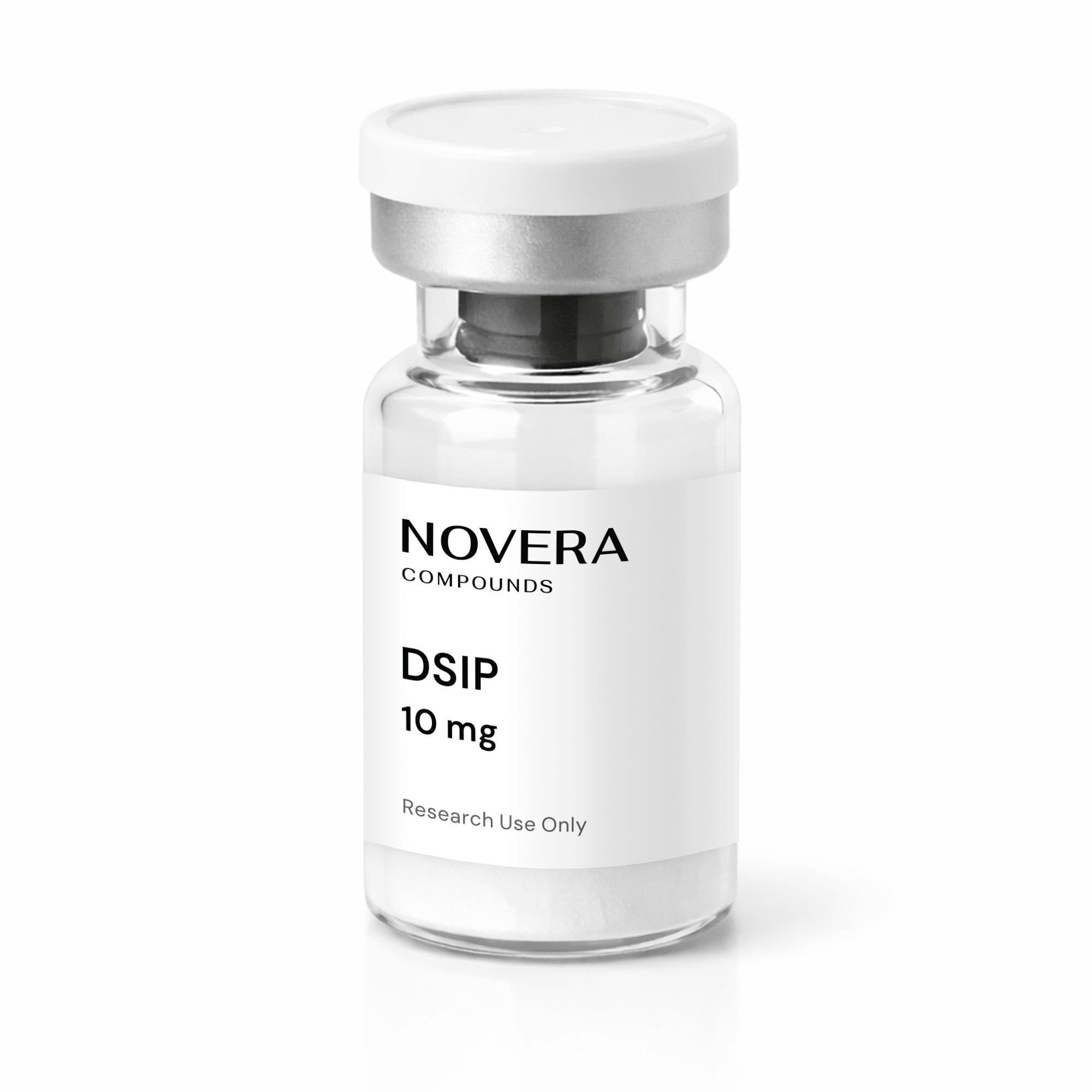
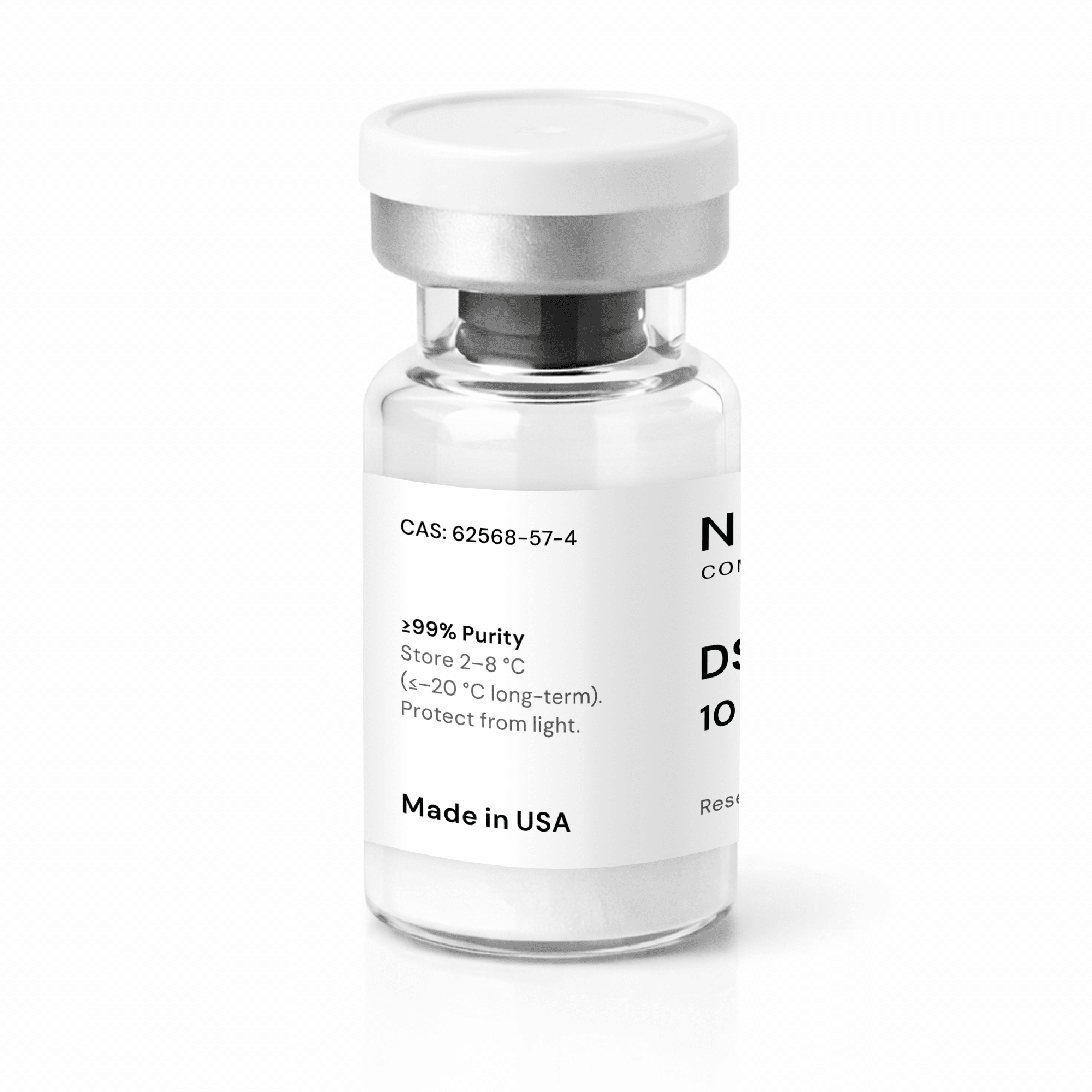
DSIP 10mg
Coming Soon
This peptide will be available soon. Join the waitlist to be notified when it launches.
Product description
What is DSIP?
Delta Sleep-Inducing Peptide (DSIP) is a naturally occurring neuropeptide that has been studied for its potential role in sleep regulation, stress-response pathways, and neuroendocrine signaling. In catalog listings, it is commonly referred to as the DSIP peptide, reflecting its classification as a short-chain peptide composed of nine amino acids. DSIP has a molecular weight of approximately 848.8 g/mol, placing it among the smaller regulatory peptides investigated in experimental neurobiological research. Purified synthetic versions used in laboratory settings typically feature purities above 95%, verified through analytical techniques such as high-performance liquid chromatography (HPLC) and mass spectrometry. DSIP continues to be studied in controlled in vitro and in vivo environments to better understand its biochemical characteristics and regulatory mechanisms.Product Specifications
- Product Name: DSIP (Delta Sleep-Inducing Peptide)
- Synonyms: Emideltide, Delta sleep-inducing peptide
- CAS Number: 62568-57-4
- Chemical Formula: C35H48N10O15
- Subscript Format: C₃₅H₄₈N₁₀O₁₅
- Molecular Weight: 848.8 g/mol
- Sequence: Trp-Ala-Gly-Gly-Asp-Ala-Ser-Glu
What are the key features of DSIP?
DSIP is usually supplied as a lyophilized powder in sealed vials to ensure stability during transportation and storage. This format allows researchers to handle the peptide in a controlled manner, improving consistency when designing experiments. Scientists who seek to buy DSIP typically use it to investigate neurochemical pathways, peptide-binding behavior, and cellular signaling mechanisms. Key features of DSIP include:- High purity (≥ 95%) verified through analytical testing
- Small peptide structure for efficient laboratory manipulation
- Lyophilized, stable formulation for long-term storage
- Investigated for sleep-related and neuroendocrine pathways
- Compatible with standard peptide solvents and handling techniques
- Common in preclinical studies evaluating neurochemical responses
- For laboratory research use only.
How is DSIP synthesized?
Laboratory-grade DSIP is produced through solid-phase peptide synthesis (SPPS), a method that allows precise assembly of its nine amino acids. SPPS ensures reproducibility across batches by building the sequence step by step, resulting in consistent molecular structure and purity. After synthesis, the peptide is purified by high-performance liquid chromatography (HPLC) to remove incomplete chains and impurities. Once purified, DSIP is further examined using mass spectrometry to verify molecular weights and confirm sequence integrity. Researchers using DSIP for research rely on these standardized manufacturing steps to ensure the peptide behaves predictably in experimental settings and aligns with published research findings.What is DSIP being studied for? What are its possible benefits?
DSIP has been studied for its role in sleep regulation, stress responses, and metabolic function. Research has examined DSIP in the context of sleep–wake cycle regulation, stress adaptation, and neuroendocrine signaling. These investigational areas remain preliminary and are not yet conclusive. Preclinical literature has explored DSIP's potential effects on several biological systems. Research has investigated its possible involvement in oxidative stress responses, cellular repair mechanisms, endocrine signaling, and metabolic processes. Some experimental models evaluate DSIP for its potential effects on protein synthesis and energy utilization. The designation DSIP sleep peptide reflects historical research focus on its sleep-related mechanisms, though no definitive clinical outcomes have been established. All findings remain limited to laboratory research environments.How does DSIP work in research studies?
In research studies, DSIP is investigated for its potential interaction with neurochemical pathways involved in sleep–wake regulation, metabolic function, and hormonal signaling. Laboratory models examine how DSIP may influence cellular signaling molecules and intracellular processes that regulate stress responses and energy balance. These mechanisms remain under investigation and vary depending on the experimental model used. DSIP is studied for its potential effects on neurotransmitter systems and cellular signaling pathways. Some preclinical studies explore peptide–protein interactions, while others assess possible effects on cellular membrane receptors or neurotransmitter balance.What dosing information exists for DSIP?
Preclinical studies investigating DSIP employ various concentrations depending on the research model and methodology:- In vivo murine models: 10–100 µg/kg (micrograms per kilogram body weight)
- In vitro cellular assays: 1–50 µM (micromolar concentrations)
How should DSIP be stored and handled?
Lyophilized DSIP should generally be stored at –20 °C, protected from light, humidity, and repeated freeze–thaw cycles. Keeping the peptide in a dark, airtight container helps maintain structural integrity over time. When reconstituted with sterile, laboratory-grade solvents, short-term storage at 2–8 °C is typically recommended for limited periods as per the handling practices. Peptide stability can vary depending on solvent type and exposure to temperature. To ensure consistency, many laboratories working with DSIP for research prepare small aliquots to reduce degradation and improve reproducibility. Following proper handling procedures helps maintain peptide quality for experimental use.Where can I read more research about DSIP?
Researchers interested in DSIP can explore various peer-reviewed publications focusing on peptide signaling, neurochemical regulation, and metabolic pathways. Relevant sources include:- Graf MV, Kastin AJ. Delta-sleep-inducing peptide (DSIP): a review. Neurosci Biobehav Rev. 1984;8(1):83-93. doi:10.1016/0149-7634(84)90022-8
- Iyer KS, Marks GA, Kastin AJ, McCann SM. Evidence for a role of delta sleep-inducing peptide in slow-wave sleep and sleep-related growth hormone release in the rat. Proc Natl Acad Sci U S A. 1988;85(10):3653-3656. doi:10.1073/pnas.85.10.3653
- Khvatova EM, Samartzev VN, Zagoskin PP, Prudchenko IA, Mikhaleva II. Delta sleep inducing peptide (DSIP): effect on respiration activity in rat brain mitochondria and stress protective potency under experimental hypoxia. Peptides. 2003;24(2):307-311. doi:10.1016/s0196-9781(03)00040-8
- Popovich IG, Voitenkov BO, Anisimov VN, et al. Effect of delta-sleep inducing peptide-containing preparation Deltaran on biomarkers of aging, life span and spontaneous tumor incidence in female SHR mice. Mech Ageing Dev. 2003;124(6):721-731. doi:10.1016/s0047-6374(03)00082-4
Compliance Statement
This product is intended for laboratory research use only and is not approved for human or veterinary use.Shop with Confidence: Product Authenticity is Guaranteed
All products available at Doctor Medica shop are obtained from respective manufacturers and contain original LOT numbers Contact us if you have any questions about product LOT numbers.
What is DSIP?
Delta Sleep-Inducing Peptide (DSIP) is a naturally occurring neuropeptide that has been studied for its potential role in sleep regulation, stress-response pathways, and neuroendocrine signaling. In catalog listings, it is commonly referred to as the DSIP peptide, reflecting its classification as a short-chain peptide composed of nine amino acids.
DSIP has a molecular weight of approximately 848.8 g/mol, placing it among the smaller regulatory peptides investigated in experimental neurobiological research.
Purified synthetic versions used in laboratory settings typically feature purities above 95%, verified through analytical techniques such as high-performance liquid chromatography (HPLC) and mass spectrometry. DSIP continues to be studied in controlled in vitro and in vivo environments to better understand its biochemical characteristics and regulatory mechanisms.
Product Specifications
- Product Name: DSIP (Delta Sleep-Inducing Peptide)
- Synonyms: Emideltide, Delta sleep-inducing peptide
- CAS Number: 62568-57-4
- Chemical Formula: C35H48N10O15
- Subscript Format: C₃₅H₄₈N₁₀O₁₅
- Molecular Weight: 848.8 g/mol
- Sequence: Trp-Ala-Gly-Gly-Asp-Ala-Ser-Glu
What are the key features of DSIP?
DSIP is usually supplied as a lyophilized powder in sealed vials to ensure stability during transportation and storage. This format allows researchers to handle the peptide in a controlled manner, improving consistency when designing experiments. Scientists who seek to buy DSIP typically use it to investigate neurochemical pathways, peptide-binding behavior, and cellular signaling mechanisms.
Key features of DSIP include:
- High purity (≥ 95%) verified through analytical testing
- Small peptide structure for efficient laboratory manipulation
- Lyophilized, stable formulation for long-term storage
- Investigated for sleep-related and neuroendocrine pathways
- Compatible with standard peptide solvents and handling techniques
- Common in preclinical studies evaluating neurochemical responses
- For laboratory research use only.
How is DSIP synthesized?
Laboratory-grade DSIP is produced through solid-phase peptide synthesis (SPPS), a method that allows precise assembly of its nine amino acids. SPPS ensures reproducibility across batches by building the sequence step by step, resulting in consistent molecular structure and purity. After synthesis, the peptide is purified by high-performance liquid chromatography (HPLC) to remove incomplete chains and impurities.
Once purified, DSIP is further examined using mass spectrometry to verify molecular weights and confirm sequence integrity. Researchers using DSIP for research rely on these standardized manufacturing steps to ensure the peptide behaves predictably in experimental settings and aligns with published research findings.
What is DSIP being studied for? What are its possible benefits?
DSIP has been studied for its role in sleep regulation, stress responses, and metabolic function. Research has examined DSIP in the context of sleep–wake cycle regulation, stress adaptation, and neuroendocrine signaling. These investigational areas remain preliminary and are not yet conclusive.
Preclinical literature has explored DSIP’s potential effects on several biological systems. Research has investigated its possible involvement in oxidative stress responses, cellular repair mechanisms, endocrine signaling, and metabolic processes. Some experimental models evaluate DSIP for its potential effects on protein synthesis and energy utilization.
The designation DSIP sleep peptide reflects historical research focus on its sleep-related mechanisms, though no definitive clinical outcomes have been established. All findings remain limited to laboratory research environments.
How does DSIP work in research studies?
In research studies, DSIP is investigated for its potential interaction with neurochemical pathways involved in sleep–wake regulation, metabolic function, and hormonal signaling. Laboratory models examine how DSIP may influence cellular signaling molecules and intracellular processes that regulate stress responses and energy balance. These mechanisms remain under investigation and vary depending on the experimental model used.
DSIP is studied for its potential effects on neurotransmitter systems and cellular signaling pathways. Some preclinical studies explore peptide–protein interactions, while others assess possible effects on cellular membrane receptors or neurotransmitter balance.
What dosing information exists for DSIP?
Preclinical studies investigating DSIP employ various concentrations depending on the research model and methodology:
- In vivo murine models: 10–100 µg/kg (micrograms per kilogram body weight)
- In vitro cellular assays: 1–50 µM (micromolar concentrations)
Note: No human dosing guidelines exist for DSIP. All available information pertains exclusively to preclinical or in-vitro testing conditions. Scientific listings sometimes reference these ranges when describing DSIP peptide concentrations used in preclinical research protocols.
How should DSIP be stored and handled?
Lyophilized DSIP should generally be stored at –20 °C, protected from light, humidity, and repeated freeze–thaw cycles. Keeping the peptide in a dark, airtight container helps maintain structural integrity over time. When reconstituted with sterile, laboratory-grade solvents, short-term storage at 2–8 °C is typically recommended for limited periods as per the handling practices.
Peptide stability can vary depending on solvent type and exposure to temperature. To ensure consistency, many laboratories working with DSIP for research prepare small aliquots to reduce degradation and improve reproducibility. Following proper handling procedures helps maintain peptide quality for experimental use.
Where can I read more research about DSIP?
Researchers interested in DSIP can explore various peer-reviewed publications focusing on peptide signaling, neurochemical regulation, and metabolic pathways. Relevant sources include:
- Graf MV, Kastin AJ. Delta-sleep-inducing peptide (DSIP): a review. Neurosci Biobehav Rev. 1984;8(1):83-93. doi:10.1016/0149-7634(84)90022-8
- Iyer KS, Marks GA, Kastin AJ, McCann SM. Evidence for a role of delta sleep-inducing peptide in slow-wave sleep and sleep-related growth hormone release in the rat. Proc Natl Acad Sci U S A. 1988;85(10):3653-3656. doi:10.1073/pnas.85.10.3653
- Khvatova EM, Samartzev VN, Zagoskin PP, Prudchenko IA, Mikhaleva II. Delta sleep inducing peptide (DSIP): effect on respiration activity in rat brain mitochondria and stress protective potency under experimental hypoxia. Peptides. 2003;24(2):307-311. doi:10.1016/s0196-9781(03)00040-8
- Popovich IG, Voitenkov BO, Anisimov VN, et al. Effect of delta-sleep inducing peptide-containing preparation Deltaran on biomarkers of aging, life span and spontaneous tumor incidence in female SHR mice. Mech Ageing Dev. 2003;124(6):721-731. doi:10.1016/s0047-6374(03)00082-4
Compliance Statement
This product is intended for laboratory research use only and is not approved for human or veterinary use.