Your Cart is Empty
Start shopping

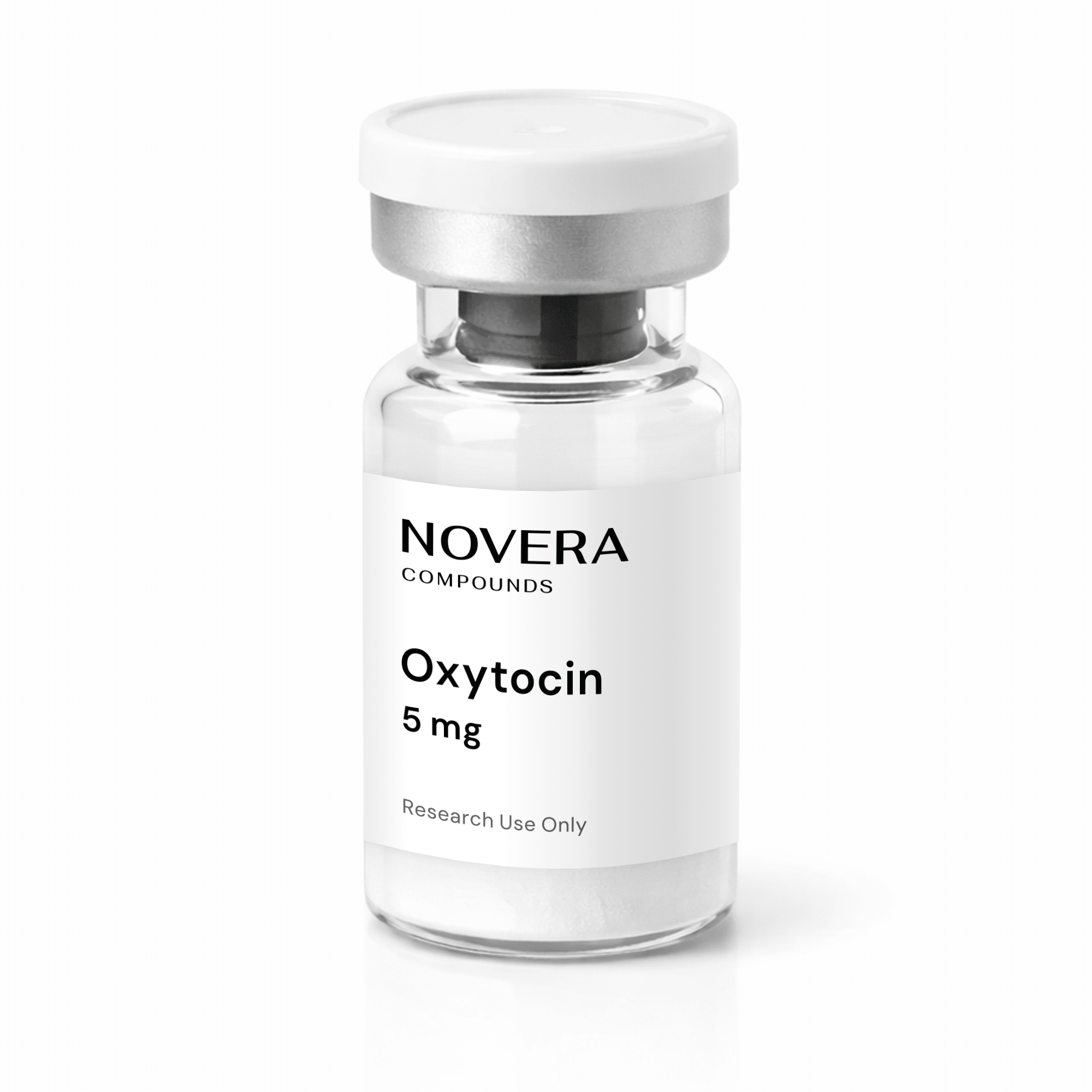
Oxytocin 5mg
Tier
| Packs | Discount (%) | For Each |
|---|---|---|
| 1 - 5 | — | $44.00 |
| 6 - 10 | 9.09 % | $40.00 |
| 11 - 20 | 18.18 % | $36.00 |
| 21+ | 25 % | $33.00 |
Shop with Confidence: 100% Authentic Products
All products are sourced from trusted suppliers and come with original manufacturer LOT numbers for identification and traceability.
Product description
What is Oxytocin (5mg)?
Oxytocin (5mg) is a synthetic laboratory-grade version of the naturally occurring neuropeptide hormone oxytocin. It is commonly used in biochemical and neuroscience research to explore hormonal signaling pathways involved in reproduction, behavior, and neuroendocrine communication. The peptide is often categorized as a sexual health and hormonal peptide due to its established roles in reproductive physiology and neuroendocrine signaling. When looking to order Oxytocin online, it is important to review sourcing information, supplier transparency, and whether proper storage conditions have been maintained.
Oxytocin consists of nine amino acids arranged in a cyclic structure, stabilized by a disulfide bond. Standard research identifiers include:
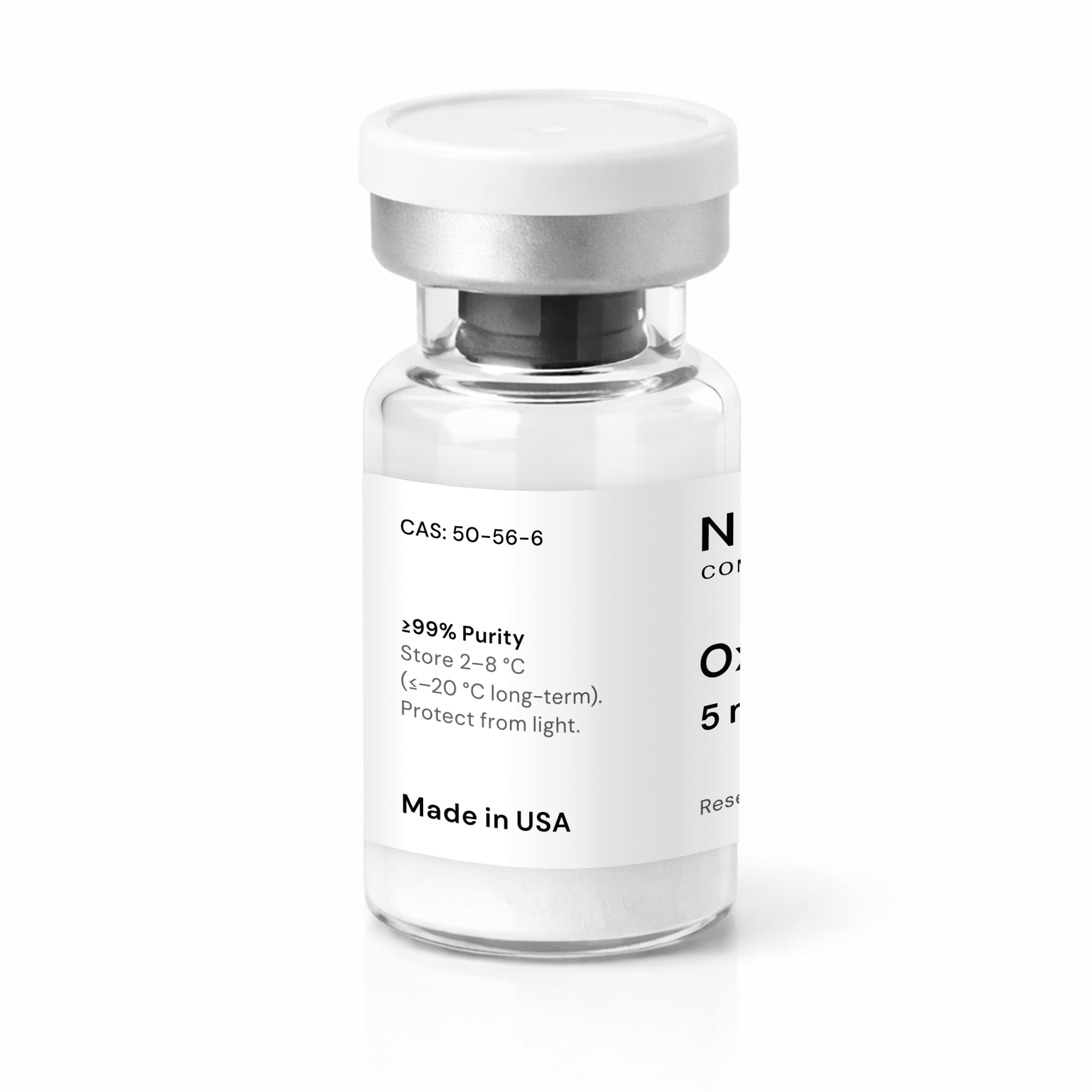
- CAS Number: 50-56-6
- Chemical Formula: C₄₃H₆₆N₁₂O₁₂S₂
- Molecular Weight: 1007.2 g/mol
- Peptide Sequence: Cys-Tyr-Ile-Gln-Asn-Cys-Pro-Leu-Gly-NH₂
- Synonyms: Pitocin, Endopituitrina
Oxytocin is frequently studied for its role in neuroendocrine communication and behavioral signaling in laboratory settings.
What are the key features of Oxytocin (5mg)?
Oxytocin (5mg) is supplied as a freeze-dried peptide powder designed for laboratory reconstitution prior to experimental use. This format allows researchers to prepare precise concentrations suitable for cellular, biochemical, or animal studies. High analytical purity ensures reproducibility in experiments involving hormonal signaling and behavioral research.
Key features include:
- High-purity peptide, commonly verified at ≥99% using analytical techniques such as HPLC
- Lyophilized powder format for stability and long-term storage
- 5 mg vial size, suitable for smaller studies or pilot experiments
- Quality verification using methods such as mass spectrometry (MS) and chromatographic testing
- Commonly used in neuroendocrine, behavioral, and reproductive research models
- Produced under controlled laboratory manufacturing conditions
- For laboratory research use only
These features make Oxytocin a valuable reagent for studies in neuroendocrine signaling and reproductive physiology.
How is Oxytocin (5mg) synthesized?
Oxytocin is synthesized using solid-phase peptide synthesis (SPPS), a controlled method for assembling peptides from individual amino acids. In this process, the nine amino acids that form the oxytocin chain are sequentially linked together. Once the peptide backbone is assembled, a controlled oxidation step forms the disulfide bond, creating the characteristic cyclic structure of oxytocin.
After synthesis, the peptide undergoes purification to remove residual reagents and incomplete peptide fragments. Analytical techniques such as high-performance liquid chromatography (HPLC) are used to verify peptide purity, while mass spectrometry (MS) confirms the correct molecular weight and structural identity. These procedures ensure the peptide meets the required standards for sensitive experimental work.
What is Oxytocin (5mg) being studied for? What are its possible benefits?
Oxytocin has been widely studied for its effects on neuroendocrine communication and smooth muscle activity. In reproductive physiology research, it is often used to investigate mechanisms related to uterine contraction and lactation signaling, where it acts as a signaling molecule between the endocrine and muscular systems.
In neuroscience, oxytocin is being studied for its potential role in social interaction, emotional processing, and stress responses. Experimental studies have examined how the peptide may influence behaviors such as bonding, parental responses, and social recognition in animal models.
Additional areas of investigation include:
- Cardiovascular and metabolic signaling pathways
- Inflammatory responses and tissue repair mechanisms
- Neurotransmission and neural circuit activity
These potential biological effects remain subjects of ongoing research and are primarily observed in controlled laboratory and preclinical environments.
How does Oxytocin (5mg) work in research studies?
In experimental systems, oxytocin functions as a signaling molecule that interacts with cellular receptors located in neural and peripheral tissues. When oxytocin binds to these receptors, it triggers intracellular signaling events that influence cell activity.
Researchers often examine how oxytocin alters calcium signaling, gene expression, and protein activity within targeted cells. These changes may affect processes such as muscle contraction, neurotransmitter release, or cellular communication between tissues.
Because of these signaling properties, oxytocin is frequently used in laboratory studies designed to evaluate neuroendocrine regulation, behavioral responses, and physiological adaptation to stress or environmental stimuli.
What dosing information exists for Oxytocin (5mg)?
Dosing protocols for oxytocin vary across research models. Experimental studies typically adjust dosage according to species, route of administration, and research objectives.
For example, some murine studies examining behavioral responses have administered oxytocin at approximately 10 µg/kg or similar ranges, depending on the study design. Other laboratory models investigating uterine contractility or endocrine signaling may use lower concentrations or localized administration.
Because oxytocin is studied in various experimental settings, including in vitro cell cultures, rodent behavioral models, and endocrine physiology experiments, dosing approaches differ across studies.
It is important to note that no standardized human dosing guidelines exist for Oxytocin (5mg) as a research reagent. Researchers typically follow protocols described in peer-reviewed literature when designing experiments.
How should Oxytocin (5mg) be stored and handled?
For those who order hormone peptides online, understanding transportation conditions, cold storage requirements, and preparation guidelines is an important part of evaluating product information.
- Store lyophilized Oxytocin at ≤–20 °C. Protect from light and moisture.
- After reconstitution, store solutions at 2–8 °C and minimize freeze–thaw cycles by preparing single-use aliquots.
- Document preparation conditions and lot numbers to support experimental reproducibility.
Careful documentation of preparation conditions and lot numbers is recommended to support experimental reproducibility. This peptide is for laboratory research use only.
Citations
Researchers interested in oxytocin biology can consult several well-established scientific databases and peer-reviewed publications:
[3] Janz P, Knoflach F, Bleicher K, et al. Selective oxytocin receptor activation prevents prefrontal circuit dysfunction and social behavioral alterations in response to chronic prefrontal cortex activation in male rats. Front Cell Neurosci. 2023;17:1286552. Published 2023 Dec 7. doi:10.3389/fncel.2023.1286552
These sources provide detailed discussions on oxytocin’s biochemical properties, physiological functions, and research applications.
Compliance Statement
This product is intended for laboratory research use only and is not approved for human or veterinary use.
All claims and references on this page apply only to the genuine product, and not replicas or products that cannot be traced back to the official manufacturer. Read more to learn how product authenticity is verified.