Your Cart is Empty
Start shopping
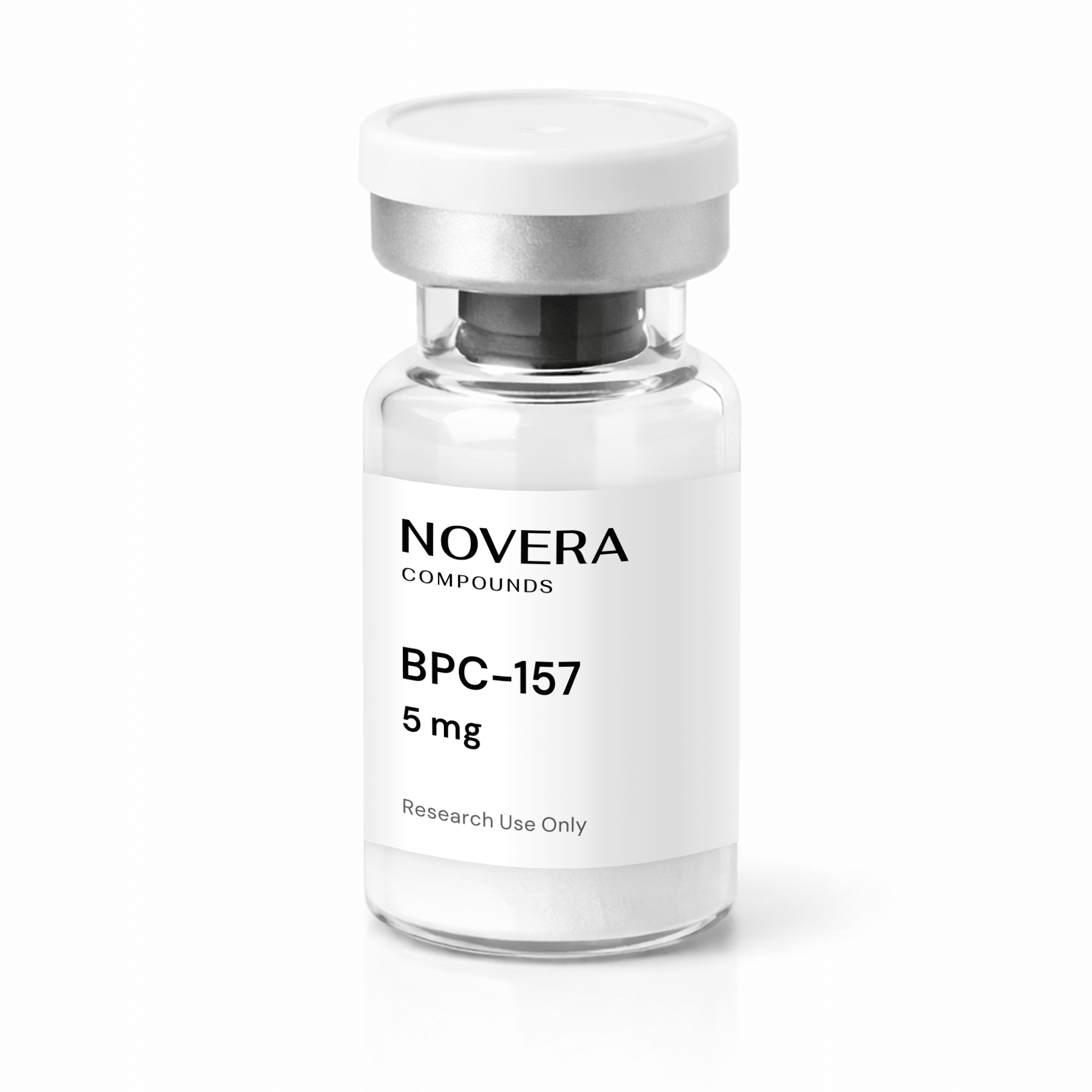
BPC-157 5mg
Coming Soon
This peptide will be available soon. Join the waitlist to be notified when it launches.
Tier
| Packs | Discount (%) | For Each |
|---|---|---|
| 1 - 5 | — | $51.00 |
| 6 - 10 | 1.96 % | $50.00 |
| 11 - 20 | 3.92 % | $49.00 |
| 21+ | 5.88 % | $48.00 |
Shop with Confidence: 100% Authentic Products
All products are sourced from trusted suppliers and come with original manufacturer LOT numbers for identification and traceability.
Product description
What is BPC 157 (5mg)?
BPC 157 (5mg) is a synthetic peptide composed of 15 amino acids. It has been studied in preclinical research for its potential role in tissue repair and related processes. Often referred to as a fragment of compounds originally associated with gastric protective pathways, it is being investigated in models of soft tissue and vascular injury.
Identification Characteristics
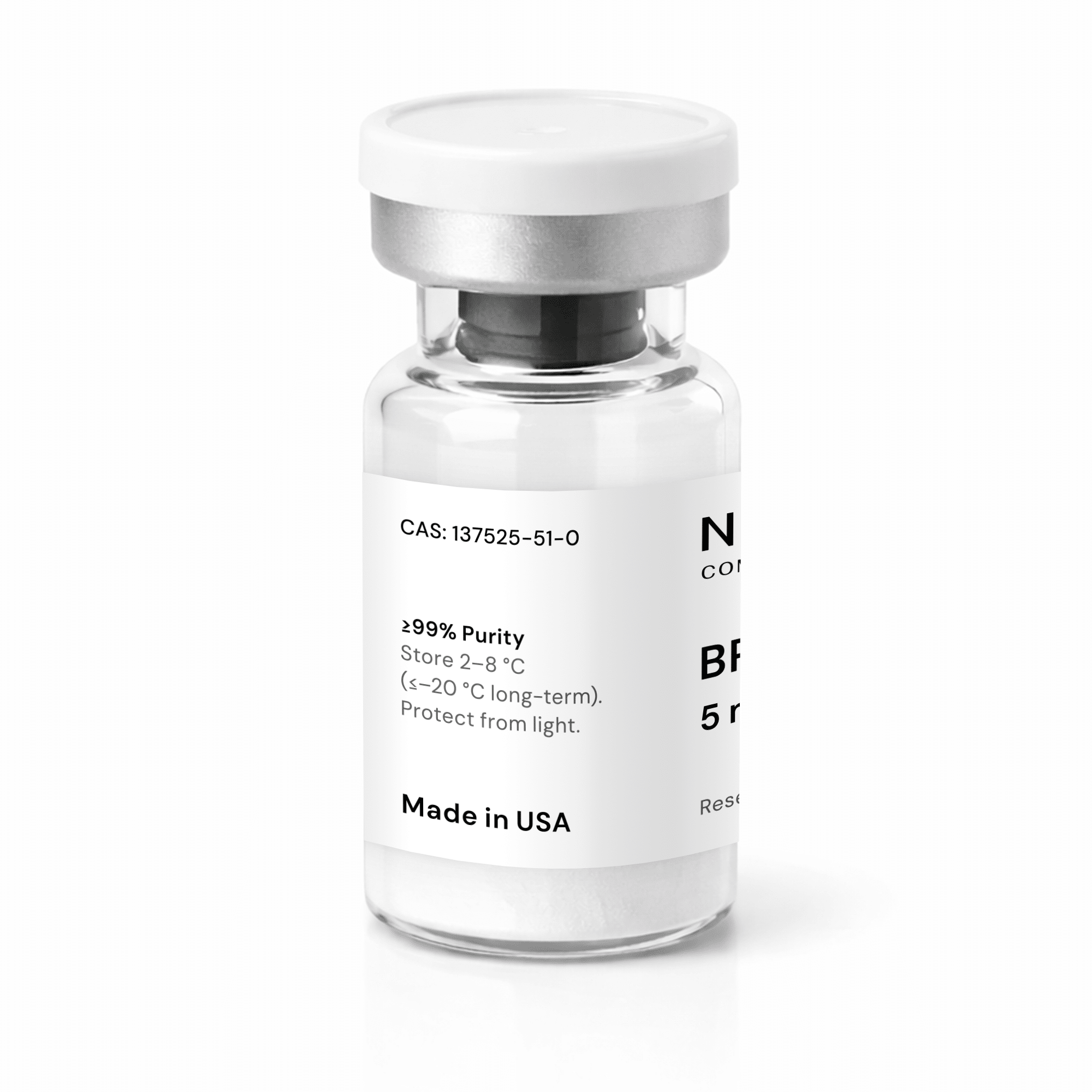
- CAS Number: 137525-51-0
- Chemical Formula: C₆₂H₉₈N₁₆O₂₂
- Molecular Weight: 1419.5 g/mol
- Sequence: Gly-Glu-Pro-Pro-Pro-Gly-Lys-Pro-Ala-Asp-Asp-Ala-Gly-Leu-Val
What are the key features of BPC 157 (5mg)?
BPC 157 (5mg) is supplied as a research-grade peptide suitable for controlled experimental applications. Key features include:
- ≥98% purity (HPLC verified; see lot-specific CoA for confirmed values)
- Supplied as 5 mg lyophilized peptide powder in a sealed vial.
- Peptide class: Pentadecapeptide (15 amino acids).
- Common research focus: Tissue repair, soft tissue regeneration, and vascular responses.
- Verified purity via HPLC and mass spectrometry (MS).
- For laboratory research use only.
- Intended strictly for in vitro and preclinical investigations.
When looking to buy BPC-157 wholesale, it is important to review sourcing information, supplier transparency, and whether proper storage conditions have been maintained.
How is BPC 157 (5mg) synthesized?
BPC 157 (5mg) is synthesized using solid-phase peptide synthesis (SPPS), a method that builds the 15-amino-acid sequence in a controlled, stepwise manner. No metal ion coordination is involved. The peptide is purified by high-performance liquid chromatography (HPLC) to achieve research-grade purity. Its molecular identity and weight are confirmed through mass spectrometry (MS). The final product is lyophilized to improve stability during storage and handling. Medical practitioners who order BPC-157 wholesale should be aware of proper storage, handling, and reconstitution practices to help maintain product integrity during evaluation.
What is BPC 157 (5mg) being studied for? What are its possible benefits?
BPC 157 (5mg) is being studied in preclinical research for its potential role in:
- Tendon and ligament repair models
- Gastric and intestinal mucosa research
- Angiogenesis and endothelial cell studies
- Nitric oxide pathway modulation
- Growth hormone receptor expression in fibroblast models
These research areas focus on BPC 157’s involvement in tissue repair, cell migration, and vascular responses. These findings are based on experimental data and are not yet established as clinical outcomes in humans.
How does BPC 157 (5mg) work in research studies?
Mechanistic research suggests that BPC 157 may modulate pathways involved in tissue response and vascular function. Studies have explored its effects on:
- Growth factor signaling
- Nitric oxide balance
- Endothelial cell migration
- Fibroblast repair activity
In tendon fibroblast studies, BPC 157 has been shown to increase growth hormone receptor expression. Endothelial cell studies have demonstrated their effects on cell migration and tube formation. These results suggest BPC 157 may have a role in tissue repair, but clinical efficacy has not been established. Anyone looking to buy peptides for healing wholesale should consider factors such as authenticity documentation, storage conditions, and sourcing practices when reviewing available information.
What dosing information exists for BPC 157 (5mg)?
Most dosing information for BPC 157 comes from preclinical studies, which vary based on tissue type, model, and study design. In vitro studies have used concentrations of 0.1–0.5 μg/mL for tendon fibroblast experiments and 1–10 μg/mL for endothelial cell migration assays.
In animal models, local concentrations have been reported in the ng/mL range (e.g., 200–800 ng/mL in a rat wound-healing study). These values should be considered experimental parameters, and there are no validated human dosing guidelines for BPC 157 (5mg).
How should BPC 157 (5mg) be stored and handled?
BPC 157 (5mg) should be stored according to the manufacturer’s instructions. Typically, the lyophilized powder should be stored at –20 °C, protected from light and moisture, and kept free from repeated temperature cycling.
After reconstitution with a sterile laboratory-grade solvent, BPC 157 should be stored at 2–8 °C. It’s essential to label the vial properly, limit storage time, and prevent contamination. Stability and shelf life depend on the formulation and supplier-specific data. Researchers should rely on the supplier’s validated COA for storage guidelines.
Citations
Compliance Statement
This product is intended for laboratory research use only and is not approved for human or veterinary use.
All claims and references on this page apply only to the genuine product, and not replicas or products that cannot be traced back to the official manufacturer. Read more to learn how product authenticity is verified.