Your Cart is Empty
Start shopping

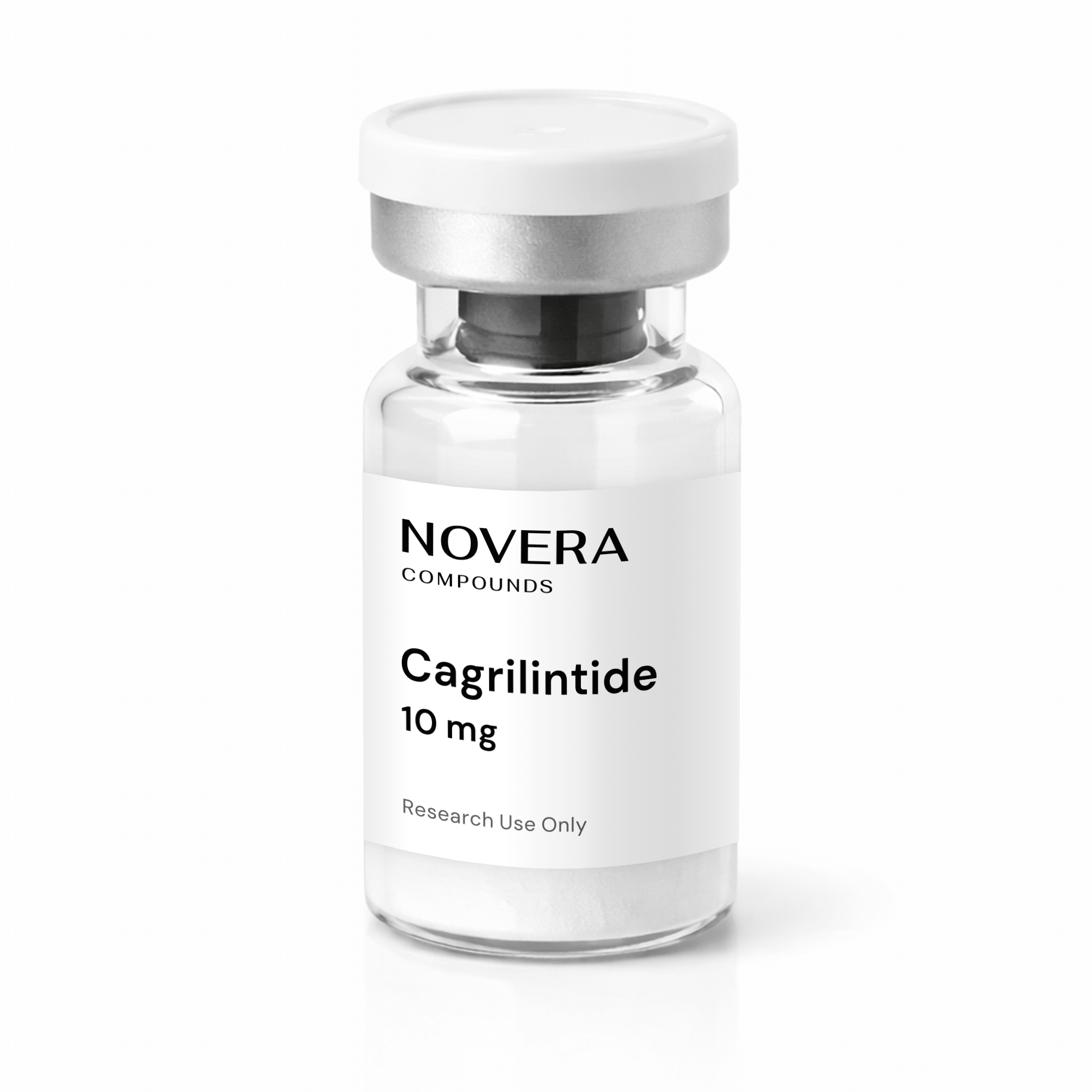
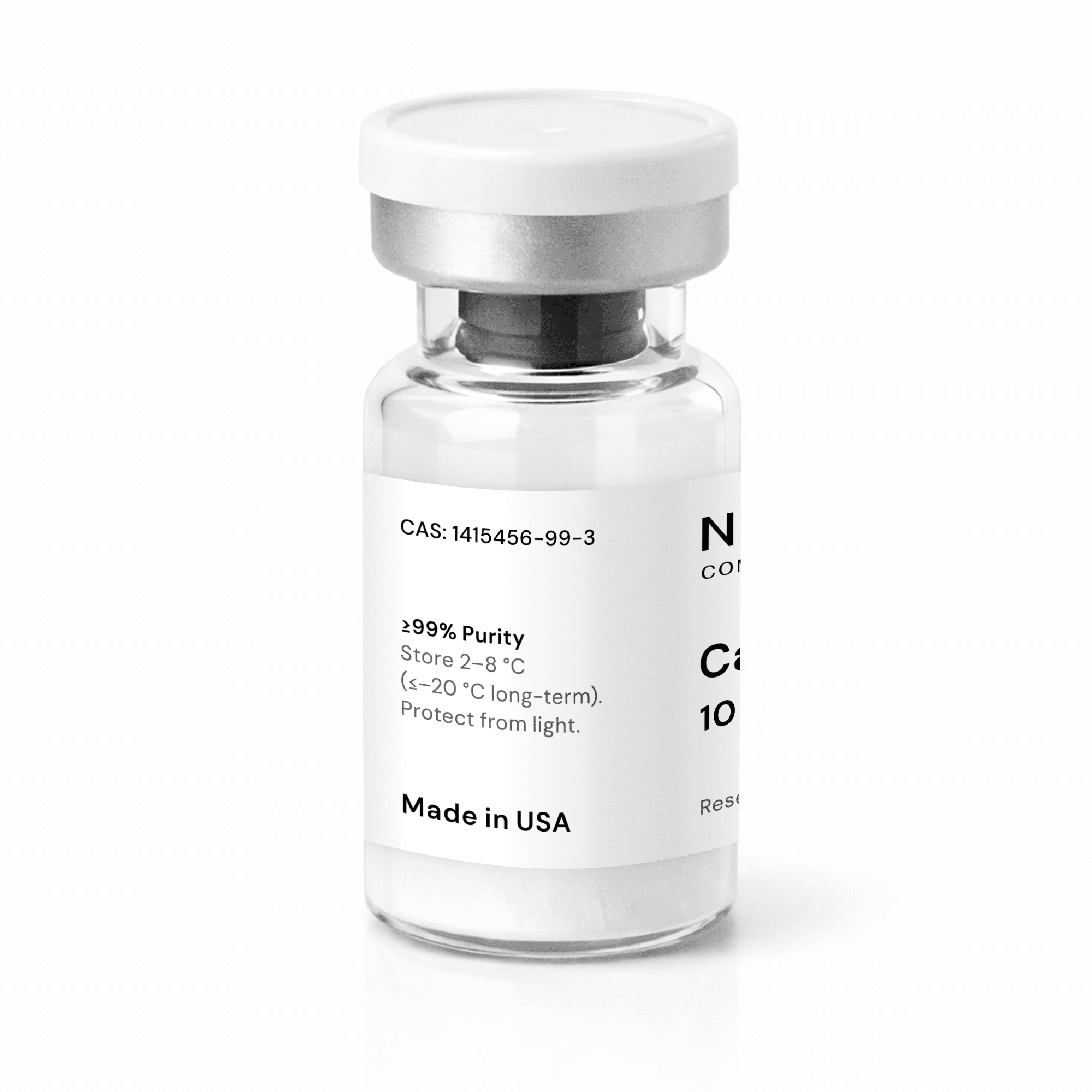
Cagrilintide 10mg
Tier
| Packs | Discount (%) | For Each |
|---|---|---|
| 1 - 5 | — | $226.00 |
| 6 - 10 | 10.18 % | $203.00 |
| 11 - 20 | 19.03 % | $183.00 |
| 21+ | 26.99 % | $165.00 |
Product description
What is Cagrilintide (10mg)?
Cagrilintide is a long-acting amylin analogue peptide that has been studied in metabolic research, particularly in models and clinical trials evaluating appetite regulation and body weight. It is a synthetic peptide analogue of amylin, a hormone involved in regulating energy intake and metabolic processes.- CAS Number: 1415456-99-3
- Chemical Formula: C₁₉₄H₃₁₂N₅₄O₅₉S₂
- Molecular Weight: 4408.258 g/mol
- Sequence: XKCNTATCATQRLAEFLRHSSNNFGPILPPTNVGSNTP
What are the key features of Cagrilintide (10mg)?
Cagrilintide (10mg) is typically listed in research catalogs as a peptide for laboratory use, particularly in metabolic and appetite regulation research models. Key features include:- Peptide class: Long-acting amylin analogue (research-use peptide)
- Subcategory: Metabolic & Appetite Regulation Research Peptides
- Structure: Lipidated amylin analogue with a fatty diacid chain conjugate conferring extended half-life
- Research focus: Investigated in body weight regulation and metabolic control
- Format: Supplied as a 10 mg vial (verify presentation with supplier documentation)
- Quality verification: Purity and identity confirmed by HPLC and mass spectrometry (MS)
- Compliance: For laboratory research use only
How is Cagrilintide (10mg) synthesized?
Cagrilintide is a synthetic peptide analogue, developed from amylin to improve stability and extend its activity duration. It is produced using peptide synthesis methods and characterized through analytical techniques such as HPLC for purity and MS for mass confirmation.What is Cagrilintide (10mg) being studied for? What are its possible benefits?
Cagrilintide is being researched primarily in metabolic models, focusing on its effects on body weight, food intake, and metabolic outcomes. It is commonly investigated as a long-acting amylin analogue, sometimes used in combination with other metabolic agents. Possible biological benefits under investigation include:- Reduced energy intake
- Altered satiety signaling
- Modulation of body weight-related outcomes
How does Cagrilintide (10mg) work in research studies?
Cagrilintide is thought to influence biological pathways involved in appetite regulation and energy balance. Mechanistic studies suggest that it binds in a manner similar to amylin, affecting cellular signaling and neuroendocrine pathways. Preclinical studies have shown changes in food intake and body weight under controlled experimental conditions. However, it is important to describe this as modulation of signaling pathways, not as proven therapeutic effects.What dosing information exists for Cagrilintide (10mg)?
Published clinical trial data describe weekly dose-escalation protocols ranging from sub-milligram to low-milligram levels in controlled study populations. These parameters are specific to the cited trial design and should not be used as dosing guidance. There are no established dosing guidelines for Cagrilintide (10mg) outside of regulated clinical research settings.How should Cagrilintide (10mg) be stored and handled?
Cagrilintide (10mg) should be stored according to the supplier’s instructions. Typically, lyophilized peptide powders are stored at low temperatures (around –20 °C), protected from light and moisture, and shielded from repeated freeze-thaw cycles to maintain integrity. If reconstituted for laboratory use, store Cagrilintide at 2–8 °C under sterile handling conditions. It is important to label the vial properly, minimize storage time, and follow sterile handling protocols. Shelf life and stability depend on the formulation, so refer to the supplier’s COA for the most accurate storage guidance.Where can I read more research about Cagrilintide (10mg)?
- Kruse T, Hansen JL, Dahl K, et al. Development of Cagrilintide, a Long-Acting Amylin Analogue. J Med Chem. 2021;64(15):11183-11194. doi:10.1021/acs.jmedchem.1c00565
- Cao J, Belousoff MJ, Johnson RM, et al. Structural and dynamic features of cagrilintide binding to calcitonin and amylin receptors. Nat Commun. 2025;16(1):3389. Published 2025 Apr 10. doi:10.1038/s41467-025-58680-y
- Carvas AO, Leuthardt A, Kulka P, et al. Cagrilintide lowers bodyweight through brain amylin receptors 1 and 3. EBioMedicine. 2025;118:105836. doi:10.1016/j.ebiom.2025.105836
Shop with Confidence: Product Authenticity is Guaranteed
All products available at Doctor Medica shop are obtained from respective manufacturers and contain original LOT numbers Contact us if you have any questions about product LOT numbers.
What is Cagrilintide (10mg)?
Cagrilintide is a long-acting amylin analogue peptide that has been studied in metabolic research, particularly in models and clinical trials evaluating appetite regulation and body weight. It is a synthetic peptide analogue of amylin, a hormone involved in regulating energy intake and metabolic processes.
- CAS Number: 1415456-99-3
- Chemical Formula: C₁₉₄H₃₁₂N₅₄O₅₉S₂
- Molecular Weight: 4408.258 g/mol
- Sequence: XKCNTATCATQRLAEFLRHSSNNFGPILPPTNVGSNTP
What are the key features of Cagrilintide (10mg)?
Cagrilintide (10mg) is typically listed in research catalogs as a peptide for laboratory use, particularly in metabolic and appetite regulation research models. Key features include:
- Peptide class: Long-acting amylin analogue (research-use peptide)
- Subcategory: Metabolic & Appetite Regulation Research Peptides
- Structure: Lipidated amylin analogue with a fatty diacid chain conjugate conferring extended half-life
- Research focus: Investigated in body weight regulation and metabolic control
- Format: Supplied as a 10 mg vial (verify presentation with supplier documentation)
- Quality verification: Purity and identity confirmed by HPLC and mass spectrometry (MS)
- Compliance: For laboratory research use only
How is Cagrilintide (10mg) synthesized?
Cagrilintide is a synthetic peptide analogue, developed from amylin to improve stability and extend its activity duration. It is produced using peptide synthesis methods and characterized through analytical techniques such as HPLC for purity and MS for mass confirmation.
What is Cagrilintide (10mg) being studied for? What are its possible benefits?
Cagrilintide is being researched primarily in metabolic models, focusing on its effects on body weight, food intake, and metabolic outcomes. It is commonly investigated as a long-acting amylin analogue, sometimes used in combination with other metabolic agents.
Possible biological benefits under investigation include:
- Reduced energy intake
- Altered satiety signaling
- Modulation of body weight-related outcomes
These findings are based on research studies and development hypotheses rather than established clinical outcomes. Cagrilintide is being studied for its role in metabolic regulation, but its therapeutic effects are not yet confirmed.
How does Cagrilintide (10mg) work in research studies?
Cagrilintide is thought to influence biological pathways involved in appetite regulation and energy balance. Mechanistic studies suggest that it binds in a manner similar to amylin, affecting cellular signaling and neuroendocrine pathways.
Preclinical studies have shown changes in food intake and body weight under controlled experimental conditions. However, it is important to describe this as modulation of signaling pathways, not as proven therapeutic effects.
What dosing information exists for Cagrilintide (10mg)?
Published clinical trial data describe weekly dose-escalation protocols ranging from sub-milligram to low-milligram levels in controlled study populations. These parameters are specific to the cited trial design and should not be used as dosing guidance. There are no established dosing guidelines for Cagrilintide (10mg) outside of regulated clinical research settings.
How should Cagrilintide (10mg) be stored and handled?
Cagrilintide (10mg) should be stored according to the supplier’s instructions. Typically, lyophilized peptide powders are stored at low temperatures (around –20 °C), protected from light and moisture, and shielded from repeated freeze-thaw cycles to maintain integrity.
If reconstituted for laboratory use, store Cagrilintide at 2–8 °C under sterile handling conditions. It is important to label the vial properly, minimize storage time, and follow sterile handling protocols. Shelf life and stability depend on the formulation, so refer to the supplier’s COA for the most accurate storage guidance.
Where can I read more research about Cagrilintide (10mg)?
- Kruse T, Hansen JL, Dahl K, et al. Development of Cagrilintide, a Long-Acting Amylin Analogue. J Med Chem. 2021;64(15):11183-11194. doi:10.1021/acs.jmedchem.1c00565
- Cao J, Belousoff MJ, Johnson RM, et al. Structural and dynamic features of cagrilintide binding to calcitonin and amylin receptors. Nat Commun. 2025;16(1):3389. Published 2025 Apr 10. doi:10.1038/s41467-025-58680-y
- Carvas AO, Leuthardt A, Kulka P, et al. Cagrilintide lowers bodyweight through brain amylin receptors 1 and 3. EBioMedicine. 2025;118:105836. doi:10.1016/j.ebiom.2025.105836
Compliance Statement
This product is intended for laboratory research use only and is not approved for human or veterinary use.