Your Cart is Empty
Start shopping

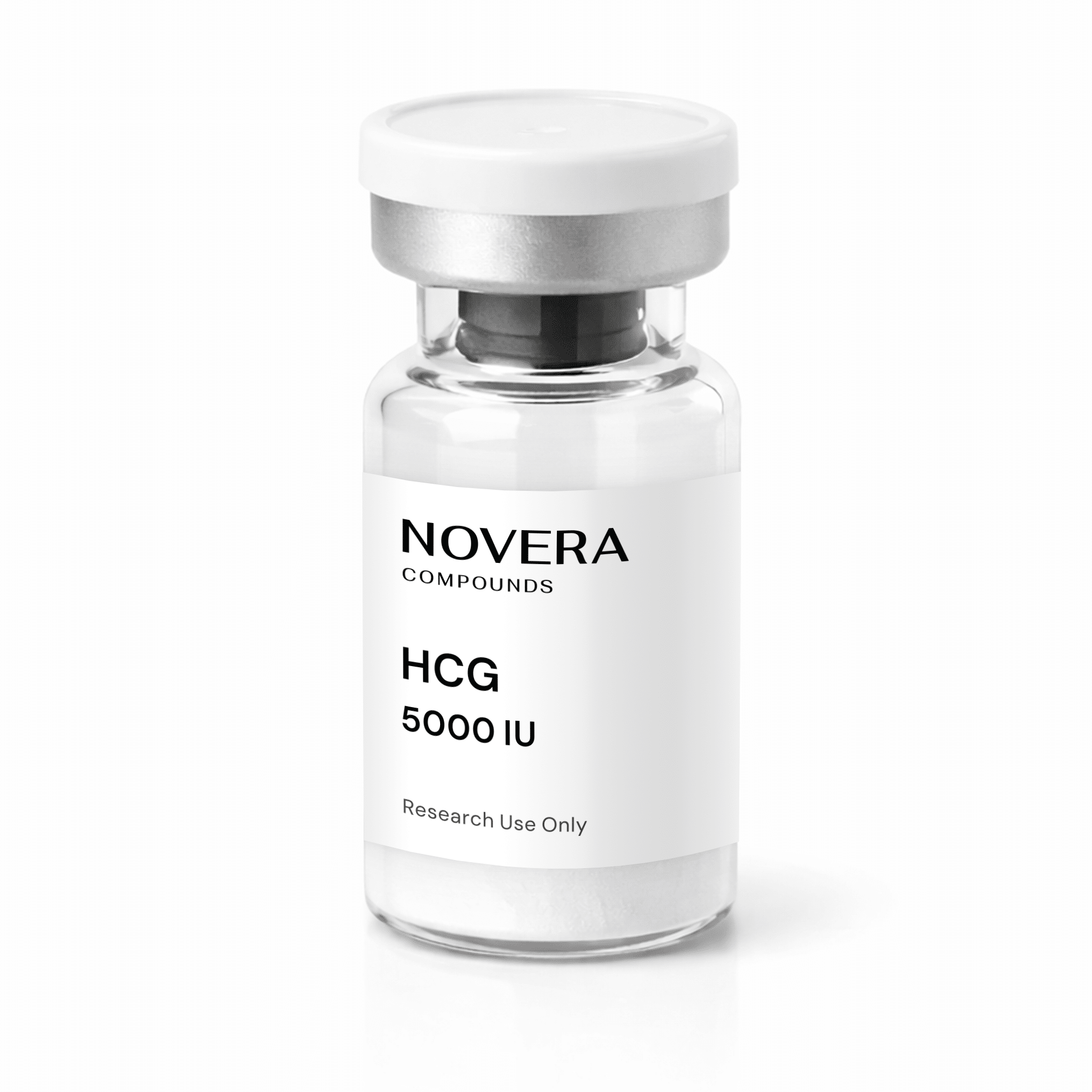
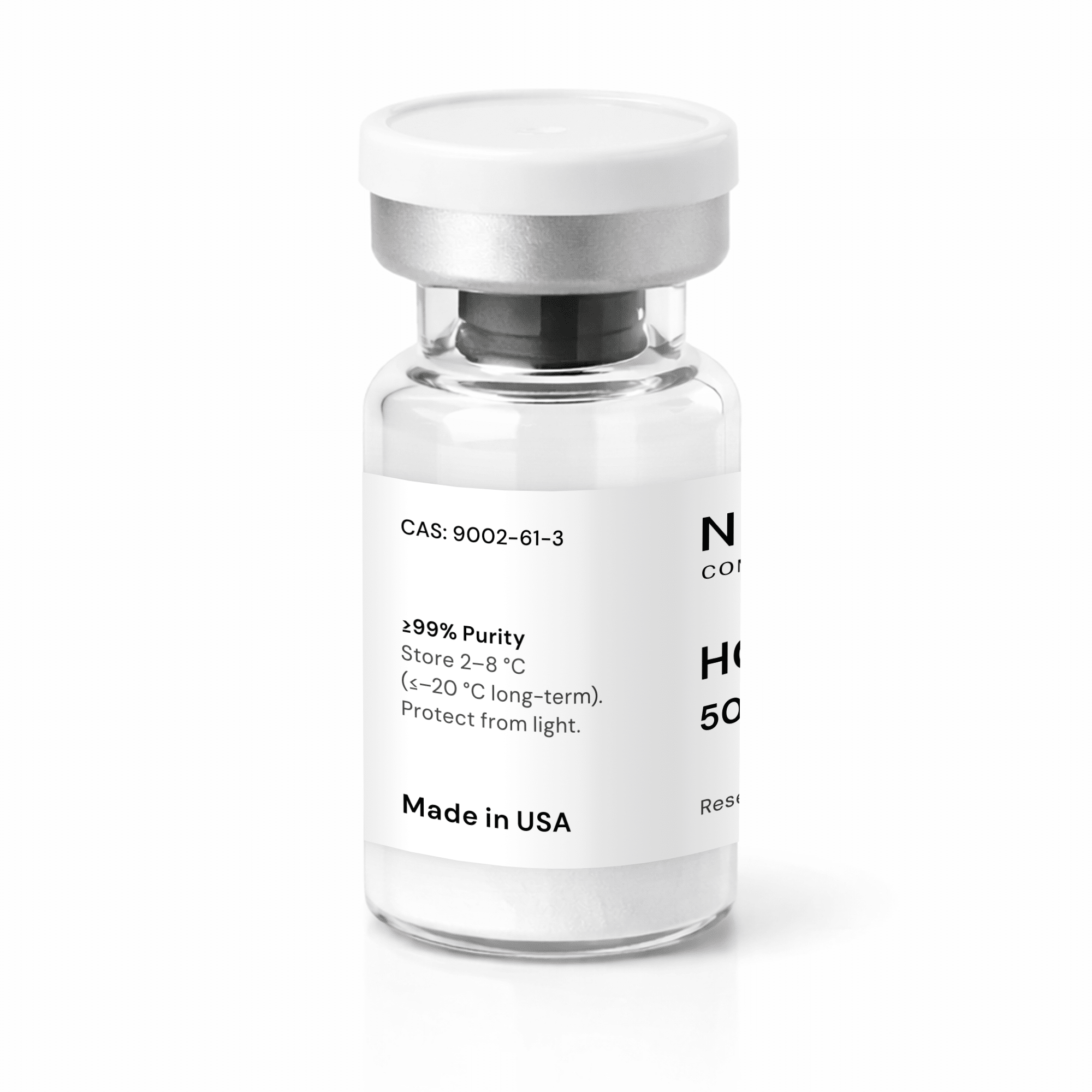
HCG 5000iu
Coming Soon
This peptide will be available soon. Join the waitlist to be notified when it launches.
Product description
What is HCG (5000iu)?
HCG (5000iu) is a glycoprotein hormone that plays a critical role in regulating reproductive and endocrine signaling. It consists of an alpha and beta subunit, making it a heterodimeric protein. Unlike gonadotropin-releasing hormone (GnRH), which regulates gonadotropin release from the pituitary, HCG functions downstream at the gonadal level, binding to luteinizing hormone/chorionic gonadotropin receptors (LHCGR) on Leydig cells in the testes and theca/granulosa cells in the ovaries. This binding has been studied for its potential to activate steroidogenic signaling pathways in experimental gonadal cell models. Human Chorionic Gonadotropin (HCG) has been widely studied in laboratory models for its involvement in gonadal signaling and its potential to influence reproductive processes such as steroid hormone synthesis. The peptide has a molecular weight of approximately 36.7 kDa (37,000 Da), with glycosylation contributing to its biological activity. Research-grade preparations are typically manufactured with ≥98% purity, verified using high-performance liquid chromatography (HPLC) and mass spectrometry (MS).What are the key features of HCG (5000iu)?
HCG (5000iu) is supplied as a sterile lyophilized powder, intended for controlled laboratory research. The lyophilized format minimizes degradation and facilitates reconstitution for experimental use. Key features of HCG (5000iu) include:- Peptide class: Glycoprotein hormone with alpha and beta subunit structure
- CAS Number: 9002-61-3
- Nominal 5000 IU per vial for flexible dosing
- Lyophilized format to minimize degradation and facilitate laboratory handling
- Purity: Typically ≥98%, verified by HPLC
- Analytical confirmation: Verified by mass spectrometry (MS)
- Research focus: Reproductive endocrinology, gonadotropin signaling, and steroidogenesis
- For laboratory research use only
How is HCG (5000iu) synthesized?
HCG (5000iu) is synthesized using recombinant DNA technology, enabling the generation of the intact heterodimeric hormone. Recombinant systems ensure proper glycosylation patterns that are essential for biological activity in experimental models. After production, HCG undergoes purification using chromatographic techniques to achieve high purity levels. Analytical verification is performed using mass spectrometry (MS) to confirm molecular weight and structural integrity. Bioassays standardized to international reference preparations are used to verify potency in IU. The final product is sterile-filtered and lyophilized to minimize degradation and facilitate laboratory handlingWhat is HCG (5000iu) being studied for? What are its possible benefits?
HCG has been studied extensively for its role in regulating gonadal function and steroidogenesis. Researchers have examined its LH-like activity at gonadal receptors and its role in sex hormone synthesis in Leydig and ovarian cells. Research areas include:- Gonadal steroidogenesis and LHCGR-mediated signaling dynamics
- Endocrine feedback loop modeling
- Steroidogenic pathway mapping in gonadal tissues
- Receptor desensitization and resensitization research
How does HCG (5000iu) work in research studies?
In laboratory settings, HCG acts as an analogue of luteinizing hormone (LH). It binds to luteinizing hormone receptors (LHCGR) on Leydig cells in the testes and theca/granulosa cells in the ovaries. This binding has been studied for its potential to activate intracellular signaling cascades associated with steroidogenic enzyme expression and sex hormone synthesis in experimental models. Researchers use controlled HCG exposure to study gonadal responses, including hormone synthesis, gene expression, and tissue morphology. These studies allow investigators to examine dose-response relationships and the reversibility of endocrine effects in controlled research environmentsWhat dosing information exists for HCG (5000iu)?
Dosing information for HCG is primarily derived from preclinical studies and experimental protocols. In rodent models, HCG has been administered at doses ranging from 5–50 IU per animal (or approximately 10–300 IU/kg) to evaluate gonadal responses. In continuous infusion models, HCG has been dosed between 1–10 µg/kg/hour to assess receptor desensitization and hormonal suppression. In vitro studies using cultured Leydig or ovarian cells typically use concentrations in the 1–100 nM range to assess intracellular signaling and hormone release. These dosing regimens are model-specific and intended for research purposes. No standardized human dosing guidelines exist for HCG (5000iu) as a laboratory reagent.How should HCG (5000iu) be stored and handled?
Store HCG (5000iu) in its lyophilized form at –20 °C or lower. Cold storage preserves peptide structural integrity and reduces degradation. Protect the vial from light, heat, and moisture, as these factors may affect peptide integrity. After reconstitution with a suitable sterile laboratory solvent, store solutions at 2–8 °C for short-term use in laboratory experiments. Researchers should prepare small aliquots to minimize repeated freeze-thaw cycles, which can compromise peptide structural integrity. Peptide integrity may vary depending on solvent choice and laboratory handling conditions.Where can I read more research about HCG (5000iu)?
The following peer-reviewed sources provide detailed information on HCG structure and research applications:- Casarini L, Lispi M, Longobardi S, et al. LH and hCG action on the same receptor results in quantitatively and qualitatively different intracellular signalling. PLoS One. 2012;7(10):e46682. doi:10.1371/journal.pone.0046682
- Casarini L, Santi D, Brigante G, Simoni M. Two Hormones for One Receptor: Evolution, Biochemistry, Actions, and Pathophysiology of LH and hCG. Endocr Rev. 2018;39(5):549-592. doi: 10.1210/er.2018-00065. PMID: 29905829.
- Moravek MB, Shang M, Menon B, Menon K. HCG-mediated activation of mTORC1 signaling plays a crucial role in steroidogenesis in human granulosa lutein cells. Endocrine. 2016;54(1):217-224. doi:10.1007/s12020-016-1065-8
- Movsas TZ, Weiner RL, Greenberg MB, Holtzman DM, Galindo R. Pretreatment with Human Chorionic Gonadotropin Protects the Neonatal Brain against the Effects of Hypoxic-Ischemic Injury. Frontiers in Pediatrics. 2017;5:232. doi:10.3389/fped.2017.00232.
- Karaman IM, Kaya C, Ozturk M, Pirincci N, Yimazgumrukcu G, Tuken M. The effects of human chorionic gonadotrophin on normal testicular tissue of rats: dose‐dependence and reversibility. British Journal of Urology. 2006;97(5):1116-1118. doi:10.1111/j.1464-4
Compliance Statement
This product is intended for laboratory research use only and is not approved for human or veterinary use.Shop with Confidence: Product Authenticity is Guaranteed
All products available at Doctor Medica shop are obtained from respective manufacturers and contain original LOT numbers Contact us if you have any questions about product LOT numbers.