Your Cart is Empty
Start shopping

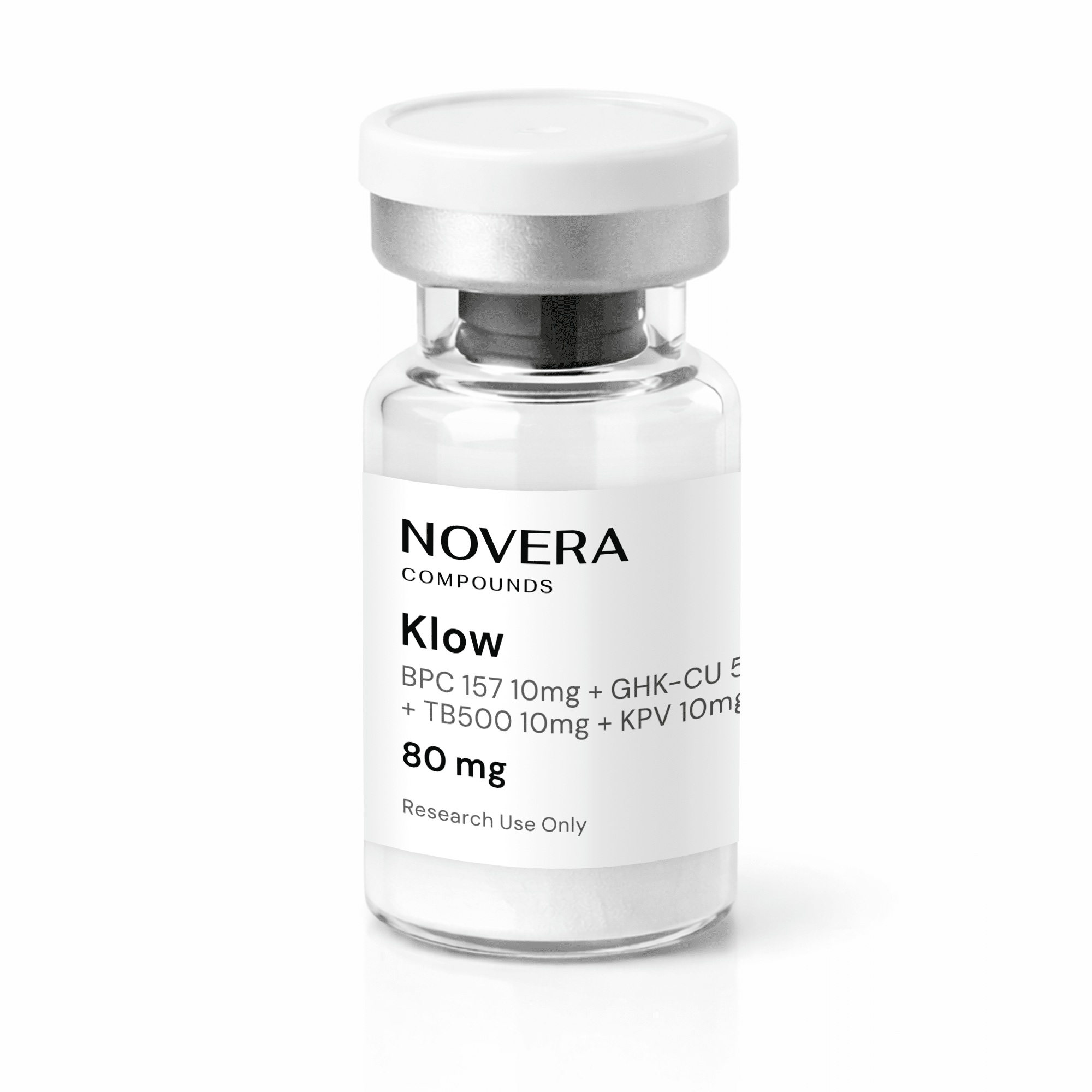
Klow BPC 157 10mg + GHK-CU 50mg + TB500 10mg + KPV 10mg
Tier
| Packs | Discount (%) | For Each |
|---|---|---|
| 1 - 5 | — | $163.00 |
| 6 - 10 | 9.82 % | $147.00 |
| 11 - 20 | 19.02 % | $132.00 |
| 21+ | 26.99 % | $119.00 |
Product description
What is “Klow” BPC 157 10mg + GHK-CU 50mg + TB500 10mg + KPV 10mg?
"Klow" is a multi-peptide research formulation combining four synthetic peptides: BPC-157, GHK-CU, TB500, and KPV peptide for research, supplied as a lyophilized powder for controlled laboratory investigation. The blend contains 10 mg of BPC-157, 50 mg of GHK-CU, 10 mg of TB500, and 10 mg of KPV in each vial, formulated to enable examination of synergistic tissue repair, immune modulation, and extracellular matrix regulation mechanisms. Each component is a short-chain synthetic peptide:- BPC-157 is a 15-amino acid pentadecapeptide (molecular weight: 1419.556 g/mol) derived from a naturally occurring gastric cytoprotective compound
- GHK-CU is a copper(II)-complexed tripeptide (molecular weight: 401.91 g/mol) naturally occurring in human plasma
- TB500 is a synthetic actin-binding peptide fragment (molecular weight: 4963.44 g/mol) based on thymosin beta-4
- KPV is a tripeptide (molecular weight: 384.48 g/mol) derived from the C-terminal region of alpha-melanocyte-stimulating hormone.
- BPC-157: 137525-51-0
- GHK-Cu: 89030-95-5
- TB500: 77591-33-4
- KPV: 67727-97-3
What are the key features of “Klow” BPC 157 10mg + GHK-CU 50mg + TB500 10mg + KPV 10mg?
The "Klow" formulation with 80mg strength is designed to support research exploring multi-pathway peptide interactions and synergistic mechanisms in controlled laboratory environments, reducing the logistical complexity of administering multiple peptides independently.- Four-Peptide Composition: Combines peptides with complementary but distinct mechanisms—BPC 157 peptide for nitric oxide and growth factor modulation, GHK-CU for metalloprotein activity and redox signaling, TB500 for actin dynamics and cell migration, and KPV for NF-κB-mediated inflammatory pathway regulation.
- High-Purity Lyophilized Powder: Supplied with ≥99% purity verified through HPLC and mass spectrometry, ensuring consistent laboratory performance and reliable batch-to-batch quality documentation.
- Defined Peptide Ratios: Fixed 10:50:10:10 mg composition per vial supports reproducibility across research protocols and enables standardized experimental design without requiring manual compounding.
- Synergistic Research Applications: The combination allows investigation of how coordinated modulation of nitric oxide signaling, cytokine production, extracellular matrix remodeling, and inflammation control influences tissue repair kinetics and functional outcomes.
- Stable Lyophilized Format: Freeze-dried formulation maintains peptide integrity during storage and transport, with sealed, research-grade vial packaging designed to preserve sterility, purity, and long-term stability under appropriate storage conditions.
- For Laboratory Research Use Only: Designed strictly for controlled research environments and compliant laboratory practice with no therapeutic applications.
How is “Klow” BPC 157 10mg + GHK-CU 50mg + TB500 10mg + KPV 10mg synthesized?
All four peptides are produced by solid-phase peptide synthesis (SPPS), a standardized method that ensures precise amino acid chain assembly with high sequence fidelity. BPC-157 is synthesized as a 15-amino acid pentadecapeptide, GHK-CU and KPV as tripeptides, and TB500 as a synthetic fragment retaining the actin-binding properties of thymosin beta-4. Each synthetic step is monitored for structural accuracy throughout the coupling and deprotection cycles. Following synthesis, the peptide mixture undergoes HPLC purification to confirm chromatographic purity and mass spectrometry analysis for precise molecular weight verification and identity confirmation. These analytical steps ensure that purity standards are met and that each peptide component retains its intended structure and bioactivity. The KLOW chemical formula of each peptide are as follows:- BPC-157: C₆₂H₉₈N₁₆O₂₂
- GHK-CU: C₁₄H₂₁N₆O₄Cu
- TB500: C₂₁₂H₃₅₀N₅₆O₇₈S
- KPV: C₁₇H₃₂N₆O₄
What is “Klow” BPC 157 10mg + GHK-CU 50mg + TB500 10mg + KPV 10mg being studied for? What are its possible benefits?
The "Klow" formulation is being researched for its potential involvement in coordinated biological processes, including tissue regeneration, inflammation regulation, angiogenesis (blood vessel formation), extracellular matrix remodeling, and cytoprotection against degenerative processes. Research areas include wound healing acceleration, tendon and ligament injury models, muscle degeneration, gastrointestinal inflammation, and age-associated tissue decline. Individual components have been studied for distinct mechanisms: BPC-157 for modulation of nitric oxide signaling and vascular stability; GHK-CU for metalloprotein activity and oxidative stress mitigation; TB500 for actin polymerization and fibrosis reduction; and KPV for NF-κB-mediated inflammation suppression. Combined research explores how these peptides coordinate to enhance healing speed, reduce scar formation, improve tissue quality, and influence long-term functional recovery. These observations reflect early-stage preclinical and in-vitro research findings based on published literature. They do not indicate proven or therapeutic effects.How does “Klow” BPC 157 10mg + GHK-CU 50mg + TB500 10mg + KPV 10mg work in research studies?
In laboratory environments, the "Klow" blend is examined for how each component influences distinct but overlapping cellular signaling pathways.- BPC-157 is studied for its role in modulating endothelial nitric oxide synthase (eNOS) activity, which influences vascular stability, angiogenic signaling, and immune cell regulation through changes in gene expression.
- GHK-CU participates in balancing extracellular matrix turnover through coordinated activation of metalloproteinases and anti-proteases while scavenging reactive oxygen species.
- TB500 regulates cytoskeletal dynamics through actin sequestration and influences inflammatory signaling pathways, including NF-κB, PI3K/Akt, and TGF-β cascades.
- KPV provides high-level NF-κB inhibition by blocking p65RelA nuclear translocation, reducing adhesion molecule expression, and suppressing pro-inflammatory cytokines.
What dosing information exists for “Klow” BPC 157 10mg + GHK-CU 50mg + TB500 10mg + KPV 10mg?
Dosing information comes exclusively from preclinical and in-vitro research settings. Published studies report component-specific concentration ranges: BPC-157 studied at 150–375 µg in animal models and 0.5–2 µg/mL in cell culture; GHK-CU used at 1–10 nanomolar (nM) concentrations in molecular and dermatological assays; TB500 evaluated at variable concentrations ranging from micrograms to milligrams depending on study design; and KPV showing activity at 0.1–10 µg/mL in cell culture systems with NF-κB suppression observed across this range, or at nanomolar concentrations in alternative assay formats. Animal model research has used dosing such as 16 µg/kg KPV daily in mouse studies examining inflammatory outcomes. No established human dosing guidelines exist for this blend or its individual components, and clinical translation has not been completed. Researchers designing preclinical investigations adjust component concentrations based on specific experimental design, target tissue, and biological endpoints. This blend is used exclusively for laboratory research and dose specifications do not apply to any human or veterinary applications.How should “Klow” BPC 157 10mg + GHK-CU 50mg + TB500 10mg + KPV 10mg be stored and handled?
Lyophilized peptides are best maintained at 2–8°C (36–46°F) in refrigeration, protected from light and moisture, as the primary storage method. Do not freeze the unreconstituted powder, as freezing temperatures can compromise lyophilized peptide integrity and reduce stability. For brief transport periods not exceeding 7 days, room temperature storage is acceptable if protected from heat and humidity. After reconstitution with sterile water or bacteriostatic water, keep the solution at 2–8°C and use within 14–30 days, depending on the research protocol and product documentation. Researchers should prepare and handle all materials using aseptic technique with appropriate personal protective equipment including gloves, eye protection, and lab coat. Avoid repeated freeze-thaw cycles of reconstituted solutions, as temperature fluctuations accelerate peptide degradation and reduce biological activity. Store reconstituted preparations away from light and temperature fluctuations. Follow all institutional biosafety guidelines and disposal protocols when handling peptide materials, and always consult the Safety Data Sheet (SDS) provided with the product for comprehensive handling procedures and hazard information.Where can I read more research about “Klow” BPC 157 10mg + GHK-CU 50mg + TB500 10mg + KPV 10mg?
Researchers can explore peer-reviewed studies on the individual peptide components through the following credible sources:- Brzoska T, Böhm M, Lügering A, Loser K, Luger TA. Terminal signal: anti-inflammatory effects of α-melanocyte-stimulating hormone related peptides beyond the pharmacophore. Adv Exp Med Biol. 2010;681:107-116. doi:10.1007/978-1-4419-6354-3_8
- Dalmasso G, Charrier-Hisamuddin L, Nguyen HT, Yan Y, Sitaraman S, Merlin D. PepT1-mediated tripeptide KPV uptake reduces intestinal inflammation. Gastroenterology. 2008;134(1):166-178. doi:10.1053/j.gastro.2007.10.026
- Land SC. Inhibition of cellular and systemic inflammation cues in human bronchial epithelial cells by melanocortin-related peptides: mechanism of KPV action and a role for MC3R agonists. Int J Physiol Pathophysiol Pharmacol. 2012;4(2):59-73.
- Luger TA, Brzoska T. alpha-MSH related peptides: a new class of anti-inflammatory and immunomodulating drugs. Ann Rheum Dis. 2007;66 Suppl 3(Suppl 3):iii52-iii55. doi:10.1136/ard.2007.079780
- Seiwerth S, Milavic M, Vukojevic J, et al. Stable Gastric Pentadecapeptide BPC 157 and Wound Healing. Front Pharmacol. 2021;12:627533. Published 2021 Jun 29. doi:10.3389/fphar.2021.627533
Compliance Statement
This product is intended for laboratory research use only and is not approved for human or veterinary use.Shop with Confidence: Product Authenticity is Guaranteed
All products available at Doctor Medica shop are obtained from respective manufacturers and contain original LOT numbers Contact us if you have any questions about product LOT numbers.