Your Cart is Empty
Start shopping

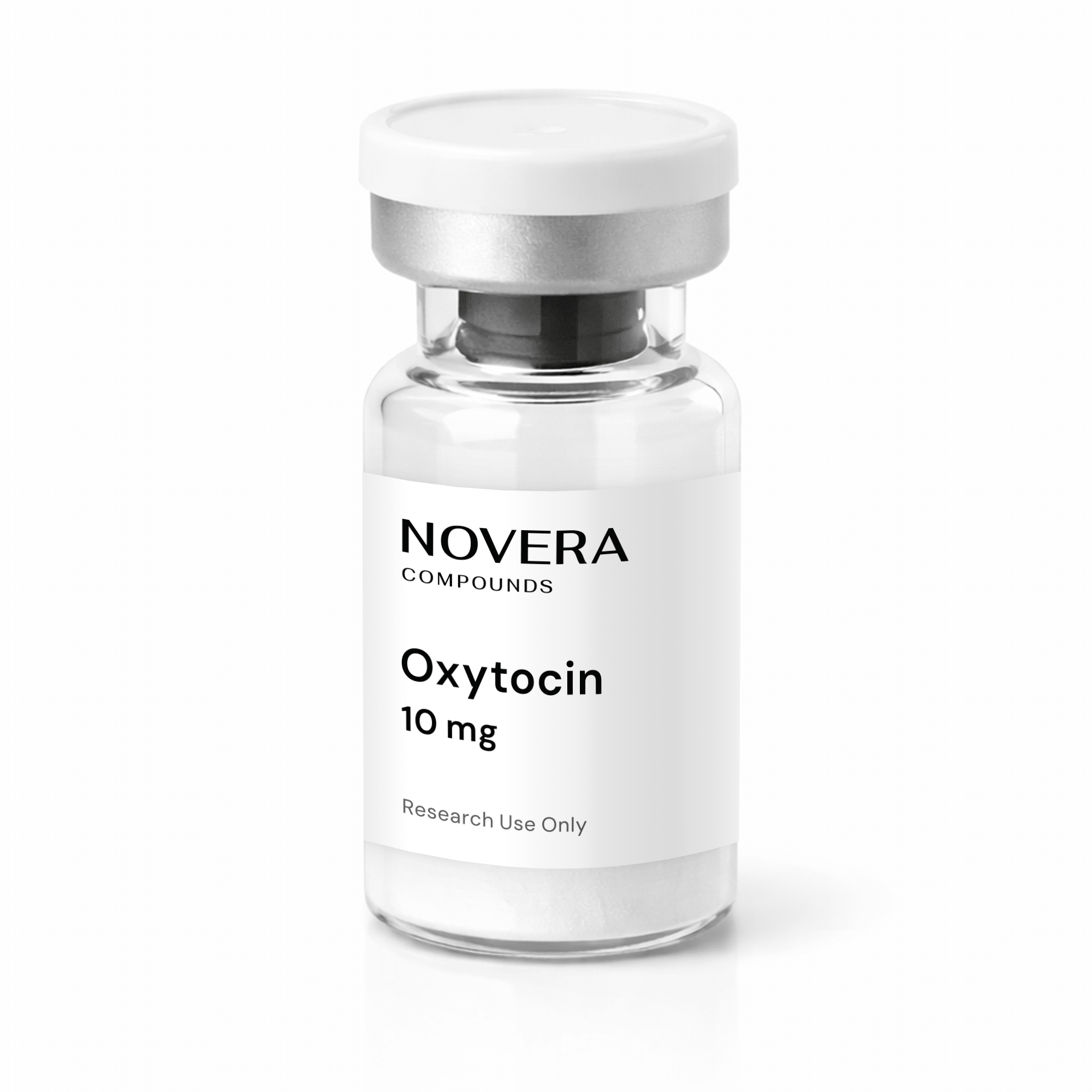
Oxytocin 10mg
Tier
| Packs | Discount (%) | For Each |
|---|---|---|
| 1 - 5 | — | $66.00 |
| 6 - 10 | 9.09 % | $60.00 |
| 11 - 20 | 18.18 % | $54.00 |
| 21+ | 25.76 % | $49.00 |
Product description
What is Oxytocin (10mg)?
Oxytocin (10mg) is a synthetic laboratory-grade version of the neuropeptide hormone oxytocin. It is commonly used in biochemical and neuroscience research to explore hormonal signaling pathways involved in reproduction, behavior, and neuroendocrine communication. The compound is often categorized within sexual health and hormonal peptides, as it plays a role in reproductive physiology and neuroendocrine signaling in mammalian systems. The peptide consists of nine amino acids arranged in a cyclic structure stabilized by a disulfide bond between cysteine residues. Standard research identifiers include:- Molecular Weight: 1007.193 g/mol
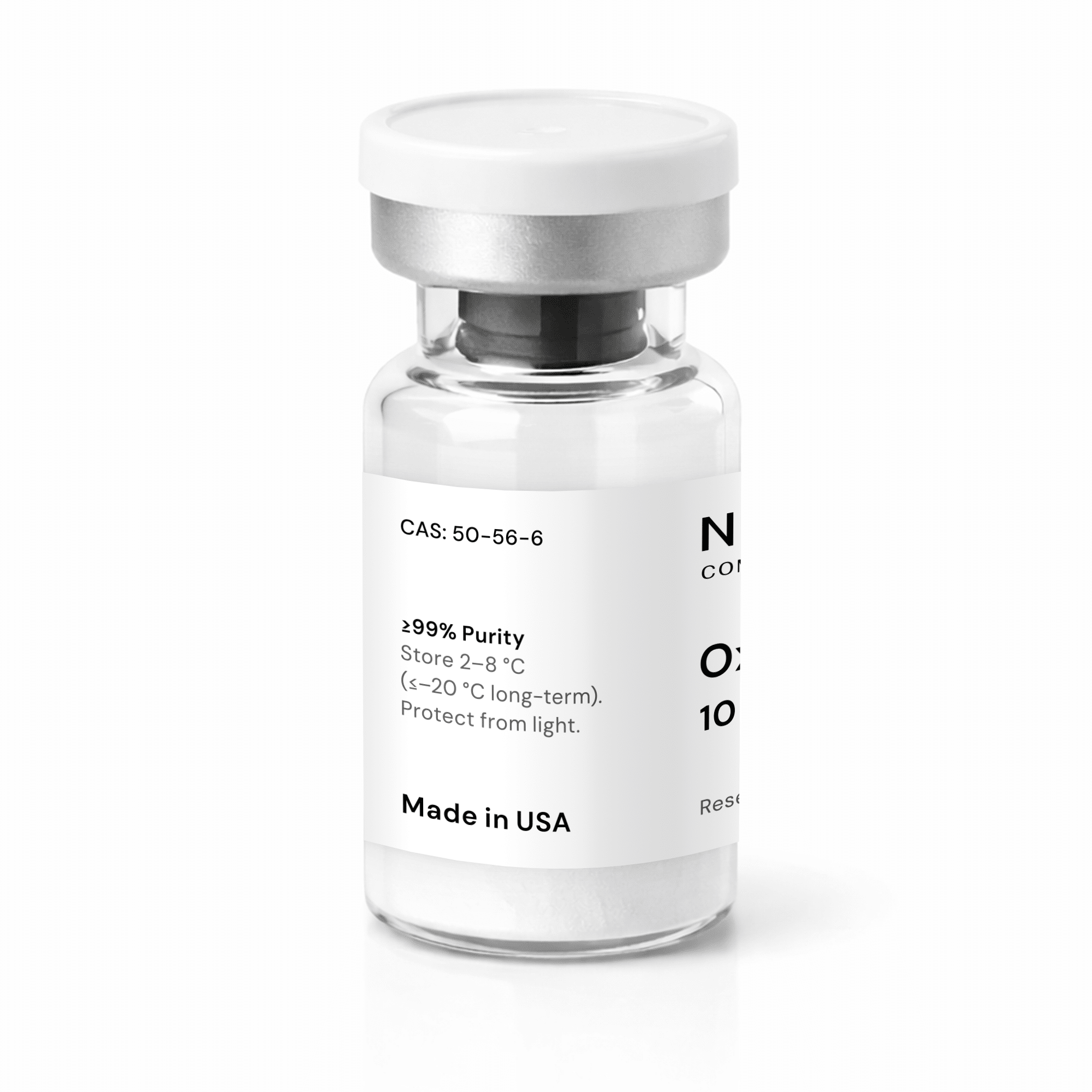
- CAS Number: 50-56-6
- Chemical Formula: C₄₃H₆₆N₁₂O₁₂S₂
- Peptide Sequence: Cys-Tyr-Ile-Gln-Asn-Cys-Pro-Leu-Gly-NH₂
- Synonyms: Pitocin, Endopituitrina
What are the key features of Oxytocin (10mg)?
Oxytocin (10mg) is supplied as a lyophilized peptide powder, designed for laboratory reconstitution prior to experimental use. This format allows researchers to prepare precise concentrations suitable for cellular, biochemical, or animal studies. High analytical purity ensures reproducibility in experiments involving hormonal signaling and behavioral research. Key features include:- Synthetic cyclic peptide consisting of nine amino acids
- Supplied in a 10 mg lyophilized vial for flexible experimental preparation
- Typically produced with high purity (≥98%), verified through analytical testing
- Structural stability maintained by a disulfide bond
- Purity and identity commonly confirmed using HPLC and mass spectrometry
- Investigated in studies involving behavioral neuroscience, reproductive physiology, and endocrine signaling
- For laboratory research use only
How is Oxytocin (10mg) synthesized?
Oxytocin used in laboratory research is produced using solid-phase peptide synthesis (SPPS), a controlled method for assembling peptides from individual amino acids. In this process, the nine amino acids that form the oxytocin chain are sequentially linked together. After the peptide backbone is assembled, a controlled oxidation step forms the disulfide bond between cysteine residues, creating the characteristic cyclic structure of oxytocin. Following synthesis, the peptide undergoes purification to remove residual reagents and incomplete peptide fragments. Analytical techniques such as high-performance liquid chromatography (HPLC) are used to verify peptide purity, while mass spectrometry (MS) confirms the correct molecular weight and structural identity. These procedures ensure that the research material is suitable for sensitive biochemical assays and experimental studies.What is Oxytocin (10mg) being studied for? What are its possible benefits?
Oxytocin has been extensively studied in animal and cellular models for its role in regulating social behavior and reproductive physiology. Research has explored how the peptide influences maternal care, pair bonding, and social recognition in species like rodents and prairie voles. These studies aim to better understand how neuropeptides affect communication between neurons involved in social and emotional processing. Additional research areas include reproductive physiology, lactation signaling, and stress regulation. Some experimental models investigate how oxytocin may affect neural circuits related to social interaction and stress responses. Observations from these studies suggest potential influences on social affiliation, emotional regulation, and neural plasticity. These findings remain under investigation and are limited to controlled laboratory and preclinical environments.How does Oxytocin (10mg) work in research studies?
In laboratory research, oxytocin is used to study how hormonal peptides influence communication between cells in the brain and endocrine system. When introduced into experimental models, the peptide interacts with signaling pathways that regulate neuronal activity and hormonal responses. Researchers often examine how oxytocin affects processes such as neural signaling, behavioral responses, and physiological changes associated with reproduction and social interaction. By observing these responses in controlled experiments, scientists can evaluate how neuropeptides contribute to communication between brain regions and influence biological responses to environmental or social stimuli.What dosing information exists for Oxytocin (10mg)?
Experimental dosing for oxytocin varies depending on the research model and experimental design. In preclinical rodent studies, central administration has been examined at doses around 1–10 ng/h through intracerebroventricular infusion to investigate changes in social behaviors and stress responses. In other animal models, systemic doses have been studied in ranges such as 0.2–2 µg administered subcutaneously for reproductive physiology research. Notably, these dosing parameters are specific to research settings and vary widely across study designs. There are no established human dosing guidelines for Oxytocin (10mg) as a research reagent.How should Oxytocin (10mg) be stored and handled?
- Store lyophilized Oxytocin at ≤–20 °C. Protect from light and moisture.
- After reconstitution, store solutions at 2–8 °C and minimize freeze–thaw cycles by preparing single-use aliquots.
- Document preparation conditions to support experimental reproducibility.
- For laboratory research use only.
Where can I read more research about Oxytocin (10mg)?
Researchers interested in oxytocin biology and neuropeptide signaling may consult the following publications:- Froemke RC, Young LJ. Oxytocin, Neural Plasticity, and Social Behavior. Annu Rev Neurosci. 2021;44:359-381. doi:10.1146/annurev-neuro-102320-102847
- Rigney N, de Vries GJ, Petrulis A, Young LJ. Oxytocin, Vasopressin, and Social Behavior: From Neural Circuits to Clinical Opportunities. Endocrinology. 2022;163(9):bqac111. doi:10.1210/endocr/bqac111
- Janz P, Knoflach F, Bleicher K, et al. Selective oxytocin receptor activation prevents prefrontal circuit dysfunction and social behavioral alterations in response to chronic prefrontal cortex activation in male rats. Front Cell Neurosci. 2023;17:1286552. Published 2023 Dec 7. doi:10.3389/fncel.2023.1286552
Compliance Statement
This product is intended for laboratory research use only and is not approved for human or veterinary use.Shop with Confidence: Product Authenticity is Guaranteed
All products available at Doctor Medica shop are obtained from respective manufacturers and contain original LOT numbers Contact us if you have any questions about product LOT numbers.
What is Oxytocin (10mg)?
Oxytocin (10mg) is a synthetic laboratory-grade version of the neuropeptide hormone oxytocin. It is commonly used in biochemical and neuroscience research to explore hormonal signaling pathways involved in reproduction, behavior, and neuroendocrine communication. The compound is often categorized within sexual health and hormonal peptides, as it plays a role in reproductive physiology and neuroendocrine signaling in mammalian systems.
The peptide consists of nine amino acids arranged in a cyclic structure stabilized by a disulfide bond between cysteine residues. Standard research identifiers include:
- Molecular Weight: 1007.193 g/mol
- CAS Number: 50-56-6
- Chemical Formula: C₄₃H₆₆N₁₂O₁₂S₂
- Peptide Sequence: Cys-Tyr-Ile-Gln-Asn-Cys-Pro-Leu-Gly-NH₂
- Synonyms: Pitocin, Endopituitrina
In experimental research, oxytocin has been studied for its involvement in reproductive signaling, maternal behaviors, and social communication pathways.
What are the key features of Oxytocin (10mg)?
Oxytocin (10mg) is supplied as a lyophilized peptide powder, designed for laboratory reconstitution prior to experimental use. This format allows researchers to prepare precise concentrations suitable for cellular, biochemical, or animal studies. High analytical purity ensures reproducibility in experiments involving hormonal signaling and behavioral research.
Key features include:
- Synthetic cyclic peptide consisting of nine amino acids
- Supplied in a 10 mg lyophilized vial for flexible experimental preparation
- Typically produced with high purity (≥98%), verified through analytical testing
- Structural stability maintained by a disulfide bond
- Purity and identity commonly confirmed using HPLC and mass spectrometry
- Investigated in studies involving behavioral neuroscience, reproductive physiology, and endocrine signaling
- For laboratory research use only
These features make Oxytocin a valuable reagent in studies of neuroendocrine signaling and behavioral research.
How is Oxytocin (10mg) synthesized?
Oxytocin used in laboratory research is produced using solid-phase peptide synthesis (SPPS), a controlled method for assembling peptides from individual amino acids. In this process, the nine amino acids that form the oxytocin chain are sequentially linked together. After the peptide backbone is assembled, a controlled oxidation step forms the disulfide bond between cysteine residues, creating the characteristic cyclic structure of oxytocin.
Following synthesis, the peptide undergoes purification to remove residual reagents and incomplete peptide fragments. Analytical techniques such as high-performance liquid chromatography (HPLC) are used to verify peptide purity, while mass spectrometry (MS) confirms the correct molecular weight and structural identity. These procedures ensure that the research material is suitable for sensitive biochemical assays and experimental studies.
What is Oxytocin (10mg) being studied for? What are its possible benefits?
Oxytocin has been extensively studied in animal and cellular models for its role in regulating social behavior and reproductive physiology. Research has explored how the peptide influences maternal care, pair bonding, and social recognition in species like rodents and prairie voles. These studies aim to better understand how neuropeptides affect communication between neurons involved in social and emotional processing.
Additional research areas include reproductive physiology, lactation signaling, and stress regulation. Some experimental models investigate how oxytocin may affect neural circuits related to social interaction and stress responses. Observations from these studies suggest potential influences on social affiliation, emotional regulation, and neural plasticity. These findings remain under investigation and are limited to controlled laboratory and preclinical environments.
How does Oxytocin (10mg) work in research studies?
In laboratory research, oxytocin is used to study how hormonal peptides influence communication between cells in the brain and endocrine system. When introduced into experimental models, the peptide interacts with signaling pathways that regulate neuronal activity and hormonal responses.
Researchers often examine how oxytocin affects processes such as neural signaling, behavioral responses, and physiological changes associated with reproduction and social interaction. By observing these responses in controlled experiments, scientists can evaluate how neuropeptides contribute to communication between brain regions and influence biological responses to environmental or social stimuli.
What dosing information exists for Oxytocin (10mg)?
Experimental dosing for oxytocin varies depending on the research model and experimental design. In preclinical rodent studies, central administration has been examined at doses around 1–10 ng/h through intracerebroventricular infusion to investigate changes in social behaviors and stress responses. In other animal models, systemic doses have been studied in ranges such as 0.2–2 µg administered subcutaneously for reproductive physiology research.
Notably, these dosing parameters are specific to research settings and vary widely across study designs. There are no established human dosing guidelines for Oxytocin (10mg) as a research reagent.
How should Oxytocin (10mg) be stored and handled?
- Store lyophilized Oxytocin at ≤–20 °C. Protect from light and moisture.
- After reconstitution, store solutions at 2–8 °C and minimize freeze–thaw cycles by preparing single-use aliquots.
- Document preparation conditions to support experimental reproducibility.
- For laboratory research use only.
Where can I read more research about Oxytocin (10mg)?
Researchers interested in oxytocin biology and neuropeptide signaling may consult the following publications:
- Froemke RC, Young LJ. Oxytocin, Neural Plasticity, and Social Behavior. Annu Rev Neurosci. 2021;44:359-381. doi:10.1146/annurev-neuro-102320-102847
- Rigney N, de Vries GJ, Petrulis A, Young LJ. Oxytocin, Vasopressin, and Social Behavior: From Neural Circuits to Clinical Opportunities. Endocrinology. 2022;163(9):bqac111. doi:10.1210/endocr/bqac111
- Janz P, Knoflach F, Bleicher K, et al. Selective oxytocin receptor activation prevents prefrontal circuit dysfunction and social behavioral alterations in response to chronic prefrontal cortex activation in male rats. Front Cell Neurosci. 2023;17:1286552. Published 2023 Dec 7. doi:10.3389/fncel.2023.1286552
Compliance Statement
This product is intended for laboratory research use only and is not approved for human or veterinary use.