Your Cart is Empty
Start shopping

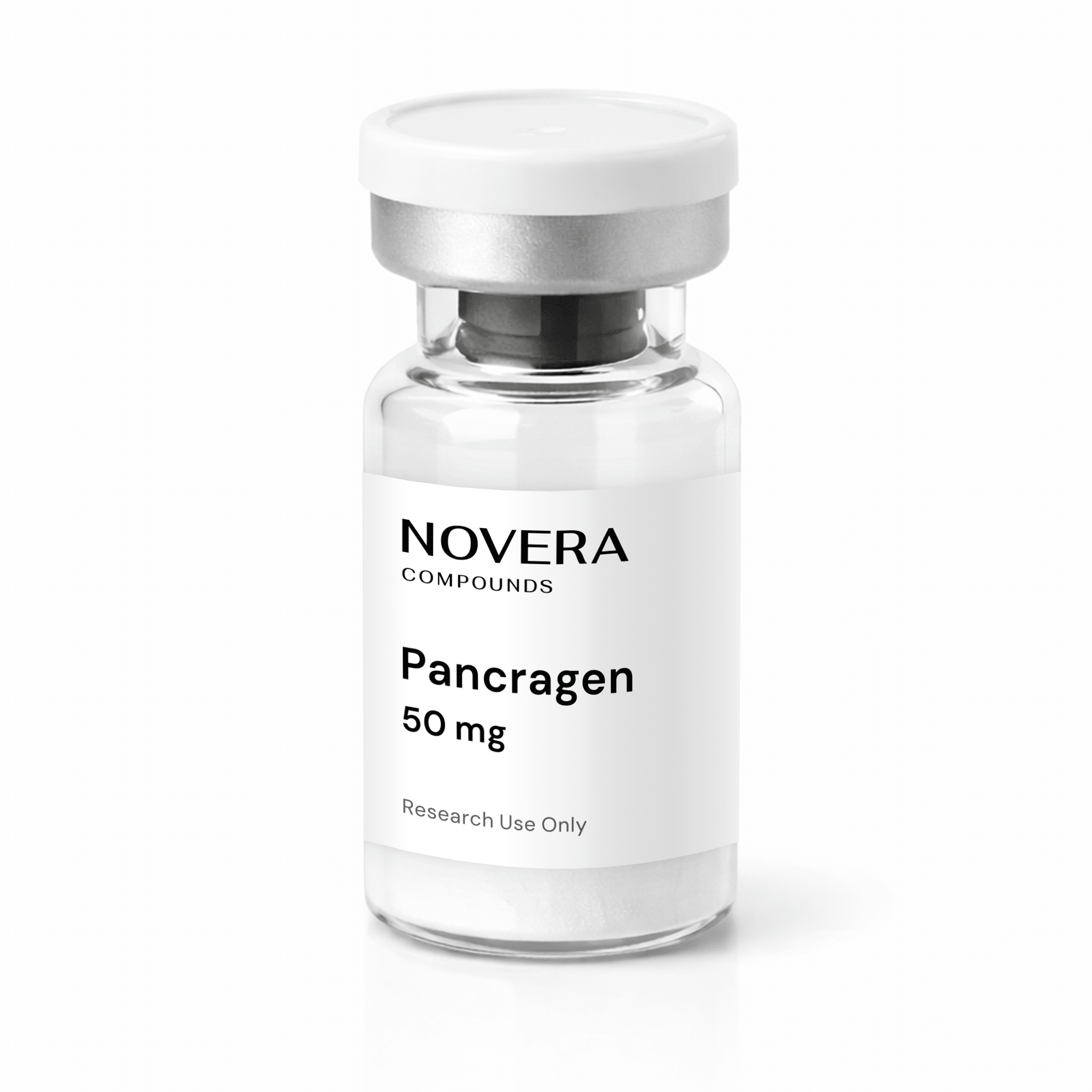
Pancragen 50mg
Coming Soon
This peptide will be available soon. Join the waitlist to be notified when it launches.
Product description
What is Pancragen (50mg)?
Pancragen is a short regulatory peptide composed of the amino acids Lys-Glu-Asp-Trp (KEDW). It belongs to a group of low-molecular-weight peptide bioregulators studied in laboratory research related to cellular signaling and gene expression in pancreatic tissues. These peptides are studied for their potential interactions with biological processes within specific cell types, making them a focus of laboratory research. Research-grade preparations are typically produced with ≥98% purity and verified by high-performance liquid chromatography (HPLC) and mass spectrometry (MS). Pancragen has been studied in experimental models examining molecular pathways associated with pancreatic cell activity and regulatory peptide signaling.What are the key features of Pancragen (50mg)?
Pancragen (50mg) is supplied as a lyophilized peptide for controlled laboratory research. Researchers use this peptide in studies of metabolic signaling and pancreatic tissue biology. Key features of Pancragen (50mg) include:- Peptide sequence: Lys-Glu-Asp-Trp (KEDW)
- Sequence length: 4 amino acids
- Category: Peptide
- Subcategory: Organ-Specific & Bioregulator Peptides
- Chemical Formula: C₂₆H₃₆N₆O₉
- Molecular weight: 576.25 g/mol
- Purity: Typically ≥98%, verified by HPLC
- Analytical verification: Identity confirmed using mass spectrometry (MS)
- Format: 50 mg lyophilized peptide supplied in a sealed research vial
How is Pancragen (50mg) synthesized?
Pancragen is produced using solid-phase peptide synthesis (SPPS), a widely used laboratory technique for constructing peptides with defined amino acid sequences. In this process, amino acids are sequentially attached to a solid resin support to form the peptide backbone. Protective chemical groups ensure correct binding, preventing unwanted reactions. After synthesis, the peptide undergoes purification using high-performance liquid chromatography (HPLC) to remove incomplete peptide fragments and impurities. Mass spectrometry (MS) confirms the peptide's molecular weight and identity. The final compound is lyophilized to minimize degradation and facilitate laboratory handling.What is Pancragen (50mg) being studied for? What are its possible benefits?
Pancragen has been investigated in laboratory studies focusing on pancreatic tissue regulation and metabolic cellular processes. Research has examined whether small peptides such as KEDW may influence gene expression or cellular activity in specific tissues. These studies primarily investigate molecular mechanisms rather than clinical outcomes. Experimental investigations have examined Pancragen’s role in pancreatic cell metabolism, cellular repair processes, and age-related molecular changes within endocrine tissues. Some models also explore whether regulatory peptides influence cellular signaling pathways related to protein synthesis and metabolic regulation. These potential biological roles remain under investigation and are not established as therapeutic effects.How does Pancragen (50mg) work in research studies?
In laboratory studies, Pancragen is investigated for its potential interaction with cellular genetic and metabolic regulatory pathways. Research on short peptide bioregulators suggests that certain peptides may interact with DNA or chromatin structures, potentially influencing gene transcription in specific cell types. Some experimental models propose that peptides like KEDW may affect protein synthesis, cellular metabolism, or intracellular signaling processes. Researchers typically conduct these studies using cultured cells or animal models designed to examine molecular responses to peptide exposure. The exact mechanisms remain an active area of ongoing scientific investigation, and current findings are limited to experimental laboratory research.What dosing information exists for Pancragen (50mg)?
Studies involving Pancragen and similar peptide bioregulators have primarily been conducted in preclinical experimental models. In some laboratory studies, researchers have evaluated peptide activity at concentrations measured in micrograms per kilogram (µg/kg) in animal models or at defined concentrations in in-vitro cell cultures. The specific concentration used depends on the experimental design and biological system being studied. Importantly, no standardized dosing guidelines exist for human use, as Pancragen remains primarily a research compound. Any dosing references in scientific literature apply strictly to research settings.How should Pancragen (50mg) be stored and handled?
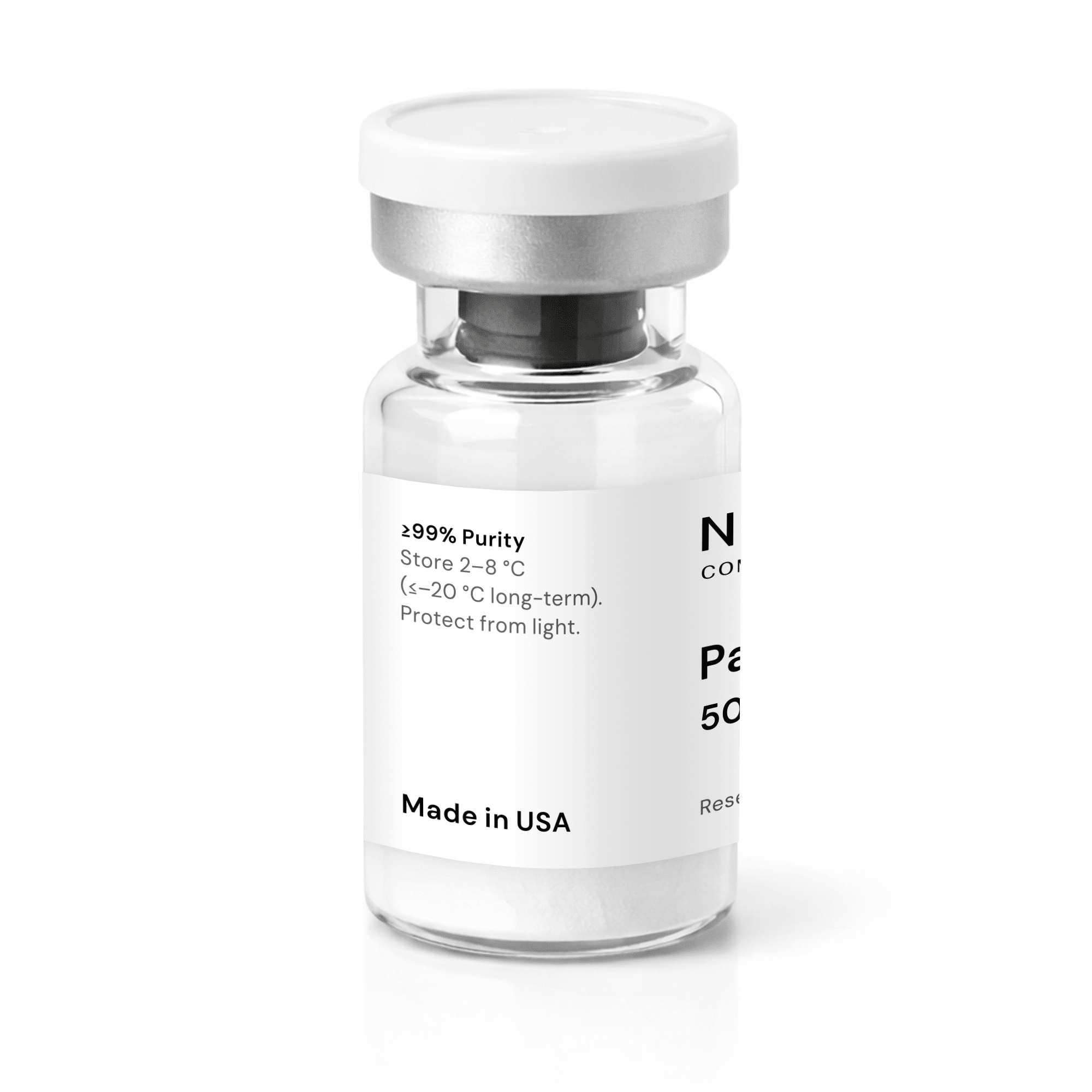
Lyophilized Pancragen should typically be stored at –20 °C to minimize degradation and protect peptide structural integrity. The compound should be protected from light, moisture, and temperature fluctuations, as these factors may affect peptide stability. Once reconstituted with an appropriate sterile laboratory solvent, solutions are generally stored at 2–8 °C for short-term use in the laboratory. Researchers often prepare smaller aliquots to minimize repeated freeze-thaw cycles, which can degrade the peptide. Stability may vary depending on the solvent used and laboratory handling conditions.Where can I read more research about Pancragen (50mg)?
Researchers interested in learning more about Pancragen and related regulatory peptides may consult several scientific databases and publications. Relevant sources include:- Goncharova ND, Ivanova LG, Oganian TÉ, Vengerin AA, Khavinson VKh. Impact of tetrapeptide pancragen on endocrine function of the pancreas in old monkeys. Adv Gerontol. 2014;27(4):662-667.
- Goncharova ND, Ivanova LG, Oganyan TE, Vengerin AA, Khavinson VK. Correction of impaired glucose tolerance using tetrapeptide (Pancragen) in old female rhesus monkeys. Adv Gerontol. 2015;28(3):579-585.
- Khavinson VKh, Durnova AO, Polyakova VO, et al. Effects of pancragen on the differentiation of pancreatic cells during their ageing. Bull Exp Biol Med. 2013;154(4):501-504. doi:10.1007/s10517-013-1987-6
- Khavinson VKh, Gapparov MM, Sharanova NE, Vasilyev AV, Ryzhak GA. Study of biological activity of Lys-Glu-Asp-Trp-NH2 endogenous tetrapeptide. Bull Exp Biol Med. 2010;149(3):351-353. doi:10.1007/s10517-010-0944-x
- Khavinson VKh, Gavrisheva NA, Malinin VV, Chefu SG, Trofimov EL. Effect of pancragen on blood glucose level, capillary permeability and adhesion in rats with experimental diabetes mellitus. Bull Exp Biol Med. 2007;144(4):559-562. doi:10.1007/s10517-007-0377-3
Compliance Statement
This product is intended for laboratory research use only and is not approved for human or veterinary use.Shop with Confidence: Product Authenticity is Guaranteed
All products available at Doctor Medica shop are obtained from respective manufacturers and contain original LOT numbers Contact us if you have any questions about product LOT numbers.