Your Cart is Empty
Start shopping

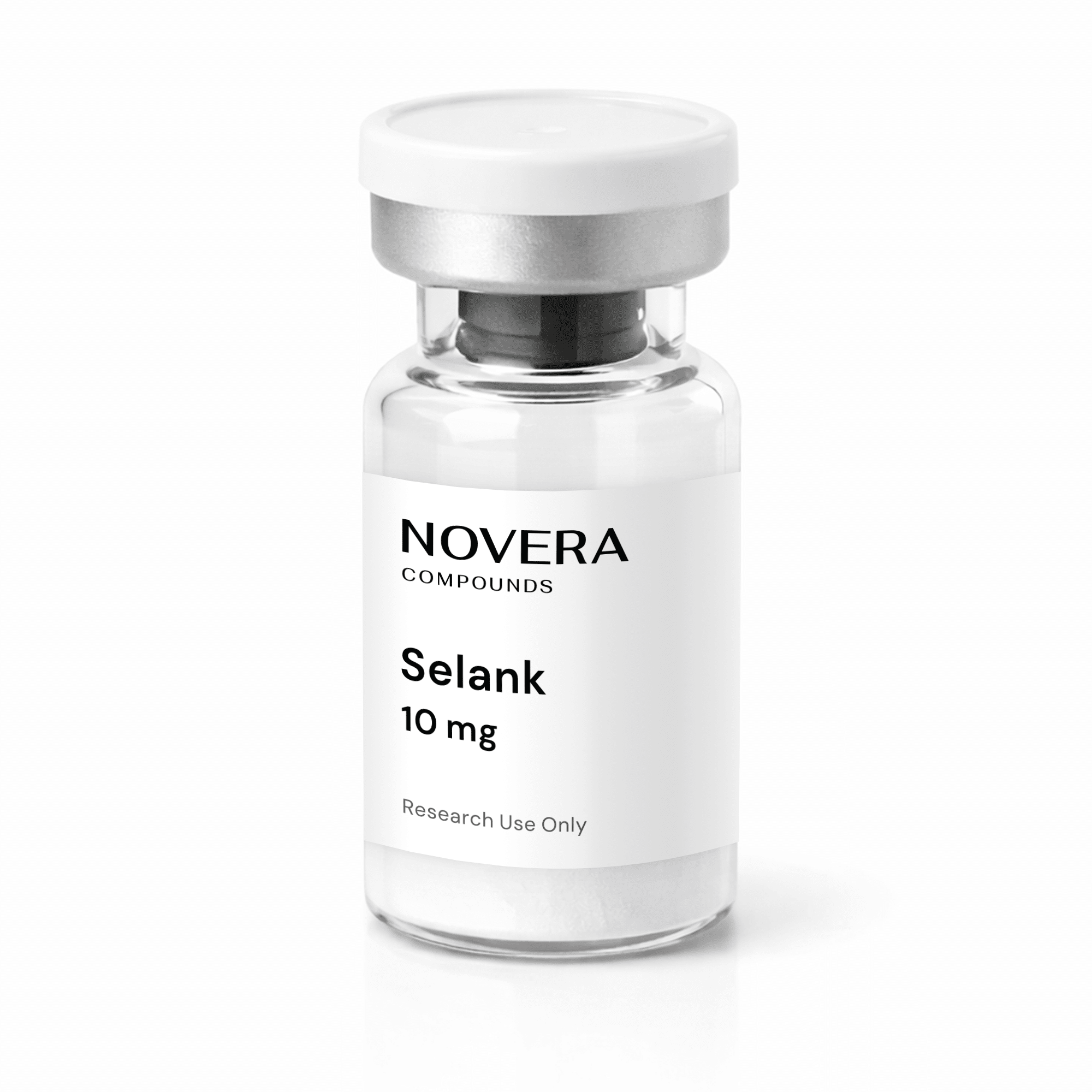
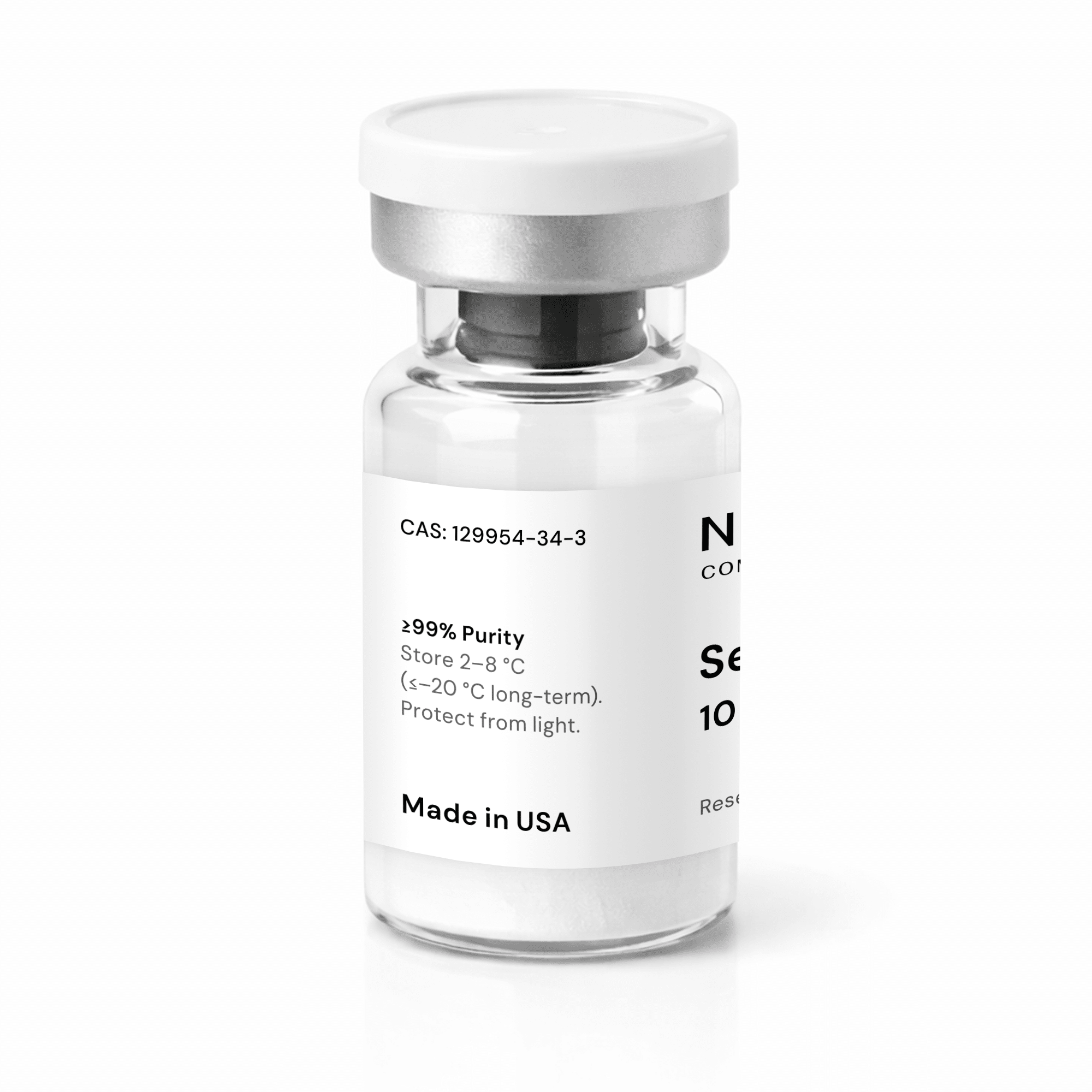
Selank 10mg
Tier
| Packs | Discount (%) | For Each |
|---|---|---|
| 1 - 5 | — | $52.00 |
| 6 - 10 | 9.62 % | $47.00 |
| 11 - 20 | 17.31 % | $43.00 |
| 21+ | 25 % | $39.00 |
Shop with Confidence: 100% Authentic Products
All products are sourced from trusted suppliers and come with original manufacturer LOT numbers for identification and traceability.
Product description
What is Selank (10 mg)?
Selank is a synthetic peptide studied in neurobiology and immunology research. It is a heptapeptide analog derived from the naturally occurring tuftsin peptide, which plays a role in immune signaling processes.
In laboratory studies, Selank has been investigated for its potential effects on cellular communication systems associated with neurological and immune pathways. As a modified form of tuftsin, this peptide is being explored by researchers for its interactions with biological signaling networks. These investigations are ongoing and aim to enhance the understanding of peptide-based regulatory mechanisms. Clinicians who order Selank online should consider comprehensive handling practices, including proper product preparation, quality assurance measures, and adherence to recommended protocols throughout use.
What are the key features of Selank (10 mg)?
- Peptide Type: Synthetic heptapeptide derived from tuftsin
- CAS Number: 129954-34-3
- Sequence Length: 7 amino acids (Thr-Lys-Pro-Arg-Pro-Gly-Pro)
- Subcategory: Brain, Cognitive & Nootropic Peptides
- Molecular Weight: 751.878 g/mol
- Chemical Formula: C₃₃H₅₇N₁₁O₉
- Purity: Typically ≥95–99%, confirmed through analytical testing
- Format: Lyophilized powder in sterile research vials
- Research Focus: Neurobiological signaling and immune-related peptide pathways
- For Laboratory Research Use Only
How is Selank (10 mg) synthesized?
Selank is produced using solid-phase peptide synthesis (SPPS), a widely-used method for manufacturing research peptides. In this process, protected amino acids are sequentially added to a growing peptide chain anchored to a solid support, allowing precise assembly of the seven-amino-acid sequence that forms Selank.
After synthesis, the peptide is purified to remove incomplete sequences and by-products. High-performance liquid chromatography (HPLC) is commonly used to verify purity, while mass spectrometry (MS) confirms the expected molecular weight and structure. These methods ensure that the peptide meets quality standards for scientific investigation.
Following purification and testing, the peptide is lyophilized into a stable powder form suitable for storage and laboratory use.
What is Selank (10 mg) being studied for? What are its possible benefits?
Selank has been studied in several areas of experimental research on neurological signaling and immune activity. As it is derived from the tuftsin peptide framework, scientists have explored its potential influence on biological communication systems involved in both neural and immune pathways.
Research areas include:
- Neurochemical signaling and central nervous system activity
- Immune system modulation and peptide signaling
- Stress-related biological responses in experimental models
- Regulation of inflammatory signaling pathways
- Interactions between peptides and neurotransmitter systems
These research areas aim to improve the understanding of how short peptides influence complex biological networks. While laboratory observations provide insights into peptide behavior, these findings are still under investigation and should not be interpreted as established therapeutic outcomes.
How does Selank (10 mg) work in research studies?
In experimental settings, Selank is studied to assess its potential effects on cellular signaling pathways in the nervous and immune systems. Peptides function as biological messengers that help coordinate communication between cells, tissues, and regulatory pathways.
Researchers have investigated whether Selank can affect biochemical signaling networks associated with neurotransmitter activity and immune responses. Laboratory studies often focus on how the peptide may influence gene expression, protein activity, or signaling molecules involved in cellular communication.
Since Selank is structurally related to tuftsin, research also explores how modifications to this peptide framework may alter biological stability or signaling interactions during experimental observation.
What dosing information exists for Selank (10 mg)?
Dosing information for Selank comes from preclinical or experimental research rather than standardized human dosing guidelines. In these studies, peptide concentrations are typically selected based on the research objectives and biological model under investigation.
Some experimental studies involving Selank have explored concentrations ranging from 10–100 µg/kg in animal models or similar ranges in controlled laboratory settings. These studies aim to observe biological responses and pharmacokinetic behavior under experimental conditions.
It is important to note that there are no universally accepted human dosing guidelines for Selank. Researchers determine appropriate concentrations according to their experimental protocols and institutional research standards.
How should Selank (10 mg) be stored and handled?
Those who order brain peptides online should ensure that all procedures, from product handling and preparation to administration considerations, follow established guidelines for maintaining quality and consistency. Proper storage is essential to maintain peptide stability during laboratory use. Selank, supplied as a lyophilized powder, should be stored at –20 °C in a sealed container protected from light and moisture. These conditions help preserve the peptide’s structural integrity before reconstitution.
Once reconstituted with an appropriate laboratory solvent, the peptide solution is typically stored at 2–8 °C for short-term use. Reconstituted solutions should be handled using sterile laboratory techniques and used within the stability period recommended by the supplier.
Repeated freeze-thaw cycles should be avoided, as they may affect peptide stability. Following standard laboratory storage practices helps maintain consistent research conditions.
Citations
[3] Kolomin T, Shadrina M, Slominsky P, Limborska S, Myasoedov N. A new generation of drugs: synthetic peptides based on natural regulatory peptides. Neurosci Med. 2013;4(4):223-252. doi:10.4236/nm.2013.44035. https://pdfs.semanticscholar.org/2a11/334f12fff603f90a83ef1127e3192ca186b2.pdf
Compliance Statement
This product is intended for laboratory research use only and is not approved for human or veterinary use.
Doctor Medica sources products exclusively through authorized distributors and established procurement channels. Products are verified as genuine, and supplied in the original packaging with their seal intact. Learn more about how we guarantee product authenticity, sourcing compliance, and traceable delivery to our clients.