Your Cart is Empty
Start shopping

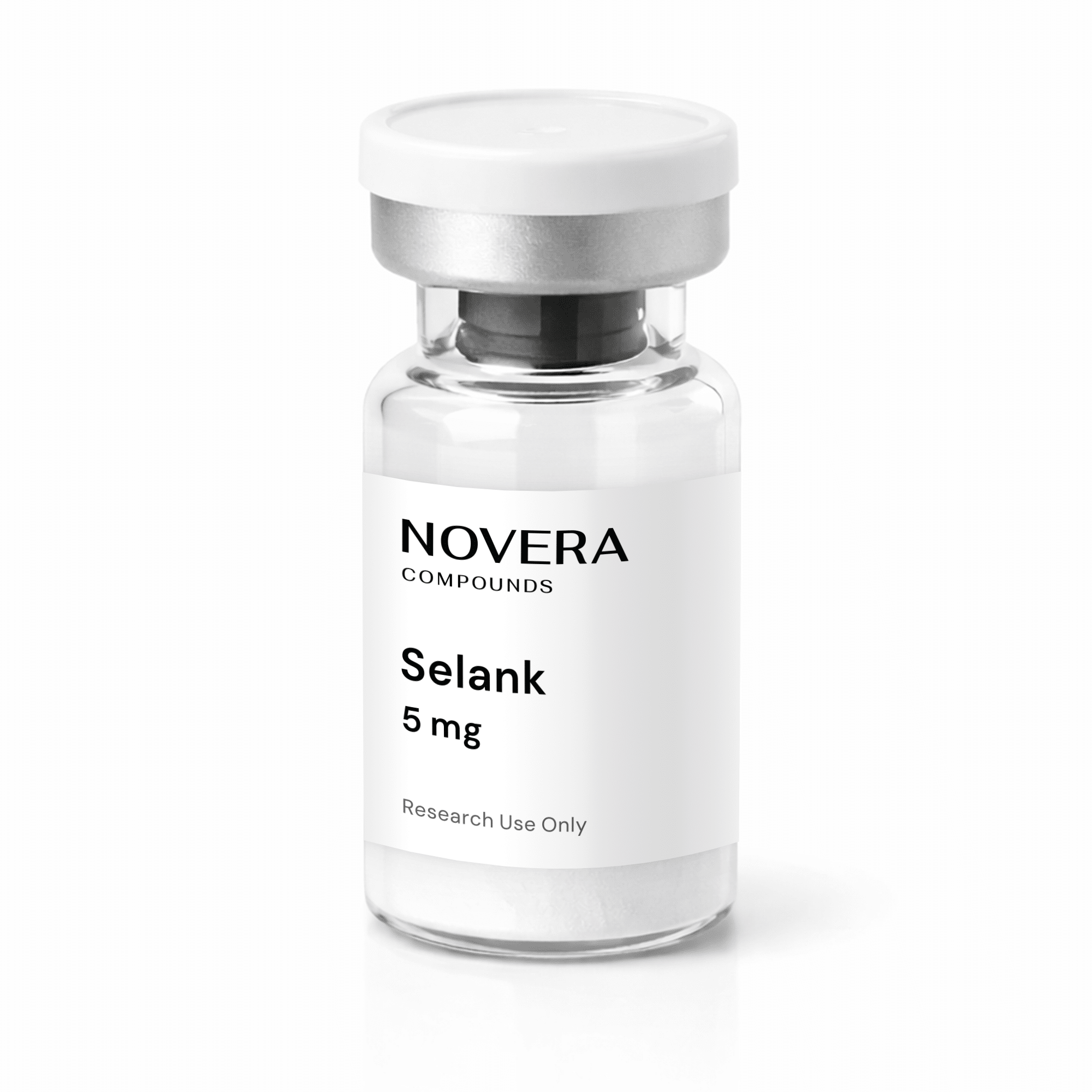
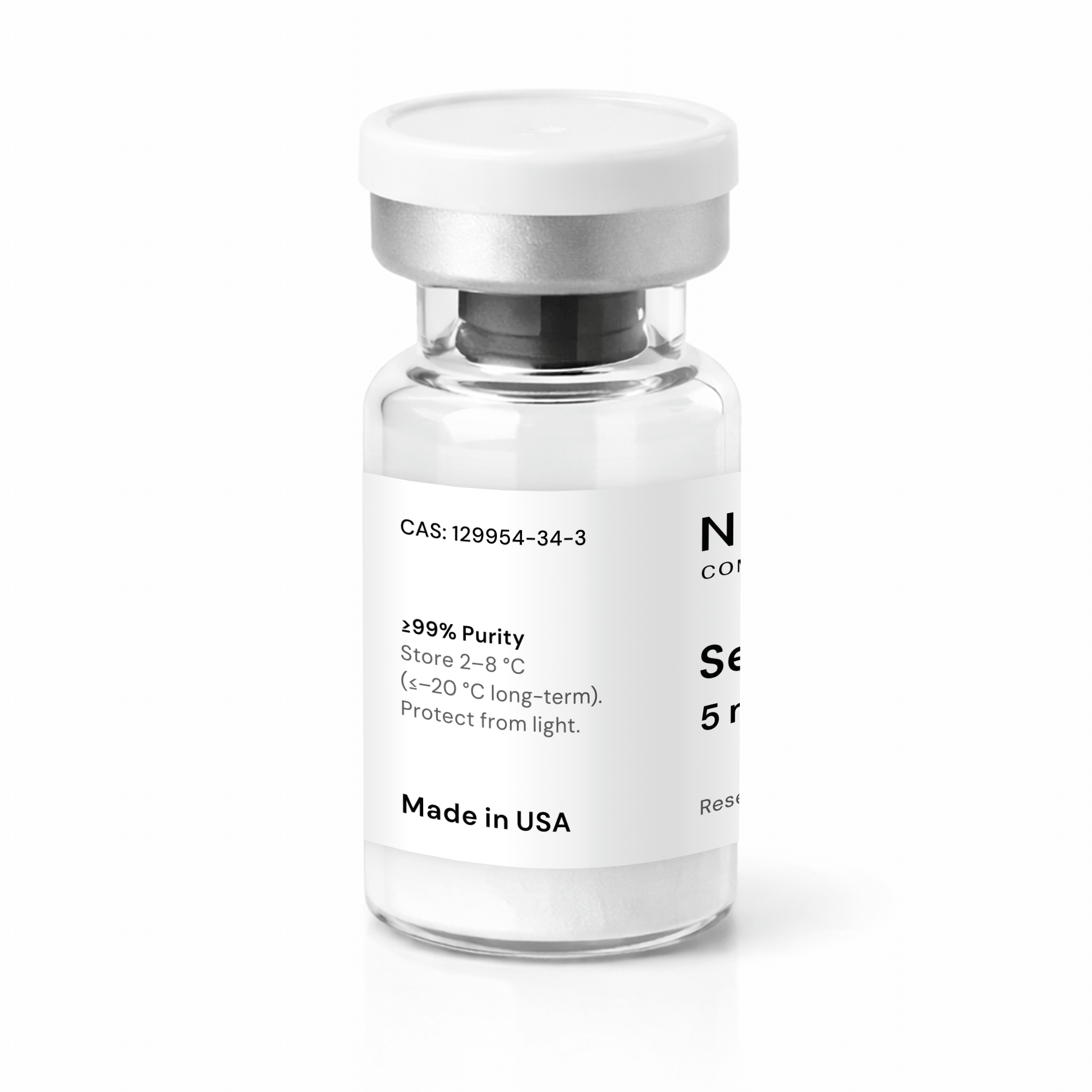
Selank 5mg
Coming Soon
This peptide will be available soon. Join the waitlist to be notified when it launches.
Tier
| Packs | Discount (%) | For Each |
|---|---|---|
| 1 - 5 | — | $45.00 |
| 6 - 10 | 8.89 % | $41.00 |
| 11 - 20 | 17.78 % | $37.00 |
| 21+ | 24.44 % | $34.00 |
Shop with Confidence: 100% Authentic Products
All products are sourced from trusted suppliers and come with original manufacturer LOT numbers for identification and traceability.
Product description
What is Selank (5 mg)?
Selank is a synthetic peptide studied in laboratory research on neurobiology and immune signaling. It is a heptapeptide analog derived from the naturally occurring tuftsin peptide, which is involved in immune regulatory processes. In experimental studies, Selank has been investigated for its potential influence on neurological signaling and immune communication pathways.
Due to its structural similarity to tuftsin, researchers are exploring how this modified peptide interacts with biological regulatory systems in controlled laboratory environments. Medical practitioners who buy Selank wholesale should be aware of proper storage, handling, and reconstitution practices to help maintain product integrity during evaluation.
What are the key features of Selank (5 mg)?
- Peptide Type: Synthetic heptapeptide derived from tuftsin
- CAS Number: 129954-34-3
- Sequence Length: 7 amino acids (Thr-Lys-Pro-Arg-Pro-Gly-Pro)
- Subcategory: Brain, Cognitive & Nootropic Peptides
- Molecular Weight: 751.9 g/mol
- Chemical Formula: C₃₃H₅₇N₁₁O₉
- Purity: Typically ≥95–99%, confirmed through analytical testing
- Format: Lyophilized powder in sterile research vials
- Research Focus: Neurobiological signaling and immune-related peptide pathways
- For Laboratory Research Use Only
How is Selank (5 mg) synthesized?
Selank is produced using solid-phase peptide synthesis (SPPS), a widely-used method for manufacturing short research peptides. In this process, protected amino acids are sequentially added to a growing peptide chain anchored to a solid support, ensuring accurate formation of the seven-amino-acid sequence that defines Selank.
Following synthesis, the peptide undergoes purification steps to remove incomplete sequences and by-products. High-performance liquid chromatography (HPLC) is typically used to confirm purity, while mass spectrometry (MS) verifies the molecular weight and sequence composition.
After purification and analytical verification, the peptide is lyophilized to a powder, which improves stability and enables long-term storage under controlled conditions.
What is Selank (5 mg) being studied for? What are its possible benefits?
Selank has been studied in several areas of experimental research on neurological signaling and immune regulation. Scientists are investigating how short peptides derived from naturally occurring proteins may influence biological communication pathways.
Research areas involving Selank include:
- Peptide signaling within the central nervous system
- Immune system communication and regulatory pathways
- Stress-related biochemical responses in experimental models
- Inflammatory signaling mechanisms
- Interactions between peptides and neurotransmitter systems
These research areas aim to help scientists better understand the biological roles of peptide-based signaling molecules. Observations from these studies remain under investigation and should not be interpreted as established therapeutic outcomes.
How does Selank (5 mg) work in research studies?
In laboratory settings, Selank is investigated for its potential to modulate cellular communication systems involved in neurological and immune processes. Peptides act as signaling molecules that coordinate biological responses between cells and tissues.
Research studies have explored how Selank may interact with biochemical pathways associated with neurotransmitter activity and immune signaling. Scientists examine how the peptide might influence gene expression, protein synthesis, or signaling by regulatory molecules within cells.
Because Selank is structurally derived from tuftsin, researchers also investigate how modifications to this peptide fragment may affect stability, signaling interactions, and biological activity during experimental observation.
What dosing information exists for Selank (5 mg)?
Available dosing information for Selank primarily comes from experimental research rather than standardized guidelines. In these studies, peptide concentrations are selected based on the objectives of the investigation and the biological model used.
Some preclinical studies on Selank have explored dose ranges of 10–100 µg/kg in experimental animal models. These studies are designed to observe biological responses and evaluate peptide behavior in controlled environments.
It is important to note that there are no established human dosing guidelines for Selank. Laboratory researchers determine appropriate concentrations according to experimental protocols, model systems, and institutional research standards.
How should Selank (5 mg) be stored and handled?
Researchers looking to buy brain peptides wholesale should examine supplier transparency, sourcing records, and relevant product details when reviewing potential options. Doctor Medica can help clarify general sourcing considerations without making purchasing recommendations. Proper storage helps preserve the stability of peptide materials used in laboratory research. Selank, supplied as a lyophilized powder, should be stored at –20 °C in sealed containers protected from light and moisture.
Before experimental use, the peptide may be reconstituted with an appropriate laboratory solvent. Once reconstituted, the solution is typically stored at 2–8 °C for short-term use. Sterile handling procedures are recommended to prevent contamination during preparation.
Repeated freeze-thaw cycles should be avoided as they may affect peptide integrity. Following supplier guidelines and standard laboratory storage practices helps maintain consistent research quality.
Citations
[3] Kolomin T, Shadrina M, Slominsky P, Limborska S, Myasoedov N. A new generation of drugs: synthetic peptides based on natural regulatory peptides. Neurosci Med. 2013;4(4):223-252. doi:10.4236/nm.2013.44035. https://pdfs.semanticscholar.org/2a11/334f12fff603f90a83ef1127e3192ca186b2.pdf
[4] Zozulya AA, Kost NV, Yu Sokolov O, et al. The inhibitory effect of Selank on enkephalin-degrading enzymes as a possible mechanism of its anxiolytic activity. Bull Exp Biol Med. 2001;131(4):315-317. doi:10.1023/a:1017979514274
Compliance Statement
This product is intended for laboratory research use only and is not approved for human or veterinary use.
All claims and references on this page apply only to the genuine product, and not replicas or products that cannot be traced back to the official manufacturer. Read more to learn how product authenticity is verified.