Your Cart is Empty
Start shopping

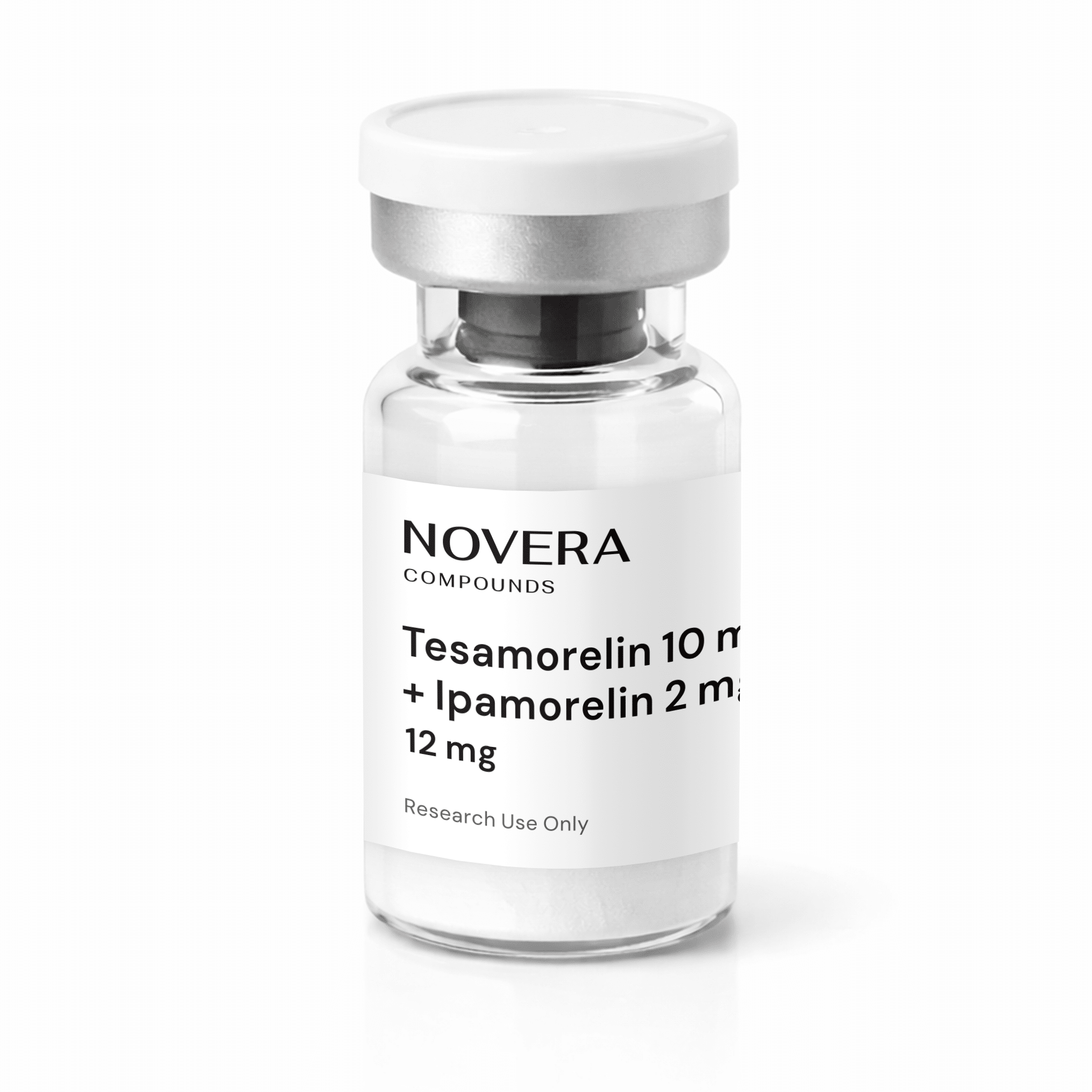
2X Blend: Tesamorelin 10mg + Ipamorelin 2mg
Tier
| Packs | Discount (%) | For Each |
|---|---|---|
| 1 - 5 | — | $95.00 |
| 6 - 10 | 9.47 % | $86.00 |
| 11 - 20 | 17.89 % | $78.00 |
| 21+ | 25.26 % | $71.00 |
Shop with Confidence: 100% Authentic Products
All products are sourced from trusted suppliers and come with original manufacturer LOT numbers for identification and traceability.
Product description
What is 2X Blend: Tesamorelin (10mg) + Ipamorelin (2mg)?
2X Blend: Tesamorelin (10mg) + Ipamorelin (2mg) is a synthetic research peptide blend that combines two compounds known to influence the growth hormone (GH) regulatory pathway. Tesamorelin is a stabilized analog of growth hormone–releasing hormone (GHRH), while Ipamorelin is a selective growth hormone secretagogue that mimics signaling pathways associated with ghrelin.
When studied together, the peptides provide researchers with a model for examining complementary mechanisms that may regulate GH release in experimental systems.
Within the category of muscle growth and performance peptides, the compounds are identified by the following scientific properties:
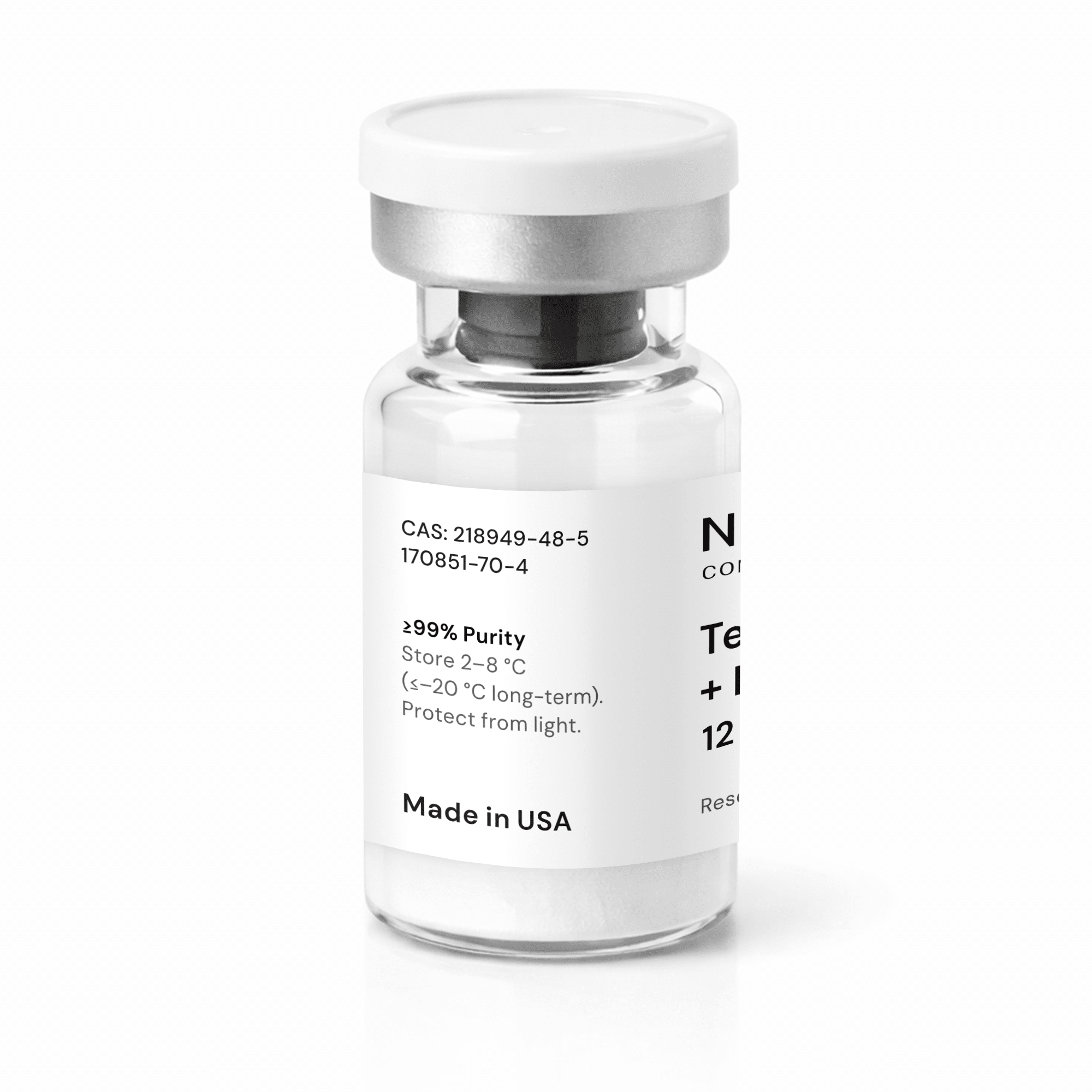
- CAS Numbers
- Tesamorelin: 218949-48-5
- Ipamorelin: 170851-70-4
- Chemical Formulas
- Tesamorelin: C₂₂₁H₃₆₆N₇₂O₆₇S
- Ipamorelin: C₃₈H₄₉N₉O₅
- Molecular Weights
- Tesamorelin: 5136 g/mol
- Ipamorelin: 711.9 g/mol
- Peptide Sequences
- Tesamorelin: Trans-3-hexenoyl-Tyr Ala Asp Ala Ile Phe Thr Asn Ser Tyr Arg Lys Val Leu Gly Gln Leu Ser Ala Arg Lys Leu Leu Gln Asp Ile Met Ser Arg Gln Gln Gly Glu Ser Asn Gln Glu Arg Gly Ala Arg Ala Arg Leu NH₂
- Ipamorelin: Aib-His-D-2Nal-D-Phe-Lys-NH₂
When you buy tesamorelin online, reviewing available sourcing details and storage requirements can help provide a clearer understanding of product handling practices. Notably, it is also documented in peptide research literature as TH9507. Tesamorelin consists of a modified 44-amino acid peptide, while Ipamorelin is a shorter pentapeptide. Both are generally manufactured with high purity for laboratory investigation.
What are the key features of Tesamorelin (10mg) / Ipamorelin (2mg)?
- Lyophilized peptide blend containing Tesamorelin (10 mg) and Ipamorelin (2 mg)
- Manufactured with high purity, commonly verified through analytical testing
- Identity typically confirmed by HPLC and mass spectrometry (MS)
- Designed for research on growth hormone signaling, IGF-1 dynamics, and metabolic pathways
- Suitable for use in controlled in-vitro, ex-vivo, or preclinical laboratory models
- For laboratory research use only
How is Tesamorelin (10mg) / Ipamorelin (2mg) synthesized?
Tesamorelin and Ipamorelin are produced using solid-phase peptide synthesis (SPPS), a widely used method for constructing peptides by sequentially linking protected amino acids on a solid resin. After the full sequence is assembled, the peptide is cleaved, and side-chain protecting groups are removed.
Following synthesis, the peptides are purified using high-performance liquid chromatography (HPLC) to remove impurities and incomplete fragments. Analytical techniques such as mass spectrometry (MS) are then used to confirm the peptide’s molecular weight and structural integrity.
The purified materials are typically combined and processed into a lyophilized powder, which improves stability during storage and transport in laboratory environments.
Related formulations studied in endocrine and growth hormone signaling research include Tesamorelin (5 mg) and Tesamorelin (8 mg), which are investigated in experimental models examining dose-dependent somatotropic signaling, GH/IGF-1 pathway activity, and peptide stability in laboratory settings.
What is Tesamorelin (10mg) / Ipamorelin (2mg) being studied for? What are its possible benefits?
Research involving Tesamorelin has examined its influence on visceral adipose tissue, metabolic parameters, and IGF-1 production in controlled preclinical and experimental models. Investigators have explored how GHRH analogs may affect body composition, endocrine signaling, and metabolic regulation in these models.
Ipamorelin has been studied primarily as a selective growth hormone secretagogue that can stimulate GH release in experimental models. Research has investigated its potential role in the study of bone metabolism, endocrine signaling, and tissue remodeling pathways.
When combined, Tesamorelin and Ipamorelin are being explored for their potential complementary effects on growth hormone pulsatility, metabolic pathways, and mechanisms underlying muscle and tissue physiology, thus they are classified as muscle growth and performance peptides. These outcomes remain areas of ongoing scientific investigation rather than confirmed biological effects.
Professionals who want to buy peptides for muscle growth online should consider factors such as supplier transparency, product authenticity, and proper storage conditions before evaluating available sourcing options.
How does Tesamorelin (10mg) / Ipamorelin (2mg) work in research studies?
In laboratory research, Tesamorelin is believed to interact with GHRH receptors in the pituitary gland, stimulating intracellular signaling pathways that promote growth hormone release, which in turn influences IGF-1 production and related metabolic signals.
Because this mechanism mimics natural hypothalamic signaling, Tesamorelin is often used to study more physiologic patterns of GH secretion.
Ipamorelin functions differently; it acts as a selective activator of the growth hormone secretagogue receptor (GHS-R), associated with ghrelin signaling. Activation of this receptor triggers GH release through calcium-dependent cellular pathways.
Studying both peptides together allows researchers to examine how these two signaling systems interact and influence hormone regulation in experimental settings.
What dosing information exists for Tesamorelin (10mg) / Ipamorelin (2mg)?
Preclinical dosing in rodent models typically involves subcutaneous administration at microgram-per-kilogram doses, with dose selection depending on species, sampling interval, and study objective. Dose design should be guided by peer-reviewed preclinical protocols. No standardized human dosing guidelines exist for Tesamorelin (10mg) / Ipamorelin (2mg) as a research reagent.
How should Tesamorelin (10mg) / Ipamorelin (2mg) be stored and handled?
- Store lyophilized peptide vials at ≤–20 °C for long-term storage
- Protect from light and moisture to preserve peptide stability
- After reconstitution, store solutions at 2–8 °C for short-term use
- Avoid repeated freeze–thaw cycles by preparing aliquots if needed
- Limited room-temperature exposure during transport is generally acceptable
- Unopened lyophilized vials may have a shelf life of up to 24 months when properly stored
Citations
[2] Kojima M, Hosoda H, Date Y, Nakazato M, Matsuo H, Kangawa K. Ghrelin is a growth-hormone-releasing acylated peptide from stomach. Nature. 1999;402(6762):656-660. doi:10.1038/45230
[5] Falutz J, Potvin D, Mamputu JC, Assaad H, Zoltowska M, Michaud SE, Berger D, Somero M, Moyle G, Brown S, Martorell C, Turner R, Grinspoon S. Effects of tesamorelin, a growth hormone-releasing factor, in HIV-infected patients with abdominal fat accumulation: a randomized placebo-controlled trial with a safety extension. J Acquir Immune Defic Syndr. 2010;53(3):311-22. doi: 10.1097/QAI.0b013e3181cbdaff. PMID: 20101189.
Compliance Statement
This product is intended for laboratory research use only and is not approved for human or veterinary use.
All claims and references on this page apply only to the genuine product, and not replicas or products that cannot be traced back to the official manufacturer. Read more to learn how product authenticity is verified.