Your Cart is Empty
Start shopping

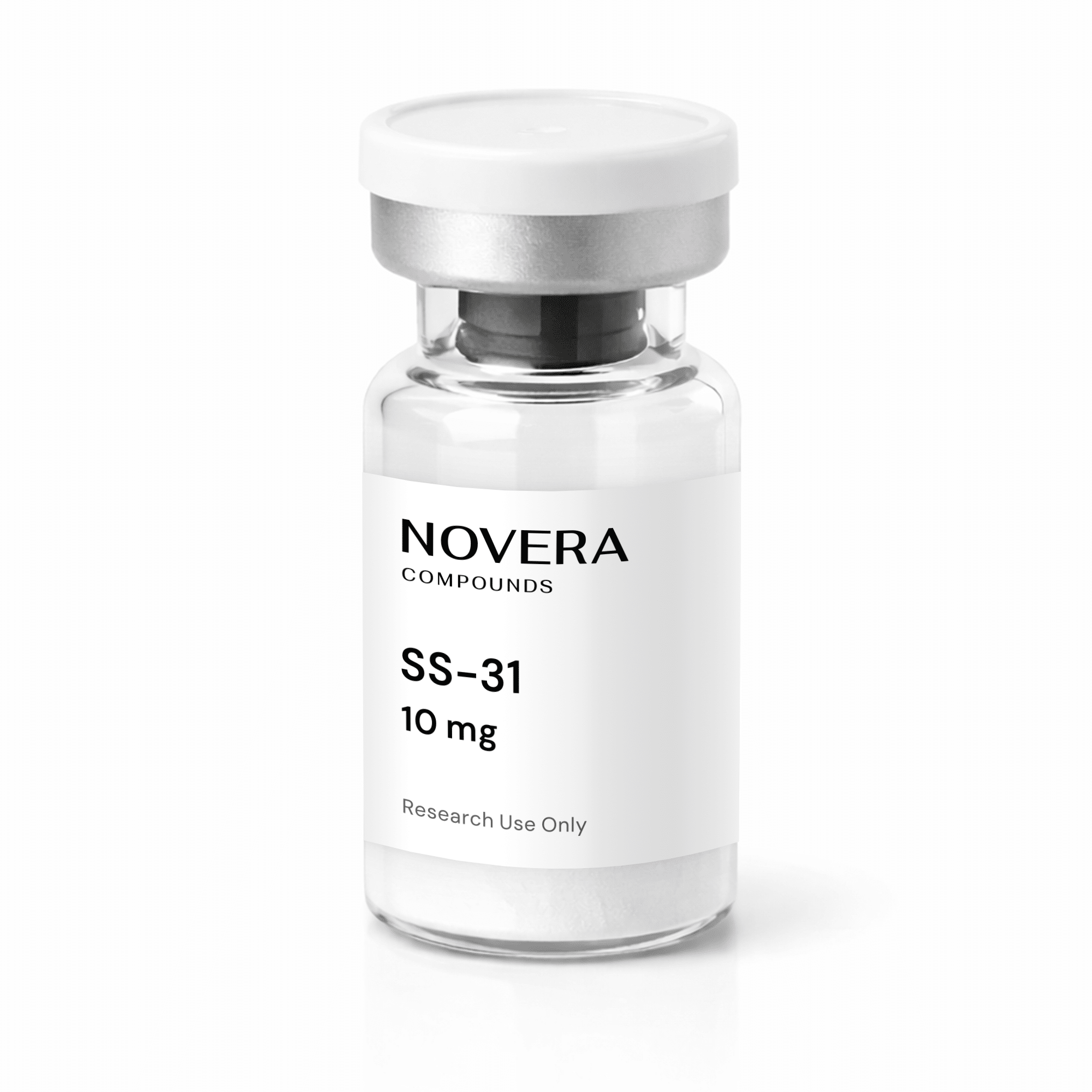
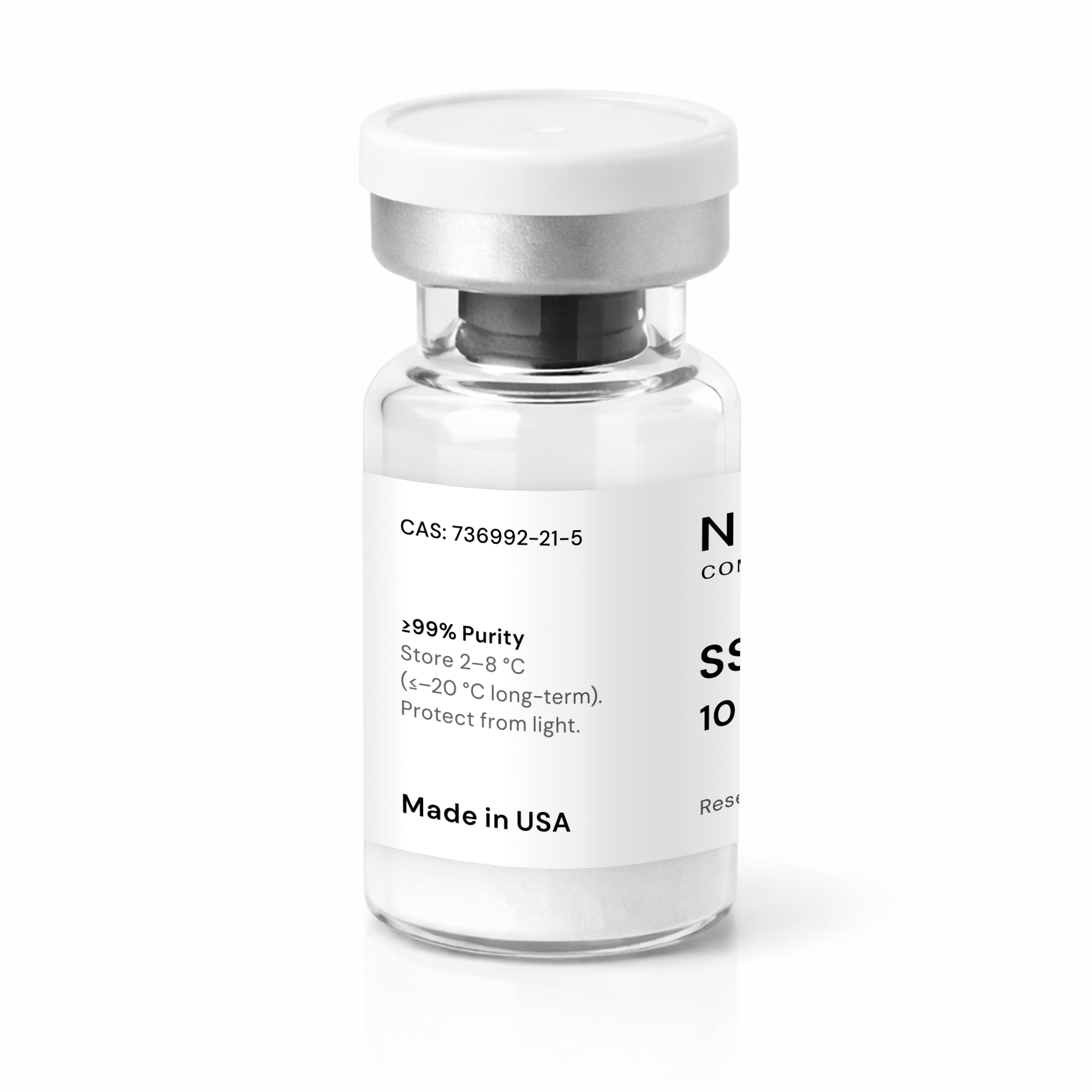
SS-31 10mg
Tier
| Packs | Discount (%) | For Each |
|---|---|---|
| 1 - 5 | — | $63.00 |
| 6 - 10 | 9.52 % | $57.00 |
| 11 - 20 | 19.05 % | $51.00 |
| 21+ | 26.98 % | $46.00 |
Product description
What is SS-31 (30mg)?
SS-31 (30mg), also known as Elamipretide or MTP-131, is a synthetic mitochondria-targeted tetrapeptide used in laboratory research. Its structure enables the peptide to interact with mitochondrial membranes and influence cellular bioenergetic processes in experimental models.
- CAS Number: 736992-21-5
- Chemical Formula: C₃₂H₄₉N₉O₅
- Molecular Weight:8 g/mol
- Sequence: D-Arg–dimethylTyr–Lys–Phe
SS-31 is manufactured with high purity, verified through analytical testing like high-performance liquid chromatography (HPLC) and mass spectrometry (MS). It is studied for its potential interactions with mitochondrial membranes, particularly with cardiolipin, which plays a crucial role in mitochondrial structure and function. When you buy SS-31 online, reviewing available sourcing details and storage requirements can help provide a clearer understanding of product handling practices.
What are the key features of SS-31 (30mg)?
- Synthetic tetrapeptide composed of four amino acids
- High research-grade purity verified through HPLC and mass spectrometry
- Supplied as 30 mg lyophilized peptide in a sealed research vial
- Studied in mitochondrial signaling and cellular energy metabolism research
- For laboratory research use only
How is SS-31 (30mg) synthesized?
SS-31 (30mg) is synthesized using solid-phase peptide synthesis (SPPS), a widely used method for precise peptide construction. In SPPS, amino acids are added sequentially to a growing peptide chain anchored to a solid support.
After synthesis, the peptide undergoes purification using high-performance liquid chromatography (HPLC) to achieve high purity. The peptide’s molecular identity and structural integrity are verified using mass spectrometry (MS). The final peptide is lyophilized to improve stability during storage and transport.
What is SS-31 (30mg) being studied for? What are its possible benefits?
SS-31 (30mg) has been studied for its potential role in mitochondrial biology and cellular energy regulation. Mitochondria are responsible for producing cellular energy through oxidative phosphorylation, so compounds influencing mitochondrial function are valuable in research related to metabolism.
Research areas involving SS-31 include:
- Mitochondrial function research
- Cellular energy metabolism studies
- Oxidative stress and mitochondrial signaling models
- Cardiovascular and muscle tissue experimental models
- Age-related cellular metabolism investigations
Laboratory findings suggest that peptides targeting mitochondria may influence cellular signaling pathways related to oxidative balance and energy production. These potential biological effects are still being studied and should not be considered confirmed therapeutic outcomes.
How does SS-31 (30mg) work in research studies?
Clinicians who buy anti-aging peptides online should consider comprehensive handling practices, including proper product preparation, quality assurance measures, and adherence to recommended protocols throughout use. In research models, SS-31 (30mg) has been studied for its ability to interact with mitochondrial membranes, particularly with cardiolipin, which is crucial for maintaining mitochondrial structure and function. This lipid component plays a central role in regulating mitochondrial energy production and metabolic signaling.
By associating with mitochondrial membranes, SS-31 may influence processes involved in cellular energy production and oxidative stress regulation. Researchers are studying how this interaction may impact mitochondrial stability and signaling pathways related to cellular metabolism. These mechanisms are still under investigation in laboratory studies and have not been established as clinical outcomes.
What dosing information exists for SS-31 (30mg)?
Research involving SS-31 (30mg) has primarily been conducted in preclinical studies using cell cultures and animal models. In vitro research typically evaluates peptide activity at nanomolar to micromolar concentrations to examine mitochondrial responses.
In animal research, dosing parameters vary by experimental model and study design. Preclinical studies have reported dosing ranges in the microgram per kilogram (µg/kg) scale depending on the research model. Because SS-31 is a research compound, no standardized human dosing guidelines exist, and its use is restricted to laboratory research settings.
How should SS-31 (30mg) be stored and handled?
- Store under temperature-controlled conditions per laboratory protocol and certificate of analysis.
- For extended storage, follow temperature conditions specified in the product certificate of analysis.
- Protect the lyophilized peptide from light, heat, and moisture.
- Room-temperature exposure during transport is generally acceptable for short periods.
- Once reconstituted, store under appropriate temperature-controlled conditions per laboratory protocol for short-term use.
- Avoid repeated freeze-thaw cycles to preserve peptide integrity.
- Refer to the batch certificate of analysis for batch-specific stability data.
Citations
- Zhu Y, Luo M, Bai X, et al. SS-31, a Mitochondria-Targeting Peptide, Ameliorates Kidney Disease. Oxid Med Cell Longev. 2022;2022:1295509. Published 2022 Jun 6. doi:10.1155/2022/1295509
- Du X, Zeng Q, Luo Y, et al. Application research of novel peptide mitochondrial-targeted antioxidant SS-31 in mitigating mitochondrial dysfunction. Mitochondrion. 2024;75:101846. doi:10.1016/j.mito.2024.101846
- Russo S, De Rasmo D, Signorile A, Corcelli A, Lobasso S. Beneficial effects of SS-31 peptide on cardiac mitochondrial dysfunction in tafazzin knockdown mice. Sci Rep. 2022;12(1):19847. Published 2022 Nov 18. doi:10.1038/s41598-022-24231-4
- Russo S, De Rasmo D, Rossi R, Signorile A, Lobasso S. SS-31 treatment ameliorates cardiac mitochondrial morphology and defective mitophagy in a murine model of Barth syndrome. Sci Rep. 2024;14(1):13655. Published 2024 Jun 13. doi:10.1038/s41598-024-64368-y
- Li M, Kong D, Meng L, Wang Z, Bai Z, Wu G. Discovery of novel SS-31 (d-Arg-dimethylTyr-Lys-Phe-NH2) derivatives as potent agents to ameliorate inflammation and increase mitochondrial ATP synthesis. RSC Adv. 2024;14(41):29789-29799. Published 2024 Sep 18. doi:10.1039/d4ra05517a
Compliance Statement
This product is intended for laboratory research use only and is not approved for human or veterinary use.
Doctor Medica sources products exclusively through authorized distributors and established procurement channels. Products are verified as genuine, and supplied in the original packaging with their seal intact. Learn more about how we guarantee product authenticity, sourcing compliance, and traceable delivery to our clients.
Shop with Confidence: 100% Authentic Products
All products are sourced from trusted suppliers and come with original manufacturer LOT numbers for identification and traceability.