Your Cart is Empty
Start shopping

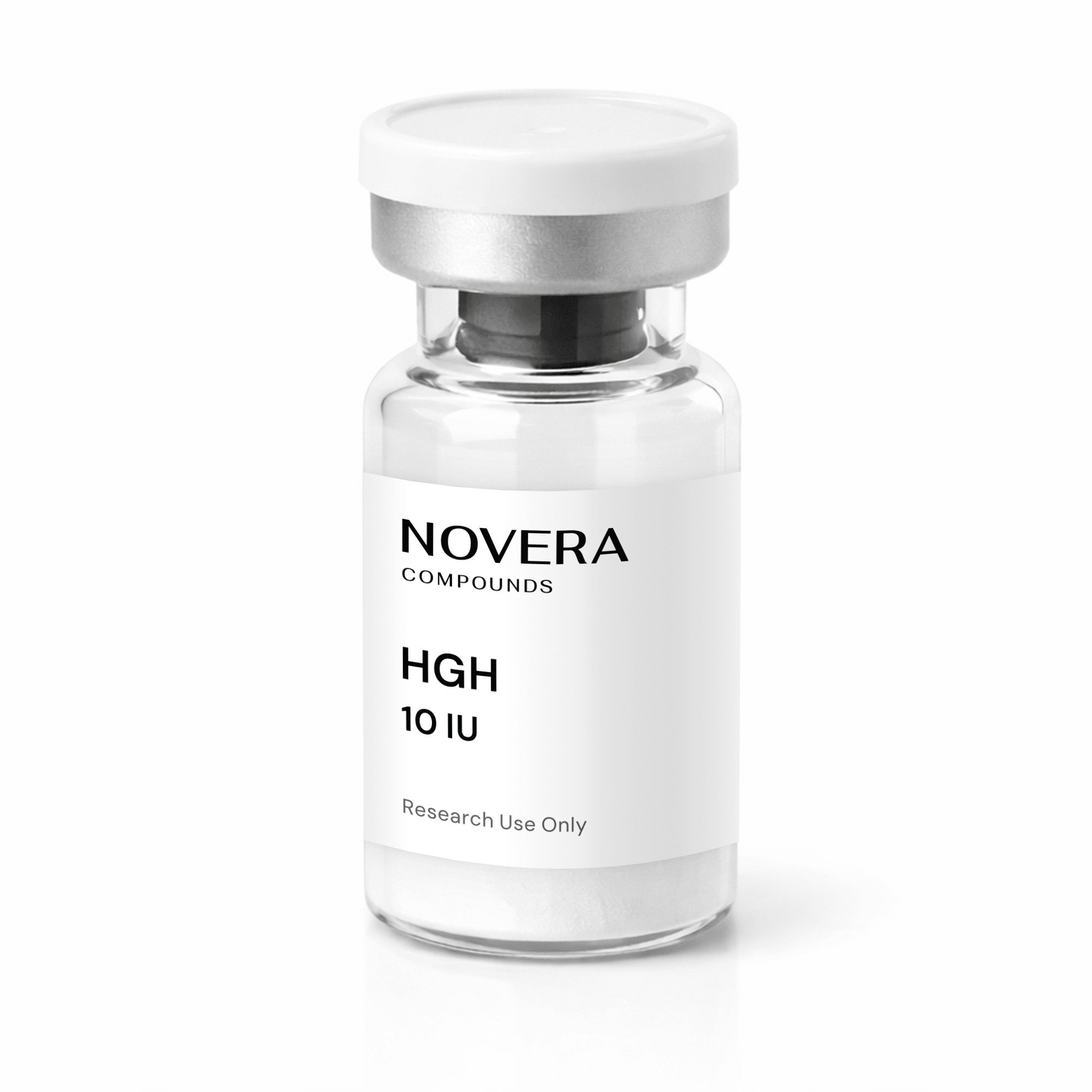
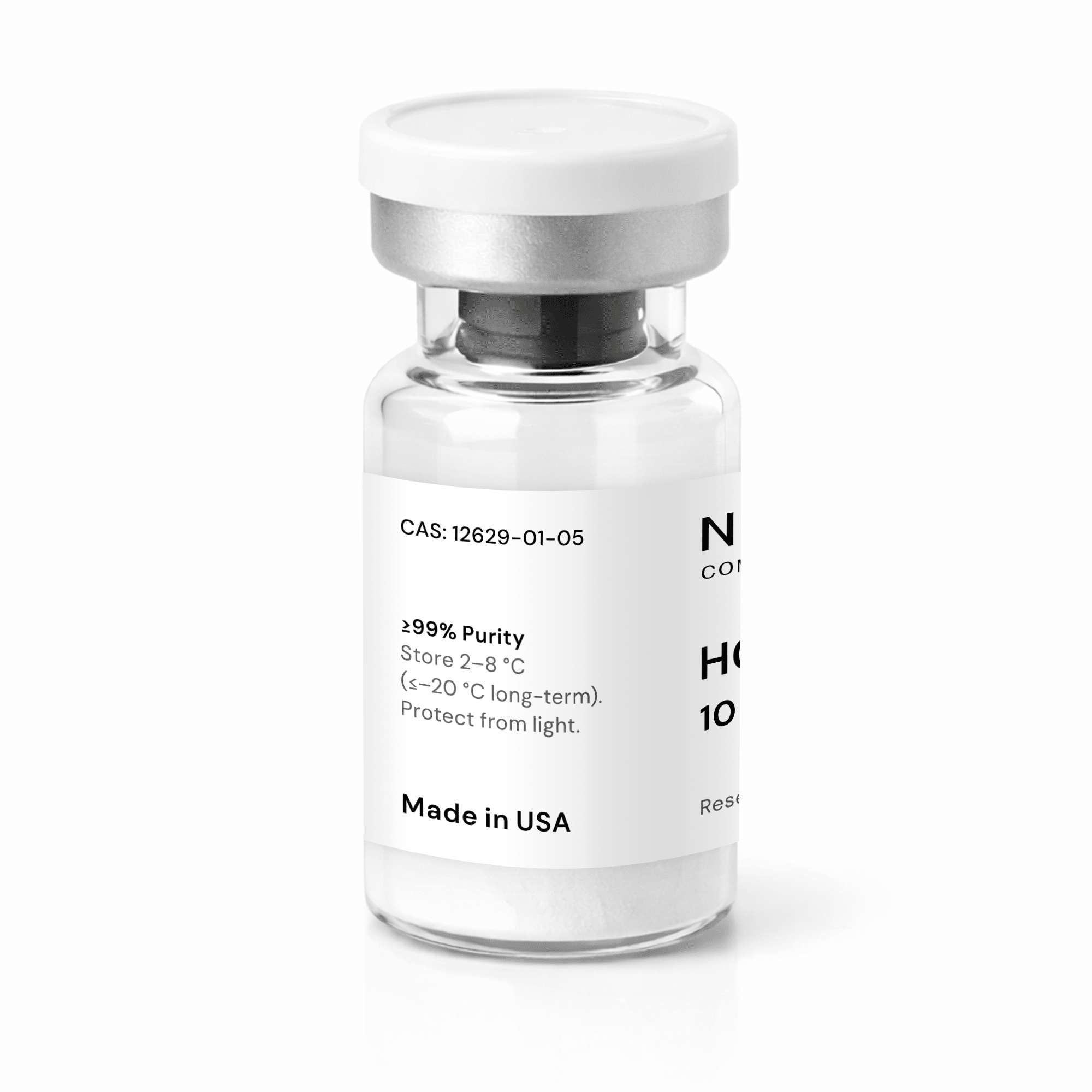
HGH 10iu
Coming Soon
This peptide will be available soon. Join the waitlist to be notified when it launches.
Product description
What is HGH (10iu)?
HGH (10iu) refers to a research preparation associated with human growth hormone–related peptide fragments. Human growth hormone (HGH), also known as somatotropin, is a naturally occurring protein hormone produced by the pituitary gland. It plays a crucial role in growth, metabolism, and cellular regulation. In laboratory research, peptide fragments related to HGH signaling pathways are studied to better understand hormone activity and endocrine regulation.Identification
- Chemical Formula: C₃₉H₆₀N₈O₁₃
- Molecular Weight:848.9 g/mol
- Sequence: H-Glu-Glu-Ala-Tyr-Ile-Pro-Lys-OH
- Synonyms: Somatotropin (32–38) / HGH (32–38)
What are the key features of HGH (10iu)?
- Research-grade peptide associated with somatotropin signaling
- Short peptide fragment consisting of seven amino acids
- Supplied in a 10 IU vial format for research applications
- Shelf life of approximately 24 months under recommended storage conditions
- For laboratory research use only
How is HGH (10iu) synthesized?
HGH (10iu) peptide fragments are produced using solid-phase peptide synthesis (SPPS), a widely used laboratory method for constructing short peptide sequences with precise amino acid order. This approach allows for the controlled synthesis of peptide fragments associated with larger hormone proteins. After synthesis, the peptide is purified using high-performance liquid chromatography (HPLC) to ensure high purity. Structural verification and molecular weight confirmation are performed using mass spectrometry (MS). The purified peptide is then lyophilized to improve stability and facilitate long-term storage in research environments.What is HGH (10iu) being studied for? What are its possible benefits?
HGH (10iu) and related peptide fragments have been studied in laboratory models focused on endocrine signaling and metabolic regulation. Research has explored their involvement in:- Growth hormone signaling pathways
- Metabolic regulation studies
- Protein synthesis research
- Cell growth and differentiation models
- Muscle and bone biology investigations
How does HGH (10iu) work in research studies?
In laboratory environments, HGH (10iu) peptide fragments are being studied for their involvement in signaling pathways associated with growth hormone activity. These peptides may influence processes that regulate cellular growth, metabolism, and protein synthesis. HGH-related peptides act as signaling molecules that may help regulate how cells respond to growth hormone activity. Experimental studies examine their interactions with intracellular pathways that influence gene expression and metabolic processes. These mechanisms remain under investigation and are limited to experimental research models.What dosing information exists for HGH (10iu)?
Research involving HGH-related peptides has been conducted in both animal and cell culture systems. In animal models, growth hormone–associated peptides have been studied at microgram-per-kilogram (µg/kg) dosing ranges, depending on the experimental design and biological endpoints evaluated. In vitro research often uses nanomolar to micromolar concentrations to examine cellular responses related to growth hormone signaling. Dosing parameters vary widely depending on the research objective and study duration. There are no established human dosing guidelines for HGH (10iu), as it is intended strictly for laboratory research use.How should HGH (10iu) be stored and handled?
HGH (10iu) should be stored at 2–8 °C for routine laboratory handling. For long-term storage, temperatures of ≤–20 °C are recommended to preserve peptide stability. Protect the vial from excessive light and moisture. After reconstitution with sterile laboratory-grade solvent, the solution should typically be stored at 2–8 °C for short-term use. Avoid repeated freeze–thaw cycles, as these may affect peptide integrity. The product generally maintains stability for approximately 24 months when stored according to recommended conditions. Appropriate laboratory protective equipment should be used during handling, and disposal should follow institutional biosafety procedures.Where can I read more research about HGH (10iu)?
The following peer-reviewed publications provide background information on growth hormone and related peptide research:- National Center for Biotechnology Information. PubChem compound summary for CID 126658, Somatotropin (32‑38). PubChem. Available at: https://pubchem.ncbi.nlm.nih.gov/compound/126658
- Sami AJ. Structure-function relation of somatotropin with reference to molecular modeling. Curr Protein Pept Sci. 2007;8(3):283-292. doi:10.2174/138920307780831820
- Fernández-Garza LE, Guillen-Silva F, Sotelo-Ibarra MA, Domínguez-Mendoza AE, Barrera-Barrera SA, Barrera-Saldaña HA. Growth hormone and aging: a clinical review. Frontiers in Aging. 2025;6:1549453. doi:10.3389/fragi.2025.1549453
- Tran K, Grobelna A. Somatropin for growth hormone deficiency. NCBI Bookshelf. Published August 1, 2023. https://www.ncbi.nlm.nih.gov/books/NBK596750/
- Waters MJ, Blackmore DG. Growth hormone (GH), brain development and neural stem cells. Pediatr Endocrinol Rev. 2011;9(2):549-553.
Compliance Statement
This product is intended for laboratory research use only and is not approved for human or veterinary use.Shop with Confidence: Product Authenticity is Guaranteed
All products available at Doctor Medica shop are obtained from respective manufacturers and contain original LOT numbers Contact us if you have any questions about product LOT numbers.