Your Cart is Empty
Start shopping
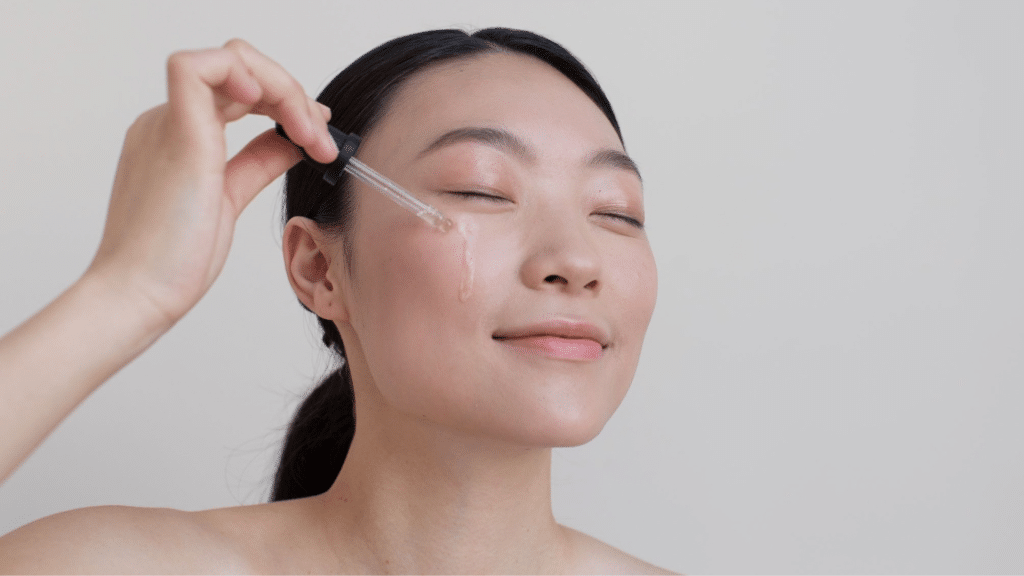
Korean Botox serum is a marketing term used for lightweight anti-aging serums often promoted as “Botox in a bottle.” Some formulas described as Korean silk peptide Botox serum combine peptides, hyaluronic acid, and other skin-conditioning ingredients intended to support hydration, texture, and the appearance of fine lines rather than reproduce the effects of injectable botulinum toxin.
Evidence varies by formulation. Studies of topical hyaluronic acid and peptide products have reported improvements in hydration and selected visible signs of skin aging, but findings from one formula should not automatically be generalized to another.
This article explores what Korean Botox serum refers to, why peptide and hyaluronic acid formulations have attracted attention, what users can realistically expect, and how the serum format compares with creams, balms, and professional injectable treatments.
Doctor Medica covers Korean botox products and related aesthetic trends for medical professionals. Those looking to purchase Korean botox online can explore injectable options separately, since Korean botox serum falls under topical skincare rather than the prescription neuromodulator category.
Key Takeaways
- The “Botox” label is cosmetic marketing shorthand; Korean Botox serums belong to topical skincare rather than the injectable neuromodulator category.
- Peptides and hyaluronic acid are commonly incorporated into these formulas for their roles in hydration and the appearance of aging skin.
- Serums are best evaluated according to their complete formulation, available evidence, tolerability, texture, and realistic skincare benefits rather than the “Botox in a bottle” comparison.
About: Doctor Medica is your trusted supplier of top-quality dermal fillers, viscosupplements, and more for your medical practice. We offer genuine products from leading brands at the lowest prices in the market. If you’re looking to buy Korean botox for your practice, contact Doctor Medica today.
What Does “Korean Botox Serum” Describe?
The term Korean Botox serum generally refers to Korean anti-aging serums marketed around smoother, firmer, or younger-looking skin. No standardized cosmetic category defines the term. Instead, the label is used for formulations commonly positioned around concerns such as fine lines, uneven texture, hydration, and loss of firmness.
Their lightweight consistency is also part of the appeal. Unlike richer creams or more occlusive balm formats, a face serum can often be layered beneath other skincare products without adding as much weight to the routine.
Why Is It Called “Botox in a Bottle”?
The “Botox in a bottle” description refers to the visible results these products are marketed around, not their pharmacological mechanism. A Korean Botox in a bottle serum does not alter neuromuscular activity in the way injectable botulinum toxin does.
Studies evaluating specific topical peptide formulations have reported changes in smoothness, hydration, fine lines, wrinkles, and perceived firmness.[2][3][5] These remain cosmetic skincare outcomes and should not be interpreted as equivalent to neuromodulation.
The distinction is particularly important for medical and aesthetic professionals evaluating marketing claims. A topical serum may make dehydrated or finely textured skin appear smoother, but that effect should not be equated with temporarily reducing targeted muscle activity.
Why Do Peptide and Hyaluronic Acid Serums Get So Much Attention?
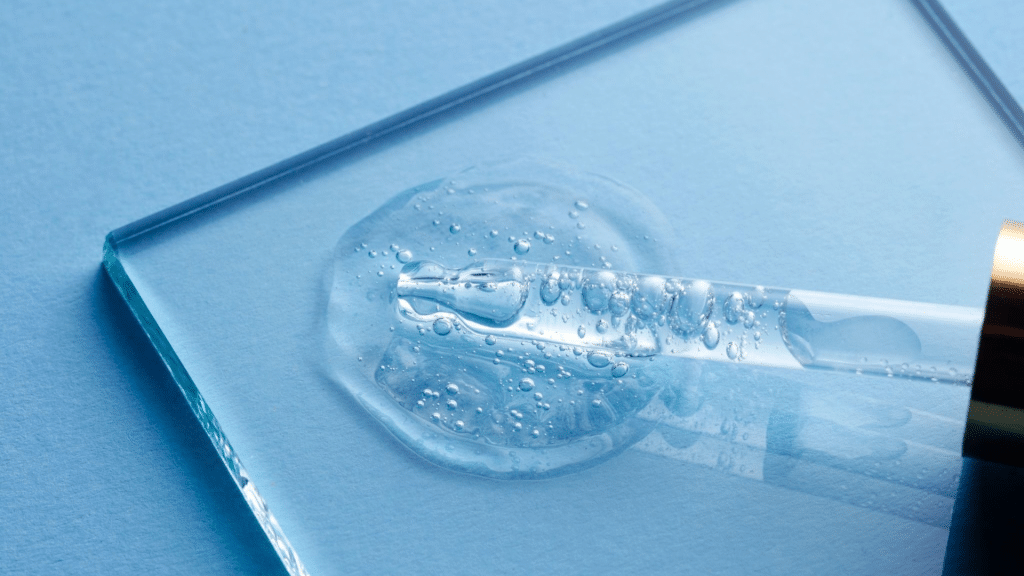
Part of the appeal of Korean Botox serum comes from ingredients already widely associated with anti-aging Korean skin care, particularly peptides and hyaluronic acid. Their inclusion allows a serum to be positioned around both immediate hydration and longer-term improvements in visible skin quality, although results vary substantially by formulation.
Silk Peptides and Other Peptide Complexes
Formulas marketed as Korean silk peptide Botox serum may combine hydrolyzed silk with cosmetic peptides such as copper peptides or acetyl hexapeptide-8. Peptides used in topical skincare vary considerably in structure and proposed function, and research has examined their potential role in improving aspects of aged or photodamaged skin.[2][3][5]
Some peptide-containing formulations have produced improvements in measures such as smoothness, visible wrinkles, and perceived firmness.[2] Their effects should nevertheless be evaluated at the level of the finished formula. The presence of a peptide should not be treated as proof that every serum will produce the same effect on collagen-related pathways or collagen production.[3][5]
The same caution applies to terms such as Korean silk Botox serum or multi-peptide serum. These labels describe how a product is positioned, but they do not establish clinical performance on their own.
Hyaluronic Acid
Hyaluronic acid primarily functions as a humectant, helping the skin retain moisture. Researchers have studied topical hyaluronic acid for its effects on hydration and visible signs of skin aging.[1]
In serum formulas, improved hydration may make the skin feel softer and appear temporarily plumper or smoother. Hyaluronic acid is therefore frequently paired with peptides in anti-aging formulations.
Combining hyaluronic acid with peptides also supports serums focused on hydration and signs of aging, but outcomes depend on the specific formulation rather than the ingredient names alone.[1][2][4]
What Can Korean Botox Serum Realistically Do for Skin?
Clinical research involving specific peptide- and hyaluronic-acid-containing formulations has reported improvements in measures including moisturization, skin texture, visible lines, wrinkles, and perceived firmness.[1][2][4][5]
In one study of a peptide-complex facial serum, participants showed improvements in smoothness, wrinkle severity, fine-line visibility, lifting, and tightening over 12 weeks.[2] Because that research evaluated a specific formulation, the findings should not automatically apply to every Korean Botox serum.
Depending on the ingredients and finished formula, users may notice:
- Softer, more hydrated skin
- Improved skin texture
- A smoother-looking surface
- Fine lines appearing less noticeable
- Greater radiance
- A temporarily plumper appearance related to hydration
These are more appropriate benchmarks for assessing whether a Korean Botox serum works than whether the product can reproduce the effects of an injectable neuromodulator.
How Might Skin Type Affect Use?
A serum’s relatively lightweight texture may suit a range of skin types, but the preferred formulation can differ.
Normal or dry skin may benefit from formulas containing hyaluronic acid and other humectants that support moisture retention.[1] Users with oilier skin may prefer the lighter feel of a serum compared with a richer cream or balm. For sensitive skin, the full ingredient list matters most. Fragrance, botanical ingredients, preservatives, and other components can affect individual tolerability, so the presence of peptides or hyaluronic acid alone does not determine whether a finished product is suitable.
Serums are generally applied to clean skin, but ingredient performance also depends on the overall formulation and delivery system. Don’t assume an ingredient on the label will produce a particular result on its own, independent of the finished product.
What About Wrinkle Appearance and Firmness?
Topical skincare may soften the appearance of fine lines and wrinkles, particularly where dryness or dehydration makes them more noticeable. Research on selected peptide formulations has also reported improvements in visible wrinkles and perceived firmness.[2][3][5]
Similar caution applies to crow’s feet, expression lines, and early sagging skin. A serum may make these areas appear smoother, better hydrated, or temporarily plumper, but it does not stop the muscle contraction that contributes to dynamic expression lines.
For this reason, claims involving dramatic wrinkle reduction or skin tightening should be interpreted according to the evidence available for the specific finished product rather than generalized to Korean Botox serums as a category.
Where Does Korean Botox Serum Fit in Home and Professional Skin Care?
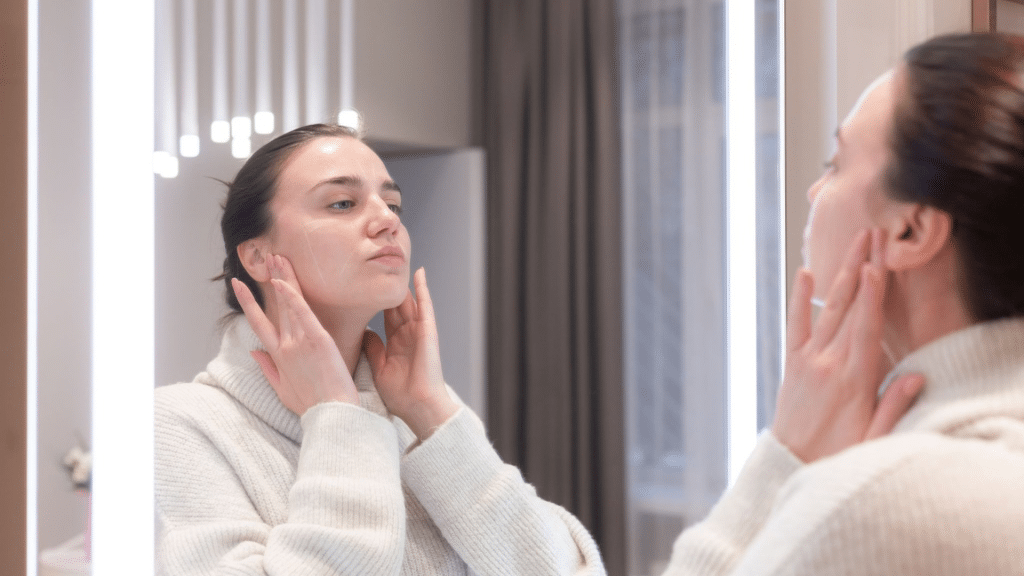
One reason serums remain popular is that their lighter texture makes them relatively easy to incorporate into an existing routine. This also distinguishes them from richer topical formats.
Compared with creams, a serum generally provides a lighter layer and may be preferred when users want hydration or active ingredients without a heavier moisturizing finish. Creams tend to provide a richer moisturizing step.
Balms are typically richer still and may be used more selectively where additional emollience or moisture is desired. These differences help explain why some users prefer a serum for layering, but the format alone doesn’t guarantee better clinical performance.
Using Serum in a Daily Routine
A face serum is generally applied after cleansing and before heavier moisturizers, although users should always follow the manufacturer’s directions for the individual product.
A basic routine may include:
- Cleansing the skin
- Applying toner or essence, if used
- Applying the serum
- Following with moisturizer
- Applying sunscreen during the day
For users wearing substantial makeup or water-resistant sunscreen, a double cleanse may be used in the evening before the serum step.
Some lightweight formulas may also layer beneath cosmetics. When used as a makeup base, allowing the serum to absorb before applying makeup may help reduce pilling, although compatibility depends on the formulation and the other products being layered.
In this context, phrases such as “firming, lifting and moisturizing” are best understood as cosmetic positioning rather than evidence that a serum alters facial musculature.
Use in Esthetician Services
If a Korean Botox serum is incorporated into esthetician services, treat it as a topical hydrating or skin-conditioning product and follow the manufacturer’s directions.
A facial service may separately include massage techniques discussed in relation to puffiness or lymphatic flow. Distinguish any effects associated with those techniques from the effects of the serum itself, rather than automatically attributing them to the topical formulation.
Within facial aesthetics, the key distinction remains the same: Korean Botox serum is a cosmetic topical, whereas injectable Korean botox brands belong to a separate neuromodulator category.
Maintaining that distinction matters, especially when marketing language makes topical formulas sound like injectable treatments.
How Should Popular Korean Botox Serums Be Evaluated?
There is no officially recognized best Korean Botox serum. The term covers a loosely defined collection of products marketed with descriptions such as peptide, silk, lifting, wrinkle care, ampoule, or “Botox in a bottle.”
Popularity online should not be treated as evidence of clinical superiority. A viral Korean Botox serum may attract attention because of its packaging, texture, ingredient story, social-media exposure, or visible short-term hydration, but those factors alone do not establish the quality of the supporting evidence.
A more useful comparison considers:
- The complete ingredient list
- Ingredient concentrations when disclosed
- Evidence supporting the principal ingredients
- Hydration and texture
- Suitability for the intended skin type
- Fragrance and other potential irritants
- Manufacturer transparency
- Packaging and product stability
Vitaliq, Viral Labels, and Search Terminology
When encountering search terms such as Korean Botox serum Vitaliq, professionals should verify the manufacturer, ingredient list, product documentation, and available evidence rather than treating online search terminology as a standardized cosmetic category.
The same applies to expressions such as Korean silk Botox serum or ampoule-style copper peptide serum. These names can describe how products are marketed, but they don’t establish that one formulation will outperform another.
Similarly, social-media popularity says relatively little about whether a finished formula has been tested in controlled clinical research.
What Makes the “Best” Serum?
For some users, the best Korean Botox serum may simply be a well-formulated hyaluronic acid serum with good tolerability. Others may prefer a Korean silk Botox serum or a multi-peptide formula.
Copper peptide-containing serums represent another variation within the category. Reviews of topical peptides indicate that evidence can vary considerably by peptide, formulation, study design, and outcome measured.[3][5] Their presence on an ingredient list alone therefore does not demonstrate that one serum is more effective than another.
Korean Botox serum reviews can be most useful when they describe practical qualities such as texture, hydration, irritation, application, and how well the product layers with other skincare. Claims of immediate Botox-equivalent wrinkle removal warrant considerably more caution.
Ultimately, the “best” serum is better assessed through formulation quality, ingredient suitability, supporting evidence, tolerability, and realistic cosmetic expectations than through the use of the Botox name.
For licensed medical professionals only. This content is for informational purposes only and does not constitute medical advice.
Citations
[1] Bravo, Bruna et al. “Benefits of topical hyaluronic acid for skin quality and signs of skin aging: From literature review to clinical evidence.” Dermatologic therapy vol. 35,12 (2022): e15903. doi:10.1111/dth.15903
[2] Moy, Melissa et al. “Peptide-pro complex serum: Investigating effects on aged skin.” Journal of cosmetic dermatology vol. 22,1 (2023): 267-274. doi:10.1111/jocd.14992
[3] Gorouhi, F, and H I Maibach. “Role of topical peptides in preventing or treating aged skin.” International journal of cosmetic science vol. 31,5 (2009): 327-45. doi:10.1111/j.1468-2494.2009.00490.x
[4] Gold, Michael H et al. “Efficacy and tolerability of a hyaluronic acid-based serum and a peptide-rich cream for the face and neck in subjects with photodamaged skin.” Journal of cosmetic dermatology vol. 21,8 (2022): 3458-3463. doi:10.1111/jocd.14981
[5] Nukaly, Houriah Y et al. “Oral and topical peptides for skin aging: systematic review and meta-analysis of randomized controlled trials.” Frontiers in medicine vol. 13 1618306. 17 Mar. 2026, doi:10.3389/fmed.2026.1618306
The content on this page has been written and fact-checked in accordance with our Editorial Policy. Clinical claims are sourced from peer-reviewed literature, regulatory documentation, and manufacturer specifications. Where citations are provided, it is always in accordance to our editorial standards.