Your Cart is Empty
Start shopping

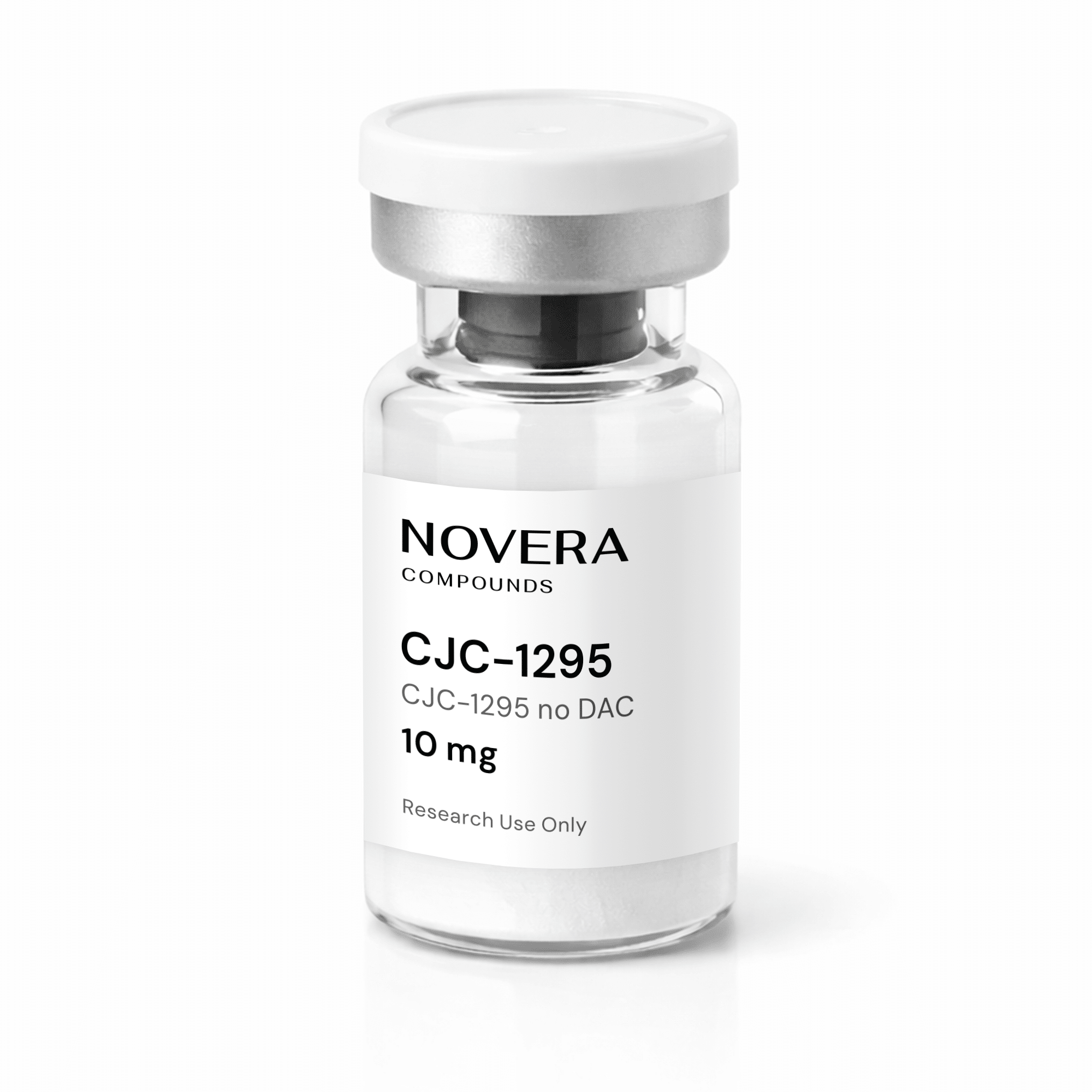
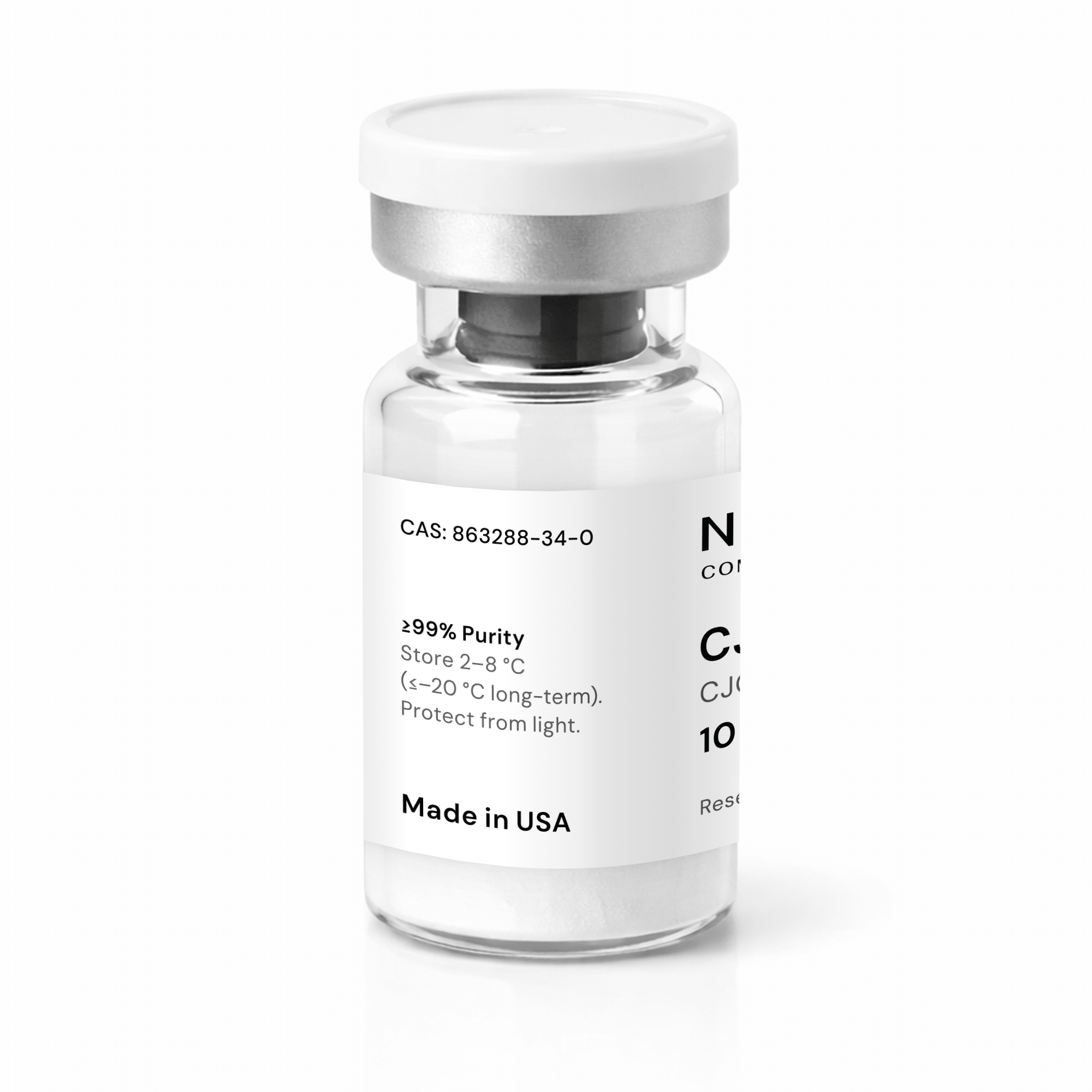
CJC-1295 – No DAC 10mg
Coming Soon
This peptide will be available soon. Join the waitlist to be notified when it launches.
Tier
| Packs | Discount (%) | For Each |
|---|---|---|
| 1 - 5 | — | $63.00 |
| 6 - 10 | 1.59 % | $62.00 |
| 11 - 20 | 3.17 % | $61.00 |
| 21+ | 4.76 % | $60.00 |
Product description
What is CJC-1295 Without DAC (10mg)?
CJC-1295 Without DAC, also known as Modified GRF (1–29), is a synthetic peptide analog of growth hormone–releasing hormone (GHRH) developed for laboratory research applications. It consists of 29 amino acids, has an approximate molecular weight of 3367.9 g/mol, and is designed to improve enzymatic stability compared to native GHRH while preserving biological activity. This peptide has been studied for its role in growth hormone signaling pathways and pituitary-related research models.
- Peptide Sequence: Tyr-D-Ala-Asp-Ala-Ile-Phe-Thr-Gln-Ser-Tyr-Arg-Lys-Val-Leu-Ala-Gln-Leu-Ser-Ala-Arg-Lys-Leu-Leu-Gln-Asp-Ile-Leu-Ser-Arg
Unlike DAC-conjugated variants, this form lacks a Drug Affinity Complex, resulting in a shorter biological half-life of approximately 30 minutes. This allows researchers to investigate pulsatile hormone signaling patterns that resemble endogenous growth hormone release. The CJC 1295 peptide is typically supplied as a lyophilized powder with ≥99% purity, verified by HPLC and mass spectrometry, supporting consistency in experimental use. When planning to buy peptides for muscle growth online, reviewing supplier credentials and sourcing records can help identify reliable product information. Doctor Medica can assist with evaluating sourcing details and answering general questions related to regulatory considerations.
What are the key features of CJC-1295 Without DAC (10mg)?
CJC-1295 Without DAC is supplied as a high-purity research peptide suitable for in-vitro and preclinical investigations involving endocrine signaling and peptide stability studies. It is commonly provided in formats such as a CJC 1295 10 mg vial, allowing flexible use across different experimental designs.
Key features include:
- ≥99% purity, confirmed by HPLC and mass spectrometry
- 29-amino acid synthetic peptide based on modified GRF (1–29)
- Short biological half-life (~30 minutes) for pulsatile signaling studies
- Lyophilized powder for enhanced stability and controlled reconstitution
- Designed without DAC modification for transient activity modeling
- Suitable for controlled endocrine and signaling research applications
- For laboratory research use only.
Researchers who choose to buy CJC-1295 online typically do so for its defined structure, reproducible purity, and suitability for short-duration signaling studies.
How is CJC-1295 Without DAC (10mg) synthesized?
CJC-1295 without DAC is manufactured using solid-phase peptide synthesis (SPPS), a controlled chemical process that allows precise assembly of amino acids in a defined sequence. The peptide is based on the N-terminal 29-amino-acid fragment of native GHRH and incorporates several targeted substitutions to improve chemical and enzymatic stability.
These modifications include D-alanine at position 2 to reduce susceptibility to dipeptidyl peptidase-4 degradation, along with substitutions at positions 8, 15, and 27 to enhance resistance to deamidation and oxidation. The peptide also features C-terminal amidation, which supports conformational stability during laboratory handling.
Following synthesis, the peptide undergoes purification using high-performance liquid chromatography and identity confirmation via mass spectrometry, ensuring structural accuracy and high purity before lyophilization.
What is CJC-1295 Without DAC (10mg) being studied for? What are its possible benefits?
CJC-1295 Without DAC has been studied in experimental models examining growth hormone axis regulation, pituitary signaling, and peptide–receptor interaction dynamics. Research focuses on how transient stimulation of growth hormone–related pathways influences downstream biological processes in controlled laboratory settings.
Areas under investigation include:
- Growth hormone secretion kinetics
- Intracellular signaling cascades
- Metabolic pathway modulation
- Cellular repair and protein synthesis models
Because this peptide lacks DAC, it is particularly useful for studies requiring short-lived biological activity rather than sustained exposure. Furthermore, any potential biological benefits remain experimental and unproven.
Findings from these studies are used to inform mechanistic understanding rather than therapeutic outcomes. CJC 1295 for research is intended solely as a laboratory tool for studying endocrine signaling behavior.
How does CJC-1295 Without DAC (10mg) work in research studies?
In laboratory models, CJC-1295 without DAC is thought to stimulate growth hormone release by initiating signaling events associated with endogenous GHRH activity. Its short half-life allows researchers to observe discrete signaling pulses, which are important for understanding feedback regulation and temporal hormone dynamics.
Once introduced into a research system, the peptide promotes intracellular signaling pathways linked to cyclic AMP production and downstream transcriptional activity. These cascades are associated with transient growth hormone secretion and related cellular responses.
Because it does not produce prolonged exposure, CJC 1295 no DAC is often used to evaluate how short-duration signaling influences metabolic pathways, gene expression, and endocrine rhythm modeling without long-acting interference.
What dosing information exists for CJC-1295 Without DAC (10mg)?
Published preclinical and in-vitro studies involving Modified GRF (1–29) analogs report a range of experimental concentrations rather than standardized dosing. In animal models, doses have been studied at approximately 30–90 µg/kg, while cell-based assays often use nanomolar to micromolar concentrations depending on study design.
Due to its rapid clearance, research protocols may involve repeated or timed exposure to examine pulsatile effects. Importantly, no human dosing guidelines exist, and all available information originates from laboratory or preclinical research settings only.
How should CJC-1295 Without DAC (10mg) be stored and handled?
Lyophilized CJC-1295 Without DAC should be stored at –20 °C or below, protected from light, moisture, and repeated freeze–thaw cycles. Under appropriate conditions, unreconstituted material may remain stable for extended periods.
After reconstitution, solutions are typically stored at 2–8 °C and used within timeframes consistent with standard peptide stability practices. Stability depends on buffer composition, sterility, temperature consistency, and light exposure. Researchers are advised to validate storage conditions within their own laboratory protocols.
Citations
Additional peer-reviewed research and background information can be found through the following sources:
[4] Jetté L, Léger R, Thibaudeau K, et al. Human growth hormone-releasing factor (hGRF)1-29-albumin bioconjugates activate the GRF receptor on the anterior pituitary in rats: identification of CJC-1295 as a long-lasting GRF analog. Endocrinology. 2005;146(7):3052-3058. doi:10.1210/en.2004-1286
[5] Caicedo D, Díaz O, Devesa P, Devesa J. Growth Hormone (GH) and Cardiovascular System. Int J Mol Sci. 2018;19(1):290. Published 2018 Jan 18. doi:10.3390/ijms19010290
[6] Frohman LA, Downs TR, Williams TC, Heimer EP, Pan YC, Felix AM. Rapid enzymatic degradation of growth hormone-releasing hormone by plasma in vitro and in vivo to a biologically inactive product cleaved at the NH2 terminus. J Clin Invest. 1986;78(4):906-913. doi:10.1172/JCI112679
Compliance Statement
This product is intended for laboratory research use only and is not approved for human or veterinary use.
Shop with Confidence: Product Authenticity is Guaranteed
All products available at Doctor Medica shop are obtained from respective manufacturers and contain original LOT numbers Contact us if you have any questions about product LOT numbers.