Your Cart is Empty
Start shopping

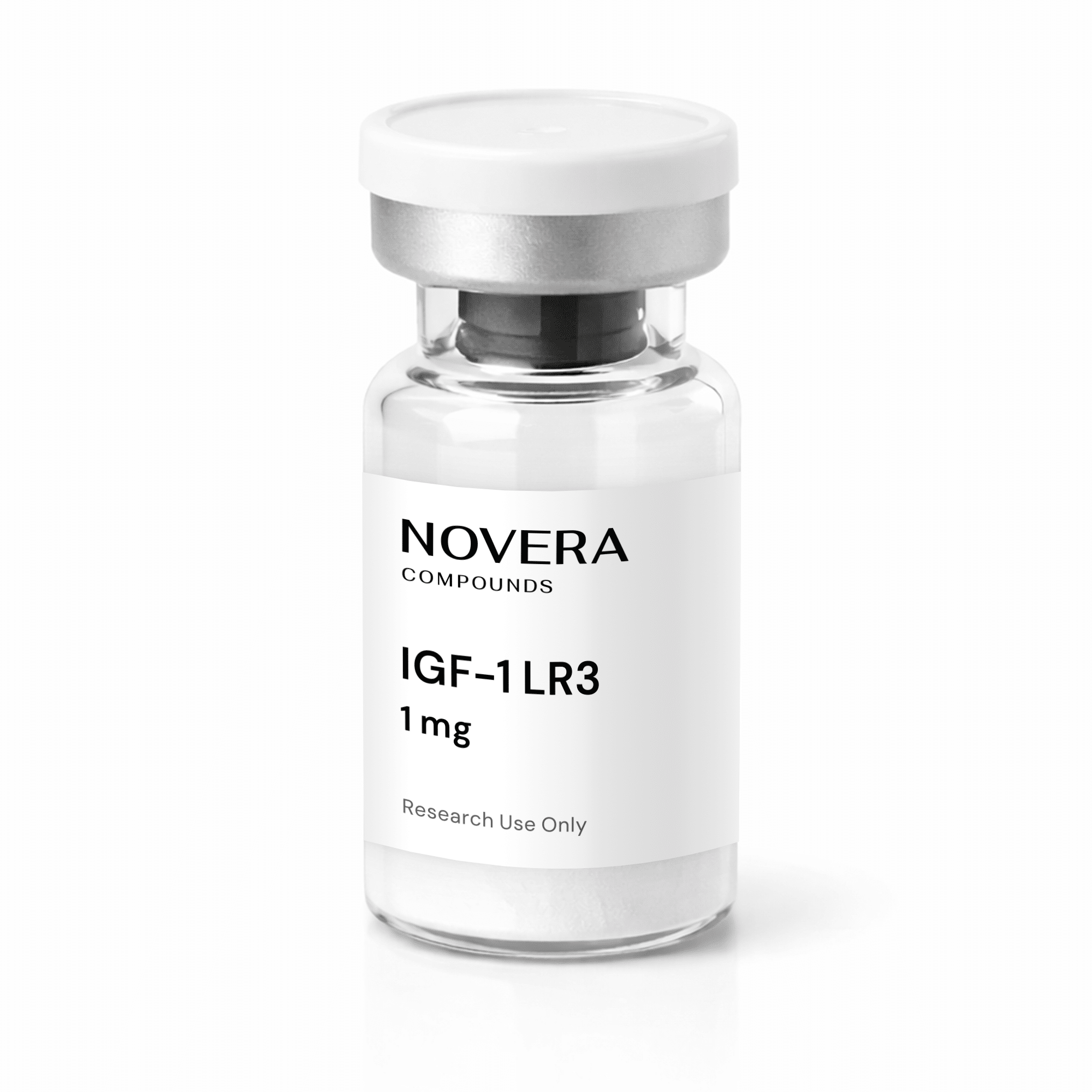
IGF-1 LR3 1mg
Tier
| Packs | Discount (%) | For Each |
|---|---|---|
| 1 - 5 | — | $131.00 |
| 6 - 10 | 9.92 % | $118.00 |
| 11 - 20 | 19.08 % | $106.00 |
| 21+ | 27.48 % | $95.00 |
Product description
What is IGF-1 LR3 (1mg)?
IGF-1 LR3 (1mg) is a laboratory-grade analog of insulin-like growth factor-1 (IGF-1), modified to enhance stability and extend its activity in experimental systems. It is often categorized as a muscle growth and performance peptide in research, as it has been studied for its role in growth-related signaling and cellular metabolism. This peptide is typically supplied as a lyophilized powder in a 1 mg vial, allowing for accurate preparation of experimental solutions for both in vitro and in vivo studies. IGF-1 LR3 has the following characteristics:- Molecular Weight: 9117.60 g/mol
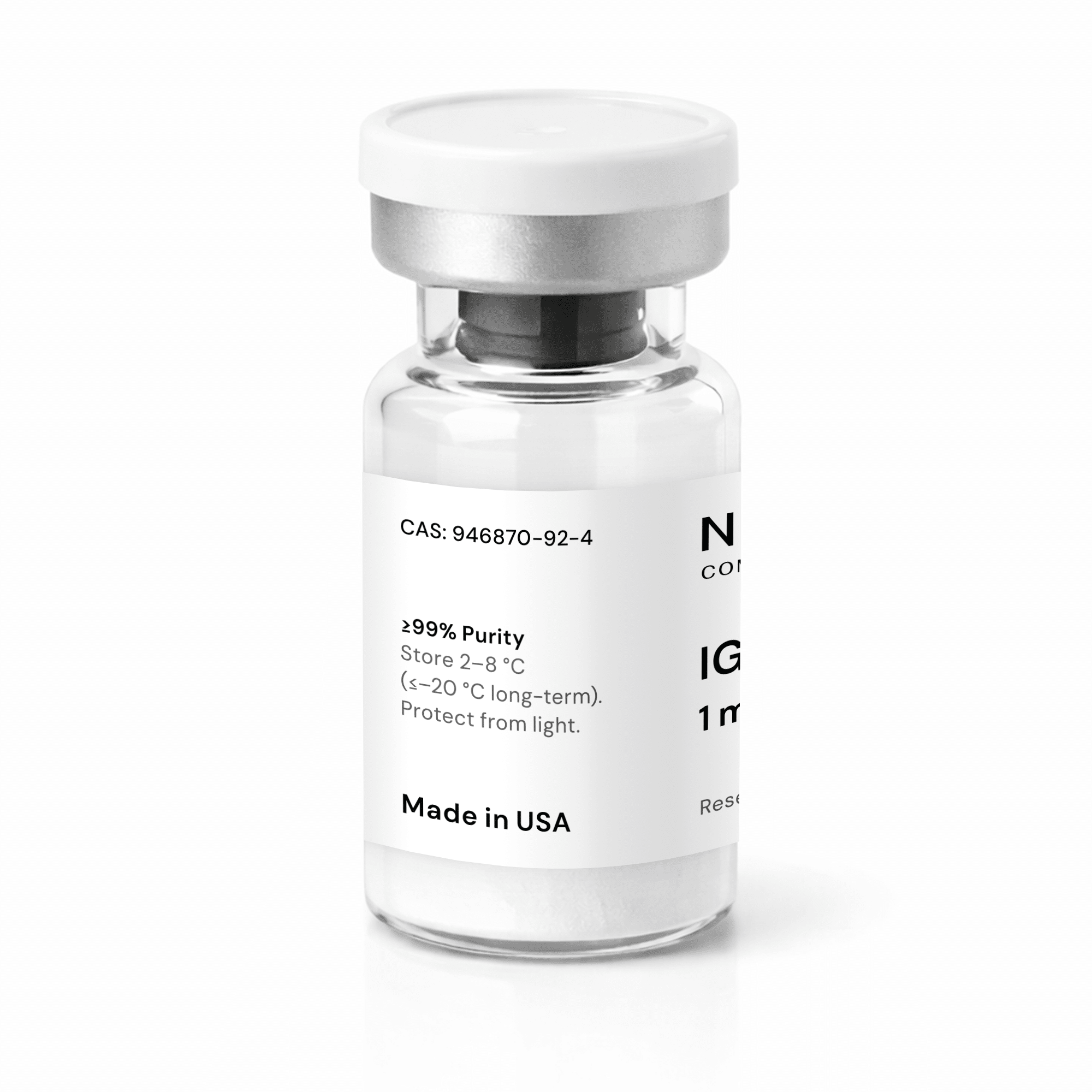
- CAS Number: 946870-92-4
- Chemical Formula: C₄₀₀H₆₂₅N₁₁₁O₁₁₅S₉
- Synonyms: Long R3-IGF-1, Long-(arg3)insulin-like growth factor-i, IGF-I analog
What are the key features of IGF-1 LR3 (1mg)?
IGF-1 LR3 (1mg) is supplied as a sterile lyophilized powder, which allows researchers to reconstitute it in controlled concentrations for laboratory use. This format supports accurate dosing and stable storage during long-term research projects. Key features include:- Synthetic 83-amino acid analog of IGF-1 with structural modifications
- Supplied as 1 mg lyophilized peptide for flexible experimental preparation
- Reduced interaction with IGF-binding proteins in some experimental systems
- High-purity material, verified through analytical testing such as HPLC and MS
- Frequently studied in cellular signaling, metabolic regulation, and tissue growth models
- For laboratory research use only
How is IGF-1 LR3 (1mg) synthesized?
IGF-1 LR3 is produced through solid-phase peptide synthesis, a controlled chemical method that constructs peptide chains one amino acid at a time. This method allows for precise incorporation of the structural modifications that differentiate IGF-1 LR3 from native IGF-1, such as the N-terminal extension and arginine substitution. After synthesis, the peptide undergoes purification using chromatographic techniques to achieve high purity. Analytical verification typically includes high-performance liquid chromatography (HPLC) to measure purity and mass spectrometry (MS) to confirm molecular weight and sequence identity. These quality-control steps ensure batch consistency, which is important for experiments evaluating signaling pathways and cellular responses.What is IGF-1 LR3 (1mg) being studied for? What are its possible benefits?
IGF-1 LR3 has been widely studied in laboratory research focused on cellular growth, tissue development, and metabolic regulation. As a modified form of IGF-1, it has been used to explore pathways related to cell proliferation, differentiation, and survival. Research has examined its effects on muscle cell cultures, connective tissue models, and metabolic signaling networks. Additional research areas include tissue regeneration models, angiogenesis (formation of new blood vessels), and cellular repair mechanisms. Some studies have also explored its role in modulating glucose metabolism and growth-related gene expression. Findings from these studies may include increased cellular proliferation markers or enhanced protein synthesis signals under certain experimental conditions. These observations are limited to research settings and do not constitute evidence of therapeutic benefits.How does IGF-1 LR3 (1mg) work in research studies?
In laboratory experiments, IGF-1 LR3 is used to stimulate growth factor signaling pathways involved in cellular growth and metabolic activity. When introduced into experimental systems, it may activate intracellular signaling networks related to protein synthesis, cell survival, and metabolic regulation. Researchers often use IGF-1 LR3 to compare the duration and strength of signaling responses with those of native IGF-1. Due to its potential to remain active longer in certain experimental models, it helps investigate prolonged growth-factor signaling. These experiments provide insights into how cells regulate growth, repair, and metabolic processes under controlled laboratory conditions.What dosing information exists for IGF-1 LR3 (1mg)?
Published preclinical literature describes a range of concentrations used in laboratory experiments. In cell culture studies, IGF-1 LR3 is typically studied at concentrations between 10 and 100 ng/mL, depending on the sensitivity of the cell type and the experimental objective. Lower concentrations are often used for primary cell cultures, whereas higher concentrations may be used in receptor activation studies. Animal studies have used doses ranging from 20–100 µg/kg in rodent models to examine tissue growth or metabolic signaling responses. Some studies have evaluated broader ranges to observe dose-dependent changes in cellular activity or tissue development. These dosing parameters are specific to experimental protocols and should not be interpreted as human dosing guidelines. No standardized human dosing recommendations exist for IGF-1 LR3 (1mg) as a laboratory reagent.How should IGF-1 LR3 (1mg) be stored and handled?
- Store lyophilized IGF-1 LR3 at ≤–20 °C. Protect from light and moisture.
- After reconstitution, store the solution at 2–8 °C and minimize freeze–thaw cycles to maintain integrity.
- Careful documentation of preparation conditions is recommended to ensure experimental reproducibility.
- For laboratory research use only.
Where can I read more research about IGF-1 LR3 (1mg)?
The following scientific sources provide background information on IGF-1 signaling and research involving IGF-related peptides:- Wang M, Zhang J, Li H, Li Y, Li Z. Insulin-like growth factor-1 (IGF-1) empowering tendon regenerative therapies. Frontiers in Bioengineering and Biotechnology. 2025;13:1492811. doi:10.3389/fbioe.2025.1492811
- Miescher I, Rieber J, Calcagni M, Buschmann J. In Vitro and In Vivo Effects of IGF-1 Delivery Strategies on Tendon Healing: A Review. International Journal of Molecular Sciences. 2023;24(3):2370. Published 2023 Jan 25. doi:10.3390/ijms24032370
- Ballard FJ, Francis GL, Ross M, Bagley CJ, May B, Wallace JC. Natural and synthetic forms of insulin-like growth factor-1 (IGF-1) and the potent derivative, destripeptide IGF-1: biological activities and receptor binding. Biochemical and Biophysical Research Communications. 1987;149(2):398-404. doi: 10.1016/0006-291x(87)90380-9. PMID: 2962574.
- Lin KN, Zhang K, Zhao W, Huang SY, Li H. Insulin-like Growth Factor 1 Promotes Cell Proliferation by Downregulation of G-Protein-Coupled Receptor 17 Expression via PI3K/Akt/FoxO1 Signaling in SK-N-SH Cells. International Journal of Molecular Sciences. 2022;23(3):1513. doi: 10.3390/ijms23031513. PMID: 35163437; PMCID: PMC8835821.
Compliance Statement
This product is intended for laboratory research use only and is not approved for human or veterinary use.Shop with Confidence: Product Authenticity is Guaranteed
All products available at Doctor Medica shop are obtained from respective manufacturers and contain original LOT numbers Contact us if you have any questions about product LOT numbers.