Your Cart is Empty
Start shopping

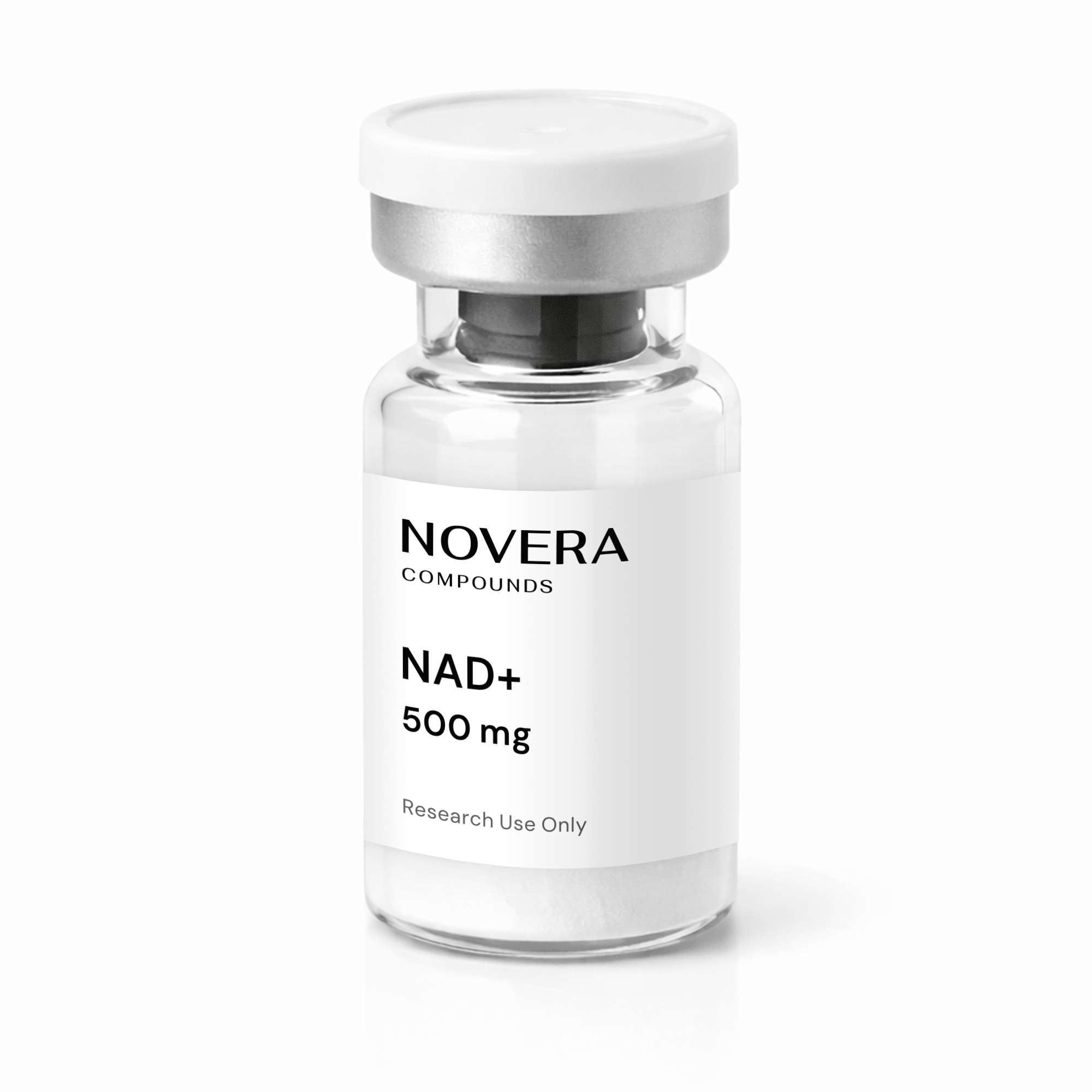
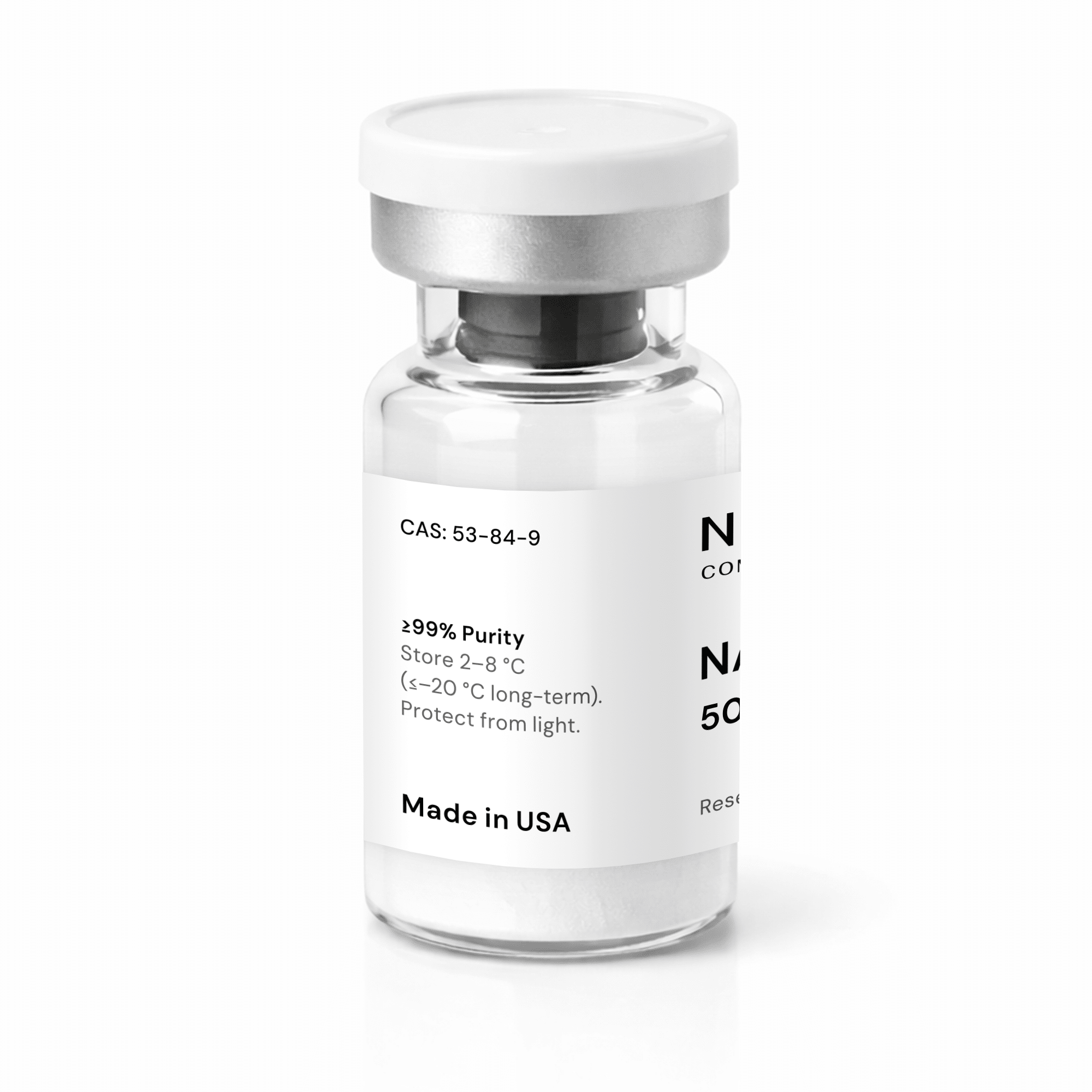
NAD+ 500mg
Coming Soon
This peptide will be available soon. Join the waitlist to be notified when it launches.
Tier
| Packs | Discount (%) | For Each |
|---|---|---|
| 1 - 5 | — | $191.00 |
| 6 - 10 | 0.52 % | $190.00 |
| 11 - 20 | 1.05 % | $189.00 |
| 21+ | 1.57 % | $188.00 |
Product description
What is NAD+?
NAD⁺ (Nicotinamide Adenine Dinucleotide) is a naturally occurring coenzyme central to cellular redox reactions and metabolic energy transfer. Although NAD⁺ is not a peptide, it is frequently categorized alongside research peptides due to its similar laboratory applications and lyophilized research-grade format. In biochemical systems, NAD⁺ functions as an electron carrier involved in oxidation–reduction (redox) reactions. It plays a key role in metabolic pathways associated with energy production, nucleotide turnover, and intracellular enzymatic signaling cycles. With a molecular weight of approximately 663.43 g/mol, NAD⁺ is studied extensively in laboratory models exploring cellular metabolism, mitochondrial dynamics, stress-response pathways, and senescence-related mechanisms.Product Specifications
- Product Name: NAD⁺ (Nicotinamide Adenine Dinucleotide)
- CAS Number: 53-84-9
- Chemical Formula: C₂₁H₂₇N₇O₁₄P₂
- Molecular Weight:43 g/mol
- Structure Type: Dinucleotide coenzyme
- Purity: ≥98% (research grade)
- Appearance: White to off-white lyophilized powder
What are the key features of NAD+?
Under cellular rejuvenation, NAD+ is supplied as a sterile, lyophilized powder designed for use in biochemical and cellular research. Researchers studying NAD+ often highlight its stability, purity, and compatibility with a wide range of experimental systems. NAD+ is verified using HPLC and mass spectrometry to confirm identity and purity. Key features include:- High-purity molecule suitable for controlled laboratory studies
- Supplied as a lyophilized (freeze-dried) powder for stability
- Typically packaged in standardized vial sizes
- Verified through analytical methods such as HPLC and mass spectrometry
- Supports research on metabolic and cellular pathways
- For laboratory research use only
How is NAD+ synthesized?
NAD+ is produced through a controlled biochemical synthesis process that combines nicotinamide mononucleotide (NMN) with adenosine monophosphate (AMP). The resulting molecule undergoes enzymatic or chemical coupling, creating the dinucleotide structure. Unlike protein-based peptides synthesized through amino acid chain assembly, NAD+ production focuses on forming its two-nucleotide components and ensuring precise bonding between the nicotinamide and adenine groups. After synthesis, NAD+ undergoes rigorous quality control testing. Identity, purity, and molecular structure are typically verified through high-performance liquid chromatography (HPLC), mass spectrometry, and related analytical assays. These evaluations help confirm that the product meets research specifications and is structurally consistent for experimental use.What is NAD+ being studied for? What are its possible benefits?
NAD+ has been widely studied for its role in pathways involved in oxidative metabolism, cellular energy balance, and DNA maintenance. Scientists explore how fluctuations in NAD+ levels may influence processes such as mitochondrial turnover, cell survival responses, and redox reactions. Publications from various models—ranging from cell lines to preclinical animals—examine the molecule’s role in metabolic adaptation and stress response. Potential benefits under investigation include support for cellular resilience, improved energy metabolism, and enhanced enzyme activity related to DNA repair and aging markers. Research focuses on how restoring intracellular NAD+ levels may impact age-associated metabolic decline and cellular senescence. However, these findings remain preliminary and confined to controlled scientific environments; no clinical outcomes have been established. Researchers exploring the cellular rejuvenation category may discuss L-Glutathione for skin-related signaling, including pigmentation pathways, melanogenesis, and dermal biology studies.How does NAD+ work in research studies?
In laboratory experiments, NAD+ is primarily evaluated for its contribution to redox reactions, in which it alternates between the oxidized (NAD+) and reduced (NADH) forms. This cycling allows researchers to study how cells generate ATP, manage oxidative stress, and maintain metabolic function. NAD+ is also examined for its involvement in enzymatic pathways regulated by sirtuins, PARPs, and other NAD-dependent proteins. Researchers analyzing NAD+ cellular energy interactions investigate how modulating NAD+ availability may influence mitochondrial function and adaptive responses to environmental stress. Its role in energy transfer makes it a central molecule of interest in studies on metabolic dynamics, nutrient sensing, and long-term cellular maintenance.What dosing information exists for NAD+?
Published research provides dosage ranges mainly from preclinical and in-vitro experiments. In cell-based studies, NAD+ is often used at concentrations of 10–500 µM, depending on the specific pathway being examined. Animal studies have explored doses ranging from 10 mg/kg to 500 mg/kg, focusing on energy metabolism, stress responses, and NAD+ cycling. These values reflect only what has been reported in experimental contexts. They do not represent standardized or recommended dosing guidelines. No clinically approved dosing information exists, and all use is confined to controlled research environments. Investigators working with the NAD+ peptide category should rely solely on experimentally justified concentrations for their models.How should NAD+ be stored and handled?
Store at –20 °C in a dry environment, protected from exposure to light and moisture. The lyophilized format ensures stability under these conditions. Notably, the handling and storage for its multiple dosage variations, including NAD+ (1000mg) and NAD+ (750mg), require similar, appropriate conditions. Once reconstituted, solutions are generally stored at 2–8 °C and used promptly to reduce the risk of degradation. Laboratories studying NAD+ for research applications typically prepare small aliquots to maintain consistency across experiments. When stored properly, lyophilized NAD+ can remain stable for extended periods, though shelf life may vary depending on formulation and manufacturer guidelines.Where can I read more research about NAD+?
Researchers can consult the following peer-reviewed articles and reviews for additional scientific information:- Covarrubias AJ, Perrone R, Grozio A, Verdin E. NAD+ metabolism and its roles in cellular processes during ageing. Nat Rev Mol Cell Biol. 2021;22(2):119-141. doi:10.1038/s41580-020-00313-x
- Strømland Ø, Diab J, Ferrario E, Sverkeli LJ, Ziegler M. The balance between NAD+ biosynthesis and consumption in ageing. Mech Ageing Dev. 2021;199:111569. doi:10.1016/j.mad.2021.111569
- Chini CCS, Tarragó MG, Chini EN. NAD and the aging process: Role in life, death and everything in between. Mol Cell Endocrinol. 2017;455:62-74. doi:10.1016/j.mce.2016.11.003
Shop with Confidence: Product Authenticity is Guaranteed
All products available at Doctor Medica shop are obtained from respective manufacturers and contain original LOT numbers Contact us if you have any questions about product LOT numbers.