Your Cart is Empty
Start shopping

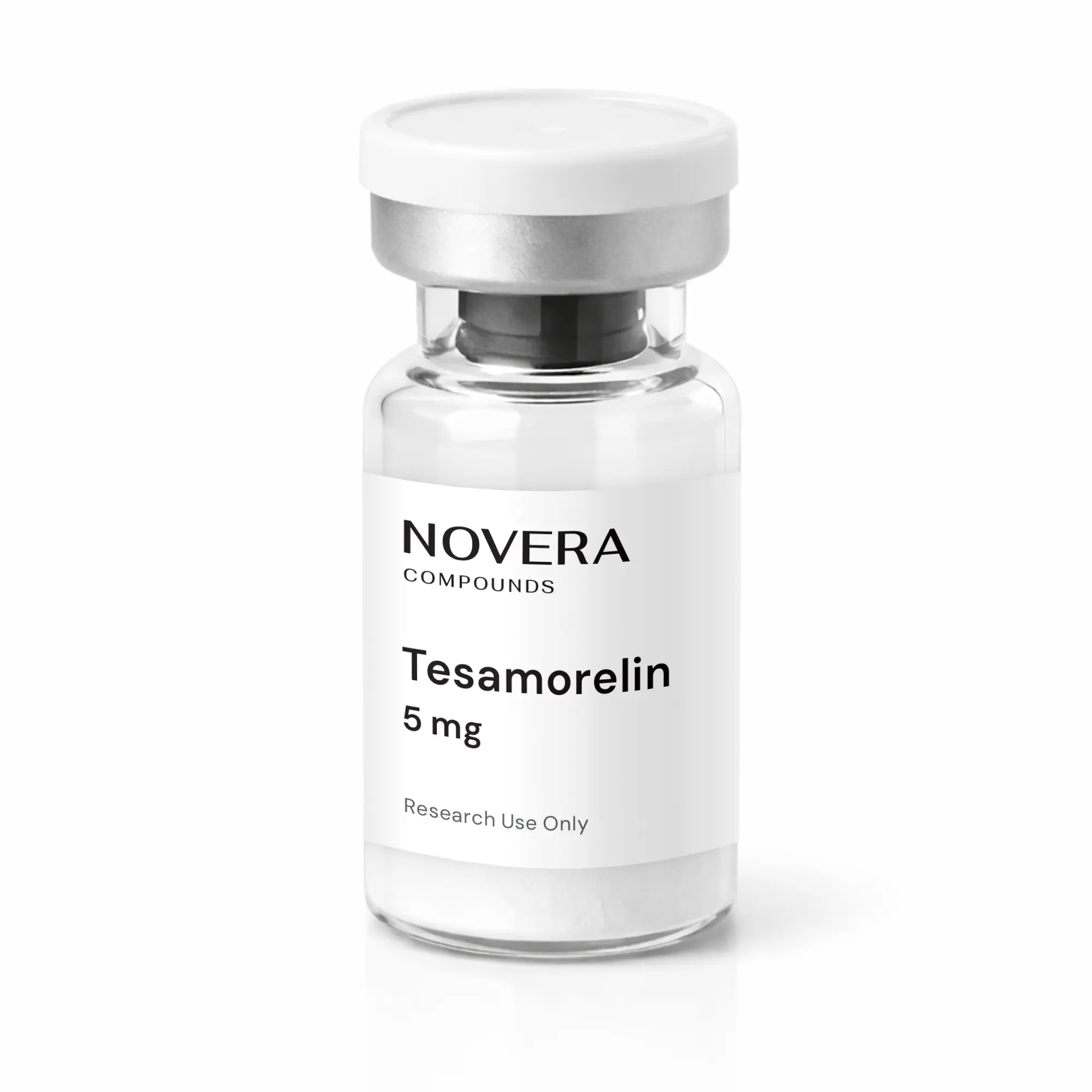
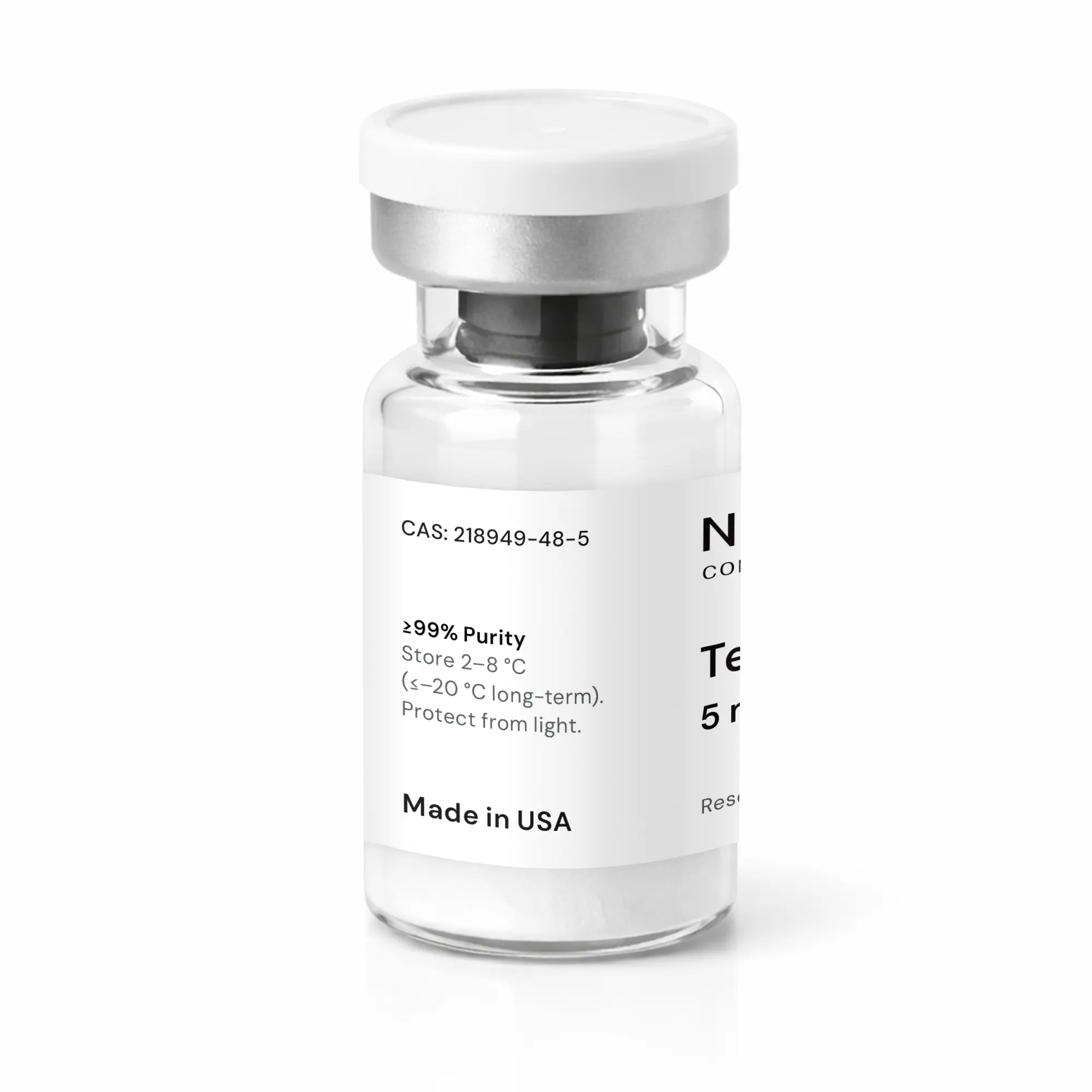
Tesamorelin 5mg
Coming Soon
This peptide will be available soon. Join the waitlist to be notified when it launches.
Product description
What is Tesamorelin (5mg)?
Tesamorelin is a synthetic peptide analog of growth hormone–releasing hormone (GHRH) developed for research on metabolic signaling and endocrine pathways. It consists of 44 amino acids, closely resembling the natural GHRH peptide but modified to enhance stability in laboratory environments.- CAS Number: 218949-48-5
- Chemical Formula: C₂₂₁H₃₆₆N₇₂O₆₇S
- Molecular Weight: 5136 g/mol
- Peptide Sequence: Trans-3-hexenoyl-YADAIFTNSYRKVLGQLSARKLLQDIMSRQQGESNQERGARARL-NH₂
What are the key features of Tesamorelin (5mg)?
- Synthetic 44-amino acid peptide derived from the structure of GHRH
- Supplied as an 8 mg lyophilized peptide vial for research preparation
- High purity, commonly ≥98–99%, verified through HPLC testing
- Identity confirmed through mass spectrometry (MS) and analytical characterization
- Studied in relation to GH/IGF-1 signaling, metabolism, and endocrine regulation
- Suitable for in-vitro, cell culture, and preclinical research models
- For laboratory research use only
How is Tesamorelin (5mg) synthesized?
Tesamorelin is produced using synthetic peptide manufacturing techniques, most commonly via solid-phase peptide synthesis (SPPS). This process involves the sequential assembly of specific amino acids into a peptide chain. Controlled synthesis conditions enable researchers to generate precise peptide sequences that resemble naturally occurring growth hormone–releasing hormone fragments while incorporating modifications to improve stability. After synthesis, the peptide undergoes purification, typically by high-performance liquid chromatography (HPLC). This step removes impurities and ensures consistent product quality. Analytical verification is performed using mass spectrometry (MS) and other biochemical assays to confirm the correct molecular weight, sequence integrity, and overall purity. These quality control steps help ensure that the peptide is suitable for controlled research applications.What is Tesamorelin (5mg) being studied for? What are its possible benefits?
Tesamorelin has been studied in various laboratory investigations related to endocrine signaling and metabolic processes. Research often focuses on how peptides that mimic growth hormone–releasing hormone influence hormone-related pathways and metabolic regulation in controlled experimental environments. Areas of ongoing research include:- Metabolic signaling and lipid metabolism pathways
- Regulation of growth hormone–related pathways
- Cellular responses related to protein synthesis and tissue signaling
- Interactions between endocrine peptides and metabolic homeostasis
How does Tesamorelin (5mg) work in research studies?
In laboratory research, Tesamorelin is often studied for its potential to modulate growth hormone signaling pathways. As an analog of GHRH, the peptide is believed to stimulate biological processes that influence the release of growth hormone–related signals within endocrine systems. Tesamorelin may influence cellular communication between the hypothalamus and the pituitary signaling systems, thereby regulating hormone-related pathways. Researchers use the peptide to explore how such signaling affects metabolic activity, protein synthesis, and lipid metabolism within experimental models. These studies aim to better understand how peptide hormones regulate complex physiological systems. Tesamorelin primarily serves as a research tool to investigate the mechanisms governing hormone-driven metabolic processes.What dosing information exists for Tesamorelin (5mg)?
Published research involving Tesamorelin includes various experimental dosing ranges depending on the study design and model used. In preclinical investigations, peptide concentrations are often measured relative to body weight, with studies reporting doses in the 10–100 µg/kg range in certain laboratory models. In in-vitro experiments, concentrations may be tested at nanomolar or micromolar levels to observe cellular responses under controlled conditions. These studies aim to evaluate how the peptide interacts with biological pathways in cultured cells or experimental organisms. Note: These reported ranges reflect only research protocols. No standardized dosing guidelines exist for human or veterinary use, and Tesamorelin supplied for laboratory study is not intended for clinical administration.How should Tesamorelin (5mg) be stored and handled?
Proper storage and handling are important for maintaining the structural integrity of peptide compounds such as Tesamorelin. The lyophilized powder form is typically stable when stored at low temperatures and protected from environmental exposure. Recommended storage conditions include:- Store at –20 °C or below for long-term preservation
- Protect from light, heat, and moisture
- Keep vials sealed until preparation for laboratory use
Where can I read more research about Tesamorelin (5mg)?
- National Center for Biotechnology Information. PubChem Compound Summary for CID 16137828, Tesamorelin. https://pubchem.ncbi.nlm.nih.gov/compound/Tesamorelin
- Raun K, Hansen BS, Johansen NL, Thøgersen H, Madsen K, Ankersen M, Andersen PH. Ipamorelin, the first selective growth hormone secretagogue. Eur J Endocrinol. 1998 Nov;139(5):552-61. doi: 10.1530/eje.0.1390552. PMID: 9849822.
- Halmos G, Szabo Z, Dobos N, Juhasz E, Schally AV. Growth hormone-releasing hormone receptor (GHRH-R) and its signaling. Rev Endocr Metab Disord. 2025 Jun;26(3):343-352. doi: 10.1007/s11154-025-09952-x. Epub 2025 Feb 12. PMID: 39934495; PMCID: PMC12137518.
- Recinella L, Chiavaroli A, Orlando G, Ferrante C, Marconi GD, Gesmundo I, Granata R, Cai R, Sha W, Schally AV, Brunetti L, Leone S. Antinflammatory, antioxidant, and behavioral effects induced by administration of growth hormone-releasing hormone analogs in mice. Sci Rep. 2020 Jan 20;10(1):732. doi: 10.1038/s41598-019-57292-z. Erratum in: Sci Rep. 2020 Mar 11;10(1):4850. doi: 10.1038/s41598-020-61185-x. PMID: 31959947; PMCID: PMC6971229.
- Müller EE, Locatelli V, Cocchi D. Neuroendocrine control of growth hormone secretion. Physiol Rev. 1999 Apr;79(2):511-607. doi: 10.1152/physrev.1999.79.2.511. PMID: 10221989.
Compliance Statement
This product is intended for laboratory research use only and is not approved for human or veterinary use.Shop with Confidence: Product Authenticity is Guaranteed
All products available at Doctor Medica shop are obtained from respective manufacturers and contain original LOT numbers Contact us if you have any questions about product LOT numbers.