Your Cart is Empty
Start shopping

Dermal Fillers
(191 products)
Doctor Medica supplies injectable dermal fillers to licensed practitioners, dermatologists, and clinic owners at wholesale prices, with hyaluronic acid, calcium hydroxylapatite, and biostimulatory brands listed side by side below. Whether you are restocking cosmetic fillers for a busy injector team or comparing dermal fillers online before trialing a new line, you can buy dermal fillers online here by the syringe or in volume. Browse the fillers below, or contact Doctor Medica's staff for wholesale pricing.
Filters
Category
Brand
Price Range
$
$







What Are Dermal Fillers? A Clinical Reference for Practitioners
Dermal fillers are injectable soft-tissue devices used in aesthetic medicine to address volume loss, facial contour changes, and visible folds or wrinkles [5]. These products are prescription medical devices and should only be administered by licensed healthcare providers with appropriate training in facial anatomy and injection techniques [3]. Because each filler has its own approved indications, material properties, and intended applications, practitioners select products based on the treatment area, correction goals, and patient needs [2]. Hyaluronic acid (HA) remains the most widely used filler material, although many HA-based treatments require maintenance because results are temporary.
Within the broader soft-tissue filler category, products differ by composition and biological effects [3]. Common filler materials include hyaluronic acid (HA), calcium hydroxylapatite (CaHA), poly-L-lactic acid (PLLA), polycaprolactone (PCL), and polymethylmethacrylate (PMMA), which is used in specific FDA-approved applications [2]. While HA fillers primarily provide immediate volume replacement, biostimulatory fillers such as CaHA, PLLA, and PCL may encourage collagen production as part of their mechanism of action [1].
Types of Dermal Fillers — HA, CaHA, PLLA, PCL, and Korean Dermal Fillers
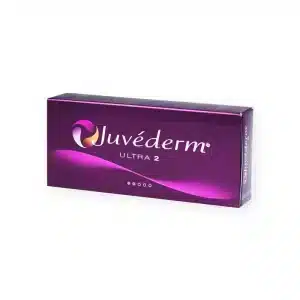
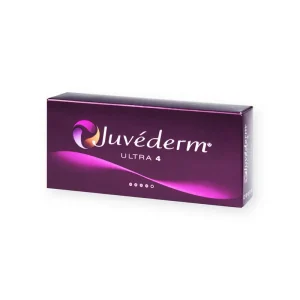
Hyaluronic acid products are the default for lips, fine lines, folds, and most contouring work [5]. Manufacturers adjust cross-linking and the gel’s G prime (G′) to control firmness and lift, allowing a single family to range from soft lip gels to dense chin products. One of the popular names for HA dermal fillers is JUVEDERM®, which has different injectables for various aesthetic concerns.
Biostimulators are fillers that rely, at least partly, on collagen production. RADIESSE® (CaHA) gives immediate structural support and then stimulates collagen. SCULPTRA® (PLLA) builds correction gradually across a series of sessions, and a randomized controlled trial recorded progressive skin-quality gains throughout the treatment period rather than at a single endpoint [4]. ELLANSÉ™ (PCL) pairs immediate correction from its carrier gel with later collagen stimulation from PCL microspheres; it is CE-marked, but not FDA-approved as a US dermal filler.
Korean dermal fillers are a growing segment of CE-marked hyaluronic acid products from South Korean manufacturers. They may be relevant to clinics comparing formulation options, product ranges, and cost across their HA filler inventory.
Conditions and Treatment Areas
- Dermal fillers for lips remain a core HA indication. Practices that buy lip fillers online usually compare softness, elasticity, and lidocaine content, and clinics that buy lip injections online should confirm the chosen product is labeled for lip augmentation.
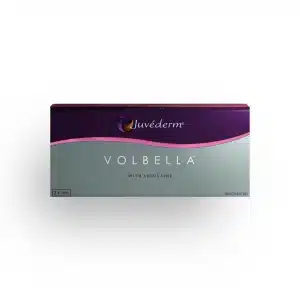
- Practitioners also use dermal fillers for under eyes, including sunken eyes. These are advanced and product-specific applications. FDA approval for infraorbital hollows is held by certain HA products only, among them RESTYLANE® EYELIGHT, JUVEDERM® VOLBELLA® XC, RHA® Redensity Eye, and BELOTERO® BALANCE (+) Lidocaine [2]. Periorbital injection also remains an unapproved use in the FDA’s general filler guidance [3].
- Cheek augmentation focuses on restoring midface support and enhancing projection, while hollow-cheek correction addresses areas where volume loss has affected facial balance and contour.
- Nasolabial folds are commonly treated with dermal fillers because they reflect structural volume changes and soft-tissue support. In comparison, crow’s feet are expression-related lines caused by repeated muscle activity and are generally addressed with botulinum toxin rather than volume replacement [4].
- Dermal fillers for weak chin presentations rely on firmer, high-G′ gels, and chin augmentation is approved for specific HA products [2].
- Dermal fillers for wrinkles target static creases that are present at rest, such as marionette lines, rather than expression lines [2].
- Aesthetic practitioners can also use dermal fillers for acne scarring (on-label only for Bellafill®). Other fillers used for acne scars are off-label.
- Dermal fillers for facial asymmetry draw on the same cheek, chin, and jawline products, with each side planned against the other.
- Some practitioners also use dermal fillers for Ozempic face, which is facial hollowing that can follow GLP-1-driven weight loss. However, this is off-label use, not an FDA-approved indication.
Dermal Fillers vs Botox® — Key Differences Practitioners Should Know
Choosing between dermal fillers and Botox® depends on the underlying cause of the aesthetic concern. Dermal fillers address volume loss, soft-tissue support, and static folds by adding injectable material beneath the skin. Botox®, a botulinum toxin product, works differently by temporarily reducing targeted muscle activity responsible for dynamic wrinkles [3].
In clinical practice, fillers are commonly used for concerns such as facial volume depletion, contour refinement, and folds that remain visible at rest. Botulinum toxin is typically used for movement-related lines, including forehead lines, glabellar lines, and crow’s feet. Because these treatments address different mechanisms of facial aging, they may be combined in comprehensive treatment plans when appropriate [4].
Where Dermal Fillers Sit in the Cosmetic Injectable Landscape
Dermal fillers are one of several injectable categories on Doctor Medica, each with its own mechanism.
- Skinboosters deliver HA through superficial microinjections to improve hydration and skin quality, not to provide structural lift.
- Polynucleotides are used in regenerative skin-quality protocols that act through a separate biological pathway.
- Biostimulators trade immediate volume for collagen-driven improvement over time.
- Mesotherapy delivers nutrient or cocktail formulations through multiple microinjections and serves a different clinical role from structural filler placement.
- Facial fat grafting is the surgical alternative—using autologous tissue rather than injectable filler material—for patients for whom a minimally invasive approach is insufficient.
Dermal Filler Brands on Doctor Medica
Doctor Medica carries a curated set of leading filler brands for licensed practitioners, including the following:
STYLAGE®
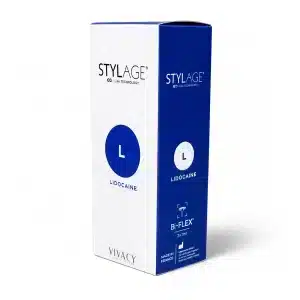
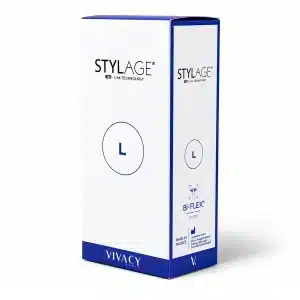
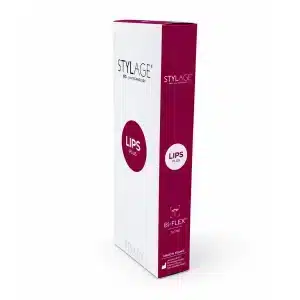
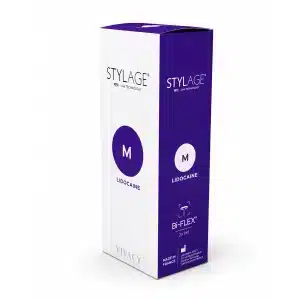
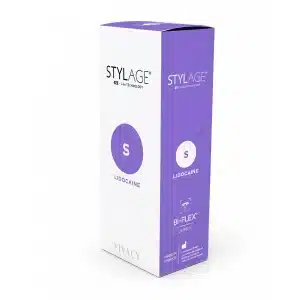
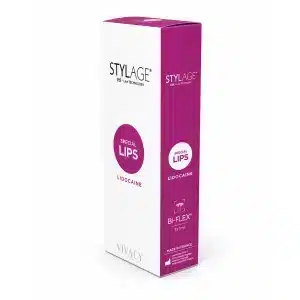
Laboratoires VIVACY builds STYLAGE® on IPN-Like cross-linking, and selected products add antioxidants for volumizing and skin-quality indications. That antioxidant formulation is usually what prompts a clinic to buy STYLAGE® over a comparable HA range.
JUVEDERM®
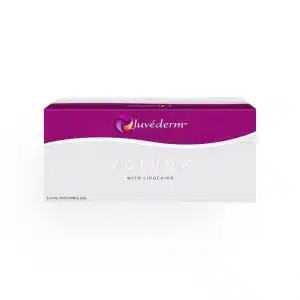
AbbVie’s JUVEDERM® family is divided between Vycross and Hylacross technologies, with products for the lips, cheeks, nasolabial folds, and skin quality. When injectors buy JUVEDERM®, they are often standardizing a lip-to-midface protocol on one family, but approved uses still differ by product and market.
RESTYLANE®
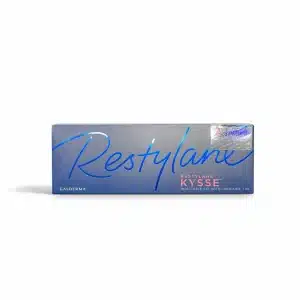
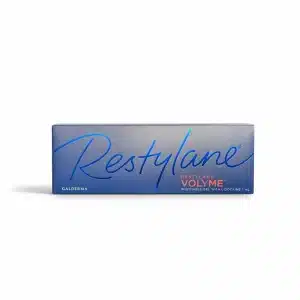
Galderma’s RESTYLANE® range uses NASHA and OBT technologies to produce gels of different textures for the lips, cheeks, under-eye hollows, and fine lines. The decision to buy RESTYLANE® often hinges on matching those textures to each indication.
RADIESSE®
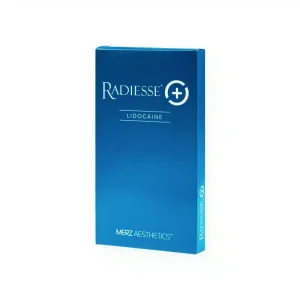
RADIESSE®, Merz’s calcium hydroxylapatite biostimulator, gives immediate correction and then supports collagen production over the following months. It is FDA-approved for hand rejuvenation, while hyperdilute protocols elsewhere on the body are largely off-label. CaHA cannot be dissolved, so clinics that plan to buy RADIESSE® for the first time should weigh their placement experience as carefully as the price.
BELOTERO®
With BELOTERO®, Merz uses Cohesive Polydensified Matrix (CPM) technology so the gel spreads evenly through superficial tissue. That behavior is usually why practitioners buy BELOTERO® for fine lines and layer it under a firmer HA.
REVANESSE®
Prollenium’s REVANESSE® is a cross-linked HA range for facial volume and lips. Being able to buy REVANESSE® next to five other brands in one catalog makes texture and elasticity comparisons for lip work much simpler.
Dosage, Longevity, and When to Expect Results
Most HA and CaHA results are visible by the end of the appointment, whereas PLLA correction appears gradually over the treatment series [4]. The final contour is easier to judge once swelling and bruising have gone, which is why review visits are usually booked a few weeks out.
Duration depends on the material, treatment area, injection plane, and patient factors, and the approval trials differ enough that cross-brand duration comparisons need caution [1]. In US class-level terms, HA products typically hold for about 6 to 12 months, although some volumizing HA products are labeled for up to 18 to 24 months. CaHA lasts roughly 18 months and PLLA up to two years [3]. Published PCL data are most consistent for about one to two years, and PMMA is non-absorbable.
Syringe planning usually starts from typical volumes: around 0.5 to 1 mL for lips, and 1 to 4 mL for cheeks, chin, or jawline. Anatomy and the degree of volume loss move those numbers either way, so treat them as ordering estimates rather than dosing rules.
Clinical Benefits of Dermal Fillers
Fillers restore volume, refine contour, and soften static lines across the lips, cheeks, chin, and jawline in a single minimally invasive visit, with limited downtime compared with surgery. HA products add a safety margin because they can be dissolved if the result needs correcting, which biostimulators cannot offer. Biostimulatory products, in turn, add collagen production to the volume effect, so improvement can continue after the carrier has been absorbed [4].
Dermal fillers before and after comparisons tend to look best when the plan was built around anatomy, rheology, and realistic correction goals rather than syringe count.
Legal Status — Prescription, Licensing, and Who Can Buy
Only verified, licensed practitioners can buy dermal fillers wholesale from Doctor Medica, and accounts must be verified before anyone can purchase dermal fillers online. Fillers are prescription medical devices, not over-the-counter products. In the US, they are approved for use in adults 22 and older and should be injected by a licensed, trained health care provider [3]. For clinicians who buy dermal fillers online from anywhere in the USA, scope-of-practice rules still decide which professions may inject, and those rules vary from state to state.
FDA Approval and CE Marking
US dermal fillers are Class III devices that reach the market through premarket approval, which makes them FDA-approved rather than FDA-cleared [3]. Not every area treated in practice appears on a label, so check the approved indications for the exact product before use [2].
European and UK market access works differently. A notified body assesses each device under the EU Medical Device Regulation before CE marking is applied, and several HA lines, including some Korean products, hold CE marking without FDA approval. Before any product enters clinical use, confirm local requirements, lot traceability, and expiry.
Storage and Shipping Requirements
Storage conditions come from each product’s IFU. Many HA fillers are kept at controlled room temperature, typically 2°C to 25°C; some products call for refrigeration at 2°C to 8°C, and RADIESSE® is usually labeled for 15°C to 32°C. Whatever the range, keep syringes away from freezing, excess heat, and direct light, and never reuse an opened single-use syringe.
Doctor Medica ships dermal filler orders in appropriate packaging. On arrival, check package integrity and expiry dates, and record lot numbers before stock goes into clinical inventory. Clinics in hot climates may want deliveries timed for when someone can receive and store them promptly, since summer shipping tests the upper limit of most storage labels.
Price of Dermal Fillers — Wholesale Costs at Doctor Medica
Dermal fillers cost different amounts depending on brand, filler class, HA concentration, syringe size, pack format, and order volume. Below are some of the popular fillers in the Doctor Medica catalog (priced per unit):
- STYLAGE® L BI-FLEX® with Lidocaine: $189.00
- STYLAGE® L BI-FLEX®: $179.00
- STYLAGE® LIPS PLUS BI-FLEX® with Lidocaine: $139.00
- JUVÉDERM® VOLIFT® RETOUCH with Lidocaine: $219.00
- JUVEDERM® ULTRA SMILE with Lidocaine: $255.00
- JUVEDERM® ULTRA PLUS XC: $489.00
- STYLAGE® SPECIAL LIPS BI-FLEX® with Lidocaine: $109.00
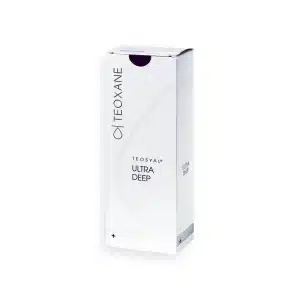
- TEOSYAL® PURESENSE GLOBAL ACTION: $159.20 – $199.00
- TEOSYAL® PURESEND REDENSITY I (1x3ml): $139.00
- TEOSYAL® RHA3 2×1.2ml: $249.00
Clinics that set out to buy cheap dermal fillers online often find that unit price is the least useful comparison. Authenticity, lot traceability, and the product’s labeled indications matter more, and a cheaper syringe that needs a touch-up sooner can end up costing more per treatment. For larger orders, Doctor Medica’s staff can quote wholesale pricing that brings the per-syringe cost of dermal fillers down.
Side Effects and Safety of Dermal Fillers
Temporary reactions following dermal filler injections may include swelling, bruising, redness, tenderness, and localized firmness at the treatment site. These effects are generally short-lived and commonly improve within one to two weeks after treatment [3].
Although serious complications are uncommon, safe filler practice requires appropriate product selection, anatomical knowledge, sterile technique, and preparation for potential adverse events. Reported risks include vascular occlusion, tissue necrosis, vision-related complications, and other rare events identified in clinical literature and regulatory guidance [3][5]. For HA fillers, hyaluronidase may be used as part of complication management protocols when clinically indicated [3].
Where to Buy Dermal Fillers Online — Doctor Medica
With more than 15 years in wholesale supply, Doctor Medica gives licensed practitioners a direct way to buy dermal fillers online from authentic, lot-traceable stock. Doctor Medica’s staff verify each account before the first order, and fast shipping helps keep clinic inventory moving.
Through Doctor Medica, you can buy fillers online across HA and biostimulatory categories and buy injectable dermal fillers online from leading brands in one checkout. Whether you buy dermal filler online for a single patient or restock a whole treatment room, you can order them by the syringe or in volume, and practices that buy dermal fillers wholesale can ask Doctor Medica’s staff for tiered pricing.
Browse the grid above to buy dermal fillers from Doctor Medica today, or contact Doctor Medica’s staff for wholesale pricing.
FAQs
How are dermal fillers defined clinically?
Dermal fillers are injectable aesthetic devices selected according to their material characteristics, treatment objectives, and anatomical applications. Common filler categories include hyaluronic acid (HA), calcium hydroxylapatite (CaHA), poly-L-lactic acid (PLLA), and polycaprolactone (PCL), each with different properties and clinical uses.
Are hyaluronic acid dermal fillers reversible?
Yes. HA dermal fillers can generally be dissolved using hyaluronidase when clinically appropriate. This reversibility is one reason HA fillers are widely used in aesthetic treatments.
Are dermal fillers permanent?
Most dermal fillers are not permanent and are gradually absorbed by the body over time. Certain non-absorbable fillers, such as PMMA-based products, are designed for longer-lasting results in specific approved applications.
How are dermal fillers and Botox different?
Dermal fillers and Botox® work through different mechanisms. Fillers restore volume, enhance soft-tissue support, and improve facial contours, while Botox® temporarily reduces targeted muscle activity that contributes to dynamic expression lines. Practitioners may combine the two approaches when treatment goals include both structural volume changes and muscle-related wrinkles.
How much do dermal fillers cost?
The cost of dermal fillers varies by brand, formulation, and product specifications. Doctor Medica offers different filler options for licensed professionals with pricing based on product selection and order requirements.
Where can licensed practitioners buy dermal fillers online?
Verified healthcare professionals may purchase dermal fillers through Doctor Medica after completing account verification requirements. Products are intended for professional use and should be selected, stored, and administered in accordance with applicable regulations and clinical guidelines.
For licensed medical professionals only. This content is for informational purposes only and does not constitute medical advice.
Citations and Resources
[1] Jiang, Betty et al. “Noncollagen Dermal Fillers: A Summary of the Clinical Trials Used for Their FDA Approval.” Dermatologic surgery : official publication for American Society for Dermatologic Surgery [et al.] vol. 45,12 (2019): 1585-1596. doi:10.1097/DSS.0000000000002141
[2] U.S. Food and Drug Administration. “FDA-Approved Dermal Fillers.” U.S. Food and Drug Administration, www.fda.gov/medical-devices/aesthetic-cosmetic-devices/fda-approved-dermal-fillers.
[3] U.S. Food and Drug Administration. “Dermal Fillers (Soft Tissue Fillers).” U.S. Food and Drug Administration, www.fda.gov/medical-devices/aesthetic-cosmetic-devices/dermal-fillers-soft-tissue-fillers.
[4] Bohnert, Krista et al. “Randomized, Controlled, Multicentered, Double-Blind Investigation of Injectable Poly-L-Lactic Acid for Improving Skin Quality.” Dermatologic surgery : official publication for American Society for Dermatologic Surgery [et al.] vol. 45,5 (2019): 718-724. doi:10.1097/DSS.0000000000001772
[5] Johns Hopkins Medicine. “Dermal Fillers.” Johns Hopkins Medicine, www.hopkinsmedicine.org/health/treatment-tests-and-therapies/dermal-fillers.
Written by Doctor Medica’s Editorial team
The content on this page has been written and fact-checked in accordance with our Editorial Policy. Clinical claims are sourced from peer-reviewed literature, regulatory documentation, and manufacturer specifications. Where citations are provided, it is always in accordance to our editorial standards.
Doctor Medica sources products exclusively through authorized distributors and established procurement channels. Products are verified as genuine, and supplied in the original packaging with their seal intact. Learn more about how we guarantee product authenticity, sourcing compliance, and traceable delivery to our clients.