Your Cart is Empty
Start shopping

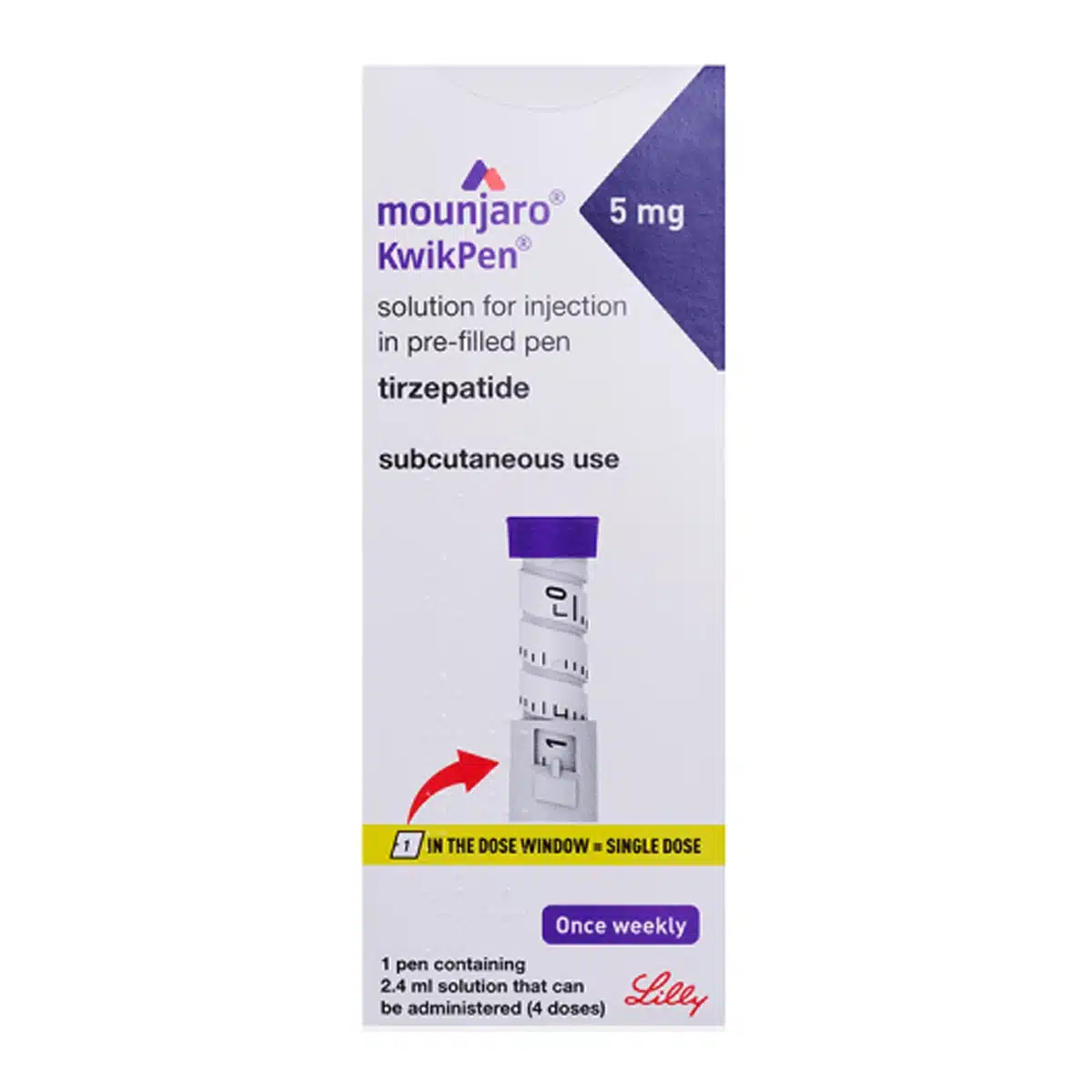
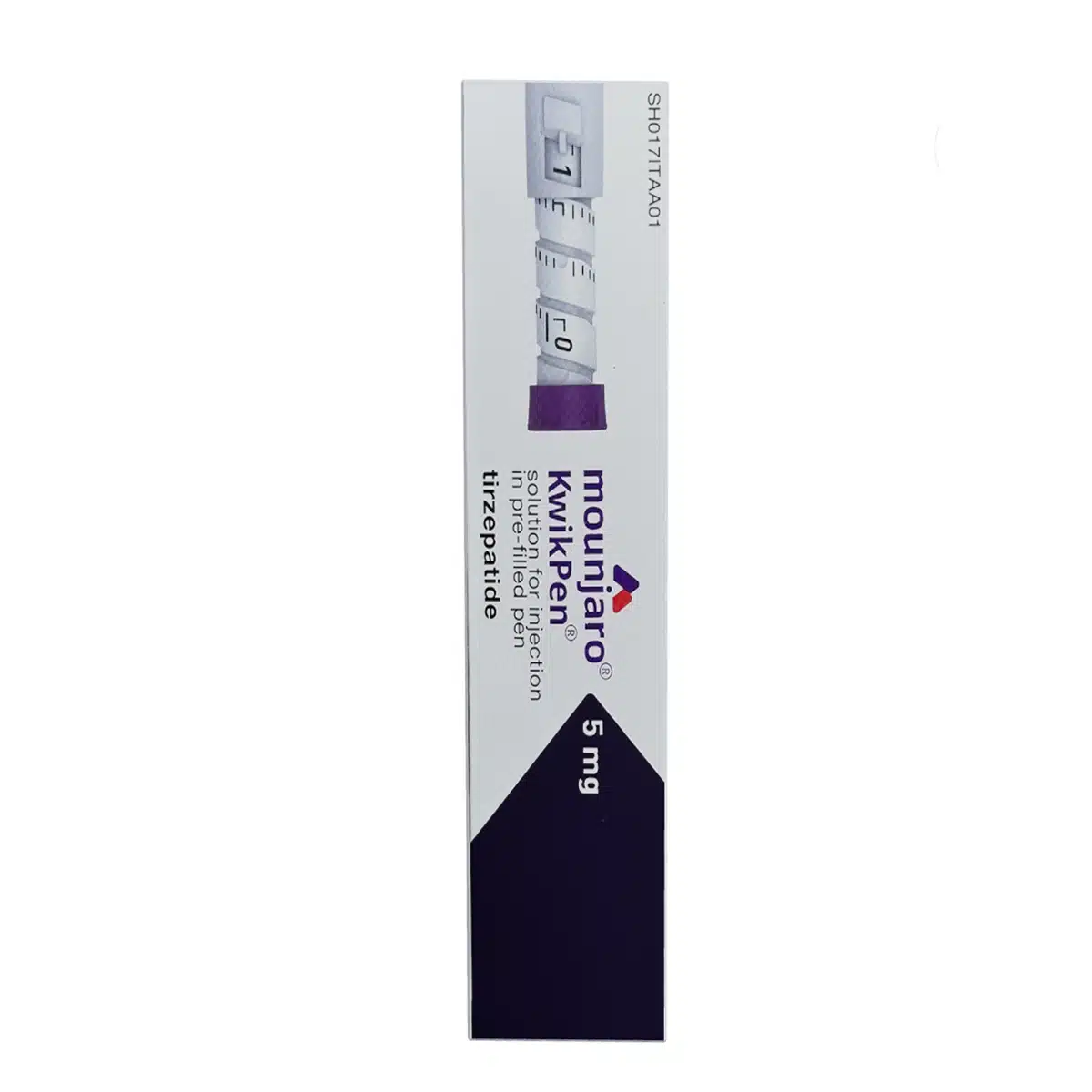
MOUNJARO® 5mg KwikPen®, 1 Stk.
Tier
| Packs | Discount (%) | For Each |
|---|---|---|
| 1 - 3 | — | $499.00 |
| 4 - 10 | 12.02 % | $439.00 |
| 11 - 20 | 14.03 % | $429.00 |
| 21+ | 16.03 % | $419.00 |
Shop with Confidence: Product Authenticity is Guaranteed
All products available at Doctor Medica shop are obtained from respective manufacturers and contain original LOT numbers Contact us if you have any questions about product LOT numbers.
Product description
MOUNJARO® 5mg KwikPen is a tirzepatide solution for injection from Eli Lilly and Company Limited, formulated as a once-weekly dual GIP and GLP-1 receptor agonist. The 5mg dose is the first titration step after the initial 2.5mg starting dose and is supplied as 1 KwikPen with 4 pre-filled doses. Learn more about the EU and US market information for MOUNJARO® 5mg KwikPen, including FDA and EMA regulatory context. Are you looking to buy MOUNJARO® 5mg KwikPen online? Licensed professionals can contact Doctor Medica staff for guidance on sourcing, documentation, and ordering.
Product Specifications
- Active Ingredient: Tirzepatide
- Strength: 5mg per dose
- Dosage Form: 5mg solution for injection; 1 KwikPen with 4 pre-filled doses
- Market Focus: EU and US regulatory context
- Manufacturer: Eli Lilly and Company Limited
- Brand: MOUNJARO®
- Country of Origin: United States
- FDA Approval Date: Initial US approval in 2022 for MOUNJARO® (tirzepatide) injection [1]
- EU Regulatory Status: Centrally authorized in the European Union through the European Medicines Agency and European Commission authorization pathway [3]
- Drug Class: Injectable dual GIP/GLP-1 receptor agonist
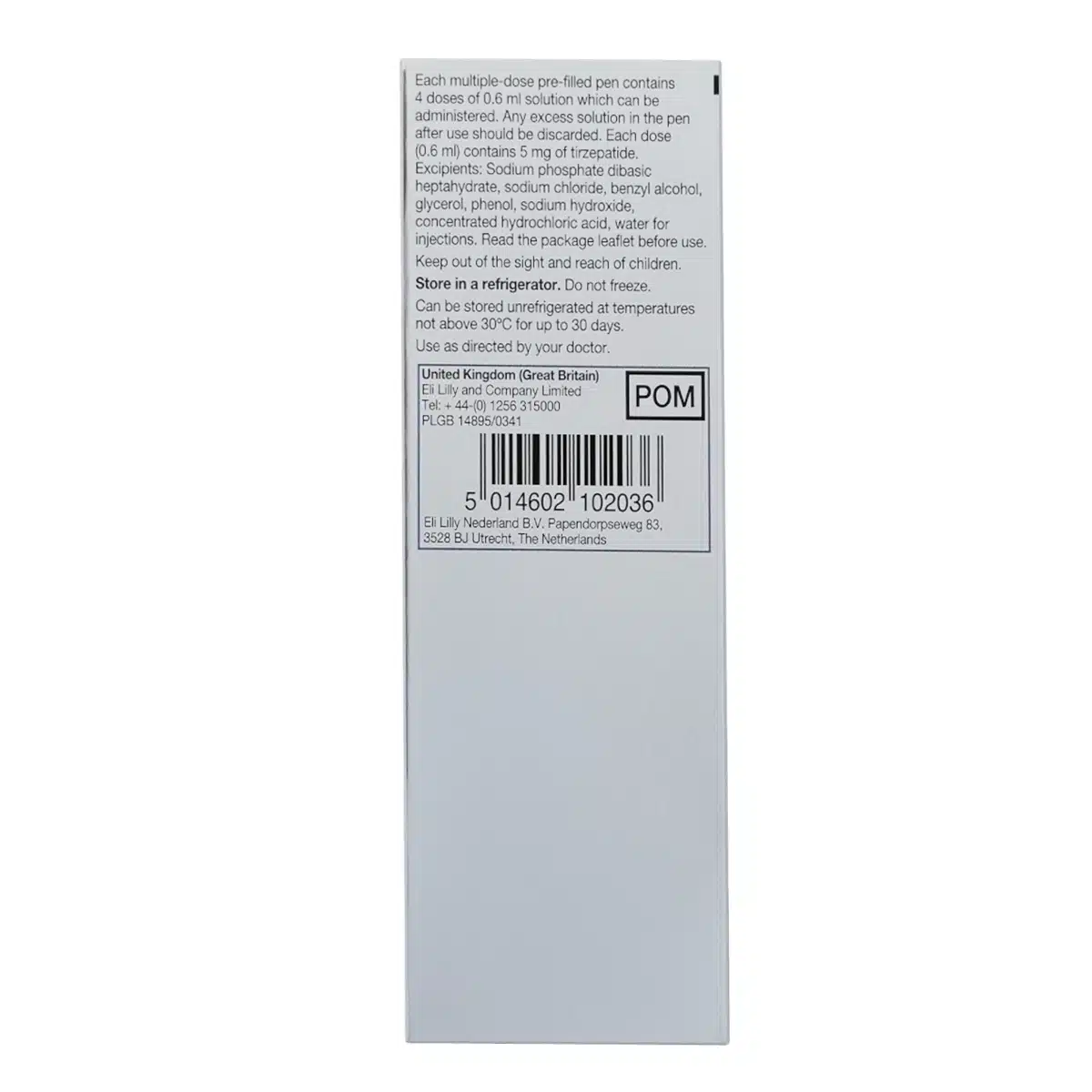
- Storage Requirements: Store refrigerated at 2°C to 8°C before use; do not freeze. After first use, the KwikPen may be stored unrefrigerated for up to 30 days at temperatures not above 30°C, according to UK/EU product information. [2][3]
- Package Dimensions: Width: 60mm | Height: 40mm | Length: 150mm | Weight: 60g
What is MOUNJARO® 5mg KwikPen?
MOUNJARO® 5mg KwikPen contains tirzepatide, a dual glucose-dependent insulinotropic polypeptide (GIP) and glucagon-like peptide-1 (GLP-1) receptor agonist. It is manufactured by Eli Lilly and Company Limited and supplied as a multi-dose, pre-filled KwikPen delivering four 5mg doses, each in 0.6mL of solution. [2]
The 5mg strength is the first titration dose, typically introduced after approximately four weeks of 2.5mg treatment initiation. In US prescribing information, MOUNJARO® is indicated as an adjunct to diet and exercise to improve glycemic control in adults and pediatric patients 10 years of age and older with type 2 diabetes. [1]
For EU markets, EMA product information describes MOUNJARO® as a prescription-only tirzepatide medicine used for type 2 diabetes and, in eligible adult populations, for weight management. Approved indications and product presentations can differ between US and EU markets, so licensed professionals should verify the applicable label before prescribing, dispensing, or sourcing. [2][3]
EU and US Regulatory Context
In the United States, MOUNJARO® is regulated by the FDA and approved to improve glycemic control in type 2 diabetes. Tirzepatide’s US chronic weight-management indication is approved under the separate Zepbound® brand, so US-based practitioners should distinguish between the Mounjaro and Zepbound labels when reviewing clinical use. [1]
In the European Union, MOUNJARO® is assessed through the European Medicines Agency via the centralized authorization procedure, with the European public assessment report (EPAR) and product information providing regulatory guidance applicable across EU member states. EU product information includes both type 2 diabetes and weight-management indications for eligible adult populations, subject to current labeling and any country-level access or reimbursement rules that may apply locally. [3]
For licensed professionals evaluating MOUNJARO® 5mg KwikPen across these markets, the key considerations are market authorization, current product documentation, the applicable approved indication, cold-chain handling, and local prescribing requirements — professionals should rely on FDA labeling, EMA product information, and applicable local guidance rather than assuming indication parity between jurisdictions.
2026 KwikPen Redesign & Differentiation from Previous Models
Eli Lilly rolled out an updated MOUNJARO® KwikPen device across markets in April 2026. The update involves only the pen’s internal hardware. Its concentration, formulation, and active ingredient remain unchanged. A new internal component positioned behind the plunger extends its resting length, so that after the fourth and final dose is delivered, the plunger sits closer to the end of the pen, providing a clearer visual indication that the device is ready for disposal.
This design change is intended to eliminate the so-called “golden dose”. This is the residual liquid that some patients previously withdrew and used as an unofficial fifth dose. Practitioners should inform patients transitioning from older pen models about this hardware change and continue to reinforce that each KwikPen is designed to deliver exactly four prescribed doses.
Mechanism of Action
Tirzepatide acts via simultaneous agonism at GIP and GLP-1 receptors. GLP-1 receptor activation increases glucose-dependent insulin secretion, suppresses glucagon, delays gastric emptying, and supports postprandial glucose control. GIP receptor activation further potentiates insulin secretion and contributes to metabolic effects relevant to body weight. [1][2]
In clinical trials, tirzepatide has been associated with dose-dependent reductions in body weight and improvements in glycemic control, including HbA1c lowering, with gastrointestinal adverse events representing the most common tolerability concern across dose levels. [4][5] Dose escalation from the 5mg strength should be based on tolerability, clinical response, and current prescribing information. [1]
Indications & Clinical Use
MOUNJARO® is used as an adjunct to diet and exercise to improve glycemic control in adults with type 2 diabetes. In the US, MOUNJARO® is approved for type 2 diabetes only, while tirzepatide’s chronic weight-management indication is approved under the Zepbound® brand. In the EU, EMA product information includes both type 2 diabetes and weight-management indications for eligible adult populations, subject to the current product label. [1][3]
The 5mg strength is the first escalation step after the 2.5mg initiation dose. Before advancing the dose of MOUNJARO®, clinicians should assess gastrointestinal tolerability, renal function, cardiovascular history, and baseline diabetic retinopathy status. MOUNJARO® is not indicated for type 1 diabetes or diabetic ketoacidosis and is not a substitute for insulin in insulin-requiring patients. For EU and US markets, prescribers should confirm whether the intended use falls under the MOUNJARO® label or another tirzepatide-labeled product, depending on jurisdiction and indication. [1][3]
Administration & Injection Guidelines
MOUNJARO® 5mg KwikPen is administered once weekly by subcutaneous injection into the abdomen, thigh, or back of the upper arm, and may be given at any time of day, with or without meals. Injection sites should be rotated with each dose; patients should avoid areas that are tender, bruised, scarred, or inflamed. [1][2]
For professionals reviewing how to use MOUNJARO® KwikPen 5mg, the device is intended to be used strictly according to its current instructions for use. In general terms, this involves checking the pen label and medicine appearance, confirming the correct strength, selecting a clean injection site, preparing the device, inserting the needle, pressing the dose button, and holding the pen in place until dose delivery is confirmed. Product-specific instructions for use should always be followed rather than relied upon from this general summary. [2]
MOUNJARO® interacts minimally with foods or drinks — no specific dietary restrictions are required on the label, though a reduced-calorie diet is typically used as an adjunct. Because tirzepatide delays gastric emptying, it may affect the absorption of oral medications, particularly time-sensitive drugs or those with a narrow therapeutic index. If a dose is missed, product instructions generally advise administration within four days of the missed dose; if more than four days have passed, the missed dose should be skipped and the regular weekly schedule resumed, without doubling the next dose. [1][2]
Side Effects & Safety
Common side effects of MOUNJARO® include nausea, vomiting, diarrhea, decreased appetite, constipation, and abdominal discomfort. These effects are predominantly gastrointestinal and dose-related, tend to peak during treatment initiation and dose escalation, and are typically self-limiting; they should still be monitored in patients with dehydration risk, frailty, renal impairment, or concomitant medicines that may worsen fluid loss. [4][5]
Serious but less common risks include pancreatitis, gallbladder disease, hypoglycemia when used with insulin or insulin secretagogues, hypersensitivity reactions, and kidney damage associated with dehydration from severe nausea, vomiting, or diarrhea. Diabetic retinopathy should also be considered in patients experiencing rapid glycemic improvement. [1]
If a patient accidentally uses too much MOUNJARO®, medical assessment should be arranged promptly, as overdose may increase the risk of gastrointestinal adverse events and hypoglycemia, particularly when used alongside other glucose-lowering medicines. MOUNJARO® is contraindicated in patients with a personal or family history of medullary thyroid carcinoma, in patients with multiple endocrine neoplasia syndrome type 2, and in those with hypersensitivity to tirzepatide or any formulation component. Current prescribing information should be reviewed for complete contraindications and safety data. [1][2]
MOUNJARO® KwikPen 5mg Price and Legal Status
MOUNJARO® is a prescription-only pharmaceutical product. In the US, MOUNJARO® is FDA-approved for glycemic control in type 2 diabetes; it does not carry a US chronic weight-management indication under the Mounjaro brand, as that indication is approved separately under Zepbound®. In the EU, EMA product information includes MOUNJARO® indications for both type 2 diabetes and weight management in eligible adult populations. [1][3] This content is current as of mid-2026; practitioners should verify current FDA labeling, EMA product information, approved indications, and local requirements before clinical use.
MOUNJARO® KwikPen 5mg price may vary by market, account status, pack configuration, cold-chain handling requirements, and professional supply requirements. Licensed professionals can contact Doctor Medica staff to check for wholesale buying options and confirm product availability, documentation, and handling information. Those interested in MOUNJARO® KwikPen wholesale should verify authenticity documentation, storage procedures, EU/US labeling, and jurisdiction-specific prescribing requirements when buying online. Procurement teams building out a broader obesity-care portfolio alongside tirzepatide may also want to buy weight loss products as part of the same sourcing review.
Citations
- US Food and Drug Administration. MOUNJARO® (tirzepatide) injection, for subcutaneous use — Prescribing Information. https://www.accessdata.fda.gov/drugsatfda_docs/label/2025/215866s039lbl.pdf
- Electronic Medicines Compendium. Mounjaro KwikPen 5mg Solution for Injection in Pre-filled Pen: Summary of Product Characteristics and Patient Leaflet. https://www.medicines.org.uk/emc/product/15481/smpc
- European Medicines Agency. Mounjaro: EPAR Product Information. https://www.ema.europa.eu/en/documents/product-information/mounjaro-epar-product-information_en.pdf
- Jastreboff AM, Aronne LJ, Ahmad NN, et al. Tirzepatide Once Weekly for the Treatment of Obesity. New England Journal of Medicine. 2022. https://pubmed.ncbi.nlm.nih.gov/35658024/
- Tian Q, Song Y, Deng Y, Lin S. Efficacy and safety of tirzepatide for weight loss in patients with obesity or type 2 diabetes: a systematic review and meta-analysis. Frontiers in Endocrinology. 2025. https://pubmed.ncbi.nlm.nih.gov/40747302/
For licensed medical professionals only. This content is for informational purposes only and does not constitute medical advice.
FAQ
MOUNJARO® 5mg KwikPen® is a disposable, multi-dose pre-filled pen that delivers tirzepatide 5 mg in a 0.6 mL subcutaneous injection once weekly. Each KwikPen contains 2.4 mL of solution (total 20 mg tirzepatide; 8.33 mg/mL) and provides 4 fixed doses. It is a dual GIP/GLP-1 receptor agonist used alongside diet and exercise for type 2 diabetes and for weight management in eligible adults. The solution is clear, colourless to slightly yellow and can be injected in the abdomen, thigh, or upper arm.
-
Dose per injection: 5 mg tirzepatide = 0.6 mL
-
Pen capacity: 2.4 mL (total 20 mg), 4 weekly doses
-
Concentration: 8.33 mg/mL
-
Mechanism: GIP and GLP-1 receptor agonist
-
Injection sites: abdomen, thigh, upper arm (rotate sites)
Begin with a once-weekly titration to improve tolerability, then maintain or escalate based on response. Each weekly dose is 0.6 mL (5 mg) delivered subcutaneously with the KwikPen.
-
Starting dose: 2.5 mg once weekly for 4 weeks, then increase to 5 mg once weekly
-
Further titration: Increase in 2.5 mg steps (7.5, 10, 12.5, 15 mg) after ≥4 weeks on the current dose; max 15 mg weekly
-
Weekly timing: Same day each week; may change day if ≥3 days between doses
-
Missed dose: If ≤4 days late, take ASAP; if >4 days, skip and resume on the next scheduled day; never double-dose
-
Technique (KwikPen): Prime the pen, dial to 1 (full 0.6 mL), inject SC, hold 5 seconds, confirm “0” in window before removing
-
Site rotation: Rotate abdomen/thigh/upper arm; different site from any insulin injection
-
Concomitant therapy: Consider reducing sulphonylurea or insulin dose to lower hypoglycaemia risk; monitor glucose
MOUNJARO® (tirzepatide) is indicated for adults with insufficiently controlled type 2 diabetes and for weight management in specified BMI categories. Use is adjunct to diet and exercise.
- Type 2 diabetes:
- Monotherapy when metformin is inappropriate (intolerance/contraindication)
- Add-on to other antidiabetic medicines
- Monotherapy when metformin is inappropriate (intolerance/contraindication)
- Weight management: Adults with BMI ≥30 kg/m², or BMI ≥27 to <30 kg/m² with ≥1 comorbidity (e.g., hypertension, dyslipidaemia, OSA, CVD, prediabetes, T2D)
- Contraindication: Hypersensitivity to tirzepatide or any excipients
- Key cautions: History of pancreatitis, severe GI disease (e.g., severe gastroparesis), certain diabetic retinopathy situations—use with caution and monitor
- Pregnancy/lactation: Not recommended in pregnancy; discontinue ≥1 month before planned pregnancy (long half-life ~5 days). Unknown if excreted in human milk
Common adverse effects (overview): Nausea, diarrhoea, vomiting, abdominal pain, constipation; hypoglycaemia risk increases with sulphonylurea/insulin (see detailed section below).
Each 0.6 mL dose from the KwikPen contains 5 mg tirzepatide in solution. The multi-dose pen contains 20 mg tirzepatide in 2.4 mL (concentration 8.33 mg/mL).
-
Active substance: tirzepatide 5 mg per 0.6 mL dose (KwikPen)Total per pen: 20 mg in 2.4 mL; 4 doses per pen
-
Excipients (not exhaustive): Contains benzyl alcohol ~5.4 mg per 0.6 mL dose (KwikPen)
-
Sodium content: <1 mmol (23 mg) sodium per dose (sodium-free)
-
Appearance: Clear, colourless to slightly yellow solution
The KwikPen is supplied with the medicine’s Patient Information Leaflet (PIL) and Instructions for Use (IFU). Pen needles are not included and must be obtained separately.
-
Device: MOUNJARO® KwikPen multi-dose, single-patient-use pre-filled pen
-
Doses per pen: 4 fixed weekly doses of 0.6 mL each (dial to 1)
-
Documentation: PIL and IFU are included with your medicine
-
Needles: Not included in the pack; use compatible pen needles
Yes—gastrointestinal events are the most frequent and are usually mild to moderate, especially during dose-escalation, and tend to decrease over time. Hypoglycaemia can occur, particularly when used with a sulphonylurea or insulin.
-
GI disorders (T2D trials): Any GI AE in 37.1% (5 mg), 39.6% (10 mg), 43.6% (15 mg) vs 20.4% placebo; nausea 12.2%, diarrhoea 11.8% at 5 mg; discontinuation due to GI events 3.0% (5 mg) vs 0.4% placebo
-
Weight-management trials (no T2D): GI disorders 55.6–60.8% on tirzepatide vs 30.3% placebo; mostly mild/moderate
-
Hypoglycaemia (T2D): With sulphonylurea: 10–14%; with basal insulin: 14–19% (clinically significant <3.0 mmol/L); severe events overall 0.2% of patients
-
Injection-site reactions: 3.2% (T2D) and 8.0–8.6% (weight mgmt/OSA) vs 0.4–2.6% placebo
-
Gallbladder events: Acute disease reported in up to 2.0% on tirzepatide vs up to 1.6% placebo; association with weight reduction observed
-
Pancreatitis: Acute pancreatitis reported (uncommon); discontinue if suspected
-
Cardiac conduction/HR: Mean +3–5 bpm increase; small PR increases; arrhythmia incidence similar to placebo
-
Lab changes: Mean amylase +23–38%, lipase +31–42% vs minimal placebo change
-
Hypersensitivity: Reported; anaphylaxis/angioedema rare
Store unused pens refrigerated and do not freeze. After first use, pens can be kept at room temperature for a limited time and must be discarded on schedule.
-
Unused pens: Refrigerate at 2–8 °C; do not freeze; if frozen, do not use
-
After first use: May store at ≤30 °C; keep away from heat; discard 30 days after first use
-
Doses per pen: Dispose after 4 weekly doses; some solution remains by design—do not attempt extra dosing
-
Needle handling: Do not store with needle attached; remove and dispose in a sharps container after each dose
-
Safety: Keep out of sight and reach of children