Your Cart is Empty
Start shopping

Coming soon
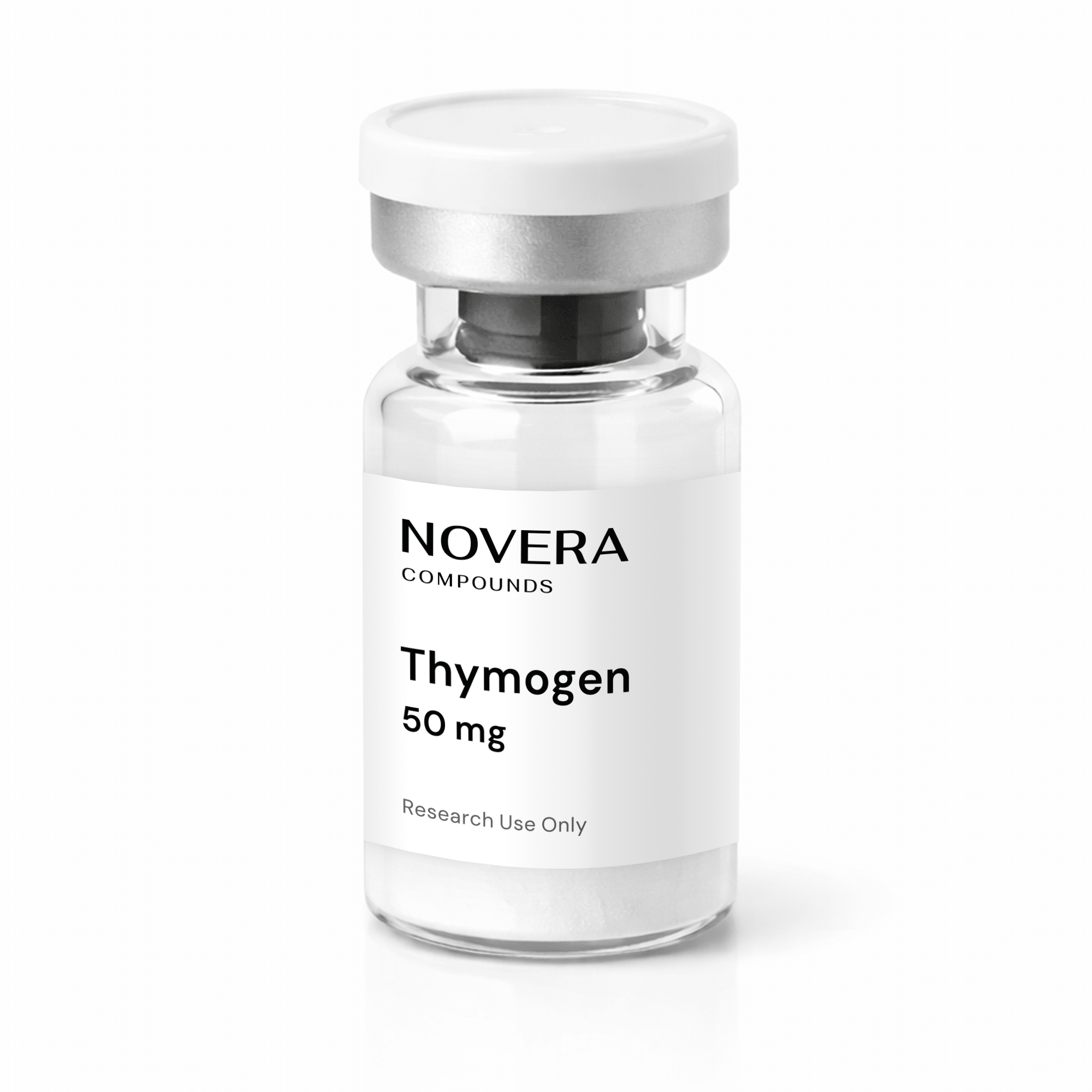

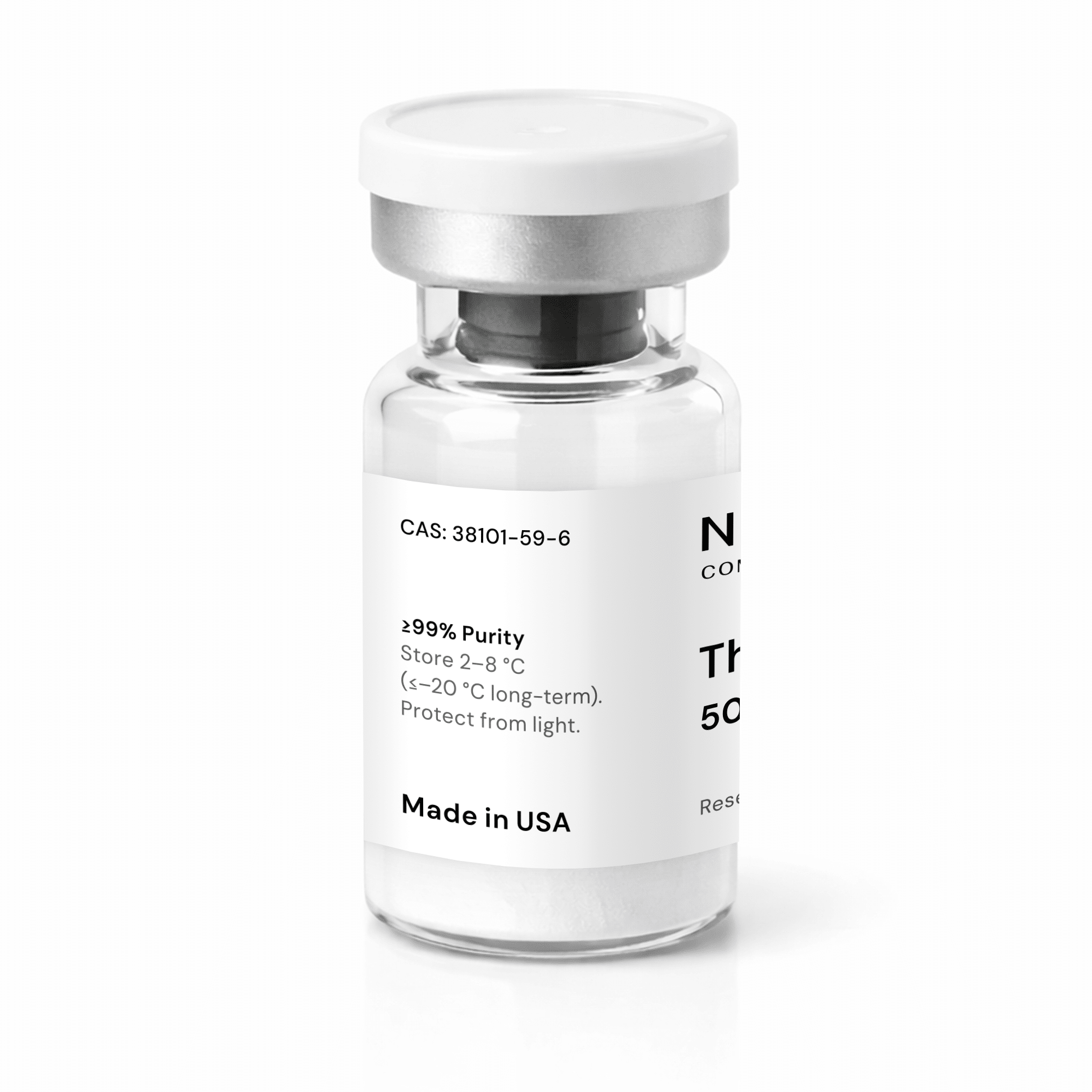
Thymagen(Thymogen) (50mg)
Coming Soon
This peptide will be available soon. Join the waitlist to be notified when it launches.
Disclaimer
The product is delivered in powdered (lyophilized) form and must be properly reconstituted prior to research use.
Research Use Only:
This product is strictly for laboratory experimentation and in vitro testing. Human administration is prohibited. All information regarding Novera Compounds available on the Doctor Medica website is for educational purposes only and is intended for use by licensed, qualified professionals.
Why choose Novera Compounds peptides
Product description
What is Thymagen (Thymogen) (50mg)?
Thymagen (50mg), also known as Thymogen, is a synthetic dipeptide consisting of two amino acids—glutamic acid and tryptophan—arranged in the sequence H-Glu-Trp-OH. This peptide belongs to a class of short regulatory peptides that have been studied in laboratory environments for their potential role in immune system signaling and thymic peptide research.- Chemical Formula: C₁₆H₁₉N₃O₅
- Molecular Weight: 333.34 g/mol
- CAS Number: 38101-59-6
What are the key features of Thymagen (Thymogen) (50mg)?
- Synthetic dipeptide composed of two amino acids (Glu-Trp)
- Purity typically ≥95%, verified through laboratory testing
- Supplied as 50 mg lyophilized peptide in a sealed research vial
- Studied in immune signaling and peptide bioregulator research models
- For laboratory research use only
How is Thymagen (Thymogen) (50mg) synthesized?
Thymagen (50mg) is synthesized using solid-phase peptide synthesis (SPPS), a laboratory technique that allows for controlled peptide chain assembly. In this method, protected amino acids are sequentially attached to a solid support until the complete dipeptide chain is formed. After synthesis, the peptide undergoes purification using high-performance liquid chromatography (HPLC) to achieve high purity levels. Structural verification of molecular weight and integrity is conducted using mass spectrometry (MS). The purified peptide is then lyophilized to improve stability during storage and transport.What is Thymagen (Thymogen) (50mg) being studied for? What are its possible benefits?
Thymagen (50mg) has been studied for its potential role in immune system signaling, particularly for its involvement in thymic regulation and immune cell differentiation. Short peptides derived from thymic proteins are often investigated for their possible ability to influence immune cell development and communication. Research areas involving this peptide include:- Immune system signaling research
- Thymus-related peptide regulation studies
- Cellular communication within lymphoid tissues
- Gene expression and peptide bioregulator research
- Experimental models of immune cell differentiation
How does Thymagen (Thymogen) (50mg) work in research studies?
In laboratory research models, Thymagen (50mg) is studied for its potential ability to interact with cellular regulatory systems involved in immune function. Short peptides such as Glu-Trp are being investigated for potential interactions with proteins involved in gene expression and intracellular signaling. Researchers examine how these interactions may influence communication between immune cells or signaling pathways within lymphoid tissues. By studying these mechanisms, scientists aim to better understand the role short peptides play in immune regulation and cellular communication. These mechanisms are still being explored in controlled experimental environments.What dosing information exists for Thymagen (Thymogen) (50mg)?
Research involving Thymagen (50mg) has primarily been conducted in preclinical laboratory studies, including cell culture experiments and animal models. In vitro research often evaluates the peptide at nanomolar to micromolar concentrations to observe cellular responses and signaling activity. Animal studies examining regulatory peptides have explored dosing ranges in the microgram per kilogram (µg/kg) scale, depending on the experimental model and research objective. Because Thymagen is supplied as a research compound, no standardized human dosing guidelines exist, and its use is restricted to laboratory research settings.How should Thymagen (Thymogen) (50mg) be stored and handled?
- Store at –20 °C or lower for long-term preservation.
- Protect from light, humidity, and excessive heat.
- Keep vials sealed until use in laboratory experiments.
- After reconstitution, store at 2–8 °C for short-term use.
- Avoid repeated freeze-thaw cycles to preserve peptide integrity.
- Refer to the batch certificate of analysis for batch-specific stability data.
Where can I read more research about Thymagen (Thymogen) (50mg)?
Researchers interested in thymic peptides and immune regulatory peptide research may consult the following scientific literature:- Khavinson VKh, Morozov VG. Peptides of pineal gland and thymus prolong human life. Neuro Endocrinol Lett. 2003;24(3-4):233-240.
- Demidov SV, Kostromin AN, Kuĭbeda VV, Chernaia IV, Borovok MI. Vliianie timagena, timalina i vilozena na soderzhanie cAMP, cGMP i aktivnost' fosfodiésteraz v limfotsitakh selezenki pri sensibilizatsii i anafilakticheskom shoke [Effect of thymagen, thymalin and vilosen on the cAMP and cGMP levels and phosphodiesterase activity in spleen lymphocytes during sensitization and anaphylactic shock]. Ukr Biokhim Zh (1978). 1991;63(4):104-106.
- Kozhemiakin AL, Morozov VG, Khavinson VKh. Uchastie tsiklaznoĭ sistemy v molekuliarnykh mekhanizmakh reguliatsii differentsirovki immunokompetentnykh kletok [Participation of the cyclase system in the molecular mechanisms of differentiation control of immunocompetent cells]. Biokhimiia. 1984;49(4):658-666.
- Silin DS, Lyubomska OV, Ershov FI, Frolov VM, Kutsyna GA. Synthetic and natural immunomodulators acting as interferon inducers. Curr Pharm Des. 2009;15(11):1238-1247. doi:10.2174/138161209787846847
- Anisimov VN, Miretskiĭ GI, Morozov VG, Pavel'eva IA, Khavinson VKh. Vliianie sinteticheskogo immunomoduliatora timogena na radiatsionnyĭ kantserogenez u krys [The effect of the synthetic immunomodulator thymogen on radiation-induced carcinogenesis in rats]. Vopr Onkol. 1992;38(4):451-458.
- Bespalov VG, Troian DN, Petrov AS, Morozov VG, Khavinson VKh. Ingibiruiushchiĭ éffekt timogena na razvitie opukholeĭ pishchevoda i predzheludka, indutsirovannykh étilovym éfirom N-nitrozosarkozina u krys [Inhibiting effect of thymogen on the development of tumors of the esophagus and forestomach induced by N-nitrososarcosine ethyl ester in rats]. Eksp Onkol. 1989;11(4):23-26.
Compliance Statement
This product is intended for laboratory research use only and is not approved for human or veterinary use.Shop with Confidence: Product Authenticity is Guaranteed
All products available at Doctor Medica shop are obtained from respective manufacturers and contain original LOT numbers Contact us if you have any questions about product LOT numbers.