Your Cart is Empty
Start shopping

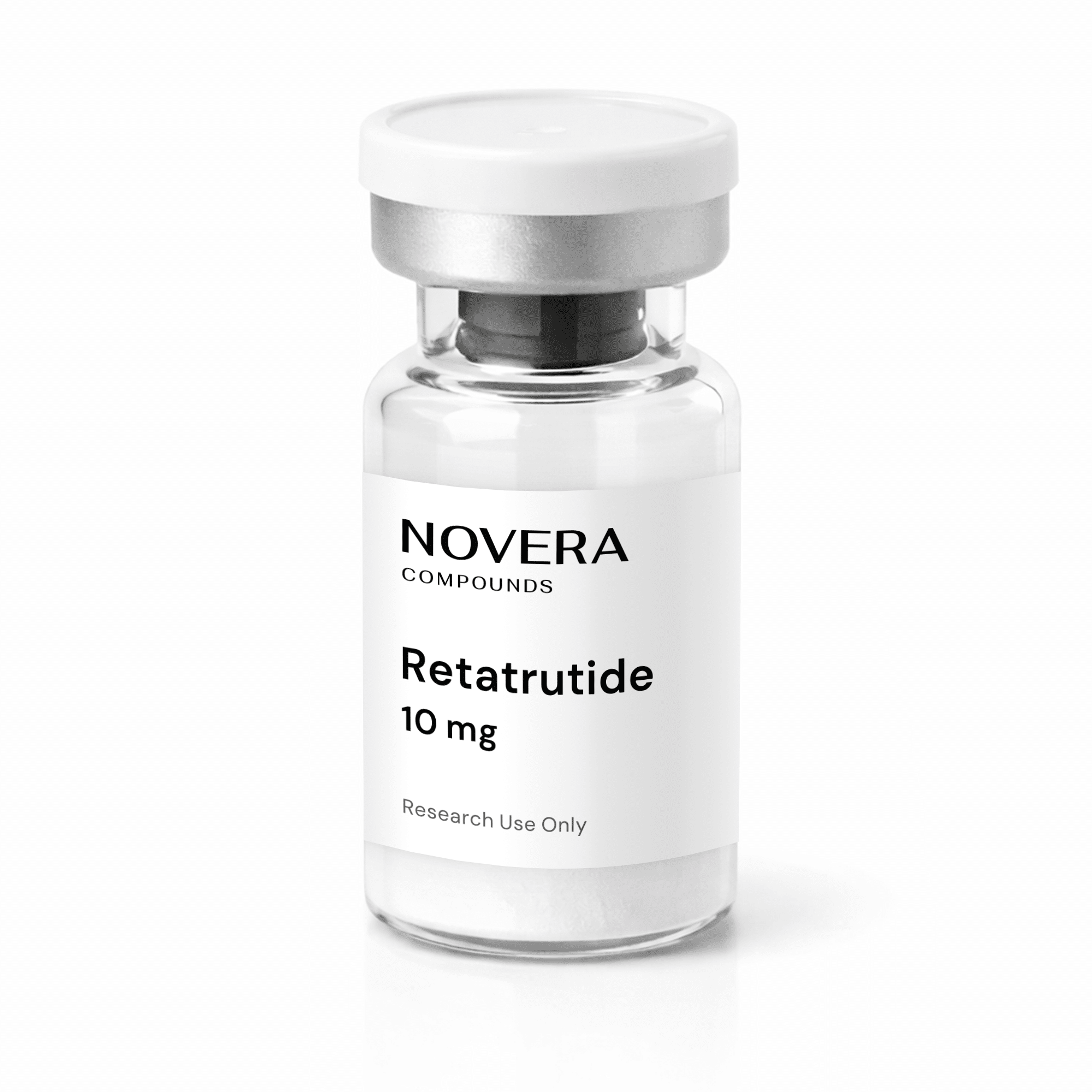
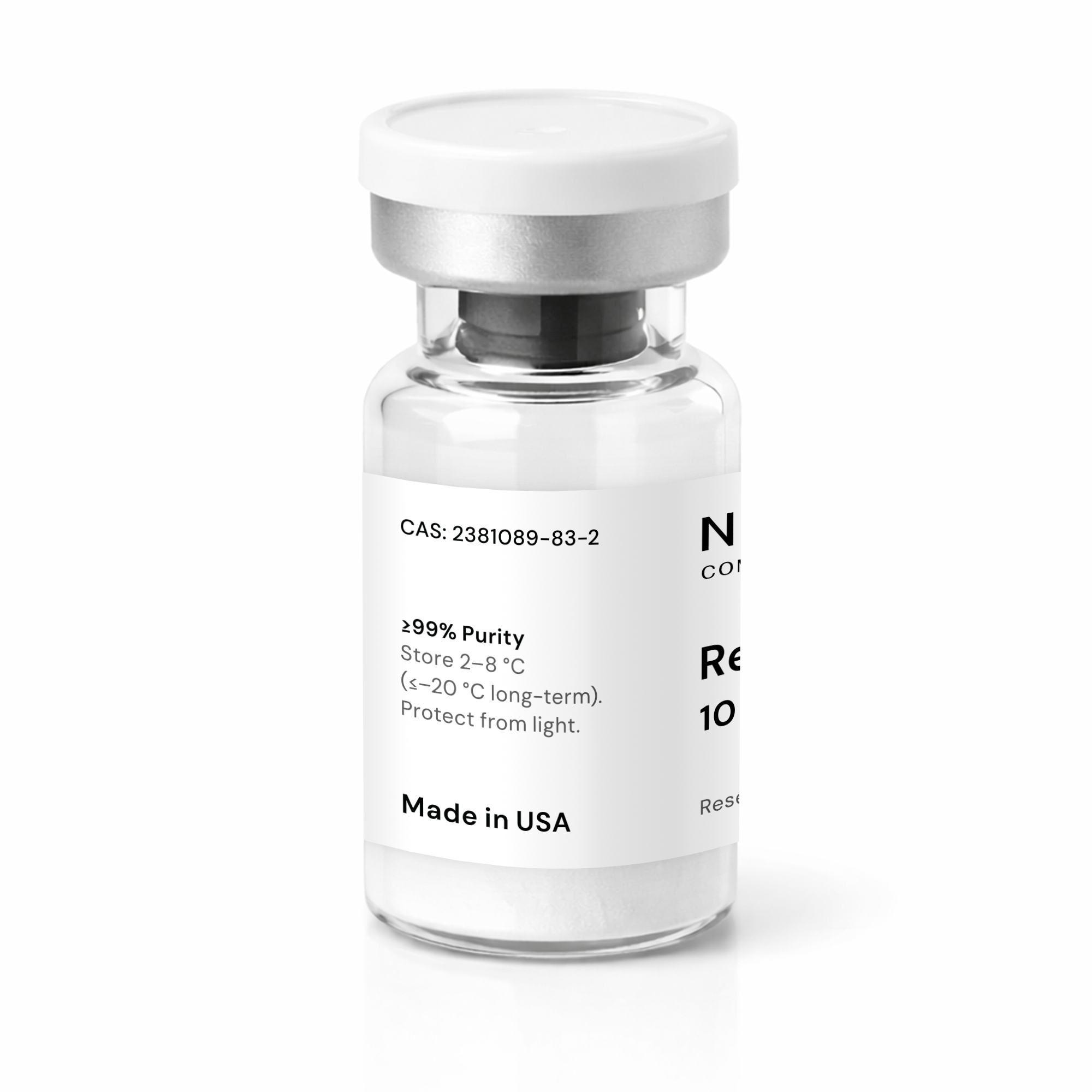
Retatrutide 10mg
Tier
| Packs | Discount (%) | For Each |
|---|---|---|
| 1 - 5 | — | $139.00 |
| 6 - 10 | 9.35 % | $126.00 |
| 11 - 20 | 17.99 % | $114.00 |
| 21+ | 25.9 % | $103.00 |
Shop with Confidence: 100% Authentic Products
All products are sourced from trusted suppliers and come with original manufacturer LOT numbers for identification and traceability.
Product description
What is Retatrutide 10mg?
Retatrutide (10 mg) is a synthetic 39-amino-acid peptide conjugated to a C20 fatty diacid moiety, studied for its activity across multiple metabolic and hormonal signaling pathways. It belongs to a class of long-acting, multi-receptor agonist peptides currently under investigation in controlled research and clinical settings.
Retatrutide selectively activates:
- GLP-1 receptor (EC50: 0.775 nM)
- GIP receptor (EC50: 0.0643 nM)
- Glucagon receptor (EC50: 5.79 nM)
Its sequence incorporates modified amino acids to enhance structural stability, receptor activity, and extended biological half-life. Due to its multi-pathway receptor activity, Retatrutide is studied for coordinated metabolic signaling, glucose regulation, and energy balance mechanisms.
Phase II clinical trials reported up to:
- 2% body weight reduction
- 02% HbA1c reduction
- 86% normalization of liver fat
The compound is currently being evaluated in Phase III clinical trials (TRIUMPH 1–4 studies; 5,500+ participants) to further assess efficacy and safety outcomes.
Product Specifications
- Product Name: Retatrutide
- CAS Number: 2381089-83-2
- Chemical Formula: C₂₂₁H₃₄₂N₄₆O₆₈
- Molecular Weight: 4845.444 g/mol
- Sequence: Tyr-{Aib}-Gln-Gly-Thr-Phe-Thr-Ser-Asp-Tyr-Ser-Ile-{α-Me-Leu}-Leu-Asp-Lys-{diacid-C20-gamma-Glu-(AEEA)-Lys}-Ala-Gln-{Aib}-Ala-Phe-Ile-Glu-Tyr-Leu-Leu-Glu-Gly-Gly-Pro-Ser-Ser-Gly-Ala-Pro-Pro-Pro-Ser-NH₂ (Sodium salt)
- Structure Type: Multi-receptor tri-agonist peptide with C20 fatty diacid conjugation
- Purity: ≥98% (research grade)
What are the key features of Retatrutide 10mg?
Clinicians who buy peptides for weight loss wholesale should consider comprehensive handling practices, including proper product preparation, quality assurance measures, and adherence to recommended protocols throughout use. Retatrutide is provided in a sealed 10mg lyophilized format, suitable for controlled laboratory applications. It is typically produced at >95% purity, supporting consistent experimental evaluation in in-vitro or preclinical environments. Researchers often examine retatrutide for mechanisms related to weight regulation, hormonal signaling, and metabolic pathways. Key features include:
- Lyophilized peptide supplied in a sterile retatrutide 10 mg vial
- Triple-receptor agonist targeting GLP-1, GIP, and glucagon receptors
- Demonstrated efficacy in Phase II human trials (2% body weight reduction at 12 mg weekly)
- C20 fatty diacid modification for extended half-life (~6 days)
- Hepatic metabolism without CYP450 enzyme interactions
- Verified using HPLC and mass spectrometry for identity and purity
- Manufactured at high research-grade purity (>95%)
- For laboratory research use only
How is Retatrutide 10mg synthesized?
Retatrutide is produced through solid-phase peptide synthesis (SPPS), a method widely used for long, structurally complex peptides. SPPS allows precise assembly of each amino acid in the retatrutide sequence, including the incorporation of modifications designed to improve molecular stability. Once synthesized, the C20 fatty diacid moiety is conjugated to the peptide backbone, enhancing bioavailability and extending half-life.
After synthesis, the peptide is purified using high-resolution chromatography, most commonly HPLC, to remove impurities and byproducts. After purification, the peptide is lyophilized to preserve stability during storage and transport. Identity and integrity are verified through mass spectrometry, which confirms molecular weight and structural accuracy. This ensures that material supplied in each retatrutide 10 mg vial is consistent with standard research specifications.
What is Retatrutide 10mg being studied for? What are its possible benefits?
Medical practitioners who buy Retatrutide wholesale should be aware of proper storage, handling, and reconstitution practices to help maintain product integrity during evaluation. Retatrutide is under active investigation for its potential roles in metabolic regulation, energy expenditure, glucose balance, and multi-receptor hormone activity. Phase II clinical trial results demonstrated:
- Body weight reduction of up to 2% at 48 weeks (vs 2.1% placebo)
- 83% of participants achieved ≥15% body weight loss at 12 mg weekly dose
- HbA1c reduction of up to 02% in participants with Type 2 Diabetes
- Normalization of liver fat in 86% of participants with hepatic steatosis
- Reduction in systolic blood pressure averaging 6-8 mmHg
These findings are preliminary. Phase III trials (TRIUMPH 1-4) are ongoing to confirm efficacy and safety in broader populations. Researchers are focusing on understanding the synergistic effects of simultaneous GLP-1, GIP, and glucagon receptor activation.
How does Retatrutide 10mg work in research studies?
In laboratory models, the research compound retatrutide is believed to work by simultaneously influencing several metabolic signaling pathways. Studies suggest it may interact with hormone-related receptors, potentially affecting glucose utilization, appetite-related signals, and energy expenditure in controlled environments. Specific receptor mechanisms include:
- GLP-1 receptor activation: Delays gastric emptying, increases glucose-dependent insulin secretion, suppresses glucagon
- GIP receptor activation: Enhances postprandial insulin secretion, improves lipid metabolism, enhances GLP-1 action
- Glucagon receptor activation: Enhances satiety signaling, increases lipolysis, promotes thermogenesis
The synergistic combination of these three receptor agonisms distinguishes retatrutide from single-pathway (GLP-1 only) or dual-pathway (GLP-1/GIP) agonists, making it a unique compound in metabolic research.
What dosing information exists for Retatrutide 10mg?
Preclinical animal studies utilized approximately 10 nmol/kg (molar concentration) for retatrutide. Phase II human trials employed once-weekly subcutaneous doses ranging from 1 mg to 12 mg, with optimal efficacy observed at the 12 mg weekly dose (24.2% weight loss at 48 weeks).
Lower starting doses (1-4 mg weekly) are recommended to minimize GI side effects, with titration over 4-8 weeks. Cell-culture in-vitro studies typically employ nanomolar to micromolar concentrations to evaluate receptor EC50 values.
How should Retatrutide 10mg be stored and handled?
Retatrutide peptide should be stored in its lyophilized form at –20 °C or lower to maintain long-term stability. It should be kept in a dry, light-protected environment to prevent degradation. When properly stored, lyophilized peptides generally remain stable for extended periods, although researchers should always follow labeled guidelines.
After reconstitution, retatrutide is typically stored at 2–8 °C and used promptly to maintain its structural integrity. Reconstituted solutions are stable for ~7-14 days at 2–8 °C in neutral pH buffer (pH 7.2-7.4). Avoid repeated freeze-thaw cycles to preserve peptide quality. Aseptic technique and sterile containers are required when reconstituting.
Citations
Researchers studying the retatrutide for research compound can consult several credible scientific sources for additional information:
[1] Coskun T, Urva S, Roell WC, et al. LY3437943, a novel triple glucagon, GIP, and GLP-1 receptor agonist for glycemic control and weight loss: From discovery to clinical proof of concept. Cell Metab. 2022;34(9):1234-1247.e9. doi:10.1016/j.cmet.2022.07.013
[2] Jastreboff AM, Kaplan LM, Frías JP, et al. Triple-Hormone-Receptor Agonist Retatrutide for Obesity – A Phase 2 Trial. N Engl J Med. 2023;389(6):514-526. doi:10.1056/NEJMoa2301972
[3] Sanyal AJ, Kaplan LM, Frias JP, et al. Triple hormone receptor agonist retatrutide for metabolic dysfunction-associated steatotic liver disease: a randomized phase 2a trial. Nat Med. 2024;30(7):2037-2048. doi:10.1038/s41591-024-03018-2
[4] Ma J, Hu X, Zhang W, Tao M, Wang M, Lu W. Comparison of the effects of Liraglutide, Tirzepatide, and Retatrutide on diabetic kidney disease in db/db mice. Endocrine. 2025;87(1):159-169. doi:10.1007/s12020-024-03998-8
Compliance Statement
This product is intended for laboratory research use only and is not approved for human or veterinary use.
All claims and references on this page apply only to the genuine product, and not replicas or products that cannot be traced back to the official manufacturer. Read more to learn how product authenticity is verified.