Your Cart is Empty
Start shopping

Coming soon
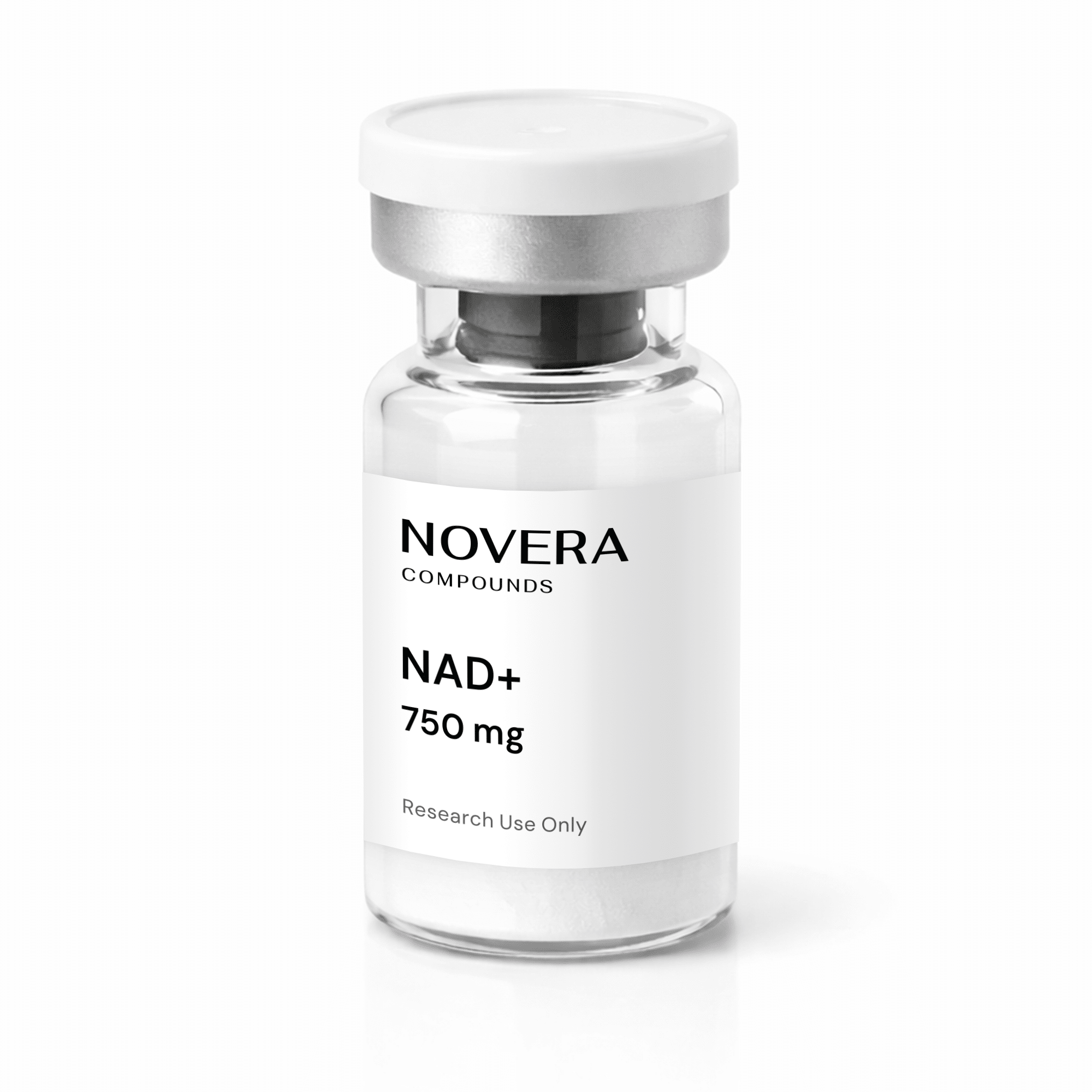

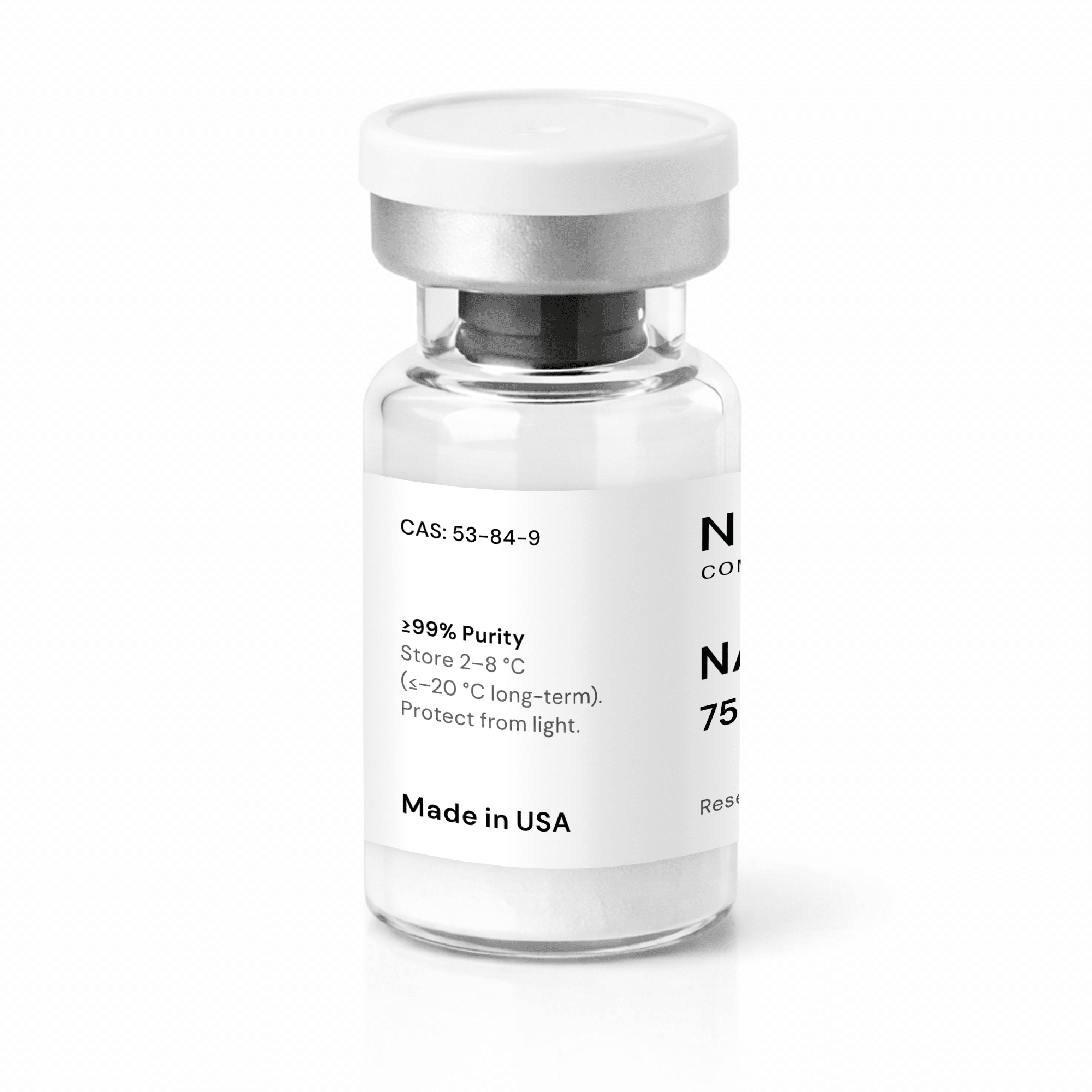
NAD+ (750mg)
Coming Soon
This peptide will be available soon. Join the waitlist to be notified when it launches.
Disclaimer
The product is delivered in powdered (lyophilized) form and must be properly reconstituted prior to research use.
Research Use Only:
This product is strictly for laboratory experimentation and in vitro testing. Human administration is prohibited. All information regarding Novera Compounds available on the Doctor Medica website is for educational purposes only and is intended for use by licensed, qualified professionals.
Why choose Novera Compounds peptides
Product description
What is NAD+ (750mg)?
NAD+ (750mg) is a research-grade preparation of nicotinamide adenine dinucleotide in its oxidized form. It is commonly used in biochemical and cellular experiments investigating metabolic reactions, enzyme activity, and redox biology. Although often listed alongside peptide research products in laboratory catalogs, NAD+ is technically a pyridine nucleotide coenzyme rather than a peptide. This research-grade coenzyme has a molecular weight of 663.43 g/mol and functions as an essential cofactor in many metabolic pathways. Key identifiers include:- CAS Number: 53-84-9
- Chemical Formula: C₂₁H₂₇N₇O₁₄P₂
What are the key features of NAD+ (750mg)?
NAD+ (750mg) is supplied as a high-purity crystalline or lyophilized compound, packaged in a sealed research container. The larger quantity enables repeated biochemical assays and cell culture experiments that require precise coenzyme concentrations. Key features include:- Research-grade oxidized coenzyme used in metabolic and enzymatic studies
- 750 mg bulk quantity suitable for multiple experimental preparations
- High purity, typically verified through HPLC and analytical testing
- Well-defined molecular weight and chemical structure for quantitative assays
- Widely used in studies of mitochondrial metabolism, aging biology, and cellular stress responses
- For laboratory research use only
How is NAD+ (750mg) synthesized?
Commercial NAD+ used in laboratory settings is produced through controlled chemical synthesis or enzymatic biosynthesis. Industrial production typically begins with nicotinamide or related precursors, which are converted into the dinucleotide structure through multi-step reactions that assemble the adenine and nicotinamide nucleotide components. After synthesis, the compound undergoes purification through chromatographic techniques to remove by-products and incomplete intermediates. Analytical verification typically includes high-performance liquid chromatography (HPLC) to confirm purity and mass spectrometry (MS) or nuclear magnetic resonance (NMR) to verify the expected molecular weight and structural composition. These quality control processes ensure that research-grade NAD+ is suitable for sensitive experiments such as enzyme kinetics assays, metabolomics studies, and investigations of cellular redox states.What is NAD+ (750mg) being studied for? What are its possible benefits?
NAD+ is widely studied in biological research due to its central role in cellular metabolism. Many metabolic reactions rely on NAD+ as a cofactor that transfers electrons between enzymes during processes like glycolysis, the tricarboxylic acid cycle, and mitochondrial oxidative phosphorylation. Beyond metabolism, NAD+ has also been investigated as a substrate for enzyme families such as sirtuins and poly(ADP-ribose) polymerases (PARPs). These enzymes are involved in processes like DNA repair, chromatin regulation, inflammatory signaling, and stress response pathways. Experimental models have examined whether changes in NAD+ levels affect mitochondrial function, oxidative stress markers, and gene expression linked to cellular maintenance. Some studies also explore its role in neurological research, metabolic regulation, and aging biology. These potential biological effects remain under investigation and are primarily observed in preclinical laboratory studies.How does NAD+ (750mg) work in research studies?
In laboratory research, NAD+ functions primarily as a redox cofactor, cycling between its oxidized form (NAD+) and reduced form (NADH). This cycling allows it to transport electrons between enzymes during metabolic reactions, supporting critical pathways that generate cellular energy (ATP). NAD+ also serves as a substrate for several regulatory enzymes. During these reactions, NAD+ is cleaved to provide ADP-ribose or related intermediates that participate in cellular signaling. These reactions influence processes such as protein modification, gene expression, and DNA repair. Because of these roles, researchers often manipulate NAD+ levels in experimental systems to study how changes in metabolic cofactors affect cellular resilience, mitochondrial function, and stress response mechanisms.What dosing information exists for NAD+ (750mg)?
Experimental dosing for NAD+ varies depending on the research model and experimental objective. In in-vitro biochemical assays, NAD+ concentrations typically range from 100 µM to 1 mM, especially when studying enzyme kinetics or metabolic flux. In cellular research models, extracellular NAD+ or precursor concentrations are often adjusted to assess changes in intracellular NAD+ pools over time. Typical mammalian cell concentrations range from 200 to 500 µM, which guides experimental design. Animal studies more commonly investigate NAD+ precursors, such as NMN or nicotinamide riboside, rather than direct NAD+ supplementation. As a result, dosing strategies vary across experimental models. No standardized human dosing guidelines exist for NAD+ (750mg) as a research reagent.How should NAD+ (750mg) be stored and handled?
- Store NAD+ at ≤–20 °C. Protect from light and moisture.
- After reconstitution, store solutions at 2–8 °C and minimize freeze–thaw cycles by preparing single-use aliquots.
- Document preparation conditions to support experimental reproducibility.
- For laboratory research use only.
Where can I read more research about NAD+ (750mg)?
The following publications provide background information on NAD⁺ biology and research applications:- Imai S, Guarente L. NAD+ and sirtuins in aging and disease. Trends Cell Biol. 2014;24(8):464-471. doi:10.1016/j.tcb.2014.04.002
- Kulkarni CA, Brookes PS. Cellular Compartmentation and the Redox/Nonredox Functions of NAD. Antioxid Redox Signal. 2019;31(9):623-642. doi:10.1089/ars.2018.7722
- Demarest TG, Truong GTD, Lovett J, et al. Assessment of NAD+metabolism in human cell cultures, erythrocytes, cerebrospinal fluid and primate skeletal muscle. Anal Biochem. 2019;572:1-8. doi:10.1016/j.ab.2019.02.019
- Cantó C, Menzies KJ, Auwerx J. NAD(+) Metabolism and the Control of Energy Homeostasis: A Balancing Act between Mitochondria and the Nucleus. Cell Metab. 2015;22(1):31-53. doi:10.1016/j.cmet.2015.05.023
- Kim HW, Ryoo GH, Jang HY, et al. NAD+-boosting molecules suppress mast cell degranulation and anaphylactic responses in mice. Theranostics. 2022;12(7):3316-3328. Published 2022 Apr 11. doi:10.7150/thno.69684
Compliance Statement
This product is intended for laboratory research use only and is not approved for human or veterinary use.Shop with Confidence: Product Authenticity is Guaranteed
All products available at Doctor Medica shop are obtained from respective manufacturers and contain original LOT numbers Contact us if you have any questions about product LOT numbers.