Your Cart is Empty
Start shopping

Coming soon
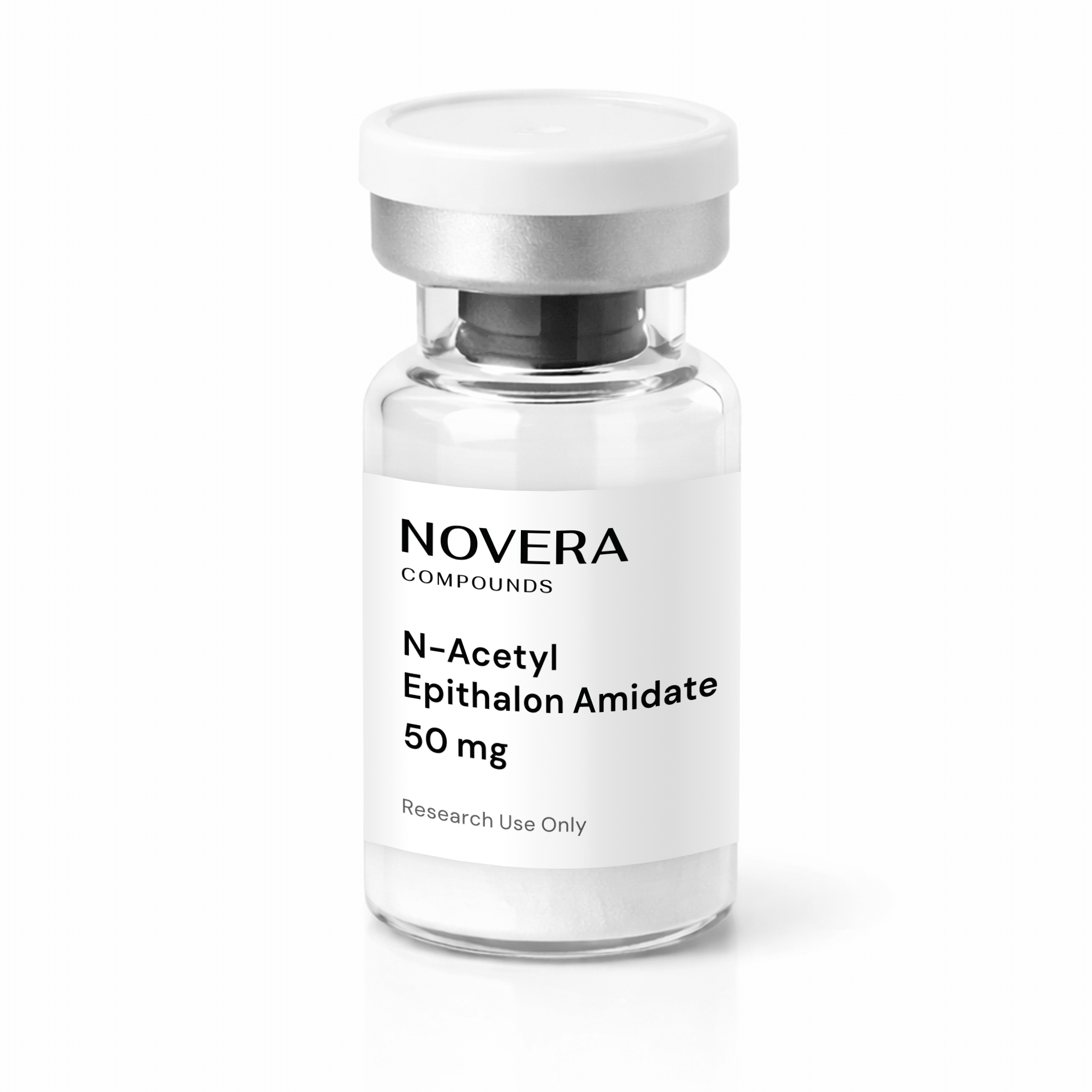

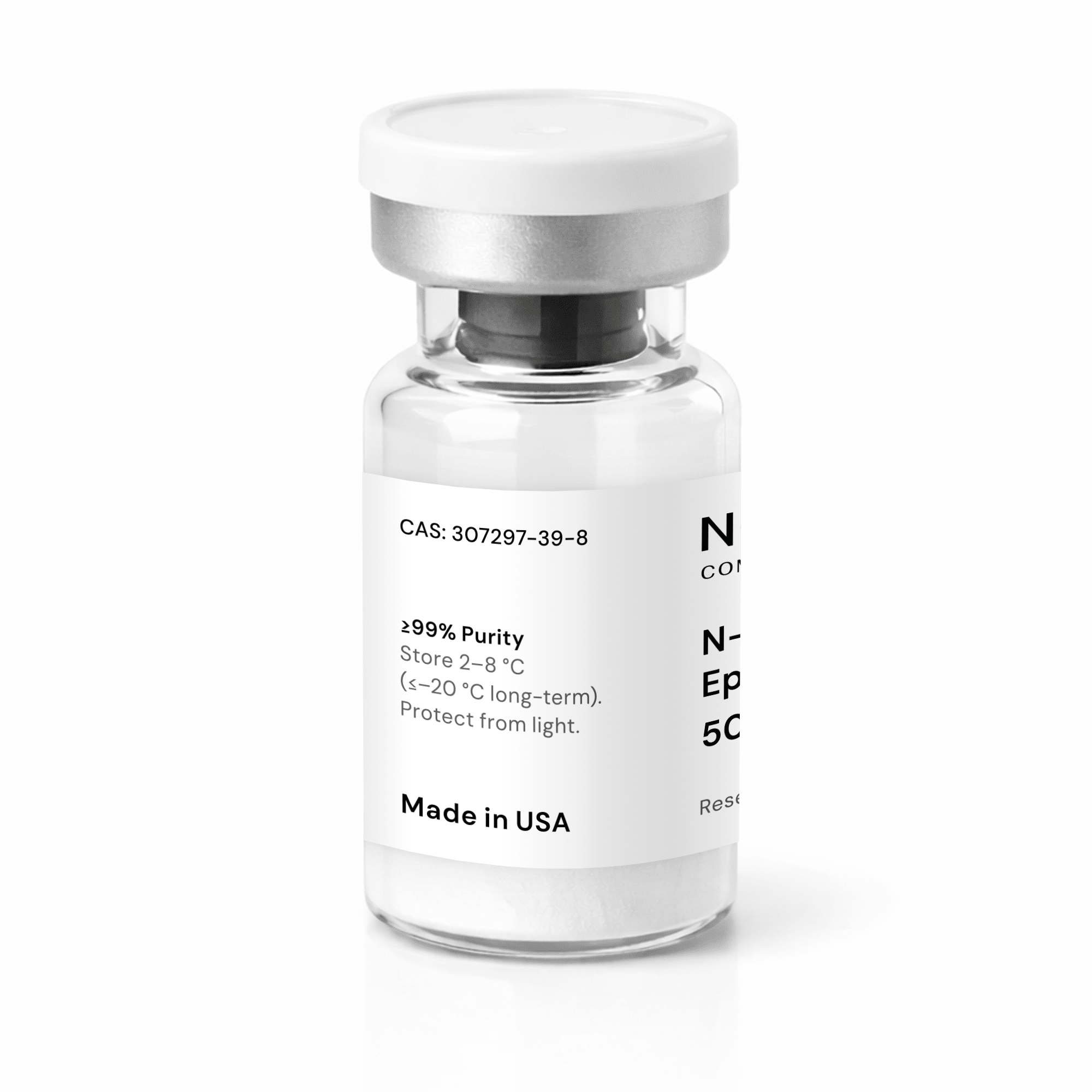
N-acetyl Epithalon Amidate (50mg)
Coming Soon
This peptide will be available soon. Join the waitlist to be notified when it launches.
Disclaimer
The product is delivered in powdered (lyophilized) form and must be properly reconstituted prior to research use.
Research Use Only:
This product is strictly for laboratory experimentation and in vitro testing. Human administration is prohibited. All information regarding Novera Compounds available on the Doctor Medica website is for educational purposes only and is intended for use by licensed, qualified professionals.
Why choose Novera Compounds peptides
Product description
What is N-acetyl Epithalon Amidate (50mg)?
N-acetyl Epithalon Amidate (50mg) is a modified synthetic peptide derived from the short-chain tetrapeptide Epithalon. The peptide contains the four–amino acid sequence Ala-Glu-Asp-Gly (AEDG) and includes structural modifications at both ends of the peptide chain. Specifically, the N-terminus is acetylated and the C-terminus is amidated, forming the compound commonly referred to as Ac-AEDG-NH₂. These modifications are frequently used in peptide research to increase molecular stability and resistance to enzymatic degradation.- Chemical Formula: C₁₄H₂₂N₄O₉
- Molecular Weight: 446.45 g/mol
What are the key features of N-acetyl Epithalon Amidate (50mg)?
- Synthetic tetrapeptide composed of four amino acids (Ala-Glu-Asp-Gly)
- Acetylated N-terminus and amidated C-terminus for enhanced structural stability
- Molecular Weight: 45 g/mol
- Supplied as 50 mg lyophilized peptide in a sealed research vial
- High analytical purity, typically verified by HPLC and mass spectrometry
- Studied in laboratory models involving cellular regulation and gene expression
- For laboratory research use only
How is N-acetyl Epithalon Amidate (50mg) synthesized?
N-acetyl Epithalon Amidate (50mg) is typically produced through solid-phase peptide synthesis (SPPS), a widely used method for manufacturing peptides with precise amino acid sequences. During this process, the peptide chain is assembled step-by-step on a solid support, allowing accurate formation of the four-amino acid sequence associated with epithalamic peptides. Following synthesis, the peptide undergoes purification using high-performance liquid chromatography (HPLC) to ensure high levels of purity. Structural identity and molecular mass are confirmed using mass spectrometry (MS) and other analytical techniques. The N-terminal acetylation and C-terminal amidation modifications are incorporated during the synthesis process to stabilize the peptide and mimic structural variations used in experimental research. After purification, the compound is lyophilized to improve storage stability.What is N-acetyl Epithalon Amidate (50mg) being studied for? What are its possible benefits?
In laboratory studies, N-acetyl Epithalon Amidate (50mg) has been investigated as part of broader research into peptide bioregulators. These peptides are being explored for their potential ability to influence cellular regulatory processes and gene expression pathways. Research areas associated with this peptide include:- Cellular signaling and regulatory peptide research
- Gene expression modulation in experimental systems
- Age-related cellular process studies
- DNA repair and chromatin structure investigations
- Cellular stress response research
How does N-acetyl Epithalon Amidate (50mg) work in research studies?
In experimental settings, N-acetyl Epithalon Amidate (50mg) is studied for its potential role as a peptide bioregulator, meaning it may influence cellular functions through interactions with molecular regulatory systems. Short peptides such as AEDG have been examined in laboratory studies for their ability to interact with proteins involved in DNA structure and gene transcription. Research models suggest that peptides derived from epithalamic tissues may influence signaling pathways related to cellular repair and metabolic regulation. These interactions are believed to occur through modulation of intracellular signaling mechanisms and gene activity. The precise biological mechanisms of N-acetyl Epithalon Amidate remain an area of ongoing investigation in laboratory environments.What dosing information exists for N-acetyl Epithalon Amidate (50mg)?
Most available dosing information for N-acetyl Epithalon Amidate (50mg) originates from preclinical laboratory studies involving cell cultures or animal models. In vitro experiments typically use nanomolar or micromolar concentrations to evaluate peptide activity within cellular systems. Some animal studies involving epithalon-related peptides have explored dosing ranges in the microgram per kilogram (µg/kg) scale, depending on the experimental objective. However, protocols vary significantly between studies. There are currently no established human dosing guidelines, as this peptide is intended strictly for laboratory research and experimental investigation.How should N-acetyl Epithalon Amidate (50mg) be stored and handled?
N-acetyl Epithalon Amidate (50mg) should be stored under controlled laboratory conditions to maintain stability and integrity. Recommended storage conditions include 2–8 °C for routine storage and ≤–20 °C for long-term preservation. The lyophilized peptide should be protected from light, moisture, and excessive heat. After reconstitution with sterile laboratory solvent, solutions should generally be stored at 2–8 °C for short-term use. Repeated freeze–thaw cycles should be avoided, as they may affect peptide stability. Under proper storage conditions, the peptide typically maintains stability for approximately 24 months. Standard laboratory protective procedures should be followed during handling and disposal.Where can I read more research about N-acetyl Epithalon Amidate (50mg)?
Researchers interested in epithalon-related peptides and peptide bioregulators can consult the following scientific publications:- Khavinson V, Diomede F, Mironova E, et al. AEDG Peptide (Epitalon) Stimulates Gene Expression and Protein Synthesis during Neurogenesis: Possible Epigenetic Mechanism. Molecules. 2020;25(3):609. Published 2020 Jan 30. doi:10.3390/molecules25030609
- Yue X, Liu SL, Guo JN, et al. Epitalon protects against post-ovulatory aging-related damage of mouse oocytes in vitro. Aging (Albany NY). 2022;14(7):3191-3202. doi:10.18632/aging.204007
- Al-Dulaimi S, Thomas R, Matta S, Roberts T. Epitalon increases telomere length in human cell lines through telomerase upregulation or ALT activity. Biogerontology. 2025;26(5):178. Published 2025 Sep 4. doi:10.1007/s10522-025-10315-x
- Khavinson VKh, Bondarev IE, Butyugov AA. Epithalon peptide induces telomerase activity and telomere elongation in human somatic cells. Bull Exp Biol Med. 2003;135(6):590-592. doi:10.1023/a:1025493705728
Compliance Statement
This product is intended for laboratory research use only and is not approved for human or veterinary use.Shop with Confidence: Product Authenticity is Guaranteed
All products available at Doctor Medica shop are obtained from respective manufacturers and contain original LOT numbers Contact us if you have any questions about product LOT numbers.