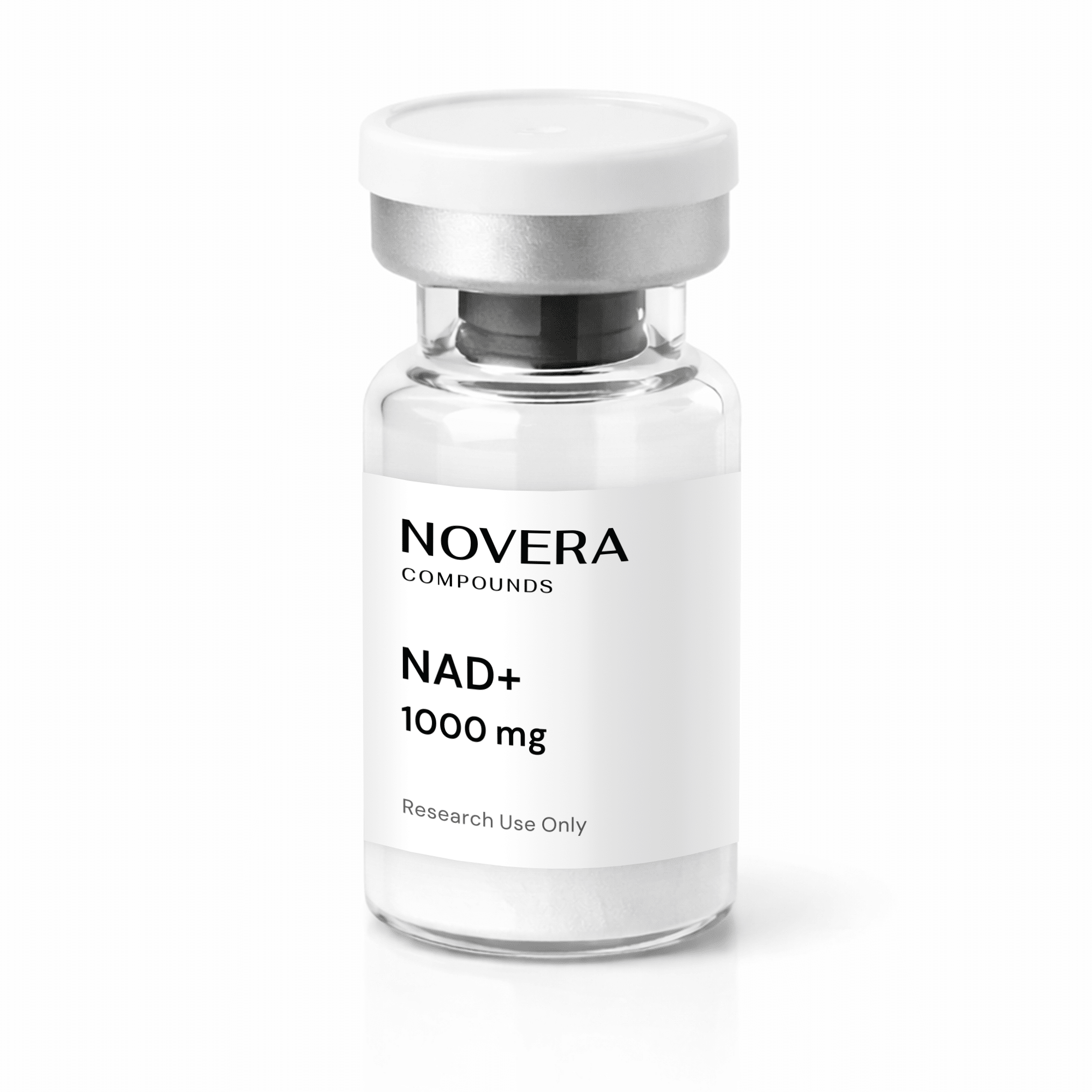
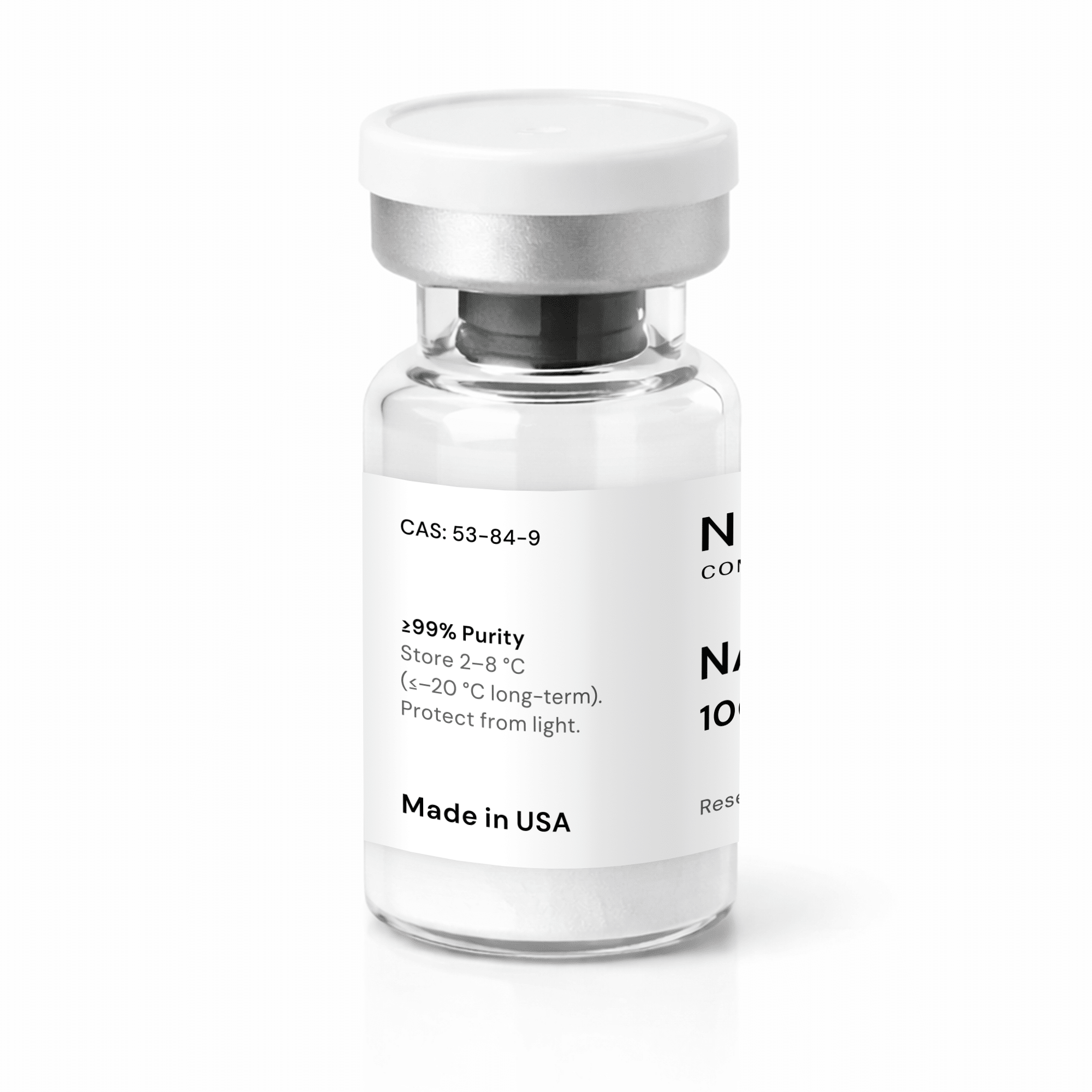
NAD+ 1000mg

Tier

Packs Discount (%) For Each
1 - 5 $191.00
6 - 10 9.95 % $172.00
11 - 20 18.85 % $155.00
21+ 26.7 % $140.00

Product description

What is NAD+ (1000mg)?

NAD+ (1000mg) refers to nicotinamide adenine dinucleotide, a naturally occurring coenzyme found in living cells. Although sometimes discussed alongside peptide-based compounds in research catalogs, NAD+ is a dinucleotide cofactor composed of two nucleotides joined through their phosphate groups. It plays a central role in cellular metabolism and energy transfer processes.
  • CAS Number: 53-84-9
  • Chemical Formula: C₂₁H₂₇N₇O₁₄P₂
  • Molecular Weight: 663.43 g/mol
Within biological systems, NAD+ functions as an essential cofactor in oxidation-reduction reactions that support cellular respiration and metabolic pathways. In laboratory research, it has been widely studied for its involvement in mitochondrial function, cellular signaling, and enzymatic reactions. Research-grade NAD+ is typically produced with high purity, verified through analytical testing, and supplied in powdered or lyophilized form for experimental applications.

What are the key features of NAD+ (1000mg)?

  • Nicotinamide adenine dinucleotide coenzyme used in cellular metabolism research
  • Supplied as 1000 mg research-grade compound; also available in 500mg and 750mg formats
  • High analytical purity verified through laboratory testing
  • Widely studied in mitochondrial function and metabolic pathway research
  • Stable under recommended storage conditions with a 24-month shelf life
  • For laboratory research use only

How is NAD+ (1000mg) synthesized?

Research-grade NAD+ (1000mg) may be produced through either enzymatic biosynthesis or chemical synthesis methods designed to replicate the naturally occurring coenzyme found in cells. Industrial production typically begins with precursor molecules such as nicotinamide mononucleotide (NMN) or related intermediates, which are converted into NAD+ via enzymatic reactions. Following synthesis, the compound is purified using analytical techniques such as high-performance liquid chromatography (HPLC). Molecular identity and structural verification are confirmed using mass spectrometry (MS) and other spectroscopic methods. These procedures ensure that the final product meets strict research-grade standards for purity and structural accuracy before being packaged for laboratory use.

What is NAD+ (1000mg) being studied for? What are its possible benefits?

In laboratory environments, NAD+ (1000mg) has been extensively studied for its role in cellular metabolism and biochemical signaling. Because NAD+ is involved in many enzymatic reactions, researchers continue to investigate how changes in NAD+ levels may influence various biological systems. Research areas associated with NAD+ include:
  • Mitochondrial energy metabolism
  • Cellular aging and metabolic regulation
  • DNA repair processes
  • Oxidative stress response
  • Cell signaling and enzyme activity
Experimental models suggest that NAD+ may influence metabolic pathways by serving as a cofactor for enzymes involved in energy production and cellular repair mechanisms. In oxidative stress research, it is sometimes examined alongside antioxidant compounds such as L-Glutathione. These findings remain part of ongoing research aimed at understanding fundamental biological processes rather than establishing therapeutic outcomes.

How does NAD+ (1000mg) work in research studies?

In experimental research, NAD+ (1000mg) functions primarily as a coenzyme involved in cellular oxidation–reduction reactions. It acts as an electron carrier in metabolic pathways such as glycolysis, the citric acid cycle, and oxidative phosphorylation. NAD+ can accept electrons from metabolic reactions and convert to its reduced form (NADH), which helps transfer energy within cells. Researchers also study its interaction with enzyme systems that regulate cellular stress responses and metabolic signaling. Through these mechanisms, NAD+ is being investigated as a central component of cellular energy regulation and metabolic homeostasis, and is cataloged among cellular rejuvenation compounds in research settings.

What dosing information exists for NAD+ (1000mg)?

Research involving NAD+ (1000mg) primarily occurs in cell culture experiments and animal models. In vitro studies often measure NAD+ concentrations in the micromolar range to investigate metabolic activity and enzymatic reactions in cultured cells. Animal studies have explored dosing levels in milligram per kilogram (mg/kg) ranges depending on the research objective and experimental design. These studies aim to examine metabolic pathways and cellular responses rather than clinical outcomes. Currently, there are no standardized human dosing guidelines for NAD+ in research-grade preparations, as the compound in this form is intended exclusively for laboratory investigation.

How should NAD+ (1000mg) be stored and handled?

NAD+ (1000mg) should be stored under controlled laboratory conditions to maintain chemical stability. Recommended storage conditions include 2–8 °C for routine storage and ≤–20 °C for long-term preservation. The compound should be protected from light, moisture, and excessive heat. After reconstitution with sterile laboratory solvent, solutions are generally stored at 2–8 °C for short-term use. Repeated freeze-thaw cycles should be avoided to prevent degradation. When stored under recommended conditions, NAD+ preparations typically remain stable for approximately 24 months. Standard laboratory safety protocols should be followed during handling and disposal.

Where can I read more research about NAD+ (1000mg)?

  1. Imai S, Guarente L. NAD+ and sirtuins in aging and disease. Trends Cell Biol. 2014;24(8):464-471. doi:10.1016/j.tcb.2014.04.002
  2. Kulkarni CA, Brookes PS. Cellular Compartmentation and the Redox/Nonredox Functions of NAD. Antioxid Redox Signal. 2019;31(9):623-642. doi:10.1089/ars.2018.7722
  3. Demarest TG, Truong GTD, Lovett J, et al. Assessment of NAD+metabolism in human cell cultures, erythrocytes, cerebrospinal fluid and primate skeletal muscle. Anal Biochem. 2019;572:1-8. doi:10.1016/j.ab.2019.02.019
  4. Cantó C, Menzies KJ, Auwerx J. NAD(+) Metabolism and the Control of Energy Homeostasis: A Balancing Act between Mitochondria and the Nucleus. Cell Metab. 2015;22(1):31-53. doi:10.1016/j.cmet.2015.05.023
  5. Kim HW, Ryoo GH, Jang HY, et al. NAD+-boosting molecules suppress mast cell degranulation and anaphylactic responses in mice. Theranostics. 2022;12(7):3316-3328. Published 2022 Apr 11. doi:10.7150/thno.69684

Compliance Statement

This product is intended for laboratory research use only and is not approved for human or veterinary use.

Shop with Confidence: Product Authenticity is Guaranteed

All products available at Doctor Medica shop are obtained from respective manufacturers and contain original LOT numbers Contact us if you have any questions about product LOT numbers.

Products you may also like

ORTHOVISC 2ML ENGLISH 01
$52.00
HYALGAN 1SYRINGE ENGLISH 01
$49.00
RESTYLANE KYSSE with Lidocaine
$189.00
RESTYLANE VOLYME with Lidocaine
$129.00
JUVEDERM VOLUMA LIDOCAINE 2X1ML 01
$359.00